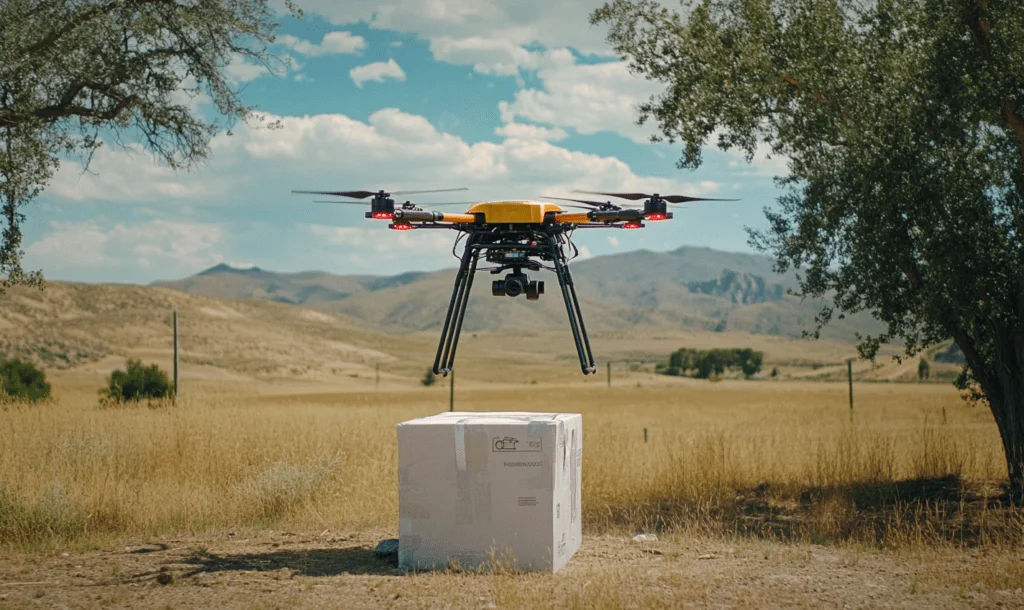

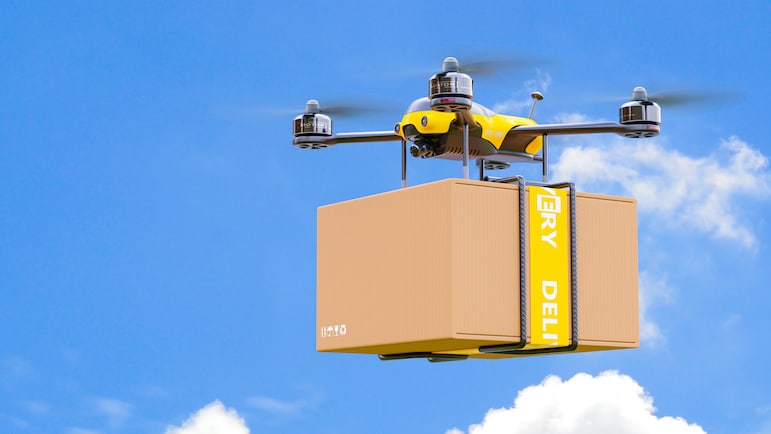
For more than a decade, drone delivery has captured the public imagination. Images of small autonomous aircraft dropping packages onto doorsteps have appeared in technology announcements, logistics forecasts, and futuristic marketing campaigns. The promise seems simple: faster deliveries, reduced traffic congestion, lower labor costs, and near-instant fulfillment.
Yet despite years of development and significant investment from major technology and logistics companies, drone delivery is still not a common part of everyday life.
So what happened? Why hasn’t drone delivery scaled globally yet? And how close are we really to widespread adoption?
The answer lies in understanding that drone delivery is not just a technological challenge. It is a complex intersection of engineering, regulation, economics, infrastructure, and human behavior.
This article explores the current state of drone delivery, what already works today, the major technical bottlenecks preventing mass adoption, and what must change before drones become a normal part of logistics networks.
What Is Drone Delivery?
Drone delivery refers to the use of unmanned aerial vehicles (UAVs) to transport packages autonomously or semi-autonomously from a distribution point to a customer location.
Unlike traditional logistics methods, drones travel through airspace rather than roads, bypassing traffic and potentially reducing delivery times dramatically.
Typical drone delivery workflow includes:
-
Order placement
-
Automated warehouse preparation
-
Package loading onto drone
-
Autonomous flight navigation
-
Delivery drop or landing
-
Return flight or recharge cycle
In theory, this process removes many inefficiencies found in ground transportation.
Why Drone Delivery Became So Attractive
Several forces drove interest in aerial logistics.
E-Commerce Growth
The rapid rise of online shopping increased demand for faster delivery options. Same-day delivery expectations pushed companies to explore alternatives beyond trucks and vans.
Urban Congestion
Cities worldwide face increasing traffic density. Air-based delivery offers a potential shortcut over crowded infrastructure.
Labor Shortages
Logistics companies struggle to recruit enough drivers, especially for last-mile delivery.
Technological Advances
Improvements in batteries, sensors, artificial intelligence, and GPS systems made autonomous flight increasingly feasible.
Together, these trends positioned drones as a possible solution to modern logistics challenges.
Where Drone Delivery Already Exists Today
Drone delivery is not entirely theoretical. Several real-world deployments already operate, though at limited scale.
Medical Supply Delivery
One of the most successful applications involves transporting medical supplies to remote areas.
Drones deliver:
-
Blood samples
-
Vaccines
-
Emergency medications
These missions benefit from predictable routes and high urgency, making drones economically viable.
Suburban Pilot Programs
Some companies operate limited commercial drone delivery services in low-density suburban areas.
Customers can receive small packages such as:
-
Snacks
-
pharmacy items
-
lightweight household goods
However, service areas remain carefully controlled.
Industrial and Campus Environments
Closed environments such as university campuses or industrial facilities provide ideal testing conditions due to controlled airspace.
Why Drone Delivery Has Not Scaled Yet
Despite successful pilots, several major obstacles prevent widespread adoption.
Barrier 1: Battery Technology Limitations
Battery performance remains the single biggest technical constraint.
Most delivery drones face limits in:
-
Flight range
-
Payload weight
-
Operational time
Typical delivery drones can carry only small packages for relatively short distances.
Increasing payload capacity requires larger batteries, which add weight and reduce efficiency.
This creates a difficult engineering trade-off.
Barrier 2: Energy Density vs Safety
Lithium-based batteries provide high energy density but introduce safety risks.
Potential issues include:
-
Overheating
-
Fire hazards
-
Performance degradation in extreme temperatures
For large-scale logistics deployment, reliability must approach aviation-level safety standards.
Battery technology has improved, but breakthroughs are still needed for mass scaling.
Barrier 3: Airspace Regulation
Airspace is heavily regulated to ensure safety.
Authorities must manage:
-
Commercial aircraft routes
-
Helicopters
-
Emergency services
-
Private aviation
-
Recreational drones
Integrating thousands of delivery drones requires entirely new traffic management systems.
Most countries currently restrict beyond-visual-line-of-sight (BVLOS) operations, limiting automation potential.
Barrier 4: Navigation and Obstacle Avoidance
Urban environments present extreme navigation complexity.
Drones must safely detect and avoid:
-
Buildings
-
Power lines
-
Trees
-
Birds
-
Weather hazards
-
Unexpected aerial objects
Autonomous perception systems must operate flawlessly under constantly changing conditions.
Even minor navigation errors carry safety risks.
Barrier 5: Weather Sensitivity
Unlike trucks, drones are highly affected by weather.
Challenges include:
-
Strong winds
-
Heavy rain
-
Snow
-
Extreme heat or cold
-
Fog reducing sensor accuracy
Weather variability reduces operational reliability, especially in regions with unpredictable climates.
Barrier 6: Noise Concerns
Drone noise remains a significant public acceptance issue.
Even relatively quiet drones produce high-frequency sounds that become noticeable when repeated frequently.
Large-scale adoption could introduce persistent urban noise pollution.
Community acceptance plays a major role in regulatory approval.
Barrier 7: Delivery Accuracy and Landing Challenges
Unlike warehouses or airports, residential areas lack standardized landing infrastructure.
Drones must determine:
-
Safe drop zones
-
Obstacle-free landing areas
-
Accurate package placement
Balconies, pets, children, and uneven terrain introduce risk factors.
Precision delivery requires advanced sensing and mapping capabilities.
Barrier 8: Security and Theft Risks
Packages delivered via drone face unique vulnerabilities:
-
Mid-air interception
-
Theft after drop-off
-
Signal interference or hacking
Ensuring secure delivery requires encryption, authentication systems, and monitoring infrastructure.
Barrier 9: Economic Viability
Perhaps the biggest challenge is economic rather than technological.
Drone delivery must compete with highly optimized ground logistics networks.
Costs include:
-
Drone manufacturing
-
Maintenance
-
Charging infrastructure
-
Monitoring personnel
-
Insurance
-
Regulatory compliance
For many deliveries, traditional vans remain cheaper.
Drone delivery becomes viable mainly for:
-
Urgent shipments
-
Remote locations
-
Lightweight items
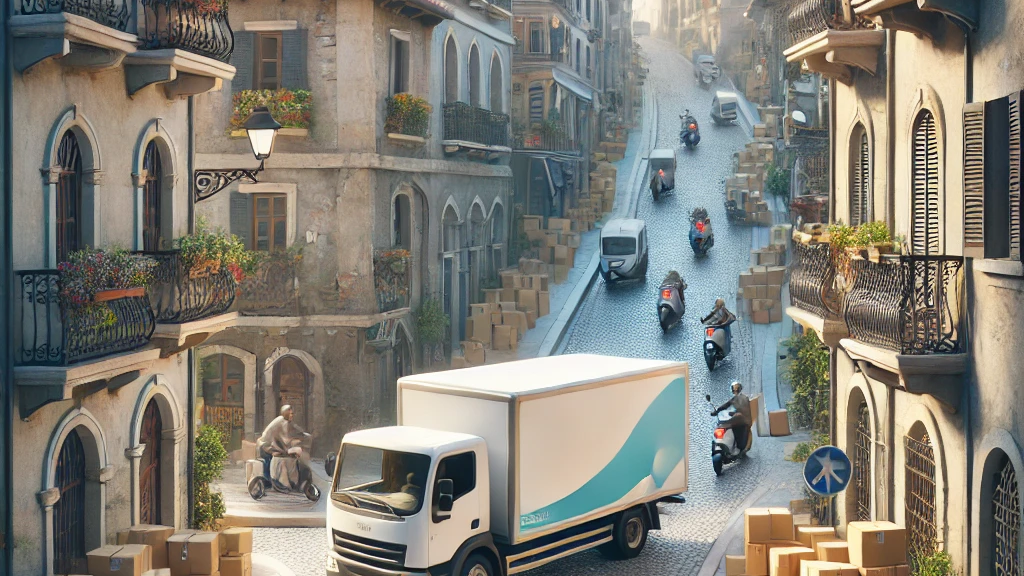
Why Last-Mile Logistics Still Favors Ground Vehicles
Ground vehicles benefit from decades of infrastructure investment.
Road networks allow flexible routing and high payload capacity.
A single delivery van can carry hundreds of packages per route, while drones typically carry one at a time.
This scale advantage remains difficult to overcome economically.
Technological Innovations Moving the Industry Forward
Despite challenges, progress continues rapidly.
AI-Based Flight Control
Machine learning improves obstacle detection and autonomous navigation.
Advanced Sensors
LiDAR, radar, and computer vision systems enhance environmental awareness.
Battery Research
Solid-state batteries and hybrid power systems aim to extend flight duration.
Drone Traffic Management Systems
Digital airspace coordination platforms are under development to manage high drone volumes safely.
Hybrid Delivery Models: The Likely Near-Term Future
Rather than replacing trucks entirely, drones may integrate into hybrid logistics systems.
Possible models include:
-
Trucks acting as mobile drone launch platforms
-
Regional hubs deploying drones for final short-distance delivery
-
Emergency priority deliveries handled aerially
This blended approach improves efficiency without requiring full infrastructure replacement.
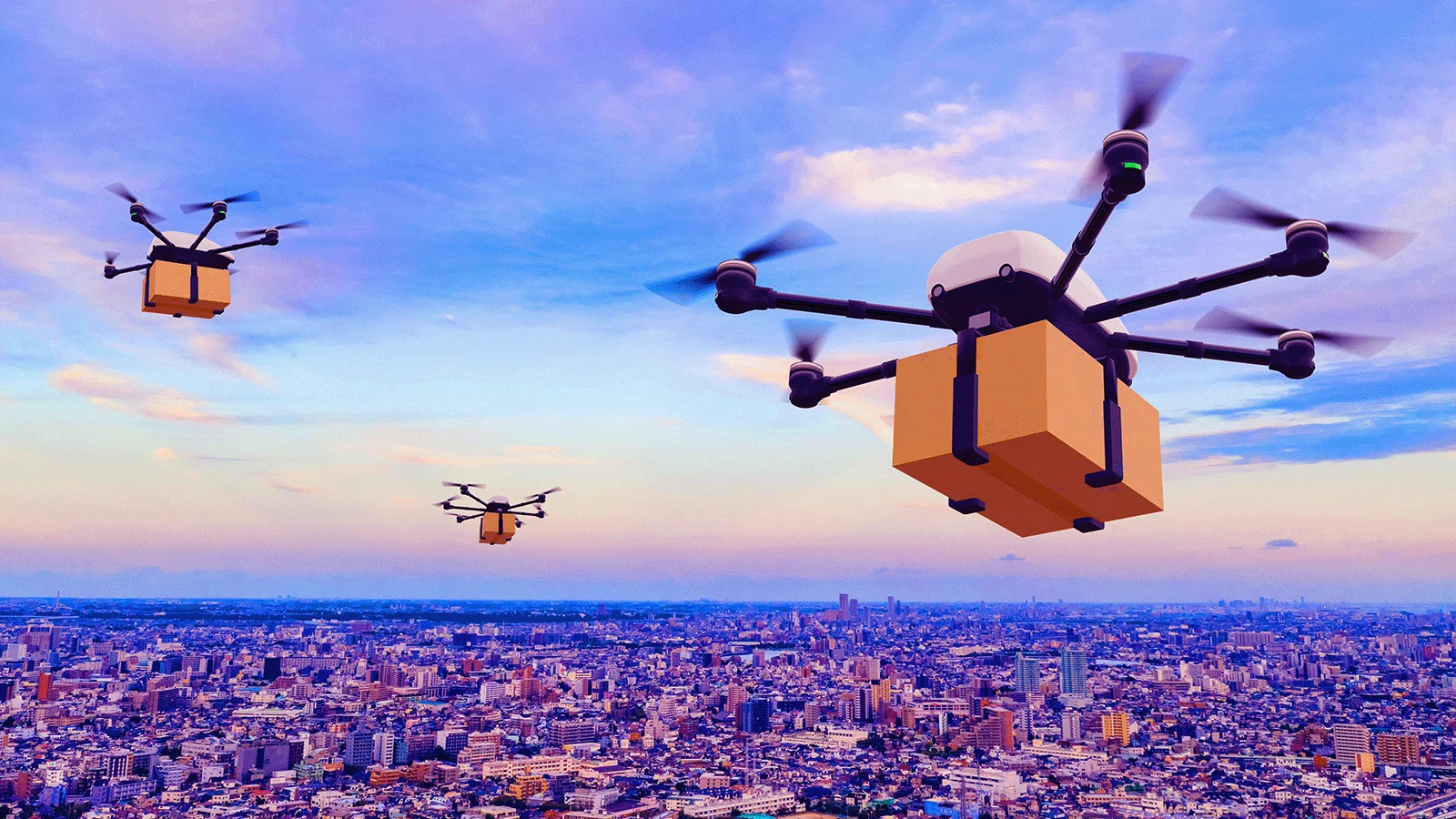
Urban vs Rural Adoption Timeline
Rural Areas
Likely earlier adoption due to:
-
Fewer obstacles
-
Lower population density
-
Greater delivery distance advantages
Dense Cities
Adoption will take longer because of:
-
Complex regulations
-
Safety concerns
-
Infrastructure constraints
Urban drone delivery requires more technological maturity.
Environmental Impact: Promise and Reality
Drone delivery could reduce emissions under certain conditions.
Advantages include:
-
Electric propulsion
-
Reduced road congestion
-
Lower fuel consumption for small packages
However, environmental benefits depend on energy sources and operational efficiency.
Poorly optimized drone fleets may not outperform efficient ground logistics.
Public Perception and Trust
Technology adoption depends not only on capability but also acceptance.
Consumers must feel comfortable with:
-
Autonomous aircraft overhead
-
Privacy protection
-
Safety assurances
Trust develops gradually through successful deployment and transparency.
When Will Drone Delivery Become Normal?
Experts generally expect phased adoption:
Short term (0–5 years):
-
Expansion of pilot programs
-
Medical and urgent deliveries grow
-
Suburban deployments increase
Medium term (5–10 years):
-
Hybrid logistics integration
-
Improved regulatory frameworks
-
Better battery performance
Long term (10–20 years):
-
Wider urban adoption
-
Autonomous traffic coordination
-
Routine aerial logistics in certain regions
Drone delivery will likely evolve gradually rather than arriving suddenly.
What Drone Delivery Will Probably Never Replace
Even in the future, drones are unlikely to replace:
-
Large package delivery
-
Bulk shipments
-
Furniture transport
-
High-volume retail distribution
Ground logistics will remain essential.
Drones will specialize rather than dominate.
The Real Transformation: Logistics Intelligence
The biggest impact of drone development may not be drones themselves but the technologies created alongside them:
-
Autonomous navigation
-
Advanced routing algorithms
-
Real-time logistics optimization
-
Distributed fulfillment networks
These innovations improve logistics across all delivery methods.
Final Thoughts
Drone delivery represents one of the most ambitious attempts to reinvent logistics in the modern era. While early visions suggested rapid transformation, reality has revealed a far more complex path shaped by engineering limitations, regulatory challenges, economic constraints, and societal acceptance.
The question is no longer whether drone delivery will exist — it already does in limited forms. The real question is how it will integrate into existing logistics systems.
Rather than replacing trucks and couriers, drones will likely become specialized tools used where their advantages are strongest: urgent deliveries, remote access, and time-sensitive logistics.
The future of delivery is not purely aerial or ground-based but interconnected — a layered system combining multiple technologies to meet evolving expectations.
Drone delivery is coming, but not as a sudden revolution. Instead, it will arrive quietly, gradually expanding until one day receiving a package from the sky feels completely ordinary.