

As the logistics and e-commerce industries continue to grow at an unprecedented pace, the demand for efficient and scalable sorting systems has never been higher. Automation is becoming the backbone of modern logistics operations, helping businesses meet the increasing challenges of order fulfillment speed, accuracy, and cost-effectiveness.
### **1. The Growing Demand for Automated Sorting**
With the rise of e-commerce, consumer expectations for fast and accurate deliveries are at an all-time high. Logistics companies are under pressure to process orders quickly while maintaining high levels of accuracy. Manual sorting methods simply cannot keep up with the growing volume of packages, leading many businesses to turn to automated sorting systems.
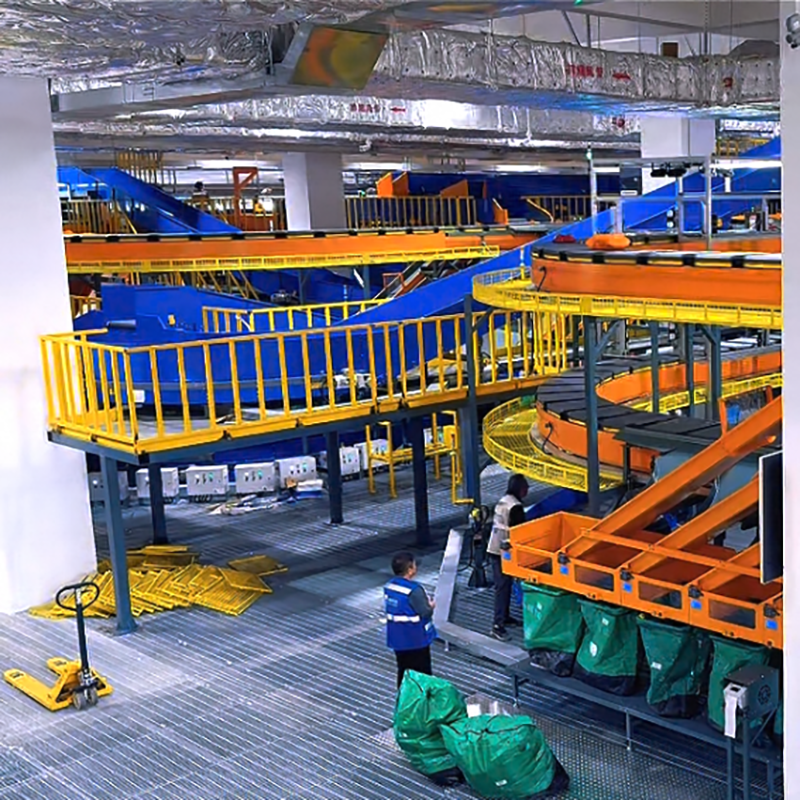
Automated sorting systems, like the cross-belt sorter, are designed to handle large volumes of items in a fraction of the time it would take with traditional manual processes. These systems not only streamline operations but also help businesses scale more efficiently to meet rising demand.
### **2. Key Benefits of Automated Sorting Systems**
Automated sorting systems offer a range of benefits that are essential for staying competitive in the logistics industry:
* **Increased Speed and Efficiency**: Automated sorters can process thousands of items per hour, drastically reducing the time needed for sorting and improving overall warehouse throughput.
* **Improved Accuracy**: Automated systems reduce human error, ensuring that items are sorted correctly and shipped to the right destinations.
* **Cost Savings**: By reducing reliance on manual labor and increasing sorting efficiency, businesses can lower operational costs and reduce the risk of costly mistakes.
* **Flexibility**: Modern sorting systems, like Truelisort’s cross-belt sorter, can be easily adapted to handle different types of products, from small parcels to large and irregularly shaped items, making them highly flexible.
### **3. Why Cross-belt Sorters are Leading the Way**
Among the various automated sorting solutions, cross-belt sorters have emerged as one of the most efficient and reliable options. These systems use individual belts to carry items across multiple sorting lanes, allowing for higher speeds and better precision.
Truelisort’s cross-belt sorter is a prime example of this technology in action. With its high-speed capabilities and intelligent control systems, it offers superior sorting accuracy, which is crucial in e-commerce and logistics operations that deal with diverse products on a daily basis.
The system’s modular design allows it to fit seamlessly into existing warehouse layouts, making it a cost-effective solution for businesses looking to upgrade their sorting infrastructure without significant downtime.
### **4. The Role of AI and Data Analytics in Sorting Systems**
As sorting systems become more advanced, the integration of artificial intelligence (AI) and data analytics is playing a key role in optimizing performance. By analyzing real-time data from sorting operations, AI algorithms can adjust sorting strategies on the fly, improving efficiency and minimizing bottlenecks.
For example, Truelisort’s cross-belt sorter can be equipped with AI-powered sensors that monitor the flow of goods and make real-time adjustments based on package size, weight, and destination. This level of intelligence ensures that the system operates at peak efficiency, even during peak demand periods.
### **5. The Future of Sorting: Towards Fully Autonomous Operations**
Looking ahead, the future of sorting systems is one of increasing automation and intelligence. As AI and machine learning technologies continue to advance, we can expect sorting systems to become even more autonomous, requiring less human intervention and offering even greater flexibility.
With developments in robotics and machine learning, future sorting systems could be fully self-operating, dynamically adjusting to changes in product volume and demand. This will allow businesses to not only improve efficiency but also optimize their entire supply chain, from warehousing to last-mile delivery.
Conclusion
The logistics industry is at a crossroads, with automation set to play a critical role in shaping its future. By adopting advanced sorting systems like Truelisort’s cross-belt sorter, businesses can stay ahead of the curve, improving speed, accuracy, and cost-effectiveness. As technology continues to evolve, the future of sorting systems promises even greater innovations that will revolutionize logistics operations worldwide.