

In the current landscape of global intralogistics, the delta between operational profitability and stagnation is measured in Parcels Per Hour (PPH) and sorting accuracy. For Logistics Directors and Supply Chain Architects, the pressure to mitigate rising labor costs while managing exponential volume growth during peak seasons is relentless. As a premier Automated Parcel Sorting System Manufacturer, TRUELI-SORT TECH (Zhejiang Xinli Electrical Equipment Co.,Ltd.) has engineered solutions since 2017 that transform these bottlenecks into competitive advantages. This technical analysis explores the architectural requirements, integration protocols, and financial ROI of deploying industrial-grade sorting automation.
System Architecture & Technology Deep Dive: The Anatomy of Throughput
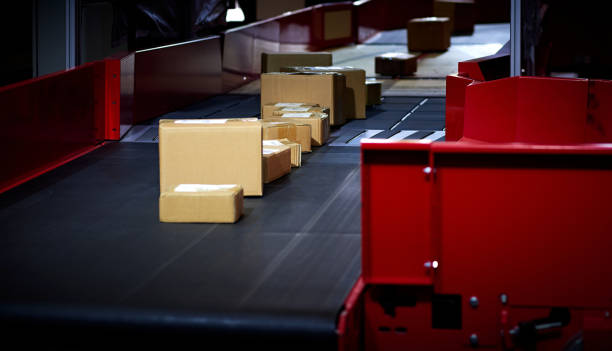
A sophisticated automated parcel sorting system is far more than a simple conveyor; it is a synchronized ecosystem of hardware and software designed for millisecond precision. The process begins with parcel singulation, where bulk flows are separated into a single file with defined gaps. This is followed by the DWS (Dimensioning, Weighing, and Scanning) station, the “brain” of the input phase.
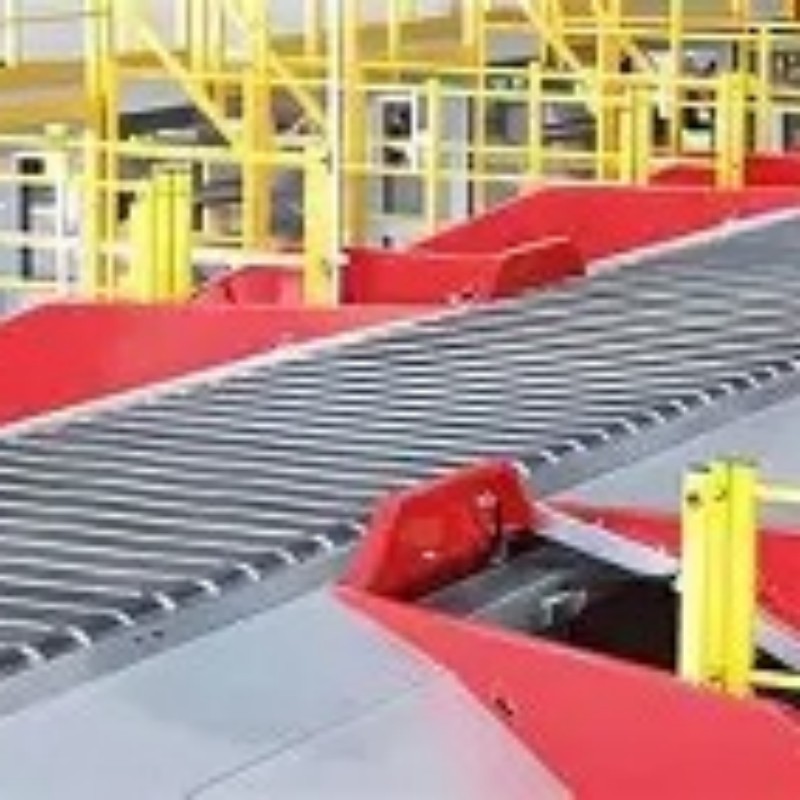
Our DWS units utilize high-frequency omnidirectional barcode scanning and 3D laser profiling to capture dimensional data. This data is instantly cross-referenced with the Warehouse Control System (WCS) to determine the exact discharge point. The mechanical execution is typically handled by either a cross belt sorter for high-speed multi-SKU handling or a swivel wheel sorter for modular, medium-throughput requirements.
Technical Performance Comparison: Sorting Methodologies
Selecting the correct technology requires a balance of SKU variety, footprint availability, and desired PPH. The following table outlines the technical specifications of our core logistics automation equipment.
| Technology Type | Max Throughput (PPH) | Min/Max Parcel Weight | Typical Application | Footprint Efficiency |
|---|---|---|---|---|
| Cross Belt Sorter | 8,000 – 25,000 | 0.1kg – 35kg | High-speed E-commerce & Parcel Hubs | Excellent (Double-Sided) |
| Swivel Wheel Sorter | 3,000 – 6,000 | 0.5kg – 50kg | Modular Distribution Centers | High (Compact/Modular) |
| Narrow Belt Sorter | 2,000 – 5,000 | 1.0kg – 60kg | Heavy Carton & Box Sorting | Linear Path Optimization |
Key Industry Applications (E-commerce, 3PL, Parcel Hubs)
As a specialized manufacturer, we tailor our systems to the specific mechanical stressors of different sectors. In the 3PL (Third-Party Logistics) sector, the primary challenge is SKU diversity. A 3PL automated sorting solution must handle everything from lightweight polybags to rigid corrugated boxes without manual intervention or jam-ups.
For E-commerce fulfillment centers, the focus shifts to the “First-Mile” and “Last-Mile” efficiency. Our e-commerce sorting solutions integrate seamlessly with “Put Walls” to facilitate high-speed order consolidation. By automating the sortation of outgoing parcels by carrier (e.g., FedEx, UPS, DHL), facilities can significantly extend their carrier cutoff times, providing a superior service level to end consumers.
In the Parcel & Post industry, durability is the priority. Our systems are built for 24/7 operation with heavy-duty components and low-friction drive systems, ensuring that the total cost of ownership (TCO) remains low despite the grueling duty cycles found in national distribution hubs.
The Importance of Custom Layouts & WCS/WMS Integration
Hardware is only as effective as the logic that governs it. A global Automated Parcel Sorting System Manufacturer must provide more than steel and motors; they must provide software integration. The WCS (Warehouse Control System) acts as the intermediary between the physical PLC on the factory floor and the high-level WMS (Warehouse Management System).
Our software suite manages chute logic, dynamic routing, and real-time error handling. For instance, if a barcode is damaged, the WCS triggers a “no-read” logic, diverting the parcel to a dedicated exception handling chute without stopping the main sorter loop. Furthermore, our engineering team utilizes CAD layout design to optimize the “footprint-to-throughput” ratio. We often design multi-tier systems or wrap-around configurations for facilities where floor space is at a premium, ensuring that automation fits the building, rather than forcing the building to fit the automation.
B2B Procurement: How to Evaluate a Sorting Automation Manufacturer
Procuring a multi-million dollar sorting system requires rigorous due diligence. Decision-makers should evaluate a manufacturer based on three pillars:
1. Engineering Depth: Can they provide a custom CAD layout that optimizes my specific facility?
2. Software Integration: Is the WCS compatible with my existing ERP/WMS (e.g., SAP, Oracle, Manhattan)?
3. Direct Manufacturing: Is the provider a middleman or a direct factory?
TRUELI-SORT TECH maintains full control over the manufacturing process in our Zhejiang facility, ensuring that every component—from the precision-balanced cross belt carriages to the infrared sensors—meets international industrial standards.
Why Partner with TRUELI-SORT TECH? (The Manufacturer Pitch)
Since our establishment in 2017, TRUELI-SORT TECH has focused on delivering high-ROI warehouse automation solutions. Unlike generic equipment resellers, we are a direct factory and turnkey solution provider. This means our clients benefit from:
- Factory-Direct Pricing: No middleman markups, allowing for a faster break-even point on your investment.
- End-to-End Delivery: From the initial consultation and CAD design to overseas installation, commissioning, and staff training.
- Robust Software Ecosystem: In-house developed WMS/WCS integration that ensures your hardware and data work in perfect harmony.
- Proven Reliability: Heavy-duty hardware designed for the rigors of modern logistics with high barcode read rates and minimal maintenance requirements.
Transform your warehouse throughput and eliminate labor-related bottlenecks. Contact TRUELI-SORT TECH today to request a technical consultation or a custom CAD layout for your facility.
Frequently Asked Questions (FAQ)
How does an automated sorting system improve warehouse ROI?
Automated systems typically reduce manual labor requirements by 60-80% while increasing throughput by up to 500%. By minimizing sorting errors (mis-sorts), companies save significantly on reverse logistics and customer service costs. Most clients achieve a full return on investment within 18 to 24 months, depending on volume.
What is the difference between a Cross Belt Sorter and a Narrow Belt Sorter?
The Cross Belt Sorter uses individual mini-belts on carriages to actively discharge items, making it ideal for high-speed (up to 25,000 PPH) and fragile items. A Narrow Belt Sorter is a more cost-effective, linear solution for medium throughputs, primarily used for heavier cartons and consistent box sizes.
Can your WCS integrate with my existing WMS/ERP?
Yes. Our WCS is designed with open-architecture protocols (TCP/IP, Modbus, etc.) to integrate seamlessly with all major WMS platforms. We provide full API documentation and support during the integration phase to ensure real-time data flow between your inventory management and the physical sorting process.
Do you provide overseas installation and training?
Absolutely. As a turnkey provider, we send our specialized engineering teams globally to handle the physical installation, PLC programming, and system testing. We also provide on-site training for your maintenance and operations teams to ensure long-term system health and performance.