


If you have ever shipped products internationally — whether running an e-commerce store, managing overseas manufacturing, or sending bulk inventory — you may have encountered a confusing situation:
Your shipment weighs 22 pounds on a scale, yet the shipping company charges you as if it weighs 45 pounds.
Nothing is wrong with the scale. The carrier isn’t making a mistake.
You’ve just encountered one of the most important — and misunderstood — concepts in global logistics:
dimensional weight, often called volumetric weight or DIM weight.
Understanding how dimensional weight works can dramatically reduce shipping costs, prevent billing surprises, and help businesses design smarter packaging strategies. Many international shipping expenses are not determined by physical weight at all but by how much space a package occupies during transport.
This guide explains exactly how dimensional weight is calculated, why carriers use it, and how to avoid the most common and expensive pitfalls.

Why Shipping Companies Don’t Charge Only by Weight
To understand dimensional weight, imagine two shipments:
-
Box A: 50 pounds of metal tools packed tightly.
-
Box B: 10 pounds of pillows filling a huge carton.
Both boxes occupy space on an aircraft or inside a truck. However, Box B consumes far more cargo volume even though it weighs less.
Transportation systems have two limits:
-
Weight capacity
-
Space capacity
Aircraft and trucks often run out of space before reaching maximum weight.
If carriers charged only by weight, lightweight bulky shipments would consume valuable cargo space while generating low revenue.
Dimensional weight solves this imbalance.
What Is Dimensional Weight?
Dimensional weight is a pricing method that converts package volume into a theoretical weight value.
Carriers then charge based on whichever is greater:
-
Actual weight (scale weight), or
-
Dimensional weight (space-based weight)
This ensures pricing reflects both mass and occupied space.
The Basic Dimensional Weight Formula
Although formulas vary slightly among carriers, the core calculation follows the same structure:
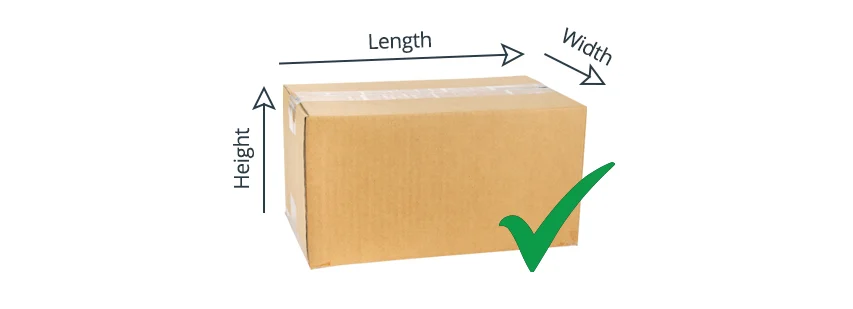
Dimensional Weight = (Length × Width × Height) ÷ Dimensional Factor
Measurements are typically in inches or centimeters depending on region.
Example Calculation (Inches)
Let’s say a package measures:
-
Length: 20 in
-
Width: 16 in
-
Height: 12 in
Volume:
20 × 16 × 12 = 3,840 cubic inches
If the carrier’s dimensional factor is 139:
3,840 ÷ 139 = 27.6 lb
The dimensional weight becomes 28 pounds (rounded up).
Even if the real weight is only 18 pounds, shipping charges apply to 28 pounds.
What Is the Dimensional Factor?
The dimensional factor (DIM divisor) represents how efficiently carriers convert space into billable weight.
Common divisors include:
-
139 (many express couriers)
-
166 (some economy services)
-
5000 or 6000 (metric calculations in cm)
A smaller divisor produces a higher dimensional weight — meaning higher shipping costs.
Metric Formula Version
When using centimeters:
Dimensional Weight (kg) = (L × W × H in cm) ÷ 5000
Example:
50 × 40 × 30 cm = 60,000 cubic cm
60,000 ÷ 5000 = 12 kg billable weight.
Why Air Shipping Uses DIM Weight More Strictly
Air cargo space is extremely limited and expensive.
Aircraft must balance:
-
fuel efficiency
-
safety limits
-
cargo distribution
Lightweight bulky packages reduce total shipment efficiency.
As a result, air express carriers almost always apply dimensional pricing.
Ocean freight may rely more on cubic volume measurements instead.
When Dimensional Weight Applies
DIM weight typically applies to:
-
international express shipments
-
cross-border e-commerce parcels
-
air freight consolidations
-
courier services
It may not apply to:
-
dense palletized freight
-
certain ocean container shipments
-
flat-rate services
Understanding service type helps predict charges accurately.
Actual Weight vs Billable Weight
Carriers compare two numbers:
| Measurement | Meaning |
|---|---|
| Actual Weight | Physical weight measured on scale |
| Dimensional Weight | Calculated space weight |
| Billable Weight | Higher of the two |
Billing always uses the larger value.
Why Small Packaging Changes Matter So Much
Because dimensional weight multiplies three dimensions, small increases dramatically affect cost.
Increasing box height by just 2 inches can raise billable weight significantly.
Example:
20 × 16 × 12 = 3,840
20 × 16 × 14 = 4,480
That small change increases dimensional weight by over 16%.
Packaging efficiency directly impacts shipping profit margins.
The Most Common Dimensional Weight Mistakes
Mistake #1: Using Oversized Boxes
Many shippers choose larger cartons for convenience.
Extra empty space equals higher dimensional charges.
Void space is essentially paid air.
Mistake #2: Ignoring Internal Packaging Design
Protective materials matter, but inefficient padding inflates dimensions.
Better solutions include:
-
custom inserts
-
molded pulp trays
-
inflatable cushioning
Protection should add minimal volume.
Mistake #3: Measuring Incorrectly
Carriers measure packages at their longest points.
Bulging sides or uneven sealing increase recorded dimensions.
Always measure:
-
longest length
-
widest width
-
highest point
Round up fractions.
Mistake #4: Forgetting Rounded Measurements
Carriers round dimensions upward.
19.2 inches becomes 20 inches.
Small rounding differences accumulate quickly.
Mistake #5: Assuming Quotes Include DIM Weight
Some shipping quotes estimate only actual weight.
Final invoices adjust after carrier measurement, causing unexpected costs.
Always calculate dimensional weight before shipping.
How Carriers Measure Packages Today
Modern logistics hubs use automated dimensioning systems.
Packages pass through scanners that capture:
-
laser measurements
-
volume imaging
-
weight sensors
Human estimation is rarely involved.
Attempting to underreport dimensions almost always fails.
Dimensional Weight in E-Commerce Logistics
Online sellers are especially affected because many products are lightweight but bulky:
-
home décor
-
lighting fixtures
-
apparel bundles
-
pillows and bedding
-
custom packaging items
Shipping cost often becomes the largest operational expense.
Understanding dimensional pricing allows smarter product packaging decisions early in product design.
Packaging Optimization Strategies
1. Right-Size Packaging
Use cartons tailored to product dimensions rather than standard box sizes.
Even reducing one dimension slightly lowers volume significantly.
2. Redesign Product Orientation
Rotating products inside packaging can reduce height or width.
Reorientation alone sometimes cuts dimensional weight tiers.
3. Compressible Materials
Vacuum packing textiles or soft goods reduces volume dramatically.
Many apparel brands rely on compression to control shipping cost.
4. Modular Packaging Systems
Design packaging that scales proportionally for multiple product quantities.
Avoid doubling box size unnecessarily.
5. Flat-Pack Design
Furniture and home products often ship flat to minimize dimensional charges.
This concept revolutionized global furniture logistics.
Carrier Differences You Should Know
Each courier applies dimensional rules slightly differently.
Variables include:
-
divisor value
-
rounding method
-
minimum charge thresholds
-
oversize surcharges
Comparing carriers based only on price per pound can be misleading without dimensional analysis.
Oversize and Additional Fees
Large packages may trigger extra charges beyond DIM weight.
Examples include:
-
oversize handling fees
-
peak season surcharges
-
remote delivery fees
Even lightweight items can incur premium pricing if dimensions exceed limits.
How Warehouses Reduce DIM Costs
Professional fulfillment centers often use:
-
automated carton selection
-
packaging algorithms
-
real-time dimension scanners
These systems choose optimal packaging automatically.
Businesses shipping frequently benefit greatly from similar optimization strategies.
Calculating DIM Weight Before Shipping: A Simple Workflow
-
Measure box dimensions accurately.
-
Calculate volume.
-
Divide by carrier DIM factor.
-
Compare with actual weight.
-
Estimate billable weight.
-
Adjust packaging if necessary.
Performing this calculation early prevents surprises later.
Why DIM Weight Matters for Profitability
Many businesses underestimate shipping costs during product planning.
A product that seems profitable may lose margin once dimensional charges apply.
Successful international sellers consider logistics during product design, not after manufacturing.
Packaging engineering becomes part of business strategy.
The Environmental Perspective
Efficient packaging reduces:
-
unused cargo space
-
fuel consumption
-
carbon emissions
Dimensional pricing indirectly encourages sustainability by rewarding compact shipping design.
Less empty space means fewer transport resources required.
Future Trends in Dimensional Pricing
Logistics technology continues evolving.
Emerging developments include:
-
AI packaging optimization
-
dynamic pricing based on real-time cargo density
-
automated fulfillment analytics
-
smart packaging materials
Dimensional weight will likely become even more precise as measurement technology improves.
Quick Dimensional Weight Checklist
Before shipping internationally:
-
Measure accurately
-
Minimize empty space
-
Know carrier divisor
-
Compare shipping methods
-
Optimize packaging design
-
Verify quotes include DIM calculations
Following this checklist avoids most costly mistakes.
Final Thoughts: Space Is Just as Valuable as Weight
International logistics isn’t only about how heavy a shipment is — it’s about how efficiently space is used.
Dimensional weight reflects a simple truth of modern transportation: cargo capacity depends on volume as much as mass.
Once shippers understand this principle, shipping costs become predictable rather than mysterious.
By designing smarter packaging, calculating billable weight in advance, and avoiding common pitfalls, businesses and individuals can ship internationally with greater confidence and significantly improved cost control.
In global logistics, mastering dimensional weight isn’t just a technical skill — it’s a competitive advantage that turns shipping from an expense into a strategic decision.