Custom Parcel Sorting Systems. Engineered for Real Operations.

Custom Parcel Sorting Systems. Engineered for Real Operations.
Converting bulk into singulated flow has always been one of the most challenging aspects for feeding automated parcel processing solutions. Historically, there have been two options; either a manual and time consuming approach or an automated solution with a very large footprint and an extremely high price tag.
To solve this challenge, Truelisort is patented Parcel Singulator can achieve production flows of up to 10,000 PPH* and handles a wide array of product types from polybags to boxes. The semi-automated design

also allows for the system to be operated with either 1 or 2 operators depending on work flow requirements. It includes a semi-automatic singulation table, independent power control panel, PLC, stand-alone safety with Safe Torque Off, standard set of dry contacts for easy.

Powering The World’s Most Trusted Brands
Induct and Singulate Up to 10,000 Parcels Per Hour With the Most Compact Singulator Available
Unload Multiple Container Types, 4 Different Modes, Utilize with One or Two Operators
Operate with One or Two Workers Depending on Your Requirements
Stop the system for any safety reason
Ability to dump carts, multiple sizes of gaylords, or collapsible bins easily and quickly
Select from Poly Fast, Poly Slow, Fully Automatic, and Manual
A cost efficient solution for a variety of applications
Providing a single system for sorting multiple product types
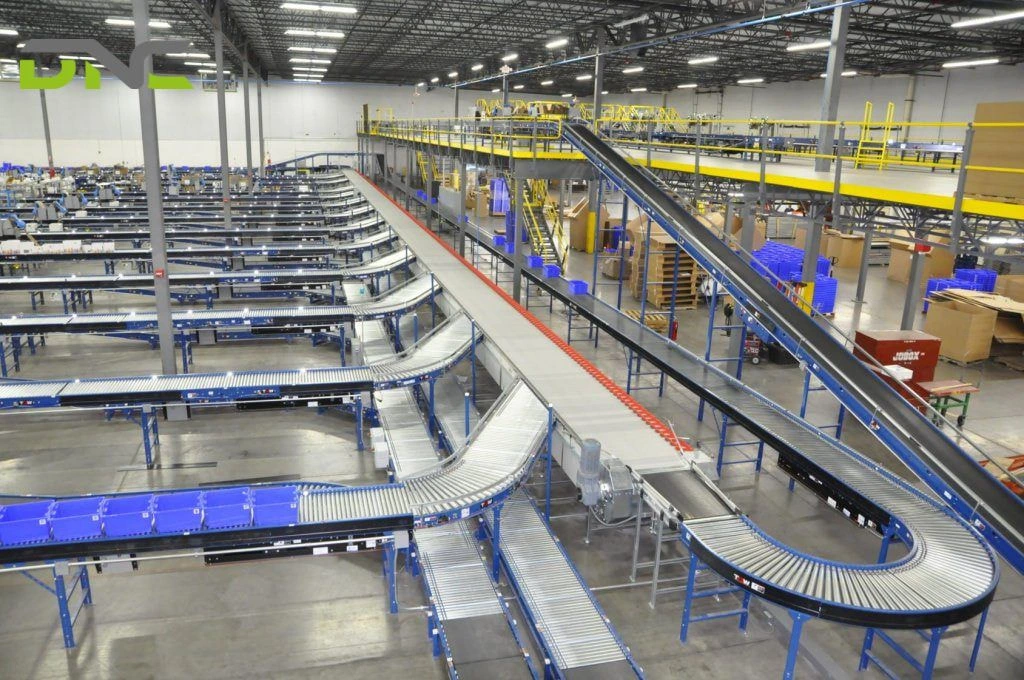
Whether you are planning a new sorting center or upgrading an existing operation, Truelisort is ready to support you with a reliable, efficient, and customized sorting solution.
Every sorting number in every brochure assumes singulation happened — parcels separated, oriented, and presented one at a time. The parcel singulator is that assumption’s hardware, and its quality decides everything downstream:
| Singulation outcome | Downstream consequence | Where it shows in metrics |
|---|---|---|
| Clean singles | Scans read first pass; diverts hit time | No-read rate below 0.5% |
| Clumps | Reject loop; re-induct; loop time burns | Recirculation above 2% |
| Wrong orientation | Label miss; exception queue grows | Manual handling minutes per hour |
| Speed mismatch | Gaps collapse at merge; jams form | Jam count per shift |
Recirculation is the metric that quietly audits singulation. Every parcel riding the loop a second time is a singulation failure wearing a sorter’s clothes — consuming capacity, delaying everything behind it, wearing rollers for nothing. Facilities that track recirculation daily discover it is the most honest number on the wall: it cannot be flattered by mix arguments, because the mix arrives at singulation first. Upgrading singulation — better gapping, orientation handling, surge buffering — often buys more effective rate than upgrading the loop itself, at a fraction of the capital, precisely because the loop was never the constraint. The induction anatomy where singulation lives is in anatomy of a sorting solution, and the first-mile flows that feed it in first mile, last mile. Reference: material-handling equipment and package handling.
Singulation performance is also a maintenance surface, and a small one. Clean read windows on schedule, keep the induct gap adjustment within its documented band, and log the morning’s first-hour singulation rate — three habits that catch most degradation before it reads as a “sorter problem.” The hardware rarely fails suddenly; it fades, and fade is visible to anyone measuring. Reference: preventive maintenance and inspection routines.


