Custom Parcel Sorting Systems. Engineered for Real Operations.

Custom Parcel Sorting Systems. Engineered for Real Operations.
In high-volume distribution networks, operational efficiency is defined early — in the first and last mile. Whether you’re routing freight through a regional sort facility or managing transfer points for national distribution, the ability to sort parcels quickly, accurately, and without disruption directly impacts your cost-per-package and SLA adherence.
The Truelisort is engineered for this reality. Purpose-built for first mile and last mile environments, it delivers high-speed, mixed-parcel sortation in a modular, data-integrated system that supports both growth and complexity.
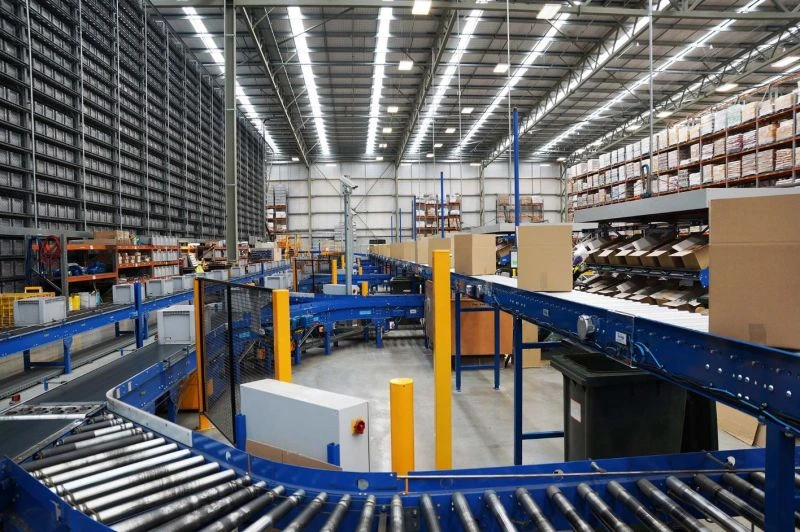
First mile logistics often involves consolidating pickups from various entry points — local merchants, e-commerce drop-offs, or cross-dock freight — and preparing them for rapid injection into a distribution network. Last mile operations, meanwhile, focus on moving these consolidated loads between regional hubs and national sort centers with minimal dwell time.
The Xstream addresses these head-on, giving logistics operators the tools they need to adapt without sacrificing performance or reliability.
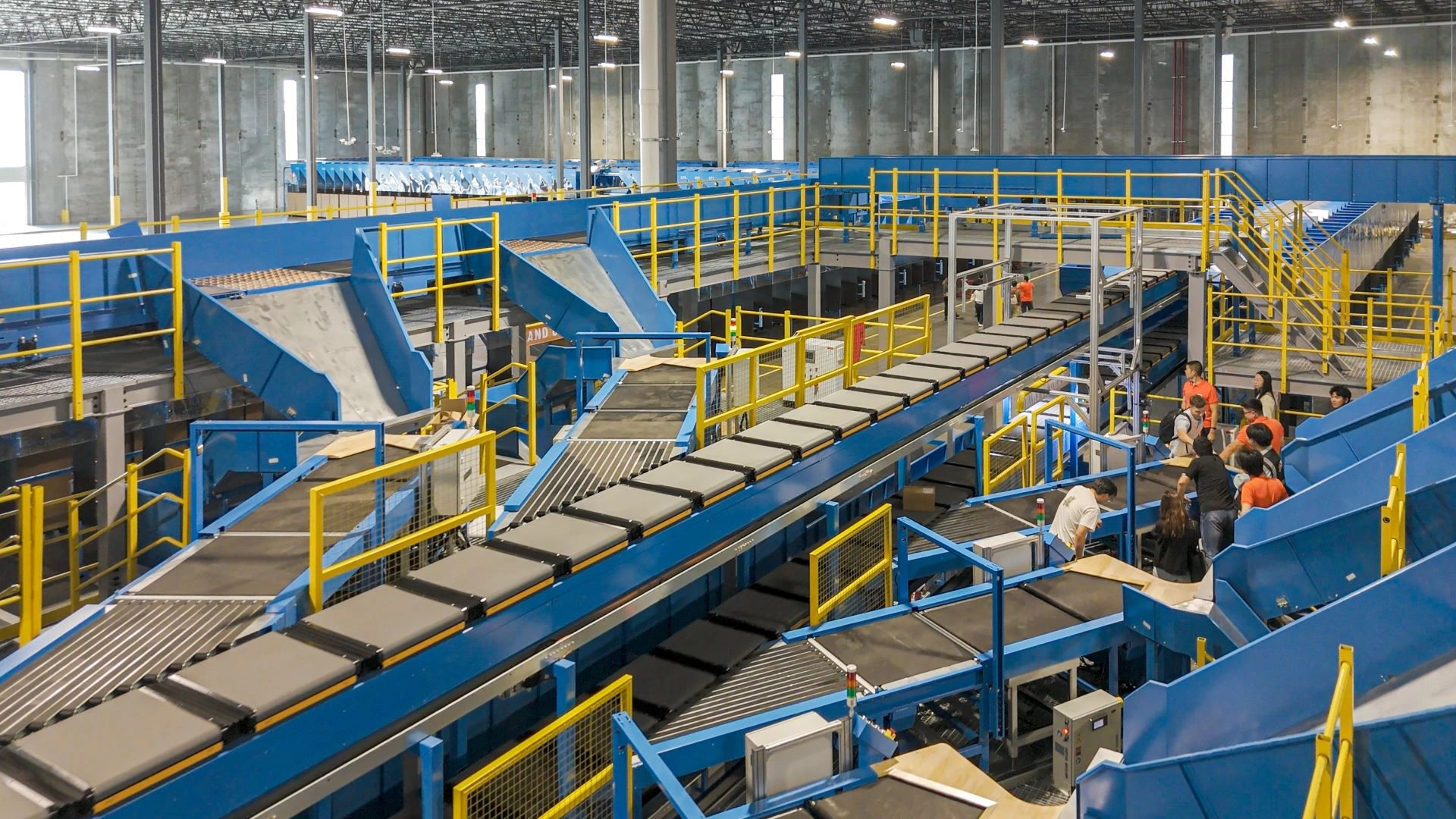
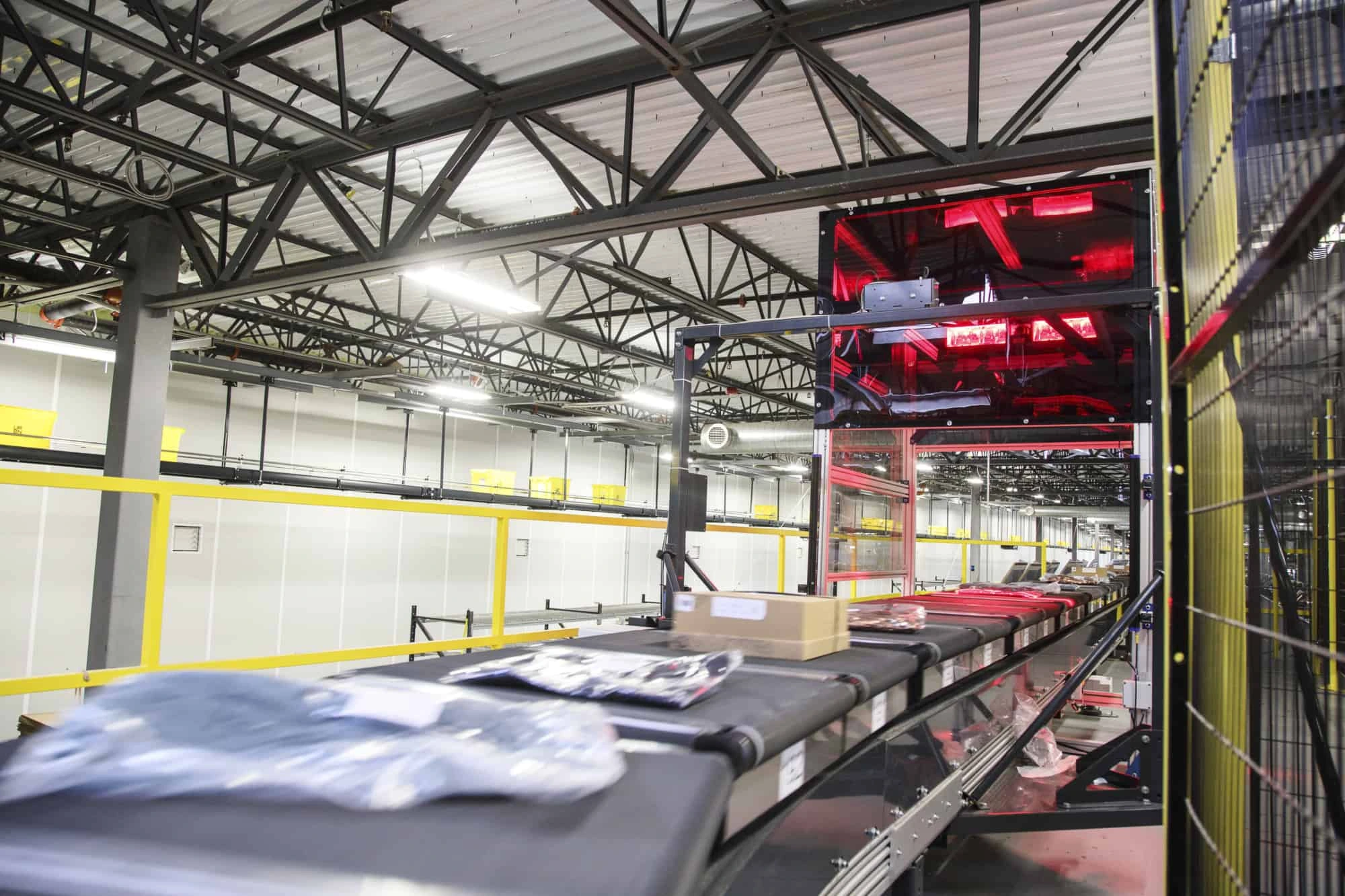
The Xstream is more than a sorter — it’s a high-throughput logistics engine engineered for evolving supply chains. By addressing the challenges of first mile and last mile operations — parcel variability, data accuracy, throughput, and network scalability — it empowers logistics organizations to move faster, adapt smarter, and maintain precision at scale.
First mile and last mile get the logistics attention; the sorter serves both ends in ways that decide their economics:
| Mile | Sorter’s role | Economic effect |
|---|---|---|
| First mile (inbound) | Sings parcels from bulk to sortable flow | Trailers turn faster; dock slots shrink |
| Last mile (outbound) | Diverts to carrier and route precision | Route density rises; drops per hour climb |
| Returns (reverse) | Grades and routes the inbound wave | Restock cycles measured in days not weeks |
| Cross-dock | Transfers between vehicles without storage | Inventory time approaches zero |
Last-mile economics reward density: a route that drops sixty parcels in an hour costs a fraction of one that drops twenty. The sorter builds density by separating flow precisely enough that every vehicle leaves loaded with one route’s geography, not a blend that forces drivers to zigzag. First-mile density works differently but equally — singulation determines how fast an inbound container becomes productive inventory, and slow singulation quietly doubles as dock congestion. The cross-dock row is the strategy where both ends meet: sort-to-vehicle transfer with no storage dwell compresses the entire chain, but it depends entirely on the sorter’s ability to sequence outbound by arrival, not by convenience. Operations evaluating their mile economics usually find the sorter already sits at the centre of the cost structure — and that upgrading it buys density at both ends simultaneously. The singulation hardware itself is profiled in the parcel singulator, and the flow backbone in five flows, one backbone. Reference: last mile logistics and cross-dock operations.
The two ends also share a clock. Inbound waves and outbound departures meet at the sorter, and operations that co-schedule them — arrival slots timed to available sort capacity, departures timed to accumulated route density — recover hours that neither end could find alone. The just-in-time discipline applies to dock calendars as much as to inventory. Reference: just-in-time thinking and dock operations.