

Not long ago, shipping a package meant accepting uncertainty. Once a parcel left a warehouse, customers and businesses entered a waiting game filled with vague updates like “in transit” or “arriving soon.” If something went wrong, locating the shipment could take days—or sometimes weeks.
Today, that reality has changed dramatically. Modern logistics operates in an era where packages are expected to be visible at every stage of their journey. Real-time tracking systems have transformed shipping from a largely reactive process into a transparent, data-driven ecosystem where delays are predicted, problems are identified instantly, and “lost packages” are becoming increasingly rare.
This shift is not simply about convenience. It represents a fundamental evolution in how global commerce functions. From e-commerce retailers to international freight operators, logistics networks now rely on continuous visibility powered by sensors, connectivity, automation, and intelligent analytics.
This article explores how real-time tracking works, why it has become essential, and how modern logistics systems are eliminating the mystery of missing shipments.
The Old Logistics Problem: When Packages Disappeared
Before real-time tracking, shipping relied heavily on manual checkpoints.
Packages were scanned only at specific locations:
- Warehouse departure
- Regional sorting center
- Final delivery facility
Between those checkpoints, shipments essentially vanished from view.
Common issues included:
- Misrouted parcels
- Incorrect sorting
- Delayed transfers
- Theft or damage
- Documentation errors
When customers asked for updates, companies often had limited information beyond estimated delivery windows.
The lack of visibility created operational inefficiencies and customer frustration alike.
The Rise of Visibility as a Core Logistics Requirement
The explosion of online shopping reshaped expectations almost overnight.
Customers no longer wanted delivery estimates—they wanted certainty.
Modern buyers expect to know:
- Where their package is right now
- When it will arrive
- Whether delays are likely
- Who handled it last
This demand forced logistics providers to rethink tracking from periodic updates to continuous monitoring.
Visibility became not just a feature, but a competitive necessity.
What Is a Real-Time Tracking System?
A real-time tracking system continuously collects and transmits shipment location and status data throughout the delivery lifecycle.
Unlike traditional tracking, which updates only when scanned manually, modern systems use automated technologies to provide near-instant updates.
Key components include:
- GPS positioning
- IoT sensors
- Wireless communication networks
- Cloud-based data platforms
- Analytics engines
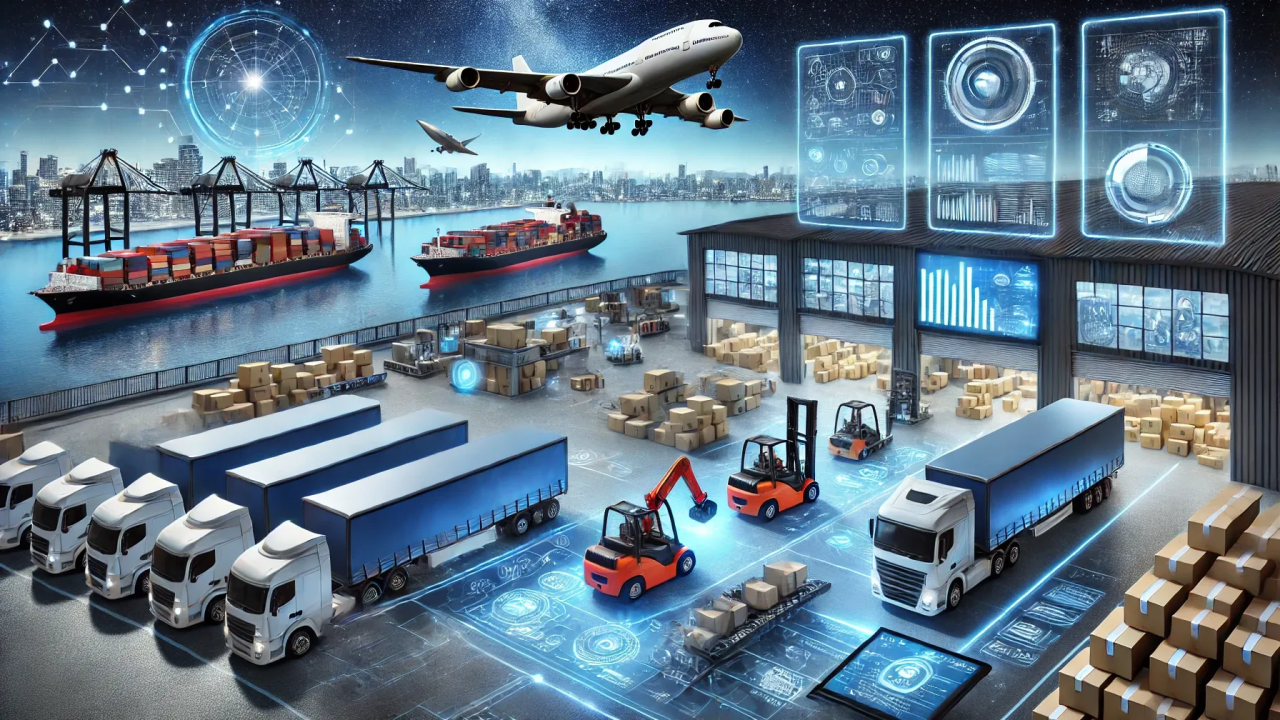
Together, these elements create a live digital representation of every shipment moving through the supply chain.
How Packages Are Tracked in Real Time
Real-time tracking depends on multiple technologies working simultaneously.
GPS Tracking
Vehicles carrying shipments transmit precise geographic coordinates at regular intervals.
This allows logistics managers to monitor:
- Vehicle routes
- Speed and direction
- Unexpected stops
- Arrival predictions
Barcode and RFID Scanning
While barcodes remain common, RFID tags enable automatic scanning without line-of-sight contact.
Benefits include:
- Faster processing
- Reduced human error
- Continuous identification within facilities
IoT Sensors
Advanced shipments may include sensors measuring:
- Temperature
- Humidity
- Shock or vibration
- Light exposure
These sensors are especially important for pharmaceuticals, electronics, and food shipments.
The Role of Cloud Computing in Modern Logistics
Real-time tracking generates enormous amounts of data.
Cloud platforms allow logistics networks to:
- Store shipment data centrally
- Process updates instantly
- Share information globally
- Integrate multiple carriers
Instead of isolated tracking systems, companies now operate interconnected logistics ecosystems.
This connectivity ensures every stakeholder—from warehouse managers to customers—accesses consistent information.
Predictive Logistics: Preventing Problems Before They Happen
One of the most powerful aspects of real-time tracking is prediction.
Modern systems analyze patterns such as:
- Traffic conditions
- Weather disruptions
- Historical delivery times
- Driver behavior
- Facility congestion
Algorithms can forecast delays before they occur, allowing companies to reroute shipments proactively.
Rather than reacting to issues, logistics providers prevent them.
Why “Lost Packages” Are Becoming Rare
Packages rarely disappear physically. Historically, they became “lost” because systems lost track of them.
Real-time tracking solves this by maintaining continuous digital visibility.
If a shipment deviates from its planned route, alerts trigger automatically.
Examples include:
- Package scanned at incorrect facility
- Vehicle stops unexpectedly
- Shipment fails to transfer on schedule
Operations teams receive notifications immediately, enabling rapid intervention.
The Customer Experience Revolution
Real-time tracking has reshaped customer expectations.
Modern delivery experiences include:
- Live map tracking
- Delivery countdown timers
- Automated notifications
- Photo confirmation of delivery
These features reduce anxiety and improve trust.
Customers feel informed rather than uncertain.
Benefits for E-Commerce Businesses
Online retailers benefit significantly from real-time visibility.
Reduced Customer Support Requests
Accurate tracking reduces “Where is my order?” inquiries, freeing support teams for higher-value tasks.
Improved Inventory Planning
Retailers can synchronize stock levels with incoming shipments.
Faster Problem Resolution
Issues are identified early, minimizing refunds and replacements.
Stronger Brand Reputation
Reliable delivery experiences build long-term customer loyalty.
Warehouse Integration and Automation
Modern fulfillment centers integrate tracking directly into operations.
Automation technologies include:
- Conveyor scanning systems
- Automated sorting robots
- Smart labeling systems
- Vision-based inspection tools
Each movement inside the warehouse updates shipment status automatically.
Human intervention becomes minimal, reducing errors dramatically.
Last-Mile Delivery Transparency
The final stage of delivery has historically been the most unpredictable.
Real-time systems now track:
- Driver routes
- Delivery sequences
- Estimated arrival windows
- Proof of delivery events
Customers can prepare for deliveries instead of waiting all day.
For carriers, optimized routing reduces fuel costs and improves efficiency.
Security Improvements Through Continuous Tracking
Real-time visibility also enhances shipment security.
Tracking systems can detect:
- Unauthorized route deviations
- Unexpected package openings
- Temperature tampering
- Extended idle times
Security alerts help prevent theft and fraud before losses occur.
Global Supply Chains and Cross-Border Tracking
International shipping once involved fragmented tracking systems across different carriers and customs agencies.
Modern platforms integrate global data sources, allowing packages to remain visible even as they cross borders.
Benefits include:
- Faster customs processing
- Accurate delivery forecasting
- Reduced documentation errors
Global commerce becomes smoother and more predictable.
Sustainability Benefits of Real-Time Logistics
Tracking technology also contributes to environmental efficiency.
Optimized routing reduces:
- Fuel consumption
- Idle vehicle time
- Empty return trips
Data-driven logistics helps companies minimize waste while maintaining service quality.
The Role of Artificial Intelligence in Shipment Visibility
Artificial intelligence enhances tracking systems by identifying patterns humans might miss.
AI systems can:
- Predict delivery delays hours in advance
- Detect anomalies in shipment behavior
- Optimize warehouse workflows
- Recommend alternative shipping paths
Over time, logistics networks become smarter and more efficient.
Challenges Behind the Technology
Despite its advantages, real-time tracking requires overcoming several challenges:
- Infrastructure investment
- Data security concerns
- Device battery management
- Network coverage limitations
- System integration complexity
Logistics companies must balance innovation with reliability.
Privacy and Data Considerations
Continuous tracking raises important privacy questions.
Companies must manage:
- Location data protection
- Secure communication channels
- Responsible data storage practices
Trust depends not only on visibility but also on responsible data handling.
Small Businesses Enter the Real-Time Era
Real-time tracking was once available only to major carriers.
Today, cloud-based platforms allow smaller retailers and logistics startups to access similar capabilities.
Affordable tracking tools now enable:
- Shipment monitoring dashboards
- Automated customer notifications
- Integrated order management
Technology democratization levels the competitive playing field.
The Future: Autonomous and Hyper-Connected Logistics
The next generation of tracking systems will extend beyond packages.
Emerging developments include:
- Autonomous delivery vehicles
- Drone-based shipping
- Smart city logistics networks
- Self-reporting containers
Packages may soon communicate their own status without human involvement.
Why Transparency Has Become Non-Negotiable
In modern commerce, visibility equals trust.
Customers expect clarity because technology makes it possible.
Businesses that fail to provide shipment transparency risk losing credibility in an increasingly competitive marketplace.
Real-time tracking is no longer an upgrade—it is infrastructure.
Building a Logistics Strategy Around Visibility
Companies adopting modern tracking systems focus on:
- End-to-end shipment monitoring
- Integrated data platforms
- Customer communication automation
- Continuous performance analysis
Visibility becomes the foundation of operational decision-making.
The Psychological Impact of Knowing Where Your Package Is
Interestingly, tracking affects customer psychology as much as logistics efficiency.
Studies consistently show that uncertainty creates more dissatisfaction than delays themselves.
When customers can see progress, patience increases.
Transparency reduces perceived waiting time.
From Reactive Shipping to Intelligent Movement
Traditional logistics responded to problems after they occurred.
Modern logistics anticipates movement dynamically.
Packages are no longer passive objects traveling blindly—they are data-connected assets participating in a living network.
This transformation marks one of the most significant technological shifts in global trade.
Final Thoughts: The End of the “Missing Package” Era
The phrase “your package is lost” is slowly disappearing from modern logistics vocabulary.
Through real-time tracking systems, continuous connectivity, and predictive analytics, shipments remain visible from origin to doorstep.
What was once an opaque process has become transparent, measurable, and increasingly intelligent.
For businesses, this means improved efficiency and stronger customer relationships. For consumers, it means confidence that purchases will arrive as expected.
And for the logistics industry as a whole, it signals a future where uncertainty is replaced by visibility—ensuring that packages no longer disappear into the unknown, but move through a system designed to keep every shipment accounted for, every step of the way.