

Entering the world of international trade can feel overwhelming at first. New importers, exporters, and sourcing professionals quickly discover that global shipping involves far more than simply sending goods from one country to another. Costs, risks, customs procedures, taxes, and responsibilities must all be clearly defined before products even leave the warehouse.
This is where trade terms become critical.
Among the many international shipping terms used in global commerce, DDP and DDU are two of the most commonly misunderstood — especially for beginners. Misinterpreting these terms can lead to unexpected fees, delayed shipments, unhappy customers, or even financial loss.
If you are new to importing or exporting, understanding the difference between DDP and DDU is not optional — it is essential.
This guide explains what DDP and DDU mean, how they work in real transactions, who pays for what, when to use each term, and how to avoid costly mistakes.
Why Trade Terms Exist in International Commerce
When goods move across borders, multiple parties become involved:
- Sellers
- Buyers
- Freight forwarders
- Customs authorities
- Carriers
- Insurance providers
Without clear rules, disputes would be inevitable.
Trade terms — formally known as Incoterms (International Commercial Terms) — define responsibilities between buyer and seller, including:
- Transportation costs
- Customs clearance
- Import duties
- Risk transfer
- Delivery location
These standardized rules reduce confusion and help businesses from different countries work together efficiently.
What Are Incoterms?
Incoterms are globally recognized trade rules published by the International Chamber of Commerce (ICC). They clarify who handles each step of shipping logistics.
Some commonly used Incoterms include:
- EXW (Ex Works)
- FOB (Free On Board)
- CIF (Cost, Insurance, and Freight)
- DAP (Delivered at Place)
- DDP (Delivered Duty Paid)
DDU was widely used in earlier Incoterms versions and is still commonly referenced in everyday trade conversations, even though newer terminology has replaced it officially.
Understanding DDP and DDU helps beginners grasp how responsibility shifts between seller and buyer.
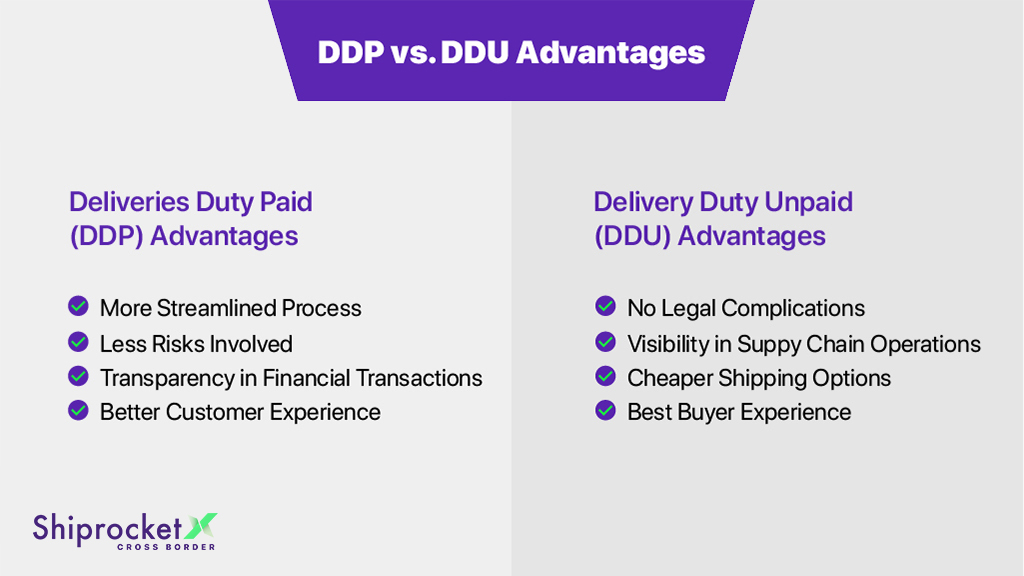
What Is DDP (Delivered Duty Paid)?
DDP represents one of the most seller-responsible shipping arrangements in international trade.
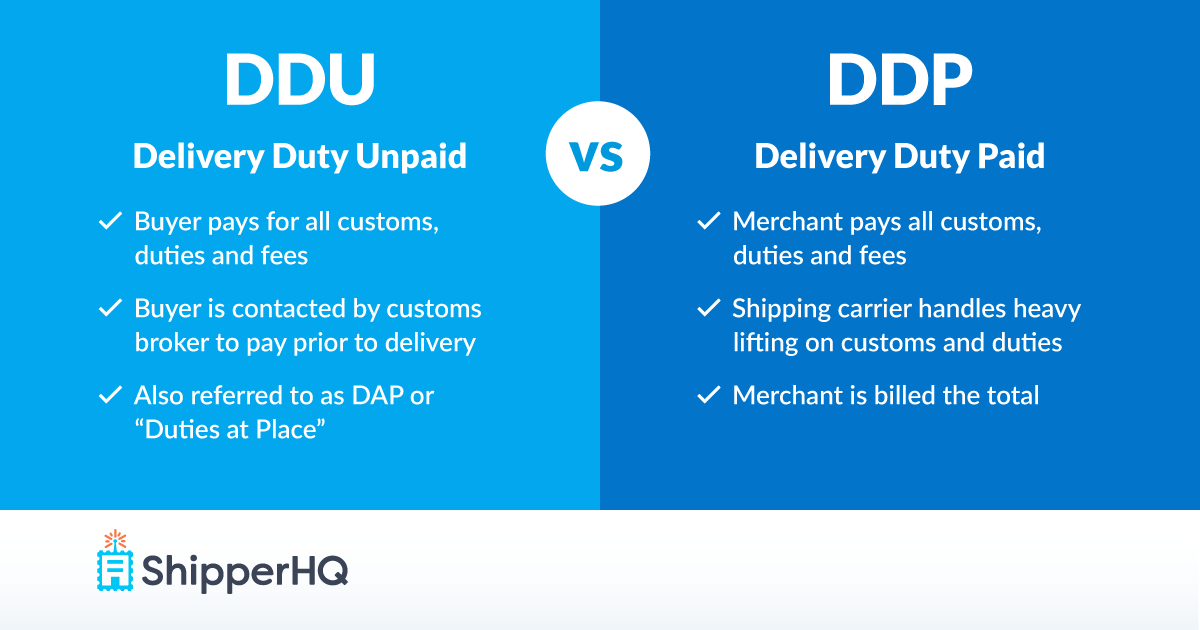
Under DDP, the seller takes nearly full responsibility for delivering goods to the buyer’s specified destination, including customs clearance and payment of import duties and taxes.
In Simple Terms
DDP means:
The seller handles everything until the goods arrive ready for delivery at the buyer’s location.
Seller Responsibilities Under DDP
The seller must:
- Package goods properly
- Arrange export documentation
- Pay export customs fees
- Book international shipping
- Cover freight costs
- Handle import customs clearance
- Pay import duties and taxes
- Deliver goods to final destination
The buyer simply receives the shipment.
Buyer Responsibilities Under DDP
The buyer’s role is minimal:
- Provide accurate delivery information
- Receive goods
- Unload cargo (in most cases)
This simplicity makes DDP attractive for inexperienced importers.
What Is DDU (Delivered Duty Unpaid)?
DDU is an older trade term still widely used informally.
Under DDU, the seller delivers goods to the destination country but does NOT pay import duties or taxes.
Those costs become the buyer’s responsibility.
In Simple Terms
DDU means:
The seller ships the goods to your country, but you must handle customs and pay import charges.
Seller Responsibilities Under DDU
The seller:
- Arranges shipping
- Pays transportation costs
- Delivers goods to destination country
- Provides shipping documents
But stops responsibility before import clearance.
Buyer Responsibilities Under DDU
The buyer must:
- Handle import customs clearance
- Pay duties and taxes
- Manage customs paperwork
- Coordinate final release
Failure to act quickly can result in storage fees.
DDU vs Modern Incoterms
In current Incoterms rules, DDU has largely been replaced by DAP (Delivered at Place).
However, many suppliers and logistics companies still use “DDU” in communication because it clearly expresses the idea that duties are unpaid.
For beginners, understanding DDU remains extremely useful.
Key Differences Between DDP and DDU
| Feature | DDP | DDU |
|---|---|---|
| Import duties paid by | Seller | Buyer |
| Customs clearance | Seller | Buyer |
| Buyer workload | Very low | Moderate |
| Cost transparency | High upfront | Variable |
| Risk of surprise fees | Low | Higher |
| Suitable for beginners | Yes | Requires experience |
Real-World Example: Importing Furniture
Imagine a U.S. buyer purchasing furniture from a manufacturer overseas.
Under DDP
The seller quotes one total price including:
- Shipping
- Customs clearance
- Import duties
- Delivery to warehouse
The buyer receives goods without dealing with customs.
Under DDU
The seller ships furniture to a U.S. port.
Then the buyer must:
- Hire a customs broker
- Pay import duties
- Arrange final delivery
Unexpected charges may appear.
Why Beginners Often Prefer DDP
New importers usually lack experience with customs procedures.
DDP simplifies the process because:
- No customs paperwork required from buyer
- Predictable landed cost
- Faster delivery release
- Less administrative stress
It functions almost like domestic shipping.
Why Suppliers Sometimes Avoid DDP
From the seller’s perspective, DDP carries higher risk.
Challenges include:
- Understanding foreign tax systems
- Managing import regulations
- Currency fluctuations
- Liability for delays
Some sellers lack legal ability to act as importer in certain countries.
Hidden Costs in DDP Shipments
While convenient, DDP pricing may include:
- Service markups
- Broker fees
- Risk premiums
The total price may appear higher compared to other terms, though it reduces uncertainty.
Risks of DDU for New Importers
DDU can surprise beginners with unexpected expenses.
Common issues:
- Customs duty invoices
- Port storage charges
- Documentation delays
- Broker service fees
If customs clearance is delayed, daily storage costs accumulate quickly.
Customs Clearance Explained
Customs clearance verifies that imported goods comply with regulations.
It involves:
- Product classification codes
- Duty calculation
- Tax assessment
- Safety compliance checks
Under DDP, the seller handles this process.
Under DDU, the buyer becomes responsible.
Import Duties and Taxes: Why They Matter
Duties vary depending on:
- Product category
- Country of origin
- Trade agreements
- Declared value
Misunderstanding duty obligations is one of the most common beginner mistakes.
DDP eliminates this uncertainty by including duties upfront.
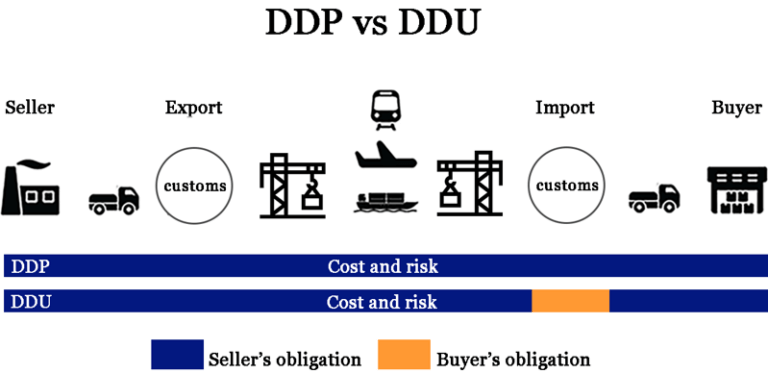
Logistics Workflow Comparison
DDP Workflow
- Seller prepares goods.
- Seller arranges export.
- Seller manages shipping.
- Seller clears import customs.
- Goods delivered directly.
DDU Workflow
- Seller ships goods.
- Shipment arrives at destination.
- Buyer notified by customs.
- Buyer pays duties.
- Buyer arranges release.
More steps mean more coordination.
When to Choose DDP
DDP works best when:
- Buyer is new to importing.
- Shipment value is moderate.
- Destination regulations are complex.
- Buyer lacks customs broker contacts.
- Predictable pricing is preferred.
When to Choose DDU
DDU may be better when:
- Buyer has import experience.
- Buyer wants control over customs costs.
- Large-volume importing reduces broker expenses.
- Buyer has established logistics partners.
Experienced importers often reduce costs using DDU.
E-Commerce and DDP
Cross-border e-commerce increasingly relies on DDP shipping because customers expect simple delivery without paying taxes at the door.
Online shoppers dislike surprise fees, making DDP ideal for direct-to-consumer shipments.
Common Beginner Mistakes
Assuming Shipping Includes Duties
Freight cost alone does not equal total landed cost.
Not Confirming Trade Terms in Writing
Always specify Incoterms clearly in contracts and invoices.
Ignoring Local Import Rules
Certain products require licenses regardless of shipping term.
Choosing Cheapest Quote Without Understanding Responsibility
Lower shipping price may shift hidden obligations to the buyer.
How to Confirm Shipping Terms Correctly
Always include:
- Incoterm (DDP or DDU)
- Named destination
- Incoterms version year
Example:
“DDP Los Angeles Warehouse, Incoterms 2020”
Clear wording prevents disputes.
Role of Freight Forwarders
Freight forwarders coordinate transportation and documentation.
Under DDP, they often act on behalf of the seller.
Under DDU, buyers may need to appoint their own forwarder or customs broker.
Choosing experienced logistics partners reduces delays.
Cost Transparency: Landed Cost Concept
Landed cost includes:
- Product price
- Freight
- Insurance
- Duties
- Taxes
- Handling fees
DDP typically provides a near-final landed cost upfront.
DDU requires calculation after arrival.
Legal Responsibility and Risk Transfer
Risk transfer refers to the point where responsibility for goods shifts from seller to buyer.
Even under DDP, risk may transfer before final delivery depending on contract details.
Always clarify insurance coverage separately.
Negotiation Tips for Beginners
- Ask suppliers for both DDP and DDU quotes.
- Compare total landed cost, not shipping price.
- Confirm who acts as importer of record.
- Request duty breakdown if possible.
Transparency builds trust.
Future Trends in Global Shipping Terms
International trade continues evolving with:
- Digital customs systems
- Automated duty calculation
- Cross-border fulfillment centers
- Simplified last-mile delivery
DDP usage is increasing as businesses prioritize convenience and predictable pricing.
Quick Decision Checklist
Choose DDP if you want:
- Simple importing
- Minimal paperwork
- Predictable total cost
- Beginner-friendly logistics
Choose DDU if you want:
- Cost control
- Customs flexibility
- Experienced logistics management
Final Thoughts
Understanding DDP and DDU is one of the most important early lessons for anyone entering international trade. These terms determine not only who pays for shipping, but who carries responsibility, handles customs procedures, and absorbs risk during cross-border transactions.
DDP offers simplicity and convenience, making it ideal for beginners and e-commerce shipments. DDU provides flexibility and potential cost savings but requires greater knowledge and active involvement from the buyer.
The key is not choosing the “better” term — but choosing the one that matches your experience level, operational capacity, and business goals.
Once you clearly understand how responsibilities shift under each term, international trade becomes far less intimidating and far more predictable.
Mastering these foundational concepts allows new traders to avoid costly surprises and build smoother global supply chains from the very beginning.