Custom Parcel Sorting Systems. Engineered for Real Operations.

E-commerce fulfillment combines high order volume, many SKUs and tight carrier cutoffs. TrueLiSort designs sorting and consolidation systems that connect picking, sortation, packing and dispatch into one flow, so orders move accurately and on time.
The operational challenge is not any single machine but the handoffs between them — a missing scan, a misfit or an unclear instruction can stop the next operation and cascade into missed cutoffs.
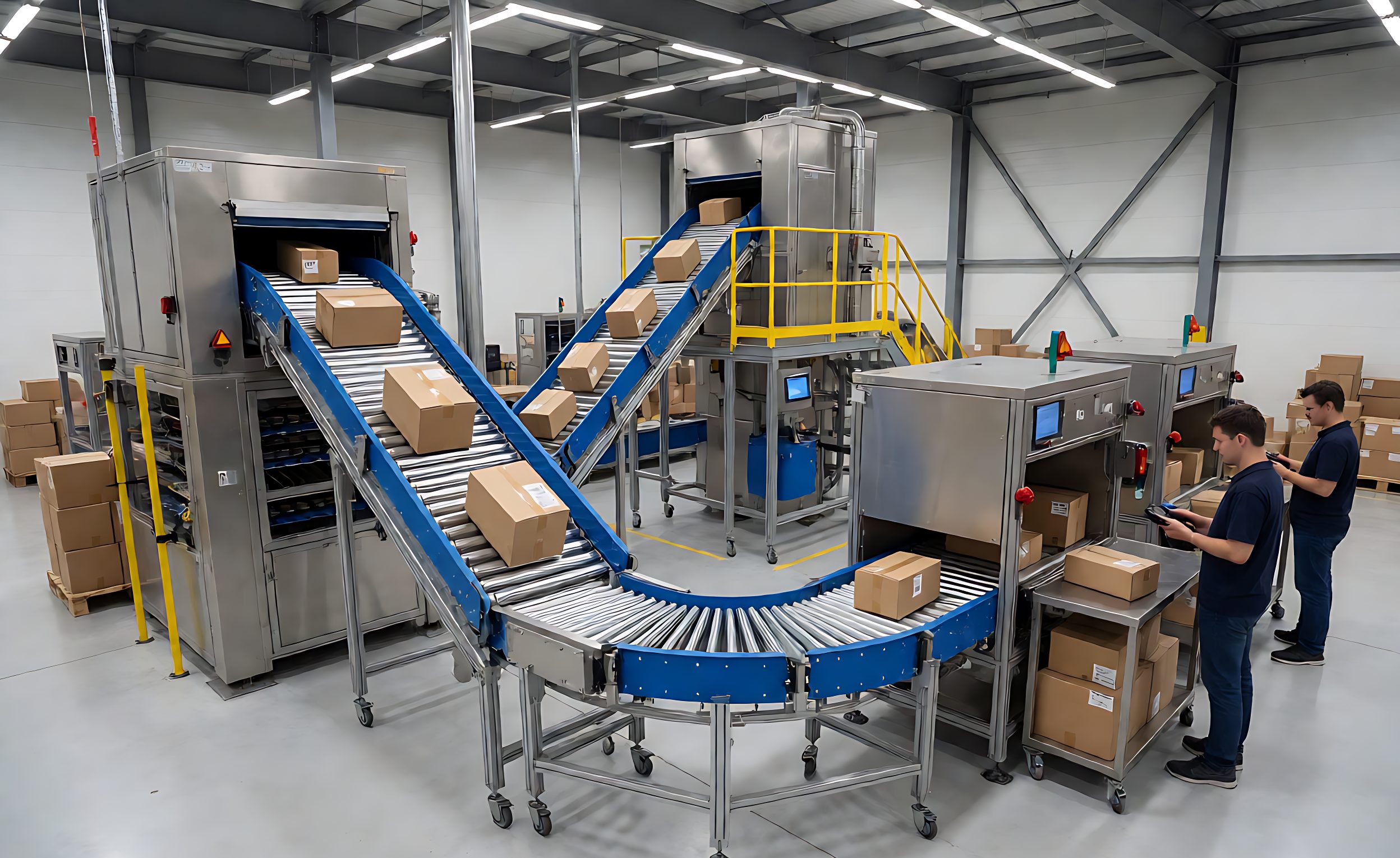
Batch-picked orders can be consolidated at a put wall, while higher-volume parcel routing uses a cross belt or narrow belt sorter. The choice depends on order lines, units per order and throughput. Many facilities use both: a sorter for rate and a wall for consolidation before packing. Our sorting solutions compare the technologies on the same item mix and peak-hour rate.
Ideal for batch-picked multi-SKU orders requiring guided item-to-order consolidation and verification before packing.
High-throughput carrier, service-level and lane routing for packed cartons, polybags, flats and single-line shipments.
Combines pre-pack order consolidation at the wall with high-speed carrier and dock sortation downstream of packing.
| Order & Workflow Profile | Recommended Technology | Primary Operational Focus |
|---|---|---|
| High SKU count, multi-line orders (2+ units/order) | Put Wall (Light-Directed Consolidation) | Batch-pick efficiency, order completeness and pack-station accuracy |
| High-rate outbound shipping, polybags & mixed cartons | Cross Belt Sorter | Sustained peak-hour parcel rate and multi-carrier dock sortation |
| Tight warehouse floor footprint, high chute count | Narrow Belt Sorter | Compact destination density and flexible zone/route sorting |
Draw the workflow as operators experience it, from batch release through pick, scan, consolidation, pack and handoff to the carrier. Record product identity, system state and owner at each step.
Include the actual peaks and difficult cases — split shipments, incomplete orders, a scan that fails — rather than only an average or ideal sample. A process map exposes where a missing decision can stop the line, and it lets a second supplier or a new team member understand the same configuration.
Induction is often the real bottleneck, not the sorter. Decide how much induction is automated and how much is manual against the parcel mix and rate, and define the measurement window before comparing options.
Parcel spacing and orientation must be set before scanning, and the exception route for a no-read must be explicit. We validate the installed line with representative parcels and actual operator workflows.
Choose a small set of fields that can be captured accurately at the work point: stable SKU or order identifiers, timestamps, quantity and exception reason. Agree the source of truth and who may edit each field.
A written check before release, plus a clear hold-and-escalation step when it fails, keeps an exception from becoming a delayed order. The responsible owner should be able to find the evidence without relying on memory.

Modern e-commerce fulfillment lines routinely process rigid cartons alongside soft polybags, padded mailers and thin envelopes. Carrier pitch, belt friction and chute geometry must accommodate the full size and rigidity range without jamming.
Select measures that match the decision: completion rate, exception count, response time, inventory variance or a successful test result. Define numerator, denominator, time period and exclusions before comparison, and report the baseline and conditions under which the number was collected.
Facility order profile, labor plan and customer cutoffs can change the documents, labels and wording that must be reviewed, so name the responsible local party and use current primary guidance.
E-commerce demand is seasonal. A modular sortation layout can reserve footprint and interfaces for additional destinations or induction points, letting capacity be phased in rather than overbuilt on day one.
After launch, a maintenance plan based on actual failure modes keeps availability predictable through peak promotional periods and Q4 volume surges.
E-commerce lines most often fail at handoffs. Each common failure mode requires a documented engineering and process countermeasure before launch:
Countermeasure: A written check and automated slot-configuration verification before batch release.
Countermeasure: Explicit spacing/orientation standards, scan rules with a single source of truth and a dedicated no-read route.
Countermeasure: Line-level reconciliation records and a clear hold state preventing partial orders from reaching packing prematurely.
Countermeasure: Automated replenishment triggers tied directly to live slot status and active wave demand.
Build a total-cost model covering energy, staffing, spare parts, downtime and software fees. Reserve footprint and interfaces for peak-season expansion so capacity can be phased in.
After launch, compare results against baseline and separate system gains from product-mix or staffing changes.
Sharing a concise baseline profile helps confirm whether a put wall, cross belt, narrow belt or hybrid line fits your fulfillment operation:
Share a representative order sample and peak profile. Our concept design process will confirm the configuration.
Use a put wall for multi-line batch-picked orders and a sorter for high-rate routing. Many fulfillment centers use both: a put wall for pre-pack order consolidation and a sorter for outbound carrier and dock sortation.
A high-speed sorter cannot run at capacity if parcels arrive unevenly, double-stacked or with unreadable labels. Balancing automated vs. manual induction around actual parcel mix, spacing and label orientation ensures sustained throughput across the measurement window.
Yes, provided carrier pitch, induction singulation, belt surface and chute angles are matched to both lightweight flexible polybags and rigid cartons. Cross belt and narrow belt sorters are commonly selected for mixed-profile e-commerce parcel flows.
Each exception requires an explicit hold condition, a reason code and a dedicated physical route before launch. Reconciliation checks stop incomplete orders from closing early, while no-read items divert to a defined exception station with clear ownership.
Use a modular layout that reserves floor footprint, electrical capacity and WCS interfaces for additional induction points or destination chutes. This lets you phase in capacity as seasonal demand grows rather than carrying excess unused hardware year-round.