
Cross-belt sorters have become one of the most important automation technologies in modern logistics, e-commerce fulfillment, and parcel distribution networks. Their ability to handle high throughput, mixed SKU flows, and complex routing requirements makes them indispensable in facilities aiming for fast, accurate, and scalable operations.
However, many organizations still treat cross-belt systems as static equipment—something that is installed, calibrated, and then simply maintained when something breaks. This outdated mindset leads to higher downtime, inefficient performance, and shorter equipment lifespan.
In reality, a cross-belt sorter is not a “machine you install.” It is a living system that evolves across its entire lifecycle—from design and commissioning to optimization, predictive maintenance, and eventual modernization or retrofit.
Understanding this lifecycle is essential for maximizing return on investment, ensuring operational stability, and continuously improving throughput performance over years or even decades of service.
This article provides a full lifecycle perspective on cross-belt sorter systems, breaking down how they are installed, operated, maintained, optimized, and eventually upgraded.
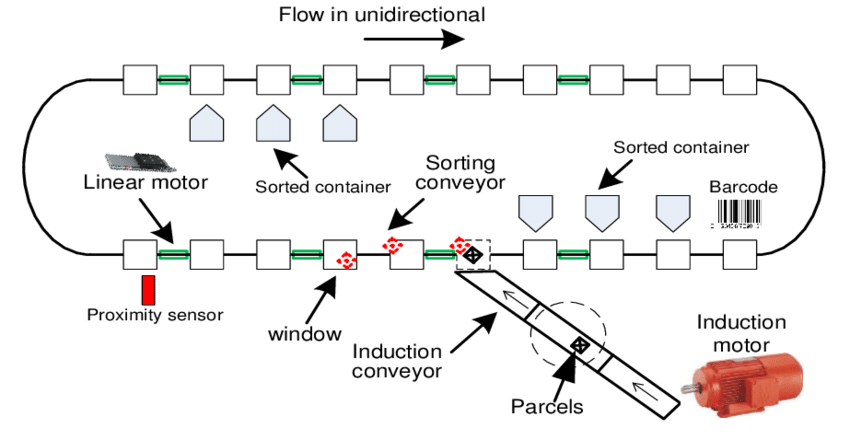
Phase 1: System Planning and Pre-Installation Engineering
Before any physical installation begins, the most important work happens at the engineering and planning stage. This phase determines whether the system will operate efficiently for the next 10–20 years or struggle with bottlenecks from day one.
Facility Flow Analysis
Engineers begin by analyzing:
- Inbound receiving volume
- Order profiles (B2B, B2C, omnichannel mix)
- SKU diversity
- Peak season variability
- Shipping cutoff constraints
This data is used to design the sorter layout that supports real operational demand rather than theoretical capacity.
Layout Design and Simulation
Modern cross-belt systems are rarely designed manually. Instead, digital simulation tools are used to model:
- Carrier flow rates
- Induction point efficiency
- Chute allocation balance
- Sorting density
- Congestion risk points
These simulations help identify design weaknesses before construction begins.
Capacity Planning
A critical decision is determining system capacity:
- Items per hour throughput target
- Number of induction lines
- Number of discharge destinations
- Expansion buffer for future growth
Underestimating capacity leads to early system saturation, while overestimating increases unnecessary capital cost.
Phase 2: Installation and Mechanical Integration
Once planning is complete, physical installation begins. This phase involves mechanical assembly, electrical integration, and system alignment.
Structural Assembly
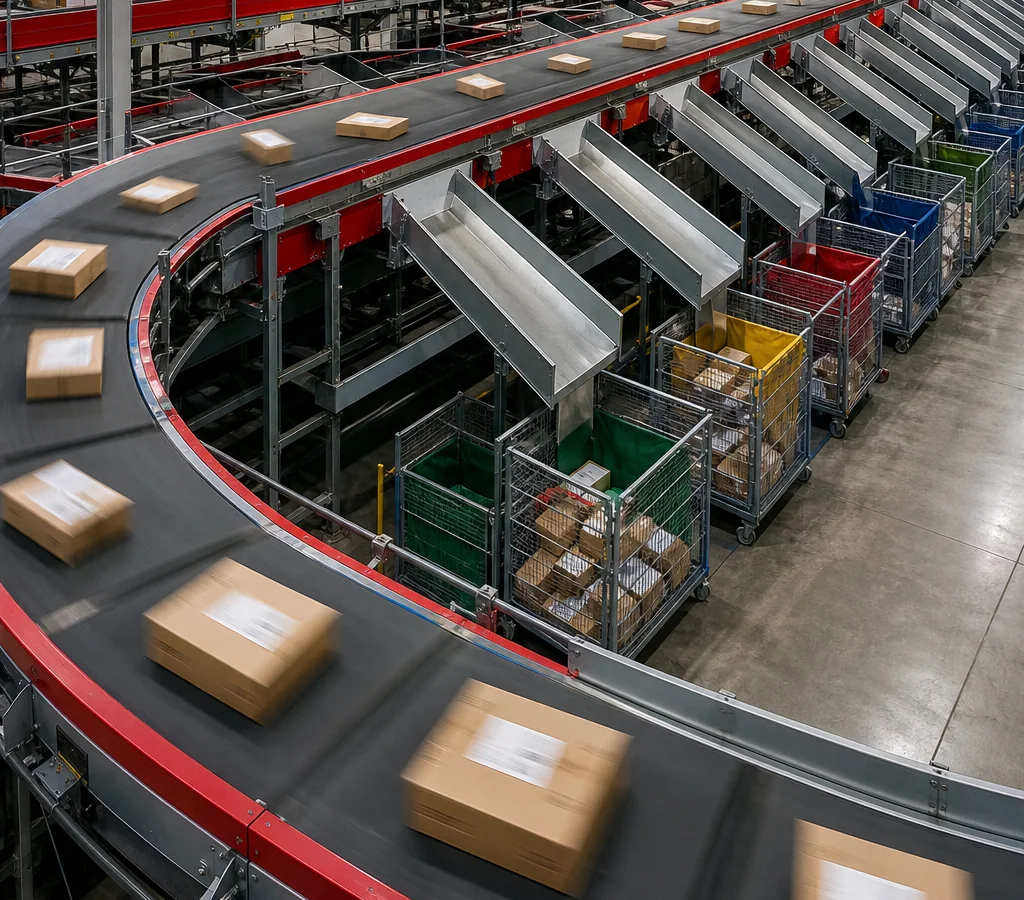
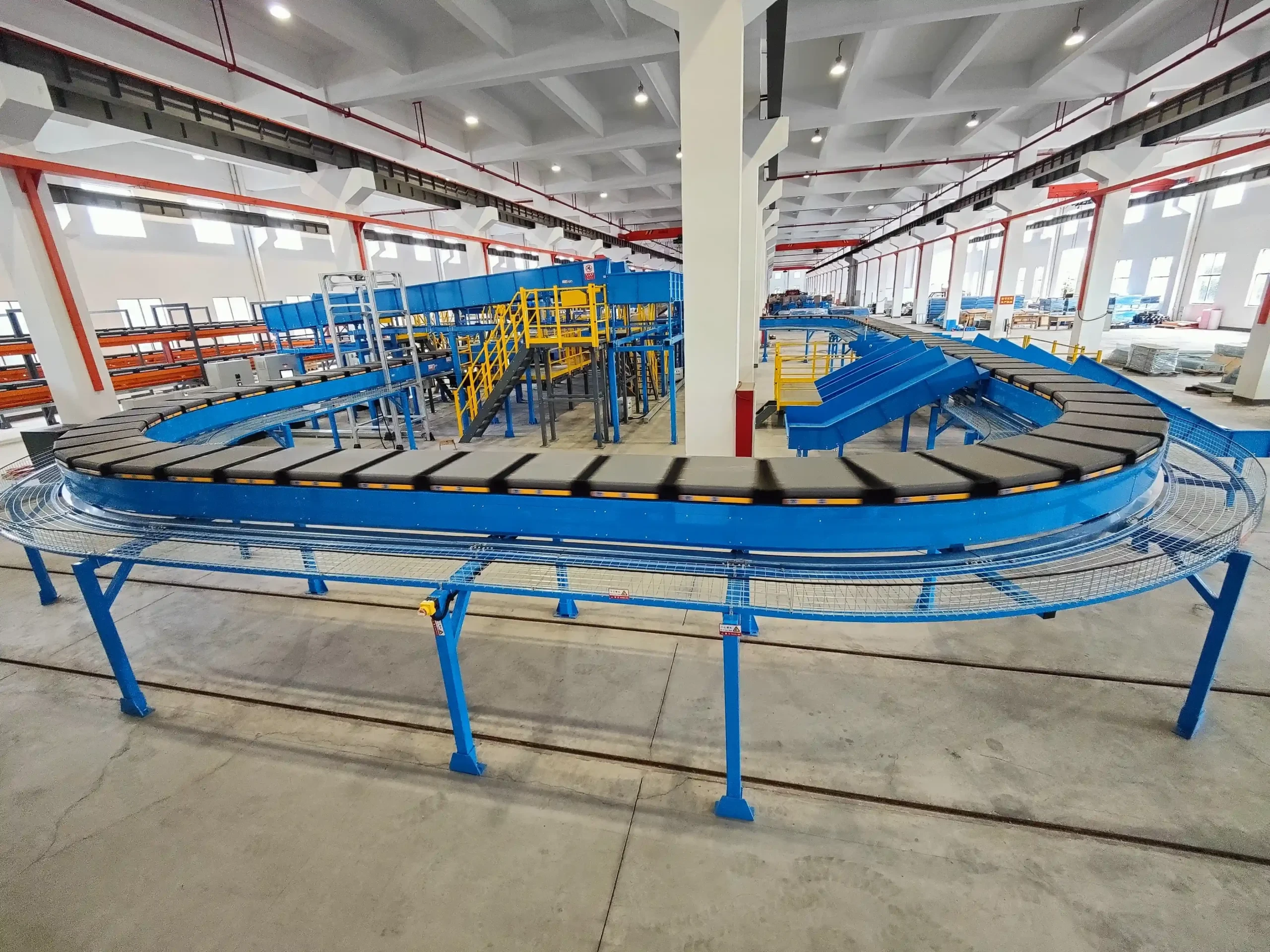
Cross-belt sorters are typically built as modular loops composed of:
- Carrier tracks
- Drive systems
- Support frames
- Induction modules
- Discharge chutes
Precision alignment is critical. Even small deviations can affect carrier stability and long-term wear.
Electrical and Control System Wiring
The system’s intelligence depends on a complex network of:
- Sensors
- PLC controllers
- Motor drives
- Barcode/RFID scanners
- Safety interlocks
At this stage, integration focuses on ensuring stable communication between physical equipment and control logic systems.
Software Configuration
Warehouse Control Systems (WCS) and Warehouse Management Systems (WMS) are configured to:
- Assign routing logic
- Define destination mapping
- Manage carrier scheduling
- Balance chute utilization
Proper configuration ensures that hardware and software behave as a unified system.
Phase 3: Commissioning and System Calibration
After installation, the system must be tested and calibrated before entering full production.
Empty Run Testing
Initial testing includes:
- Carrier movement validation
- Motor synchronization checks
- Emergency stop functionality testing
- Sensor accuracy verification
This phase ensures mechanical integrity without product load.
Load Testing with Controlled Volume
Once basic functionality is confirmed, controlled product flow is introduced to test:
- Sorting accuracy
- Throughput stability
- Chute balancing
- Induction efficiency
Adjustments are made based on observed performance.
System Fine-Tuning
Commissioning engineers adjust:
- Carrier speed curves
- Discharge timing precision
- Sensor sensitivity thresholds
- Routing logic efficiency
This ensures the system performs optimally under real-world conditions.
Phase 4: Early Operational Phase (Stabilization Period)
The first 3–6 months of operation are critical. During this phase, the system transitions from “installed equipment” to a fully operational production asset.
Common Early-Stage Adjustments
- Minor sensor recalibration
- Software logic refinement
- Chute balancing optimization
- Induction rate adjustments
These changes are normal and expected.
Operator Learning Curve
Warehouse staff must learn:
- Induction timing discipline
- Exception handling procedures
- System monitoring dashboards
- Basic troubleshooting workflows
Human adaptation is just as important as machine performance.
Data Collection Begins
From the first day of operation, systems begin generating:
- Throughput metrics
- Error rates
- Carrier utilization data
- Bottleneck identification patterns
This data becomes the foundation for long-term optimization.
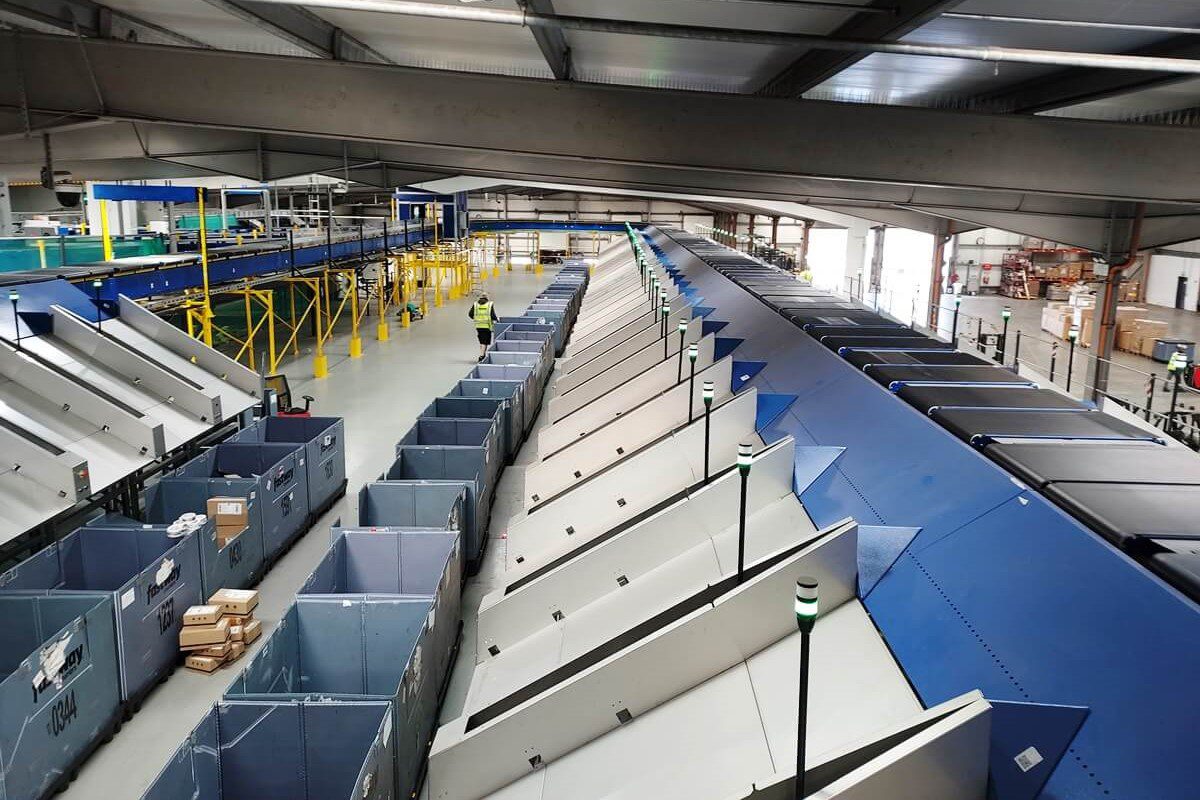
Phase 5: Mature Operation Phase (Stability and Efficiency)
Once stabilized, the system enters its most productive phase.
High-Throughput Consistency
At this stage, cross-belt systems achieve:
- Stable hourly throughput
- Predictable performance curves
- Low error rates
- Optimized chute distribution
The system operates as a highly synchronized logistics engine.
Maintenance Becomes Predictive Instead of Reactive
Instead of waiting for failures, mature systems rely on:
- Sensor-based condition monitoring
- Motor vibration analysis
- Temperature tracking
- Wear pattern forecasting
This shift significantly reduces downtime risk.
Continuous Optimization Loops
Operations teams continuously refine:
- Routing algorithms
- Carrier allocation efficiency
- Peak-hour flow distribution
- Staffing alignment with system output
Optimization becomes an ongoing process, not a one-time effort.
Phase 6: Preventive Maintenance Strategy
Preventive maintenance is the backbone of long-term system reliability.
Mechanical Maintenance
Key focus areas include:
- Carrier wheel inspection
- Belt tension adjustments
- Drive system lubrication
- Structural alignment checks
Electrical Maintenance
Electrical systems require:
- Sensor recalibration
- Cable integrity testing
- Control cabinet inspection
- Power distribution stability checks
Software Maintenance
Digital systems also require:
- Firmware updates
- Routing logic improvements
- Error-handling optimization
- System security updates
Phase 7: Wear, Aging, and Performance Drift
Over time, all mechanical systems experience natural degradation.
Mechanical Wear Patterns
Common issues include:
- Carrier friction increase
- Belt elasticity reduction
- Motor efficiency decline
Sensor Drift
Sensors may gradually lose calibration accuracy due to:
- Dust accumulation
- Temperature fluctuations
- Component aging
Throughput Degradation Signals
Early warning signs include:
- Slight reduction in sorting speed
- Increased micro-delays at induction points
- Higher exception handling rates
Phase 8: Mid-Life Optimization and Retrofit Upgrades
Instead of replacing systems, many operators choose to upgrade them.
Control System Upgrades
Older PLC systems may be replaced with:
- Faster processing controllers
- AI-enhanced routing engines
- Cloud-based monitoring platforms
Mechanical Enhancements
Upgrades may include:
- New carrier designs
- Improved belt materials
- Enhanced motor efficiency units
Sensor Modernization
Legacy sensors are replaced with:
- High-resolution barcode scanners
- Machine vision systems
- Multi-point detection arrays
Phase 9: Digital Transformation of Cross-Belt Systems
Modern cross-belt systems are no longer isolated machines—they are becoming digital ecosystems.
Real-Time Monitoring Dashboards
Operators can now track:
- Live throughput
- System health indicators
- Bottleneck zones
- Energy consumption patterns
AI-Based Predictive Maintenance
Machine learning models analyze historical data to:
- Predict failure probability
- Recommend maintenance timing
- Optimize spare part usage
Digital Twin Technology
Some facilities use virtual replicas of their sorter systems to:
- Simulate upgrades
- Test routing changes
- Forecast performance impact
Phase 10: Peak Efficiency Optimization Phase
In mature systems with advanced analytics, performance reaches its highest level.
Self-Balancing Load Distribution
Systems automatically:
- Redirect items between chutes
- Adjust carrier speeds
- Balance induction rates
Adaptive Throughput Scaling
During peak demand:
- System increases processing speed
- Prioritizes high-value shipments
- Optimizes carrier allocation dynamically
Phase 11: End-of-Life Management and Replacement Strategy
No system lasts forever. Eventually, operators must decide whether to:
- Extend lifecycle
- Retrofit heavily
- Fully replace system
Indicators of End-of-Life Stage
- Frequent mechanical failures
- Excessive maintenance cost
- Limited software compatibility
- Reduced throughput efficiency
Replacement vs Retrofit Decision
Companies evaluate:
- ROI of new system vs upgrade
- Downtime tolerance
- Future scalability requirements
- Technology gap with modern systems
Phase 12: Sustainability and Lifecycle Efficiency
Modern lifecycle management also considers environmental impact.
Energy Efficiency Improvements
Newer systems reduce:
- Motor power consumption
- Idle energy usage
- Mechanical friction losses
Waste Reduction
Better accuracy reduces:
- Returns
- Mis-sorts
- Packaging waste
Equipment Longevity
Lifecycle optimization extends usable system life by:
- 5–10 additional years in many cases
- Reducing premature replacements
The Evolution Mindset: Why Lifecycle Thinking Matters
Cross-belt sorter systems are not static installations—they are evolving platforms. Treating them as lifecycle systems allows organizations to:
- Maximize throughput over decades
- Reduce total cost of ownership
- Improve system reliability
- Adapt to changing logistics demands
The most successful operations are not those with the newest equipment, but those that continuously evolve their systems through structured lifecycle management.
Final Thoughts: From Installation to Intelligence
The journey of a cross-belt sorter does not end at installation—it begins there.
From engineering design to commissioning, from early stabilization to mature optimization, and from predictive maintenance to digital transformation, each phase contributes to the system’s long-term performance.
Organizations that embrace this lifecycle perspective gain a powerful advantage: their sorting systems do not simply run—they improve, adapt, and evolve with business needs.
In modern logistics, efficiency is no longer defined by hardware alone. It is defined by how intelligently that hardware is managed over time.
A cross-belt sorter is not just a machine—it is a continuously evolving operational ecosystem.