
Most buyers comparing sortation proposals are actually comparing two different procurement routes without naming them. In one, the buyer contracts directly with the sorter manufacturer, who supplies the machine and usually the core controls. In the other, a systems integrator buys the sorter from a manufacturer and delivers it as part of a wider package – conveyors, software, other vendors’ equipment, one contract, one responsible party. The machine on the drawings may be similar; the experience of buying it is not.
Neither route is generally better. Each fits a different situation, and choosing deliberately – rather than by habit or by whichever proposal arrived first – prevents a set of predictable problems at the interfaces.
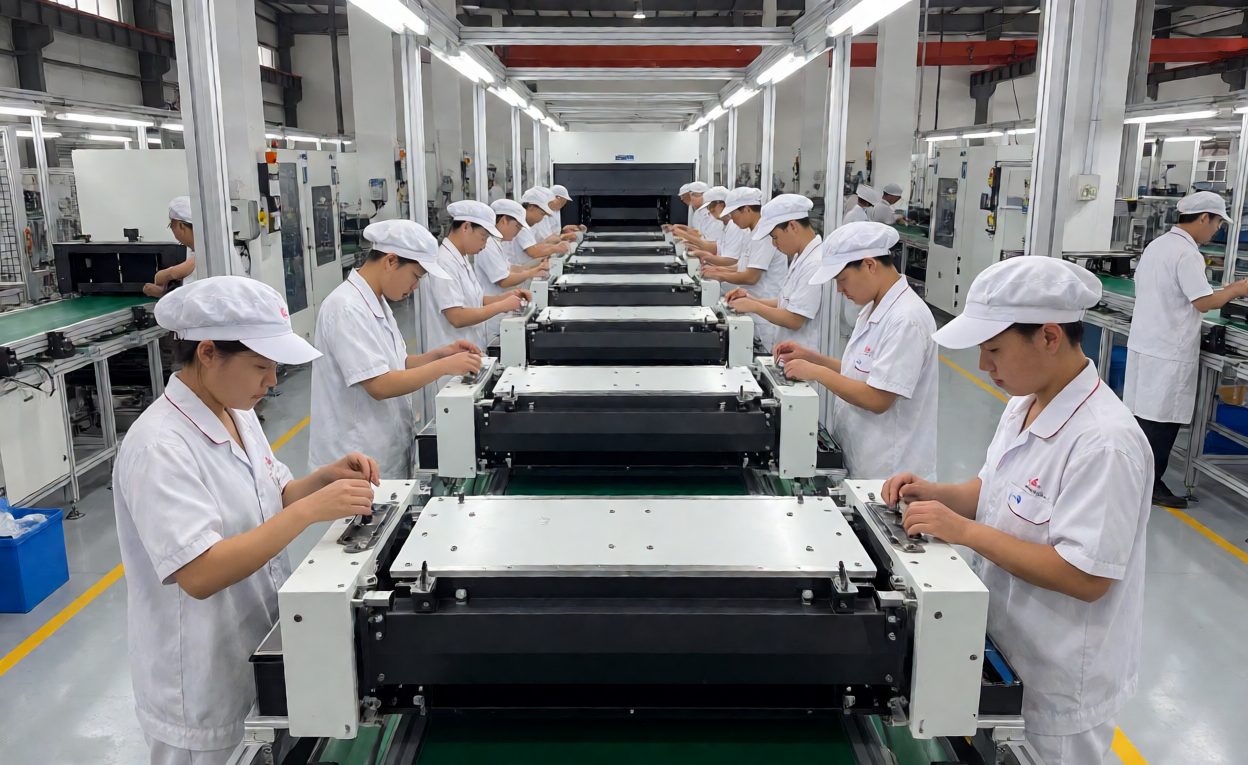
What OEM-Direct Buys You
Going direct to the manufacturer shortens the chain to the people who design and build the machine. The advantages are concrete:
- Design authority: questions about throughput, wear and configuration are answered by the people who engineered the product, not relayed through a middle layer.
- Price transparency: there is no integrator margin on the machine, and the buyer sees the manufacturer’s own options list.
- Deep product support: spares, firmware and long-term component availability sit with the party that will still be making the machine in ten years.
The corresponding demands are real. The buyer owns the project: the interface to upstream and downstream conveyors, the software integration with the warehouse management system, the coordination of any third-party scope, and the single point of accountability that an integrator would otherwise provide. OEM-direct suits buyers who have run sortation before, have in-house engineering capability, or are buying a clean, well-bounded machine into a straightforward environment.
What an Integrator Adds
An integrator earns its margin by absorbing the coordination problem. Where a project spans several equipment types and a software layer, someone has to make the pieces behave as one system, and the integrator contract makes that someone accountable:
- One contract, one throat to choke: interface failures between the sorter and the conveyor network, or between the control layers, belong to the integrator to fix.
- Vendor-neutral selection: a good integrator picks the sorter technology that fits the profile rather than the one they manufacture, drawing on the comparisons in choosing between cross-belt, sliding shoe and tilt-tray sorters.
- Integration engineering: the WMS-to-controls layer, the traffic logic across the whole line, and the test regime that proves them together.
- Local presence: many integrators provide installation labour and first-line service regionally, which shortens response times.
The costs are the margin, a layer between the buyer and the machine builder, and variance in depth: an integrator’s sorter expertise is only as good as their relationship with, and volume from, the manufacturers they represent.

Choosing the Route: Five Questions
The choice resolves into five practical questions. How complex is the total scope beyond the sorter itself – if the answer is “mostly the sorter”, direct is simpler; if it is “sorter, conveyors, print-and-apply, put walls and a software layer”, an integrator is carrying real work. Does the buyer have engineering staff who can own interfaces and integration testing? Is there an existing relationship with a manufacturer whose machines the operation already runs? Who will service the system long-term, and is that party competent on every component? And how much internal project management capacity exists to run the coordination that OEM-direct requires?
Where most answers point to simplicity and in-house capability, OEM-direct is the leaner route. Where scope is wide, interfaces are numerous, or the buyer lacks integration capacity, the integrator margin buys more than it costs. The procurement data that makes either proposal comparable is the same, and is set out in the sorter RFQ data package.
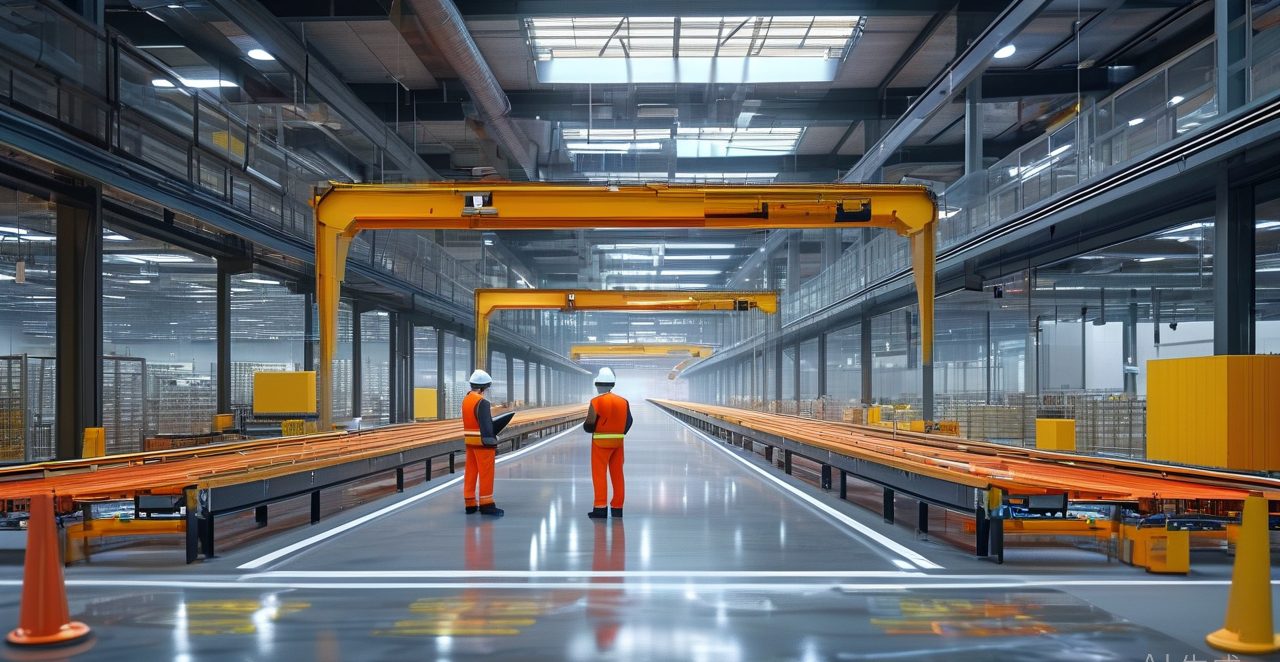
Technical Background
The direct route is a purchase from the original equipment manufacturer – the party that designs and builds the machine under its own brand. The alternative is a system integration engagement, where separately sourced components are engineered to operate as one system. The choice between them is a textbook question in procurement: what is being bought is partly equipment and partly accountability, and the two routes distribute those differently.
Contract Points That Differ by Route
Whichever route is chosen, three contract areas need explicit attention because they behave differently in each:
- Single point of accountability: with an integrator this is contractual by default; with OEM-direct it must be constructed – a prime contractor clause, or a named interface owner on the buyer’s side with the authority to bind both suppliers.
- Warranty boundaries: OEM-direct leaves a boundary between the machine warranty and the conveyor or software scope, and disputes live at boundaries. State which party warrants the interface, not only the components.
- Performance guarantees: an integrator should guarantee the whole line’s throughput, not just the sorter’s nameplate rate; a manufacturer guaranteeing direct will scope the guarantee to the machine alone.
Payment structure and security follow the same logic in both routes, and the milestones that protect the buyer are set out in payment milestones and performance security. Where the software layer is substantial, the integration obligations and test responsibilities deserve their own section, following the structure in WMS and PLC integration for sorters.
Running the Comparison Honestly
The final comparison should be on delivered capability and total cost, not on the machine’s price line. The direct route’s price looks leaner until the buyer adds the project management, integration engineering and interface risk it assumes; the integrator route’s price looks higher until those costs are priced into it. Building both figures over the same horizon, as in the five-year total cost model, makes the routes genuinely comparable.
For buyers early in selection, the supplier-level evaluation – financial stability, reference sites at comparable volume, service coverage – matters more than the route itself, and the criteria are set out in selecting a parcel sorting system manufacturer. Route and supplier are separate decisions, and buyers who separate them negotiate both better.
Frequently Asked Questions
What is the difference between OEM-direct and integrator procurement?
OEM-direct contracts with the machine builder for the sorter; an integrator buys the machine and delivers it as one accountable package with the wider system.
When does OEM-direct make sense?
When the scope is mostly the sorter itself and the buyer has engineering staff able to own interfaces and integration testing.
What does an integrator’s margin actually buy?
Single-point accountability across vendors, integration engineering, vendor-neutral technology selection, and often local installation and service.
Who warrants the interface between sorter and conveyors?
Whoever the contract says. With OEM-direct, the interface warranty must be stated explicitly; integrators normally carry it by default.
Whose throughput guarantee is broader?
An integrator should guarantee the whole line; an OEM guarantee usually scopes to the machine, so read the guarantee boundary carefully.
Is OEM-direct always cheaper?
The price line is leaner, but the buyer absorbs project management and integration risk; compare total cost over the same horizon, not list prices.
Should supplier selection and route be decided together?
No. They are separate decisions – choose the supplier on capability and support, and the route on scope complexity and internal capacity.