In today’s interconnected economy, global supply chains are more complex than ever. Products travel across multiple countries, pass through dozens of intermediaries, and involve countless transactions before reaching the end consumer. While this complexity enables efficiency and scale, it also introduces a major challenge: transparency.
Where did a product come from? Was it ethically sourced? Has it been tampered with? Are the records accurate?
These questions have become increasingly important for businesses, regulators, and consumers alike. And this is where blockchain technology is emerging as a powerful solution.
In this comprehensive guide, we’ll explore how blockchain enhances supply chain transparency, why it matters, and what it means for the future of global trade.
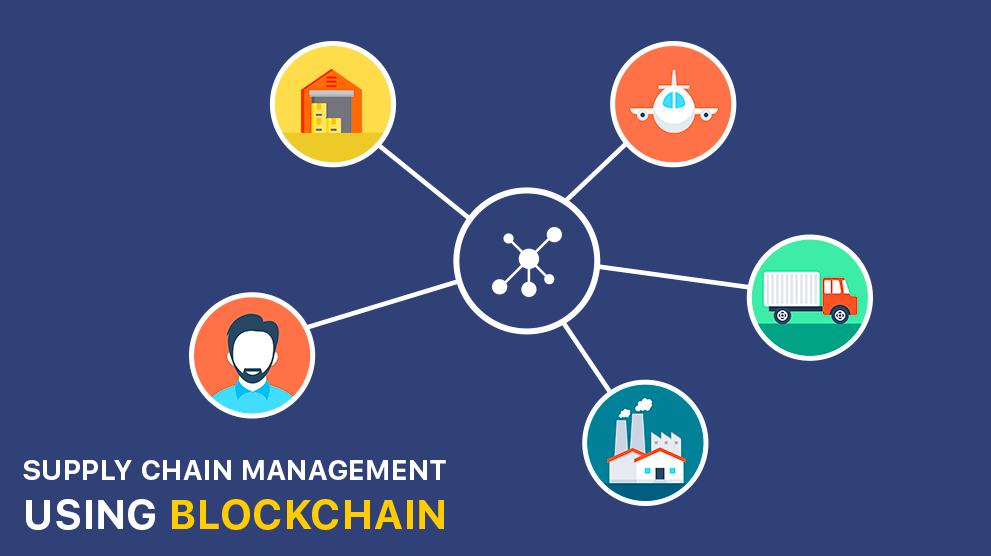
The Transparency Problem in Modern Supply Chains
Before diving into blockchain, it’s important to understand the problem it aims to solve.
Fragmented Data Systems
Most supply chains rely on disconnected databases managed by different stakeholders:
- Manufacturers
- Suppliers
- Logistics providers
- Distributors
- Retailers
Each party maintains its own records, often using incompatible systems. This fragmentation leads to:
- Data silos
- Inconsistent records
- Limited visibility across the chain
Lack of Trust
Because data is stored separately, trust becomes a major issue.
- Can you verify a supplier’s claims?
- Are certifications legitimate?
- Has the product been altered in transit?
Without a shared source of truth, verifying information becomes time-consuming and expensive.
Vulnerability to Fraud and Errors
Traditional systems are prone to:
- Manual data entry mistakes
- Document forgery
- Counterfeit goods
- Shipment manipulation
These risks can result in financial losses, legal issues, and reputational damage.
Limited Traceability
In many industries, tracing a product back to its origin is difficult.
For example:
- Food recalls can take days or weeks
- Pharmaceutical tracking may be incomplete
- Luxury goods are vulnerable to counterfeiting
What Is Blockchain Technology?
At its core, blockchain is a decentralized digital ledger that records transactions across multiple computers.
Key characteristics include:
1. Decentralization
No single entity controls the data. Instead, it’s shared across a network.
2. Immutability
Once data is recorded, it cannot be easily altered or deleted.
3. Transparency
All participants can view relevant transactions in real time.
4. Security
Cryptographic techniques protect data from tampering.
How Blockchain Enhances Supply Chain Transparency
Blockchain addresses many of the traditional challenges by creating a single, shared version of the truth.
1. End-to-End Visibility
With blockchain, every transaction is recorded and visible to authorized participants.
This means:
- You can track a product from raw materials to final delivery
- Every handoff is documented
- Delays and disruptions are easier to identify
2. Real-Time Data Sharing
Instead of waiting for updates from multiple systems, stakeholders can access information instantly.
Benefits include:
- Faster decision-making
- Reduced communication gaps
- Improved coordination
3. Immutable Record Keeping
Once data is added to the blockchain, it cannot be altered without consensus.
This ensures:
- Accurate historical records
- Protection against fraud
- Reliable audit trails
4. Enhanced Traceability
Blockchain enables precise tracking of products at every stage.
For example:
- A food item can be traced back to its farm of origin
- A pharmaceutical product can be verified for authenticity
- A luxury item’s provenance can be confirmed
5. Improved Accountability
Because all actions are recorded, participants are more accountable.
This reduces:
- Fraudulent behavior
- Misreporting
- Unauthorized changes
Real-World Applications Across Industries
Blockchain is already being used in various sectors to improve transparency.
Food Supply Chains
Food safety is a major concern worldwide.
Blockchain helps:
- Track contamination sources بسرعة
- Reduce recall times
- Verify organic or fair-trade claims
Retailers can scan a product and see its entire journey—from farm to shelf.
Pharmaceuticals
Counterfeit drugs are a global issue.
Blockchain enables:
- Secure tracking of medications
- Verification of authenticity
- Compliance with regulations
This helps protect patient safety and brand integrity.
Manufacturing
Complex manufacturing processes involve multiple suppliers.
Blockchain provides:
- Visibility into component sourcing
- Verification of quality standards
- Better coordination between partners
Luxury Goods
Counterfeiting is a major problem in the luxury market.
Blockchain helps brands:
- Prove authenticity
- Track ownership history
- Build consumer trust
Logistics and Shipping
Shipping involves multiple handoffs and documentation.
Blockchain streamlines: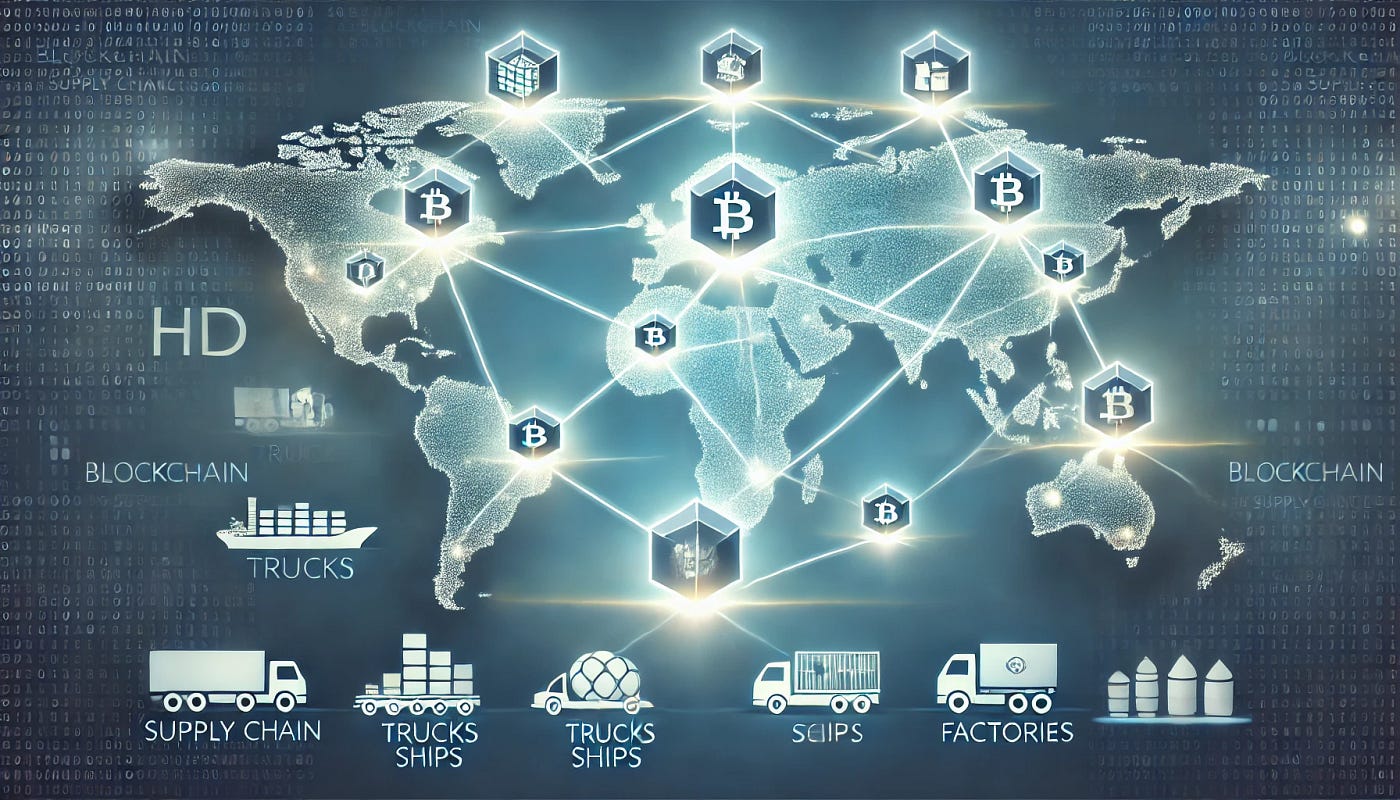
- Bill of lading processes
- Customs documentation
- Shipment tracking
Key Technologies That Work with Blockchain
Blockchain doesn’t operate in isolation. It often integrates with other technologies.
Internet of Things (IoT)
IoT devices collect real-time data, such as:
- Temperature
- Location
- Humidity
This data can be recorded on the blockchain for:
- Cold chain monitoring
- Shipment tracking
- Quality assurance
Smart Contracts
Smart contracts are self-executing agreements coded on the blockchain.
They can:
- Automatically trigger payments
- Enforce contract terms
- Reduce administrative work
Artificial Intelligence (AI)
AI can analyze blockchain data to:
- Predict disruptions
- Optimize routes
- Detect anomalies
Benefits of Blockchain in Supply Chains
Increased Trust
A shared, transparent system builds trust among stakeholders.
Reduced Fraud
Immutable records make it difficult to manipulate data.
Faster Audits
Auditors can access verified data instantly.
Cost Savings
By reducing inefficiencies and errors, companies can lower operational costs.
Better Consumer Confidence
Consumers increasingly want to know where products come from.
Blockchain provides that visibility.
Challenges and Limitations
Despite its potential, blockchain is not without challenges.
Implementation Costs
Setting up a blockchain system requires:
- Technology investment
- Training
- Integration with existing systems
Scalability Issues
Handling large volumes of transactions can be challenging.
Data Accuracy
Blockchain ensures data integrity—but it doesn’t guarantee that the data entered is correct.
“Garbage in, garbage out” still applies.
Regulatory Uncertainty
Different countries have varying regulations around blockchain.
Adoption Barriers
Widespread adoption requires collaboration across the entire supply chain.
How Companies Can Get Started
If you’re considering blockchain for your supply chain, here’s a practical roadmap.
1. Identify Key Pain Points
Focus on areas where transparency is lacking.
2. Start with a Pilot Project
Test blockchain in a specific segment before scaling.
3. Choose the Right Platform
Different blockchain platforms offer different features.
4. Collaborate with Partners
Success depends on participation from multiple stakeholders.
5. Integrate with Existing Systems
Ensure smooth data flow between systems.
The Future of Transparent Supply Chains
Blockchain is still evolving, but its impact is already significant.
In the future, we can expect:
- Greater standardization across industries
- Increased integration with IoT and AI
- Wider adoption by governments and regulators
- More consumer-facing transparency tools
Imagine scanning a product with your phone and instantly seeing:
- Where it was made
- Who handled it
- Whether it meets ethical standards
That future is closer than you think.
Why Transparency Matters More Than Ever
Today’s consumers are more informed and more demanding.
They care about:
- Sustainability
- Ethical sourcing
- Product authenticity
Businesses that can provide transparent, verifiable information will have a competitive advantage.
Final Thoughts
Blockchain technology is redefining how global supply chains operate.
By providing a secure, transparent, and immutable record of transactions, it addresses many of the long-standing challenges in supply chain management.
While there are still hurdles to overcome, the potential benefits far outweigh the limitations.
For companies looking to build trust, improve efficiency, and stay competitive in a rapidly changing world, blockchain is not just an option—it’s becoming a necessity.