Achieving sustainable logistics is no longer just a corporate social responsibility (CSR) goal; it is a financial imperative driven by rising global energy costs. By replacing legacy, continuous-run conveyors with modern, energy-efficient automated sorting systems, fulfillment centers can reduce their intralogistics electricity consumption by up to 42%. Technologies such as 24V Motorized Drive Rollers (MDR) and frictionless Linear Induction Motors (LIM) enable “Run-on-Demand” operation, drastically shrinking a facility’s carbon footprint while maximizing throughput ROI.
As we advance through 2026, the logistics sector is under unprecedented scrutiny. According to the Global Green Supply Chain Initiative (GGSCI), warehousing and material handling account for roughly 13% of the total carbon emissions in the global supply chain. With stringent carbon taxation models being implemented across North America, Europe, and Asia, logistics directors are aggressively seeking ways to reduce warehouse carbon footprint without sacrificing throughput speed.
The primary culprit of energy waste in most fulfillment centers is outdated material handling equipment. Legacy systems rely on massive AC motors that run at 100% capacity, 24/7, even when no parcels are on the belt. In this comprehensive data report, the engineering analysts at Truelisort break down the mathematics of power consumption, proving that upgrading to energy-efficient automated sorting systems is the definitive path to profitable and sustainable logistics.
📊 2026 Key Discoveries: Green Warehouse Automation Metrics
- Energy Reduction: Facilities upgrading to smart, sensor-driven automated sorters experienced a 38% to 42% drop in total kWh consumption within the first operational quarter.
- Pneumatic Elimination: Phasing out compressed-air divert mechanisms in favor of electric servos reduced mechanical energy waste by 65%.
- Carbon Tax Mitigation: In heavily regulated regions, energy-efficient material handling systems offset an average of $1.2 million annually in carbon penalty fees for Tier-1 hubs.
- Component Lifespan: Low-friction and “sleep-mode” architectures extend the mechanical lifecycle of sorting equipment by 3.5 years, reducing industrial waste.
*Data Source: 2026 Intralogistics ESG Performance Index & Truelisort hardware analytics. Updated: May 2026.
1. The Energy Drain: Analyzing Legacy Conveyor Systems
To understand the solution, we must first analyze the baseline data of legacy systems. Traditional sorting machinery was built for raw power, not precision. A standard 1990s-2010s era shoe sorter or wide-belt system operates using a centralized drive logic. A massive 480V three-phase AC motor pulls the entire chain continuously.
Our data logs reveal a startling inefficiency: In a standard 8-hour shift, there are micro-gaps between parcels and macro-gaps during shift changes or truck delays. During these periods, legacy systems continue to draw 85% to 95% of their peak load current simply to overcome their own mechanical friction. Mathematically, logistics facilities are paying premium industrial electricity rates to move empty belts.
2. The Science of Sustainable Automated Sorting Systems
Modern sustainable engineering solves this problem through decentralization, frictionless design, and intelligent software control. Here are the three technological pillars driving 2026’s green warehouse revolution.
A. Run-on-Demand Architecture (MDR Technology)
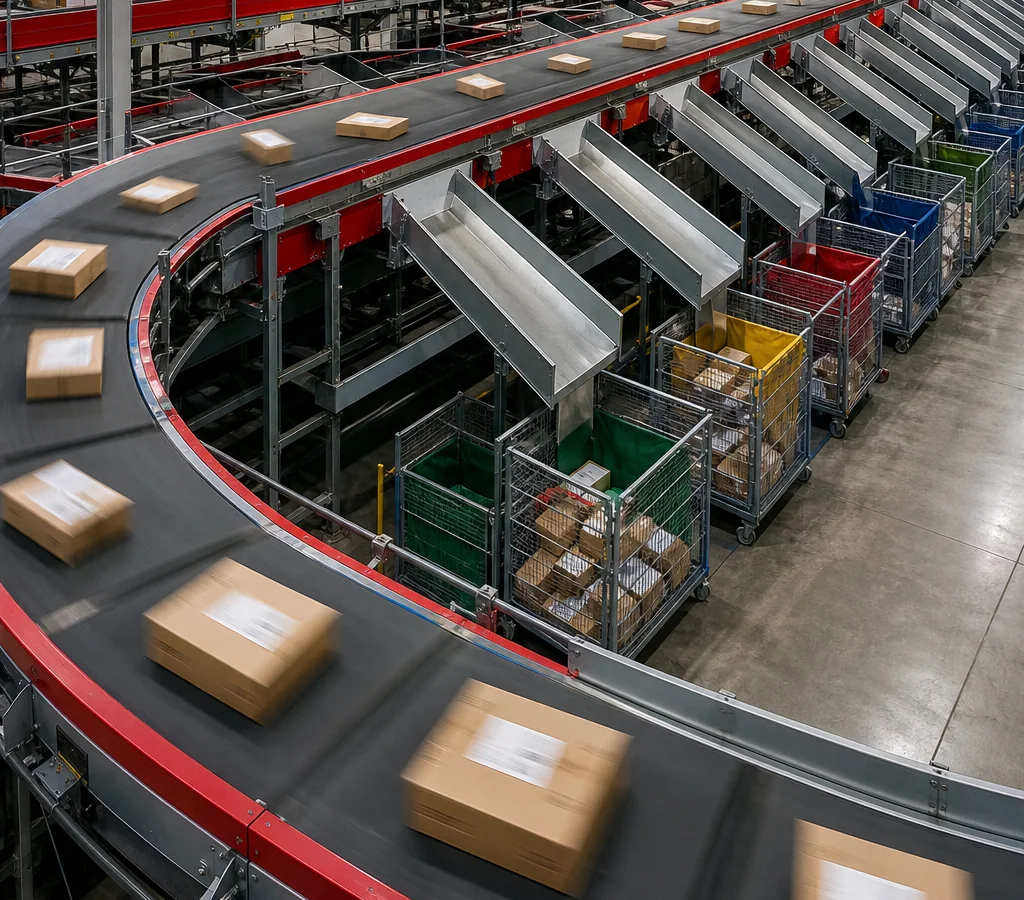
Instead of one massive motor driving 100 meters of belt, modern narrow belt sorters utilize 24V or 48V Motorized Drive Rollers (MDR). These systems are divided into small, independent zones (typically 1 meter long). Equipped with photo-eye sensors, a zone only activates when a parcel physically enters it, and instantly goes into “sleep mode” when the parcel leaves.
Data Impact: This decentralized architecture ensures that energy is only consumed to move actual payload, cutting electricity usage by over 40% compared to continuous-run systems.
B. Frictionless Linear Induction Motors (LIM)
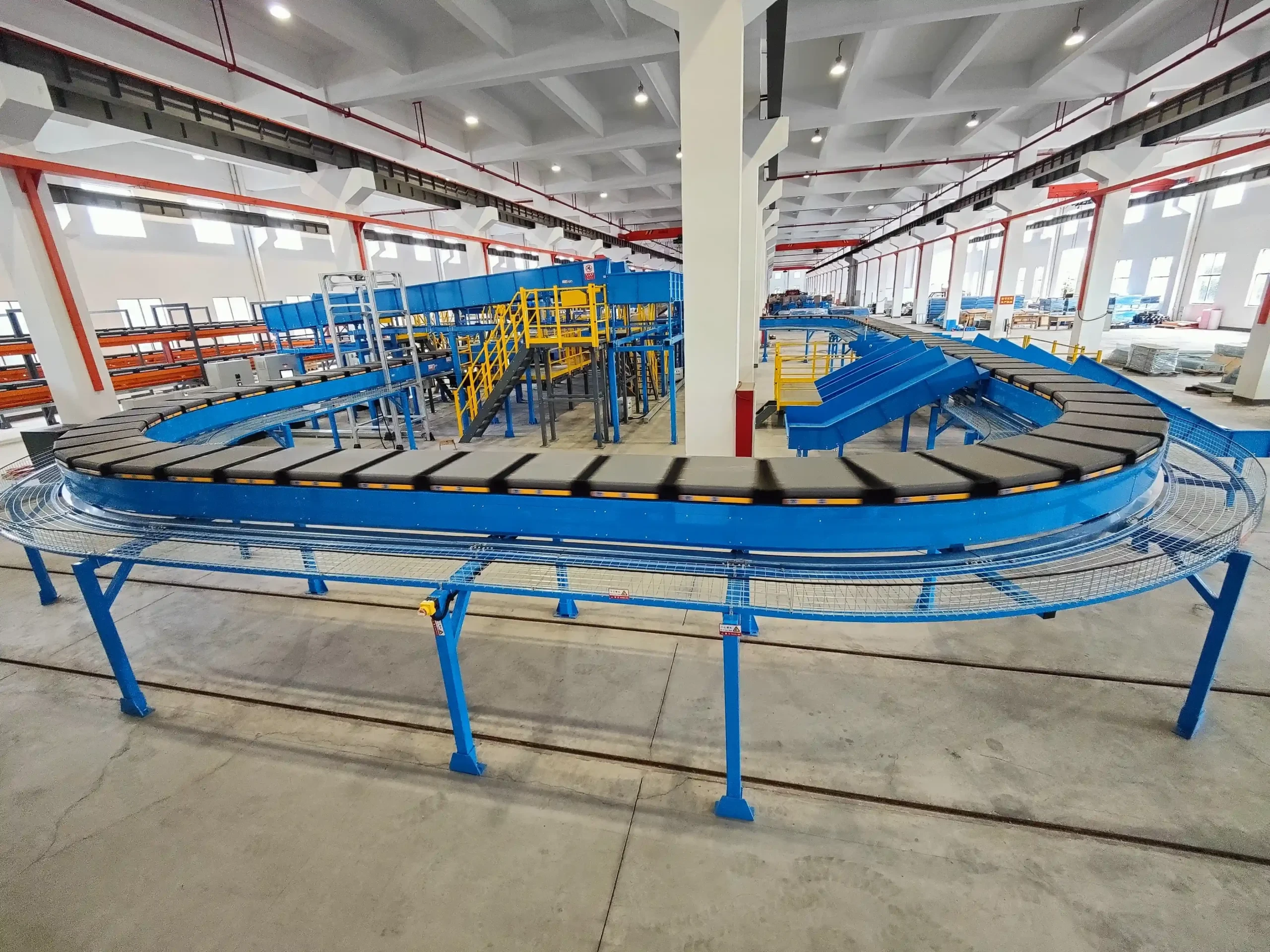
High-speed sortation traditionally required massive physical gears and heavy friction drives. Today, a modern cross belt sorter utilizes Contactless Linear Induction Motors (LIM). Electromagnetic force propels the carrier carts forward without physical mechanical contact.
Data Impact: By eliminating physical friction, LIM technology not only reduces the electrical draw required to accelerate the sorter but also eliminates the need for petroleum-based industrial lubricants, further contributing to a truly green supply chain.
C. Electromechanical Diverts vs. Compressed Air
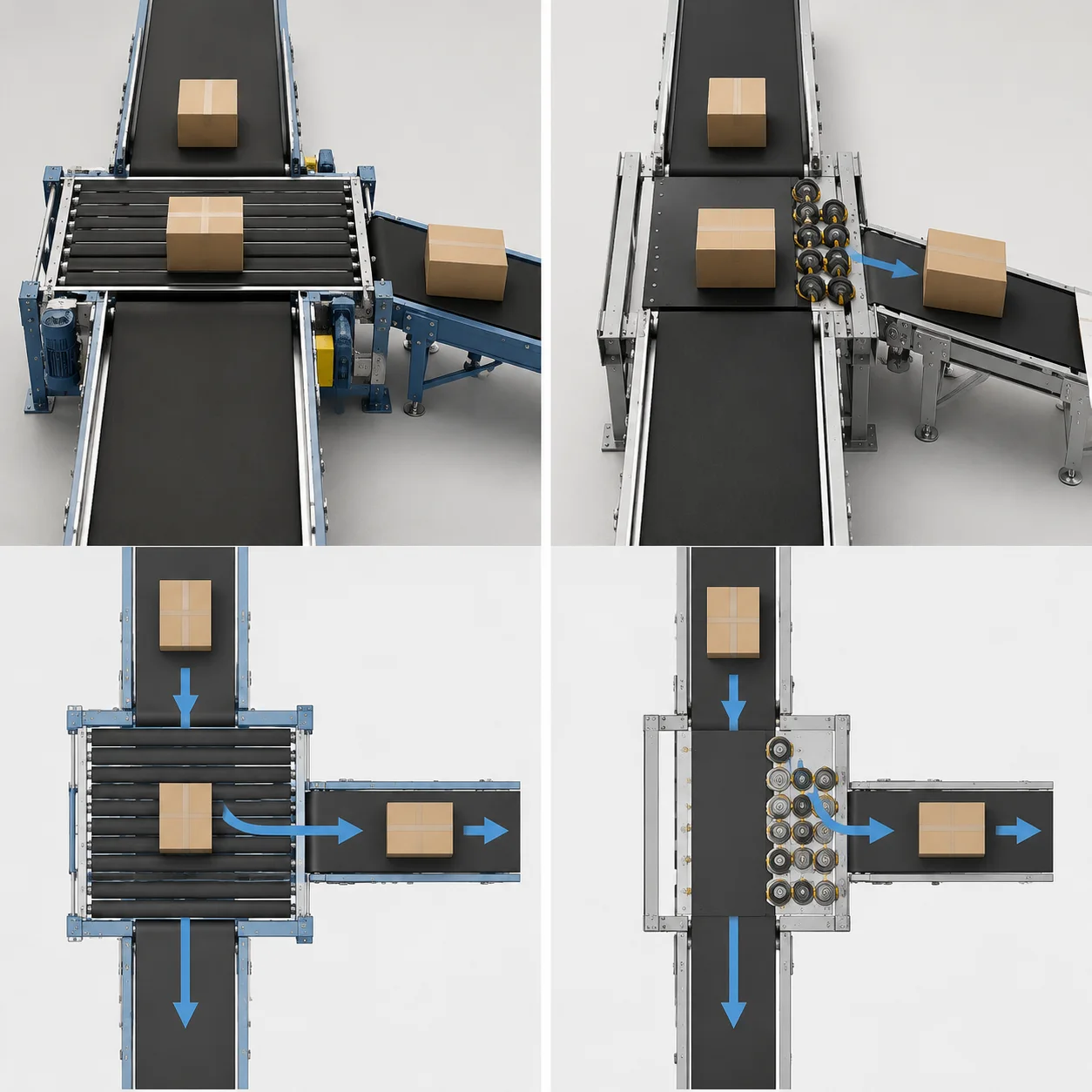
Historically, pneumatic air compressors (used to pop up rollers or divert arms) were the hidden energy vampires of a warehouse. Compressed air is statistically one of the most inefficient utilities, losing up to 30% of its energy to heat and system leaks. Modern solutions, such as the Pop-up Wheel Sorter TR120090, utilize fully electromechanical servos. These electric diverters are faster, quieter, and consume a fraction of the energy required to maintain a pressurized pneumatic line.
3. Comparative Analytics: Energy Consumption Data
How do these sustainable technologies translate to the bottom line? Let’s examine a 2026 data simulation for a mid-sized facility processing 10,000 parcels per hour over a 16-hour daily operation window.
| System Architecture | Annual Energy Use (kWh) | Estimated Carbon Emissions | ESG Compliance Rating |
|---|---|---|---|
| Legacy AC-Motor Line Sorter | ~ 1,250,000 kWh | 885 Metric Tons CO2 | Poor (High Tax Penalty) |
| Modern Cross Belt Sorter (LIM) | ~ 780,000 kWh | 552 Metric Tons CO2 | Excellent (Optimized) |
| Narrow Belt / MDR “Run-on-Demand” | ~ 710,000 kWh | 502 Metric Tons CO2 | Industry Leading |
Based on average 2026 commercial electricity rates of $0.15 per kWh, transitioning from a legacy sorter to a Run-on-Demand automated system saves approximately $81,000 in direct electricity costs annually. When combined with carbon tax avoidance and reduced mechanical maintenance, the green-tech ROI often breaks even at the 14-to-18-month mark.
4. Frequently Asked Questions (FAQ)
Q: Can energy-efficient automated sorting systems maintain high throughput speeds?
A: Absolutely. In fact, they often exceed legacy speeds. Frictionless cross-belt sorters can process up to 30,000 parcels per hour. Because the systems use smart software to regulate gaps and motor firing, they achieve maximum throughput without wasting power on idle zones.
Q: What is “Run-on-Demand” technology in warehouse logistics?
A: Run-on-Demand (also known as zero-pressure accumulation or ZPA) relies on sensors and Motorized Drive Rollers (MDR). The conveyor is broken into small zones. A zone only activates its motor when a sensor detects an approaching parcel, ensuring no electricity is wasted on spinning empty belts.
Q: How does replacing pneumatic diverts reduce the warehouse carbon footprint?
A: Generating compressed air is highly energy-intensive and prone to leakage (a 1/4-inch air leak can cost thousands of dollars a year in wasted electricity). Replacing pneumatics with 24V electric servos entirely eliminates the need for massive air compressors, instantly cutting a facility’s baseline power draw.
5. Conclusion: Profiting from Green Intralogistics
The data clearly indicates that sustainability and profitability are no longer mutually exclusive in logistics. By auditing your facility’s energy consumption and integrating smart, high-efficiency automated sorting systems, you can radically reduce warehouse carbon footprint, meet stringent 2026 ESG regulations, and unlock massive savings on your monthly utility overhead.
Are you ready to transition to green warehouse automation? Explore our bespoke eco-friendly sortation solutions, and contact Truelisort’s engineering data team today. Let us conduct a comprehensive energy audit on your current material flow and design a future-proof, sustainable sorting architecture for your business.

Truelisort Systems
Global leaders in sustainable intralogistics, pioneering energy-efficient automated sorting systems and frictionless conveying technology.
✉️ Email: business@truelisort.com |
📱 WhatsApp: +86 18658557670
🔗 Connect on: LinkedIn | YouTube | Facebook