
In today’s e-commerce landscape, mega sales events are no longer occasional spikes in demand—they are structural stress tests for entire supply chains. From flash sales and holiday peaks to global shopping festivals, modern fulfillment networks must process explosive order volumes with speed, accuracy, and consistency.
In this environment, one piece of automation technology has quietly become the backbone of high-performance warehouses: the cross belt sorter.
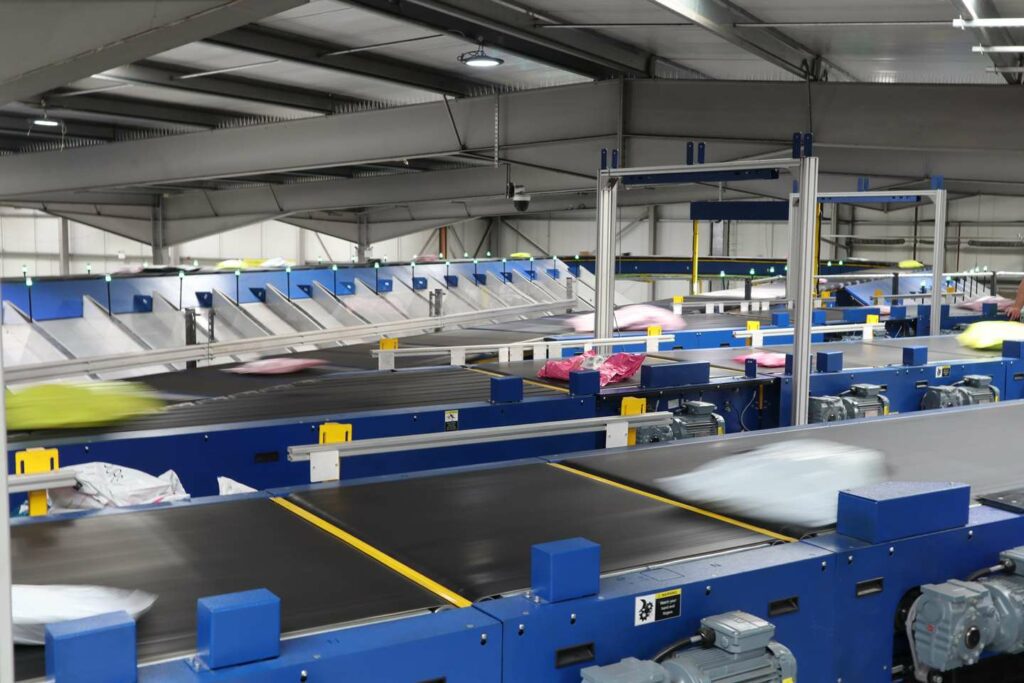
Often described as the “anchor of stability” during peak operations, cross belt sortation systems are now a standard in advanced fulfillment centers worldwide. They are not just machines—they are operational stabilizers that allow warehouses to survive and thrive during extreme demand surges.
This article explores why cross belt sorters have become indispensable, how they support e-commerce mega sales, and why they are now considered essential infrastructure rather than optional automation.
1. The Reality of E-Commerce Mega Sales: A Pressure Test on Everything
E-commerce “big sale” events are not simple increases in traffic. They are systemic shocks that affect every layer of warehouse operations.
During peak events, fulfillment centers typically experience:
- 3x to 10x order volume spikes
- Extreme SKU diversity in a short time window
- Unpredictable order clustering patterns
- Tight delivery SLAs (same-day or next-day expectations)
- Labor constraints and overtime limitations
These conditions create a perfect storm where traditional manual or semi-automated sorting systems quickly become bottlenecks.
The challenge is no longer just moving packages—it is maintaining consistency under extreme variability.
This is where cross belt sorters redefine what is possible.
2. What Makes Cross Belt Sorters Different From Traditional Systems
To understand why cross belt sorters are now standard in modern warehouses, it is important to compare them with older sorting methods.
2.1 Manual Sorting
Limitations:
- Highly labor-dependent
- Error-prone under fatigue
- Difficult to scale during peaks
- Inconsistent throughput
Manual systems collapse under surge demand.
2.2 Tilt Tray Sorters
While faster than manual sorting, tilt tray systems have constraints:
- Less flexible for fragile or irregular items
- Slower handling of high SKU variability
- Limited bidirectional routing efficiency
2.3 Cross Belt Sorters
Cross belt systems solve these problems by design:
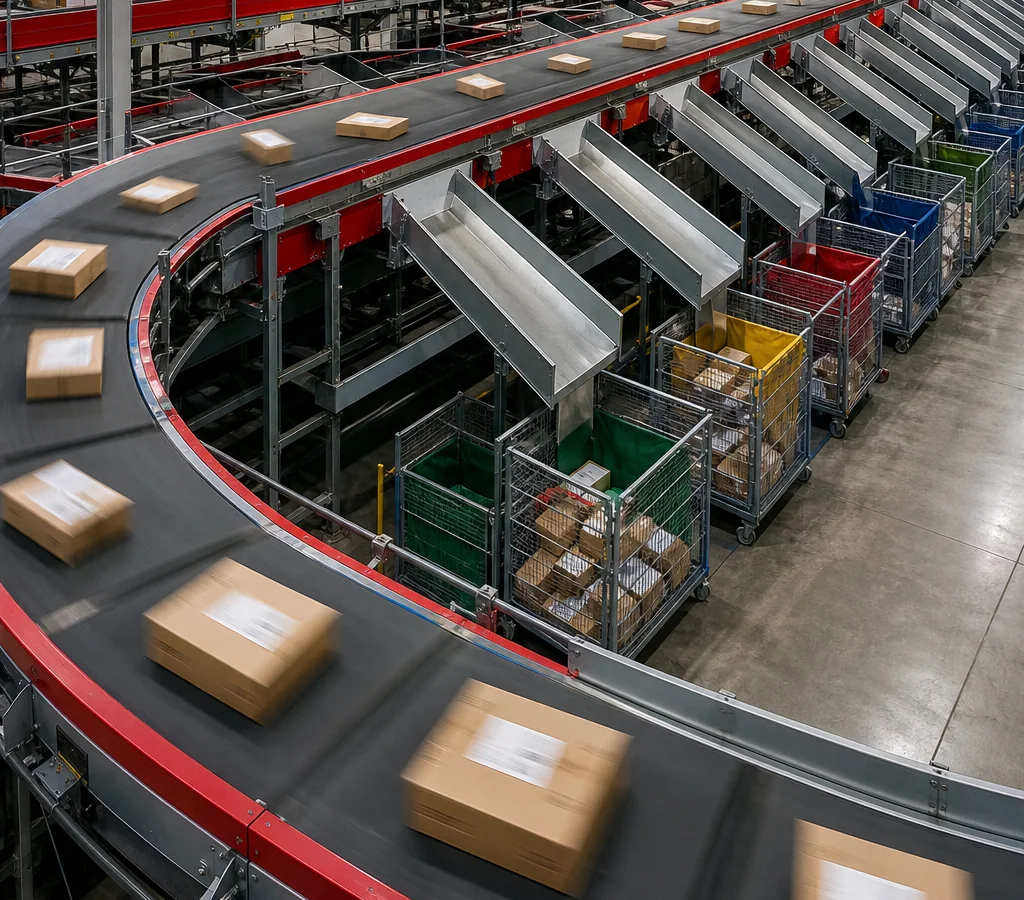
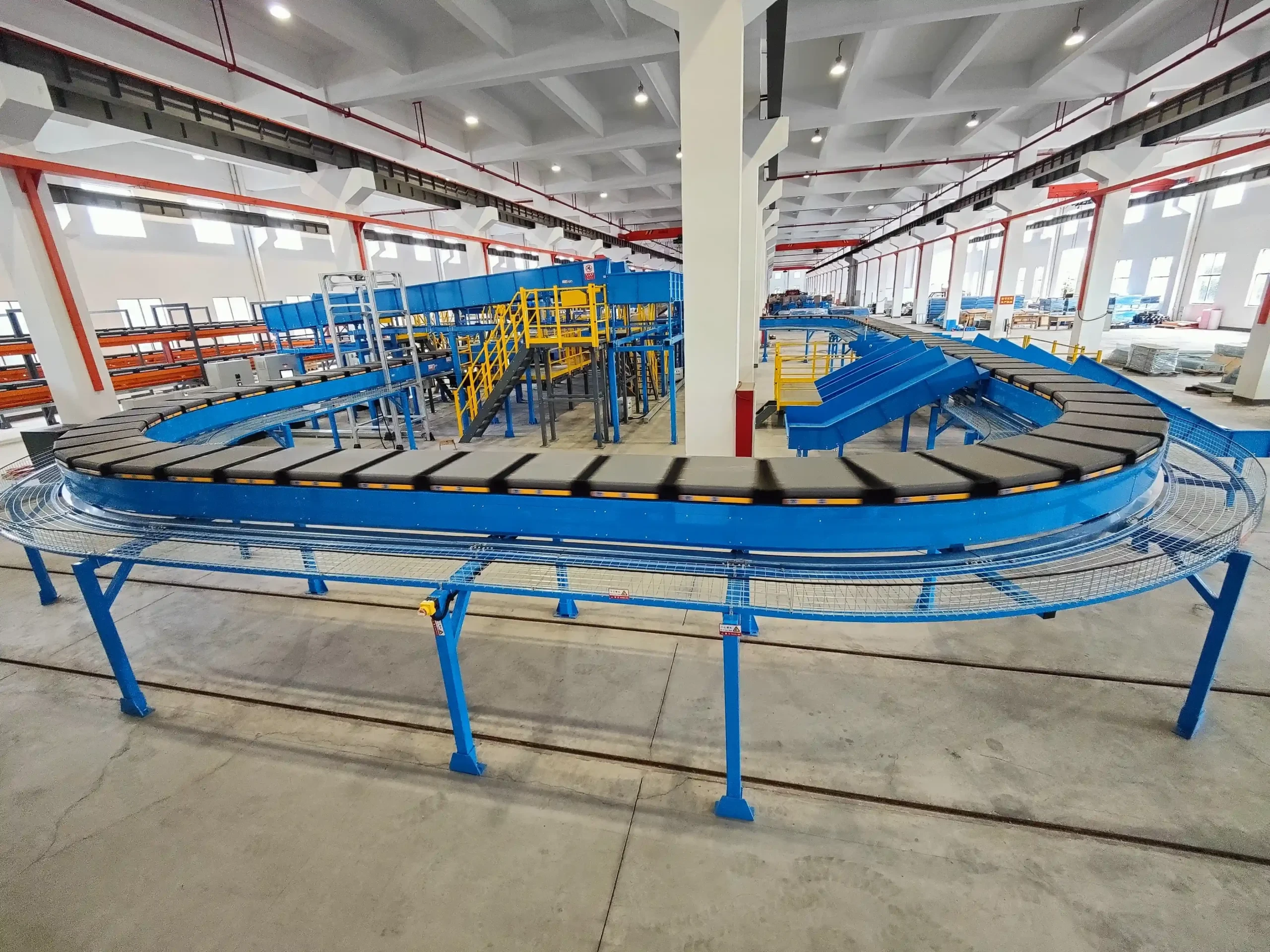
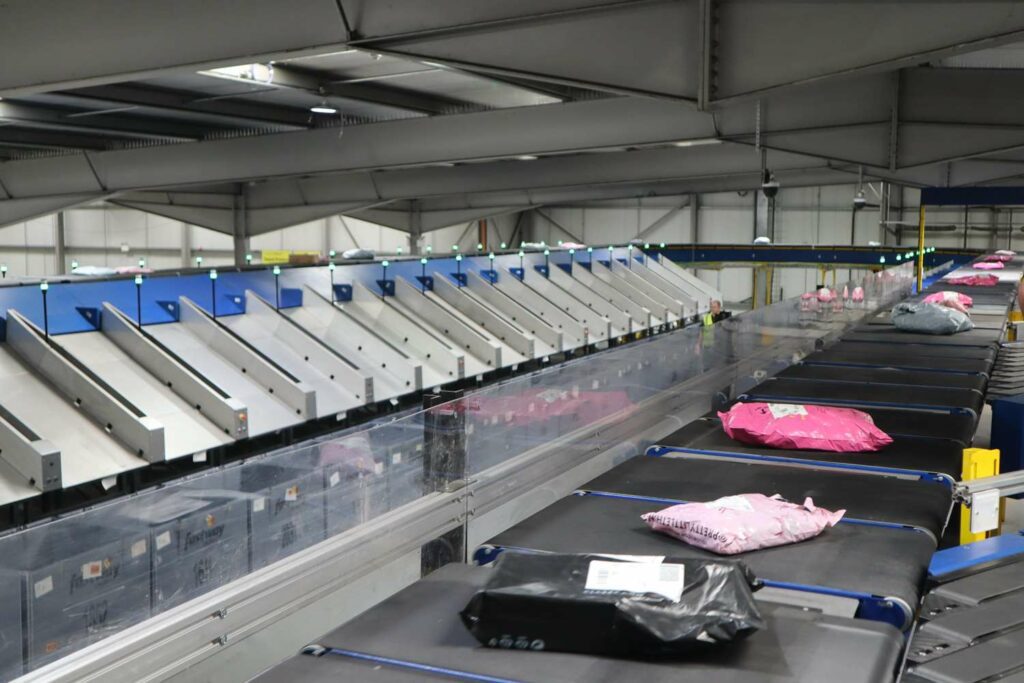
- Each carrier has an independent mini belt
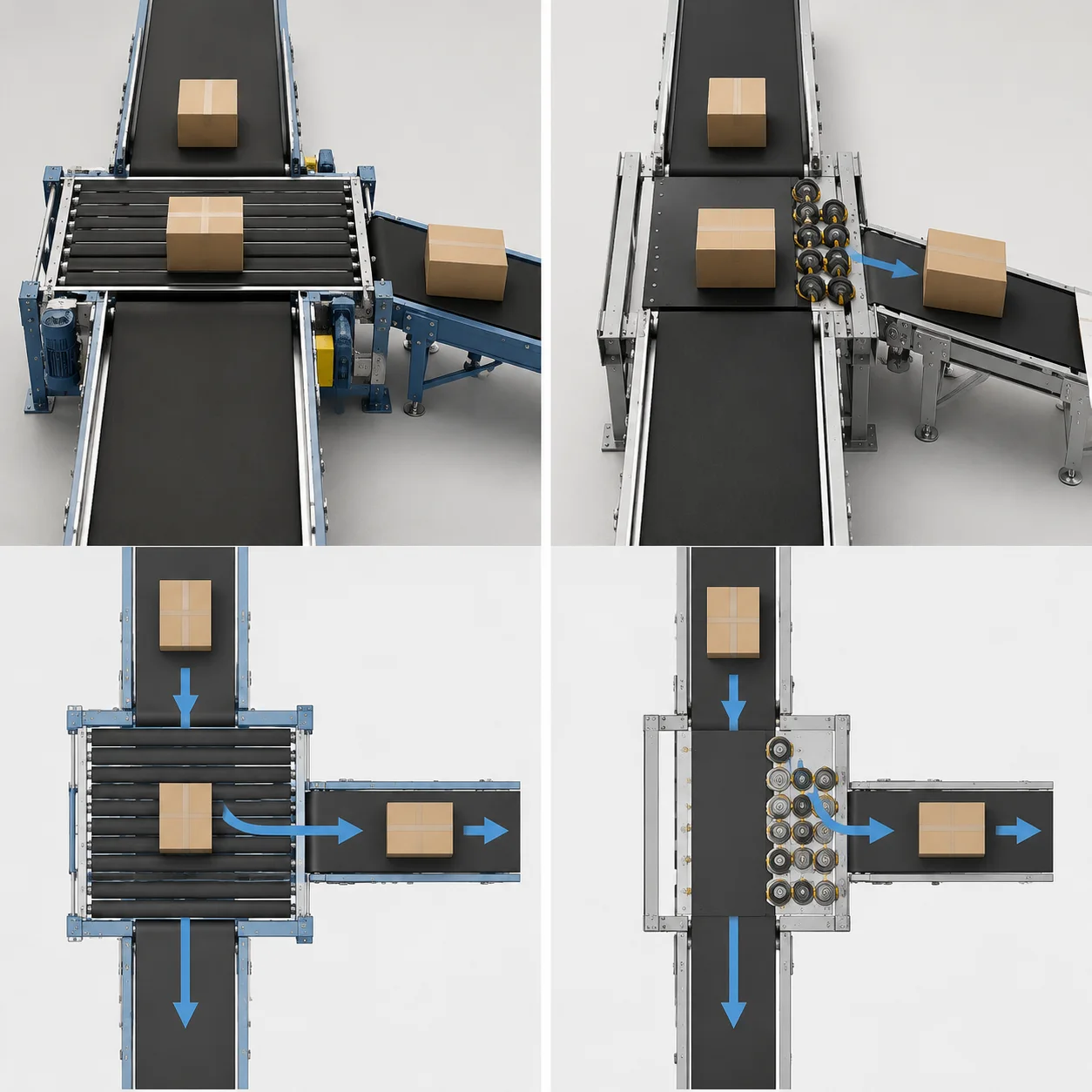
- Items can be precisely ejected to any destination
- High-speed continuous operation
- Excellent handling of diverse parcel types
In short:
Cross belt sorters combine speed, precision, and flexibility in a way that older systems cannot match.
3. The Core Advantage: Deterministic Flow Under Chaos
During mega sales, warehouses are not dealing with steady demand—they are dealing with chaotic, non-linear order surges.
Cross belt sorters bring something critical to this environment:
Deterministic material flow
Even when input demand is unpredictable, output remains structured and controlled.
This is achieved through:
- Real-time routing logic
- High-frequency decision execution
- Continuous conveyor motion
- Precise parcel control at individual unit level
Instead of batch-based chaos, warehouses achieve stream-based order flow stability.
4. Why Stability Matters More Than Speed
Many assume that the primary advantage of cross belt sorters is speed. In reality, speed is only part of the equation.
The real value lies in stability under load.
During peak events, unstable systems create:
- Queue congestion
- Misrouted packages
- Increased labor intervention
- System-wide slowdowns
Cross belt sorters minimize these risks by ensuring:
- Even distribution of workload
- Predictable routing behavior
- Reduced human intervention
- Continuous throughput without collapse points
In high-volume logistics, stability is more valuable than raw speed.
5. The “Single Point of Control” Advantage
Cross belt systems function as centralized decision execution engines.
Every parcel is:
- Identified
- Scanned
- Assigned a destination
- Precisely ejected to the correct chute or line
This creates a single control layer for sorting logic.
Benefits include:
- Simplified operational management
- Reduced error propagation
- Easier system diagnostics
- Consistent performance across shifts
In contrast, decentralized manual or semi-automated systems introduce variability at every touchpoint.
6. Handling SKU Explosion in Modern E-Commerce
One of the biggest challenges during mega sales is SKU explosion.
Modern e-commerce platforms may process:
- Tens of thousands of SKUs per hour
- Highly mixed product categories
- Frequent new product introductions
Cross belt sorters excel in this environment because:
- They do not rely on product-specific handling logic
- They route based on destination codes, not item type
- They can process mixed flows without reconfiguration
This flexibility is critical when inventory changes rapidly during promotional events.
7. Throughput Consistency: The Hidden Performance Metric
In warehouse operations, average throughput is not the key metric during peak events.
Instead, consistency matters more.
Cross belt sorters deliver:
- Stable parcels-per-hour output
- Predictable system behavior under load
- Reduced performance variance across shifts
Why this matters:
A system that fluctuates between high and low performance creates downstream instability in:
- Packing stations
- Shipping docks
- Carrier pickups
Consistency ensures the entire fulfillment chain remains synchronized.
8. Error Reduction and Its Compounding Impact
Small sorting errors during mega sales can escalate quickly.
A single misrouted package can lead to:
- Rehandling delays
- Increased labor costs
- Customer dissatisfaction
- Return logistics complexity
Cross belt sorters reduce errors through:
- Automated scanning integration
- Precise mechanical ejection
- Real-time routing validation
Lower error rates create a compounding effect:
Fewer mistakes → less rework → smoother flow → higher overall efficiency
9. Labor Optimization During Peak Seasons
Labor shortages are a recurring issue during large-scale sales events.
Cross belt sorters reduce dependency on manual labor by:
- Automating sorting decisions
- Reducing physical handling requirements
- Minimizing training complexity
- Allowing workers to focus on value-added tasks
Instead of being overwhelmed by sorting volume, staff can focus on:
- Exception handling
- Packing optimization
- Quality control
This shifts labor from reactive work to structured operations.
10. Scalability Without Structural Overhaul
One of the key reasons cross belt sorters have become standard is scalability.
Warehouses can scale operations by:
- Increasing system length
- Adding more induction points
- Expanding destination chutes
- Integrating modular control systems
Unlike manual systems, scaling does not require proportional increases in labor.
Instead, capacity grows through infrastructure extension.
11. Real-Time Decision Execution: The Digital Nervous System
Cross belt sorters are deeply integrated with warehouse management systems (WMS).
They act as a physical extension of digital decision-making.
Process flow:
- Order is created in system
- Routing decision is generated
- Sorter receives instruction instantly
- Parcel is physically routed in real time
This tight coupling allows:
- Faster response to demand changes
- Dynamic rerouting capabilities
- Real-time system optimization
In essence, cross belt sorters turn warehouse logic into physical motion.
12. Peak Season Resilience: Avoiding System Collapse
During mega sales, many warehouses experience partial or full system collapse due to overload.
Cross belt systems prevent this through:
- Distributed load handling
- Continuous motion design
- Buffer zone integration
- Automated congestion control
Instead of collapsing under pressure, the system degrades gracefully—maintaining partial functionality even under extreme load.
This resilience is one of its most valuable characteristics.
13. Energy Efficiency at Scale
While often overlooked, energy efficiency is a major advantage.
Cross belt sorters:
- Reduce unnecessary re-handling
- Minimize idle motion
- Optimize routing paths
- Operate with high mechanical efficiency per unit sorted
At scale, even small efficiency gains translate into significant cost and environmental benefits.
14. Integration With Modern Warehouse Automation Ecosystems
Cross belt sorters are rarely standalone systems. They integrate with:
- Automated storage and retrieval systems (AS/RS)
- Robotic picking systems
- Conveyor networks
- AI-based forecasting tools
- Real-time analytics dashboards
This ecosystem integration allows warehouses to operate as unified intelligent systems rather than isolated machines.
15. Why They Have Become a “Standard Configuration”
The shift toward cross belt sorters as a warehouse standard is driven by three macro trends:
1. Demand volatility
E-commerce demand is no longer predictable.
2. Delivery expectations
Same-day and next-day shipping requires extreme efficiency.
3. SKU complexity
Product variety continues to expand rapidly.
Cross belt sorters solve all three simultaneously.
16. Common Misconceptions About Cross Belt Sorters
Despite widespread adoption, several misconceptions persist:
Misconception 1: “They are only for large warehouses”
In reality, modular designs make them scalable for mid-size operations as well.
Misconception 2: “They are too expensive”
While upfront costs are high, long-term labor savings and efficiency gains offset investment.
Misconception 3: “They are complex to operate”
Modern systems are highly automated and integrated with intuitive control software.
17. The Hidden Strategic Value: Competitive Advantage
Beyond operational efficiency, cross belt sorters create strategic advantages:
- Faster order fulfillment cycles
- Higher customer satisfaction rates
- Improved peak season reliability
- Lower operational risk exposure
In competitive e-commerce environments, these advantages directly impact market positioning.
18. The Future of Cross Belt Sorting Systems
The next evolution of cross belt technology will likely include:
- AI-driven adaptive routing
- Predictive congestion management
- Autonomous maintenance diagnostics
- Energy-aware sorting algorithms
- Fully digital twin simulation environments
These advancements will further strengthen their role as core infrastructure in logistics.
Final Thoughts: The Backbone of Modern Fulfillment
E-commerce mega sales are no longer occasional disruptions—they are recurring operational realities.
In this environment, warehouses cannot rely on fragile or manually intensive systems. They need infrastructure that delivers:
- Stability under pressure
- Precision at scale
- Flexibility across SKU diversity
- Predictable performance during extreme demand
Cross belt sorters provide exactly that.
They are not just sorting machines—they are the structural foundation of modern fulfillment resilience.
As e-commerce continues to grow and accelerate, their role will only become more central, not less.
In many ways, they are no longer a competitive advantage.
They are the standard that defines whether a warehouse can survive peak demand at all.