
The explosive growth of cross-border e-commerce has transformed the global logistics industry. What was once a supply chain designed primarily for bulk shipments and predictable retail cycles must now support millions of small, diverse, and time-sensitive orders traveling across continents every day.
Consumers expect international purchases to arrive almost as quickly as domestic deliveries. At the same time, online retailers face increasing pressure to reduce costs, improve order accuracy, and handle seasonal demand spikes without sacrificing service quality.
To meet these challenges, logistics providers and fulfillment centers are accelerating their investment in warehouse automation. Among the many technologies reshaping modern distribution operations, the cross-belt sorting system has emerged as one of the most effective solutions for high-speed, high-accuracy parcel handling.
More than just another piece of automated equipment, the cross-belt sorter has become a strategic infrastructure investment—one capable of redefining operational efficiency for cross-border e-commerce businesses.
This article explores how cross-belt sorting systems work, why they are becoming the new benchmark for international logistics, and what companies can learn from successful implementation projects around the world.
Why Cross-Border E-Commerce Needs a New Logistics Standard
The global rise of online marketplaces has dramatically changed order fulfillment patterns. Traditional warehouse models were designed to process large batches of identical products. Today’s fulfillment centers, however, must manage a completely different operational reality.
Typical cross-border e-commerce facilities face several common challenges:
- A massive increase in daily order volume.
- Highly fragmented product categories.
- Large fluctuations during promotional events.
- Multiple destination countries and carrier requirements.
- Strict delivery deadlines.
- Increasing labor shortages and rising operational costs.
Unlike conventional retail distribution, cross-border fulfillment often involves handling thousands of unique stock-keeping units (SKUs) with varying sizes, weights, and packaging requirements. Products may need to be sorted according to destination country, transportation route, customs process, carrier partner, or final delivery hub.
Manual sorting methods quickly become inefficient under these conditions. Human operators struggle to maintain accuracy and throughput during peak periods, while labor costs continue to rise globally.
As a result, warehouse operators are increasingly adopting advanced automated sorting technologies capable of delivering both speed and flexibility.
What Is a Cross-Belt Sorting System?
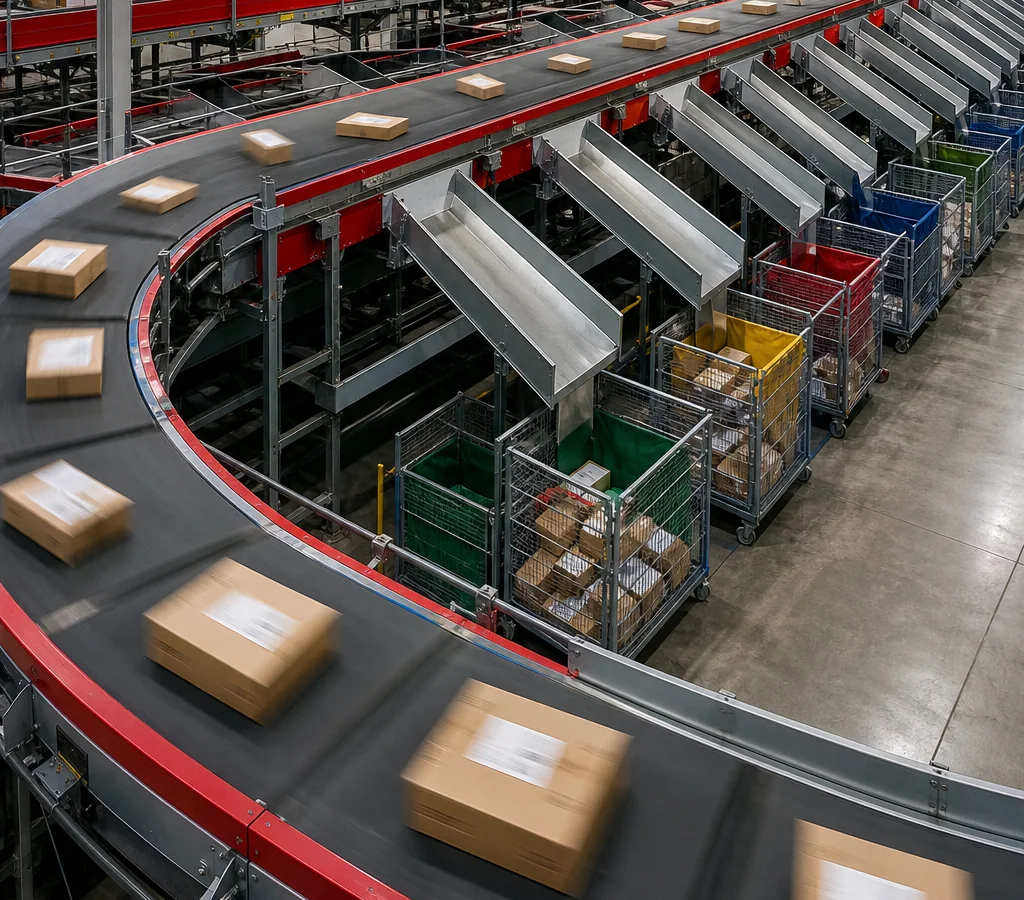
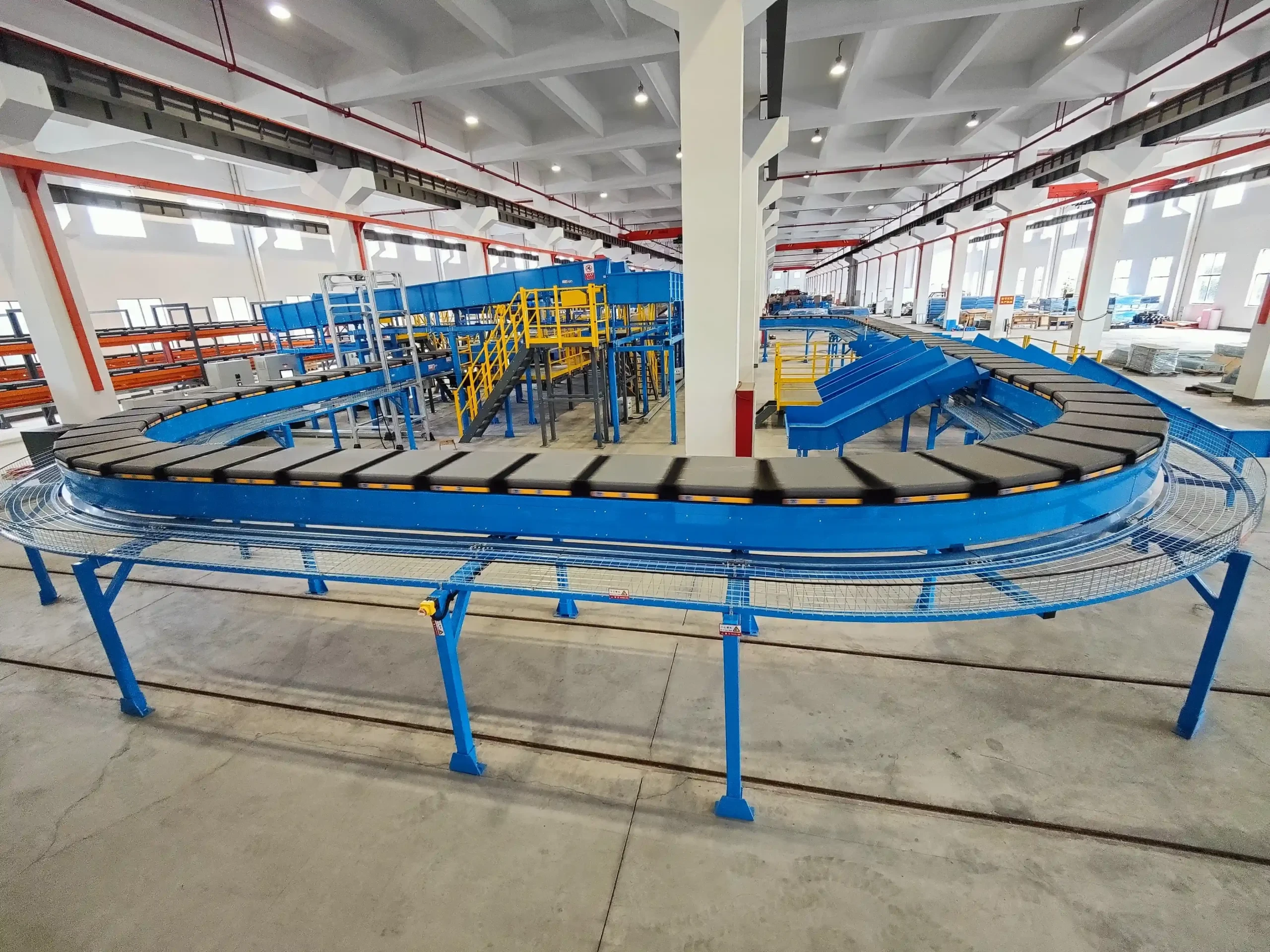
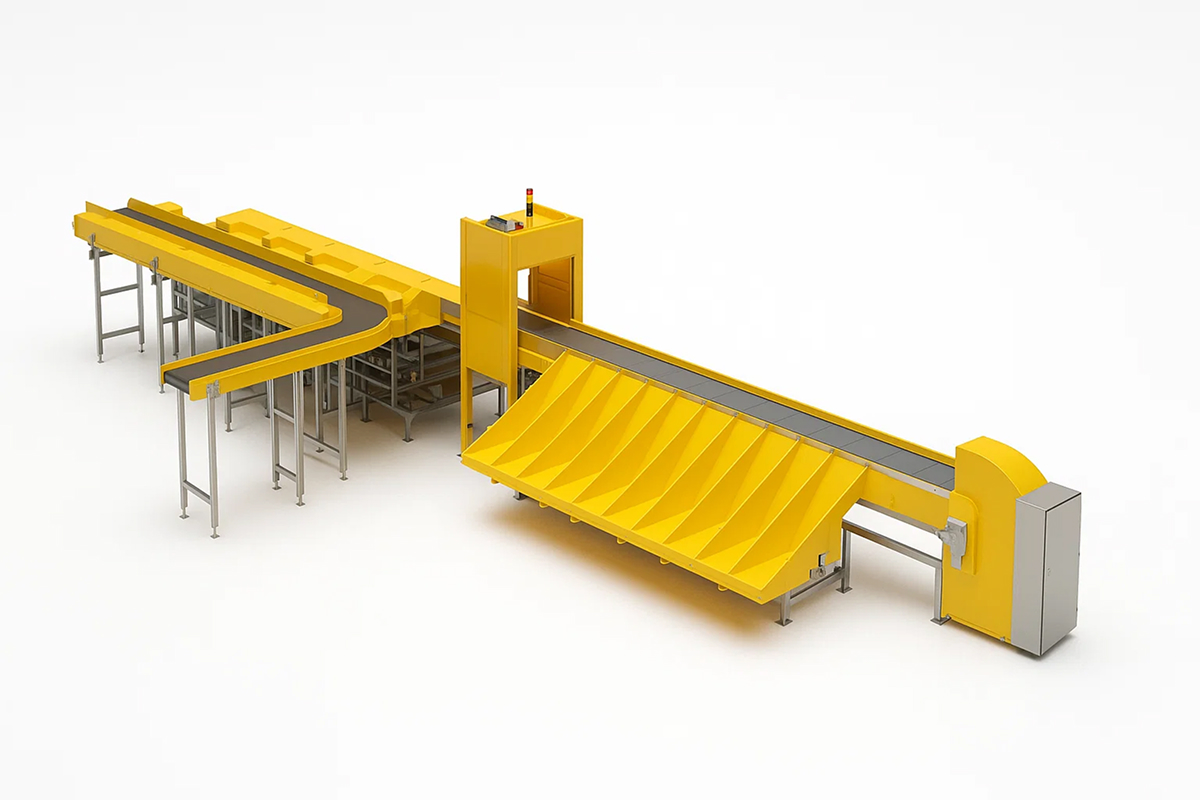
A cross-belt sorting system is a high-speed automated sortation solution that uses independently driven carrier units, each equipped with a small conveyor belt mounted perpendicular to the main loop. As items travel around the sorting track, the cross belts activate at the designated destination and gently discharge products into assigned chutes or collection bins.
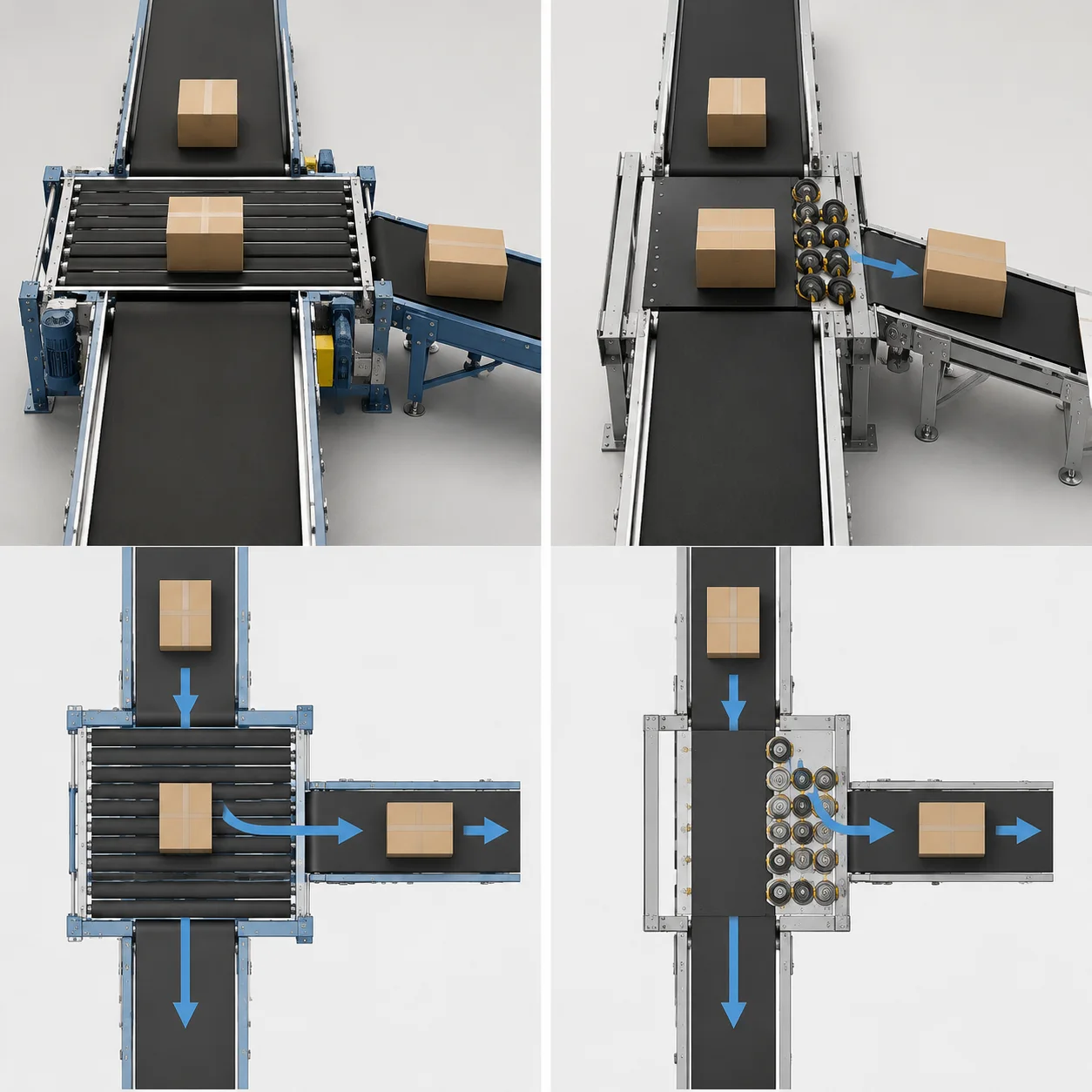
Unlike simpler push-tray or tilt-tray sorters, cross-belt systems can handle a wide variety of package types with exceptional precision.
These systems are commonly used to sort:
- Small parcels.
- Poly mailers.
- Apparel packages.
- Books and printed materials.
- Electronics accessories.
- Cosmetic products.
- Pharmaceutical items.
- Small cartons and boxed goods.
Because each carrier functions independently, cross-belt sorters can process products with minimal impact from package shape or orientation.
How Cross-Belt Sorting Systems Work
Understanding the operating principle helps explain why this technology has become so popular in modern logistics facilities.
Step 1: Item Induction
Products enter the sorting line through automated induction stations or manual loading positions. Advanced systems often use singulators and spacing devices to ensure proper item separation.
Step 2: Identification and Data Capture
Barcode scanners, QR code readers, RFID systems, or machine vision cameras identify each package and associate it with order management data.
Information typically includes:
- Destination country.
- Shipping carrier.
- Customer order number.
- Priority level.
- Package dimensions.
- Delivery route assignment.
The warehouse management system (WMS) instantly determines the appropriate sorting destination.
Step 3: Carrier Assignment
An available cross-belt carrier receives the package. The package remains securely positioned as the carrier moves along the main sorting loop.
Step 4: Intelligent Routing
The control system continuously tracks the position of every carrier and calculates the optimal discharge point.
Step 5: Precision Discharge
As the carrier reaches the assigned output chute, the cross belt rotates sideways, smoothly transferring the item into the correct destination lane without impact or sudden movement.
This process repeats continuously, allowing thousands of packages to be sorted every hour with remarkable consistency.
Why Cross-Belt Sorters Are Ideal for Cross-Border Fulfillment
Cross-border logistics differs significantly from domestic parcel distribution. The ability to manage complexity is often more important than raw speed alone.
Cross-belt sorting systems address several key requirements.
Exceptional Sorting Accuracy
International shipments involve customs documentation, carrier-specific labels, and destination-specific handling procedures. Even a small sorting error can result in delayed customs clearance or incorrect international routing.
Modern cross-belt systems often achieve sorting accuracy rates exceeding 99.9%, significantly reducing costly shipping mistakes.
High Throughput Capacity
Large fulfillment centers may process tens or hundreds of thousands of parcels per day. Cross-belt sorters can support extremely high throughput rates while maintaining stable performance during peak demand periods.
Gentle Product Handling
Cross-border e-commerce includes many delicate items such as cosmetics, electronics accessories, and consumer goods that require careful handling.
Because the discharge process uses controlled belt movement rather than mechanical pushing or dropping, cross-belt systems reduce the risk of product damage.
Adaptability to Mixed Product Sizes
Unlike some automated sorting technologies that perform best with standardized packages, cross-belt sorters can effectively handle a broad range of dimensions and packaging materials.
This flexibility is especially valuable for e-commerce businesses managing diverse product catalogs.
The Business Drivers Behind Cross-Belt Sorter Adoption
Warehouse automation projects are often driven by more than simple labor reduction. Companies investing in cross-belt sorting technology are typically pursuing several long-term strategic objectives.
Coping with Labor Shortages
Many logistics markets face persistent labor challenges. Recruiting, training, and retaining large numbers of warehouse workers becomes increasingly difficult, particularly during seasonal peaks.
Automation reduces dependency on temporary labor while improving operational consistency.
Supporting Business Growth
Expanding order volumes do not necessarily require proportional increases in workforce size. A scalable sorting platform allows facilities to accommodate future growth without continuous facility expansion.
Improving Customer Satisfaction
Fast and accurate order processing directly affects delivery reliability, customer reviews, and repeat purchases. Reducing sorting errors contributes to a better end-user experience.
Lowering Total Operating Costs
Although automated sorting systems require significant initial investment, long-term savings often result from:
- Reduced labor expenses.
- Fewer shipping errors.
- Lower product damage rates.
- Improved space utilization.
- Increased operational efficiency.
The total cost of ownership frequently becomes more favorable over the lifecycle of the equipment.
Planning a Successful Cross-Belt Sorting System Implementation
Installing a cross-belt sorter is not simply a matter of purchasing equipment. Successful implementation requires careful planning across multiple operational areas.
Step 1: Analyze Current and Future Order Volumes
Facilities should evaluate:
- Average daily throughput.
- Peak seasonal demand.
- Expected annual growth.
- SKU expansion plans.
Designing for future scalability helps avoid expensive retrofits later.
Step 2: Evaluate Product Characteristics
Package dimensions, weight distribution, packaging materials, and product fragility all influence sorter configuration.
Cross-border operations often benefit from flexible carrier designs capable of accommodating diverse merchandise categories.
Step 3: Optimize Warehouse Layout
The sorting system should integrate naturally with inbound receiving, storage, picking, packing, and outbound shipping processes.
Poor layout planning can create bottlenecks that reduce the benefits of automation.
Step 4: Integrate Software Platforms
The sorter must communicate seamlessly with:
- Warehouse Management Systems (WMS).
- Warehouse Control Systems (WCS).
- Enterprise Resource Planning (ERP) platforms.
- Transportation Management Systems (TMS).
- Order Management Systems (OMS).
Real-time data exchange is essential for maintaining high sorting accuracy.
Step 5: Prepare for Employee Training
Automation changes job responsibilities rather than eliminating human involvement entirely. Employees need training in equipment operation, maintenance procedures, troubleshooting, and system monitoring.
Real-World Applications Across Cross-Border Industries
Cross-belt sorting systems are no longer limited to large courier companies. They are now used across a wide variety of industries.
E-Commerce Fulfillment Centers
Online retailers use cross-belt sorters to process customer orders by destination region, shipping service level, or carrier assignment.
International Parcel Hubs
Global logistics providers sort incoming and outgoing shipments for customs processing and transportation routing.
Fashion and Apparel Distribution
Garments, footwear, and accessories often require rapid sorting while minimizing product handling damage.
Consumer Electronics Logistics
Small electronic devices and accessories benefit from the gentle discharge process offered by cross-belt carriers.
Pharmaceutical and Healthcare Supply Chains
High sorting accuracy supports regulatory compliance and reduces the risk of shipping errors.
Integrating Cross-Belt Sorters with Smart Warehouse Technologies
The true value of a cross-belt sorting system increases when it becomes part of a connected warehouse ecosystem.
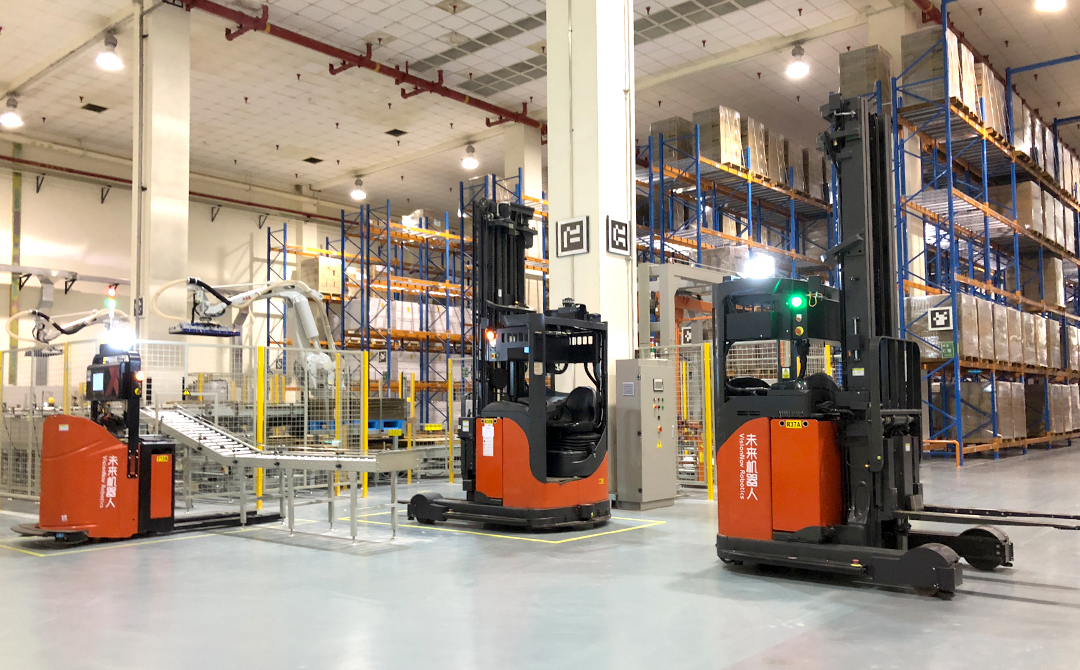
Automated Guided Vehicles (AGVs) and AMRs
Autonomous mobile robots can transport inventory between storage locations and induction stations, reducing manual movement.
Machine Vision Systems
AI-powered cameras verify package dimensions, label placement, and barcode readability before sorting.
Industrial Internet of Things (IIoT)
Connected sensors monitor equipment health, motor temperatures, vibration levels, and system utilization in real time.
Predictive Maintenance Platforms
Data analytics software identifies early warning signs of wear, allowing maintenance teams to address issues before failures occur.
Digital Twins
Virtual models simulate sorting line performance and help operators optimize workflows before implementing physical changes.
Together, these technologies create highly responsive fulfillment environments capable of adapting to changing business demands.
Maintenance Strategies for Long-Term Performance
Even the most advanced sorting system requires ongoing care. Reliability depends on a combination of preventive maintenance, predictive diagnostics, and operational discipline.
Daily Maintenance
- Remove debris from conveyors.
- Inspect sensors and barcode scanners.
- Check emergency stop functions.
- Verify smooth carrier movement.
Weekly Maintenance
- Examine cross belts for wear.
- Inspect rollers and guide rails.
- Clean optical equipment.
- Test pneumatic and electrical components.
Monthly Maintenance
- Lubricate moving assemblies.
- Inspect drive motors.
- Check belt tension and alignment.
- Review system performance reports.
Predictive Monitoring
Modern facilities increasingly use condition-monitoring tools such as:
- Vibration analysis.
- Thermal imaging.
- Motor current monitoring.
- AI-driven maintenance analytics.
These technologies help reduce unexpected downtime and maximize equipment lifespan.
Measuring Success: Key Performance Indicators for Cross-Belt Sorting Projects
Organizations implementing automated sorting systems should establish measurable performance benchmarks.
Common key metrics include:
Sorting Throughput
The number of items processed per hour reflects system productivity.
Sorting Accuracy
Monitoring mis-sort rates helps evaluate both hardware performance and software integration quality.
System Availability
Equipment uptime directly affects fulfillment capacity.
Labor Productivity
Comparing orders processed per employee before and after implementation demonstrates operational improvements.
Damage Rate
Lower product handling damage contributes to cost savings and customer satisfaction.
Return on Investment
Long-term analysis should consider labor savings, reduced errors, increased capacity, and operational flexibility.
Tracking these indicators enables continuous optimization after deployment.
Common Challenges During Cross-Belt Sorter Deployment
Like any large-scale automation project, implementation may involve obstacles.
Integration Complexity
Connecting new equipment with legacy software systems can require customized development and testing.
Facility Constraints
Existing warehouse layouts may need modification to accommodate sorter installation.
Change Management
Employees may initially resist new workflows or fear automation-related job displacement. Transparent communication and training help ease the transition.
Peak Season Timing
Many companies avoid implementation during high-demand periods to minimize operational risk.
Data Quality Issues
Poor barcode quality or inconsistent order data can reduce system effectiveness, highlighting the importance of upstream process improvements.
Addressing these challenges proactively contributes to smoother project execution.
The Future of Cross-Border Logistics Automation
The next generation of cross-border fulfillment centers will rely even more heavily on intelligent automation.
Several trends are shaping the future:
- AI-powered dynamic route optimization.
- Robotics-assisted picking and induction.
- Cloud-connected warehouse ecosystems.
- Autonomous inspection and maintenance robots.
- Advanced machine vision quality control.
- Carbon-efficient logistics planning.
- Real-time global shipment visibility.
Cross-belt sorting systems will continue evolving as a central component within these integrated logistics networks, serving as the high-speed engine that keeps products moving across increasingly complex supply chains.
Final Thoughts: Why Cross-Belt Sorting Systems Are Becoming the New Industry Benchmark
Cross-border e-commerce has fundamentally changed the demands placed on logistics operations. Warehouses are expected to process more orders, manage greater product diversity, and deliver higher accuracy than ever before—all while controlling costs and adapting to labor market challenges.
Traditional manual sorting methods and older automation technologies often struggle to meet these expectations. Cross-belt sorting systems offer a compelling alternative by combining speed, precision, flexibility, and scalability in a single platform.
Their ability to handle mixed product sizes, reduce handling damage, integrate with intelligent warehouse software, and support future business growth makes them one of the most valuable investments available for modern fulfillment centers.
However, the true success of a cross-belt sorting project depends not only on selecting the right equipment but also on thoughtful planning, software integration, employee training, preventive maintenance, and continuous operational improvement.
As international e-commerce continues to expand, the facilities that lead the market will not simply move packages faster—they will build smarter, more connected logistics ecosystems capable of delivering uninterrupted performance under any demand condition.
In that future, cross-belt sorting technology is more than an automation upgrade. It is the new benchmark for efficient, scalable, and resilient cross-border logistics.