


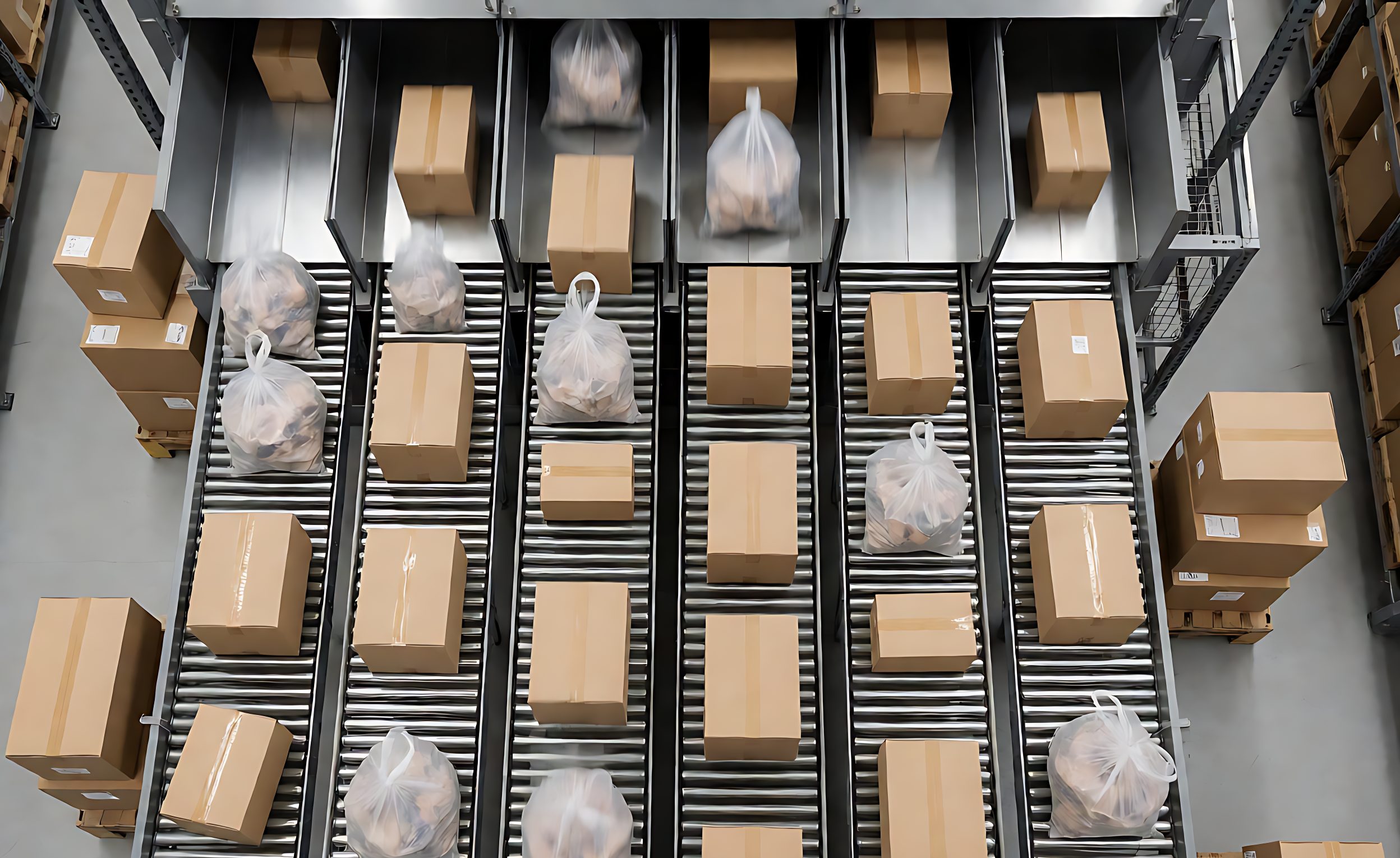
In today’s fast-paced e-commerce world, logistics efficiency is key. TRUELISORT offers advanced sorting solutions that help warehouses handle high parcel volumes with speed and accuracy.
Their cross-belt sorters, wheel sorters, and DWS systems integrate hardware and software for seamless operations. Modular and customizable, TRUELISORT adapts to different facility layouts while maintaining high throughput and reliability.
With TRUELISORT, businesses can reduce errors, save labor costs, and meet tight delivery deadlines—making it an essential partner in modern logistics automation.
Where the Speed Actually Comes From
“Faster logistics” is earned in four stations, and a sorter is only one of them:
| Station | Bottleneck it removes | Typical limiter |
|---|---|---|
| Singulation | Parcels arrive as a stream, not a queue | Spacing discipline at induct |
| DWS capture | Manual measuring and weighing | Scan-rate and dimension accuracy |
| Sortation | Human routing decisions | Outlets vs destination count |
| Dispatch staging | Waiting for complete loads | Chute and container planning |
Speed gains that last come from balancing the four: a 12,000-parcel sorter behind a 6,000-parcel DWS still delivers 6,000. That is why serious projects start with a profile study — parcel mix, peak factors, destination counts — before a machine is sized. See how the capture layer works in DWS explained, and how full-line throughput compounds in parcel sortation systems. Reference reading: dimensional weight and order fulfillment.
Peak Season Math Before the Peak
Faster logistics is really peak logistics: the sorter earns its keep on the twenty days a year that break manual floors. The arithmetic to run in September, not December:
- Peak factor — record last year’s peak-day volume over average day; e-commerce commonly runs 4–8×.
- Induct staffing — a sorter feeds on parcels, and induct is usually the first bottleneck; plan the extra shifts now.
- Surge protocols — pre-agreed carrier cut-offs, overflow lanes, and a “degraded mode” plan for the day the line stops.
- Spares on shelf — belts, motors, scanners; the peak-week lead time doubles exactly when you cannot afford it.
| Volume profile | What carries the peak |
|---|---|
| +2× average | Longer shifts on the same line |
| +4× average | Second induct, overflow lanes |
| +8× average | Pre-positioned temporary sort capacity |
Operations that rehearse the peak — timed dry runs, not memos — convert the season into margin; operations that improvise it convert the season into overtime, apology emails and churned carriers.
Speed You Can Feel: The Handback Time
Beyond parcels-per-hour, the speed customers actually feel is handback time — from order cut-off to parcel on the carrier truck. Sorting automation compresses it from hours to minutes, and the compression compounds downstream: later cut-offs mean more same-day orders captured, and earlier handovers mean carriers make their linehauls, which means tomorrow’s parcels arrive on schedule. When comparing systems, ask for the handback timeline at your cut-off volume, not just machine speed; the difference between two 10,000-parcel systems can be entirely in when their last parcel leaves the building. Operations that compete on cut-off flexibility win customers that never mention sorting in the RFQ — they just stay.
One caveat keeps the metric honest: handback time improvements must not be bought by loosening verification at discharge — a parcel handed to the wrong carrier early is worse than one handed correctly late. The timeline and the mis-sort rate are read together, always.