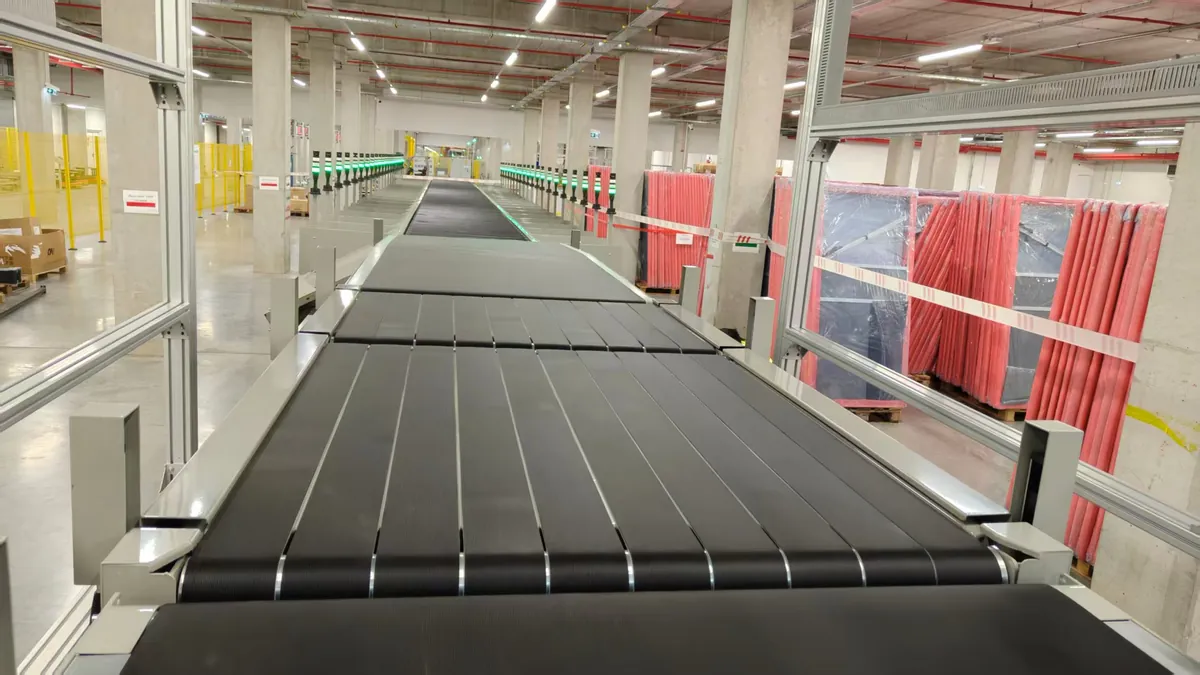
Custom Parcel Sorting Systems. Engineered for Real Operations.

Swivel wheel sorters suit logistics centers and warehouse distribution where items are robust enough for wheel-based diversion and the process already relies on conveyors. They are a practical choice when a full cross-belt system would be more than the operation needs, offering gentle handling in a compact footprint.
Each sorter family diverts items by a different mechanism, and the mechanism sets its limits. The envelope rows are physical limits, not preferences — compare on the same peak-hour rate and the same item mix.
Items travel on a conveyor and are identified upstream. At each diversion point, the wheels swivel to steer the item into the assigned lane, while controls and WCS coordinate routing and exception handling. Lane count, item orientation and spacing are confirmed during engineering review. The line is built from our conveyor systems and integrated with identification and control layers, including a defined data-acceptance checklist.
We plan access platforms, guarding and maintenance clearance into the layout from the start; a line that cannot be serviced safely will lose availability over time. Normal and exception routes are documented separately, with hold conditions and escalation contacts for no-reads, mis-sorts and alarms. Chute or lane density is reviewed against the destination count and the physical limits of the line.
Swivel wheel sorters offer very good gentle handling in a compact, low-cost footprint, but only for lighter, smaller items. The envelope is a physical limit: heavier or larger items will not divert correctly. If your mix includes those items, compare a narrow belt or cross belt family rather than forcing the wheel sorter beyond its range.
Share your item profile, lane count and conveyor layout. We will confirm whether the item envelope fits and what configuration to use.
It handles robust cartons and small parcels well; very light bags or oversize items may not divert reliably. Test representative items before committing.
Heavier or oversized items will not divert accurately and can create jams or wear at the wheel bank. If your item profile exceeds the wheel sorter envelope, evaluate a narrow belt or cross belt sorter rather than overextending the wheel diverter.
Swivel wheel modules bolt into straight conveyor runs, paired with upstream spacing and orientation conveyors, barcode scanning or DWS identification, and WCS routing logic that triggers wheel rotation at each lane spur.
Yes. Each diversion lane requires minimum spacing for safe wheel actuation, chute takeaway clearance and maintenance access. When destination counts grow very high within limited floor space, a narrow belt or cross belt sorter often delivers higher chute density.
Handover includes the as-built layout, interface list, revision history, spare-parts list, role-based training records and approved item-envelope limits so your site team can operate and maintain the system independently.