

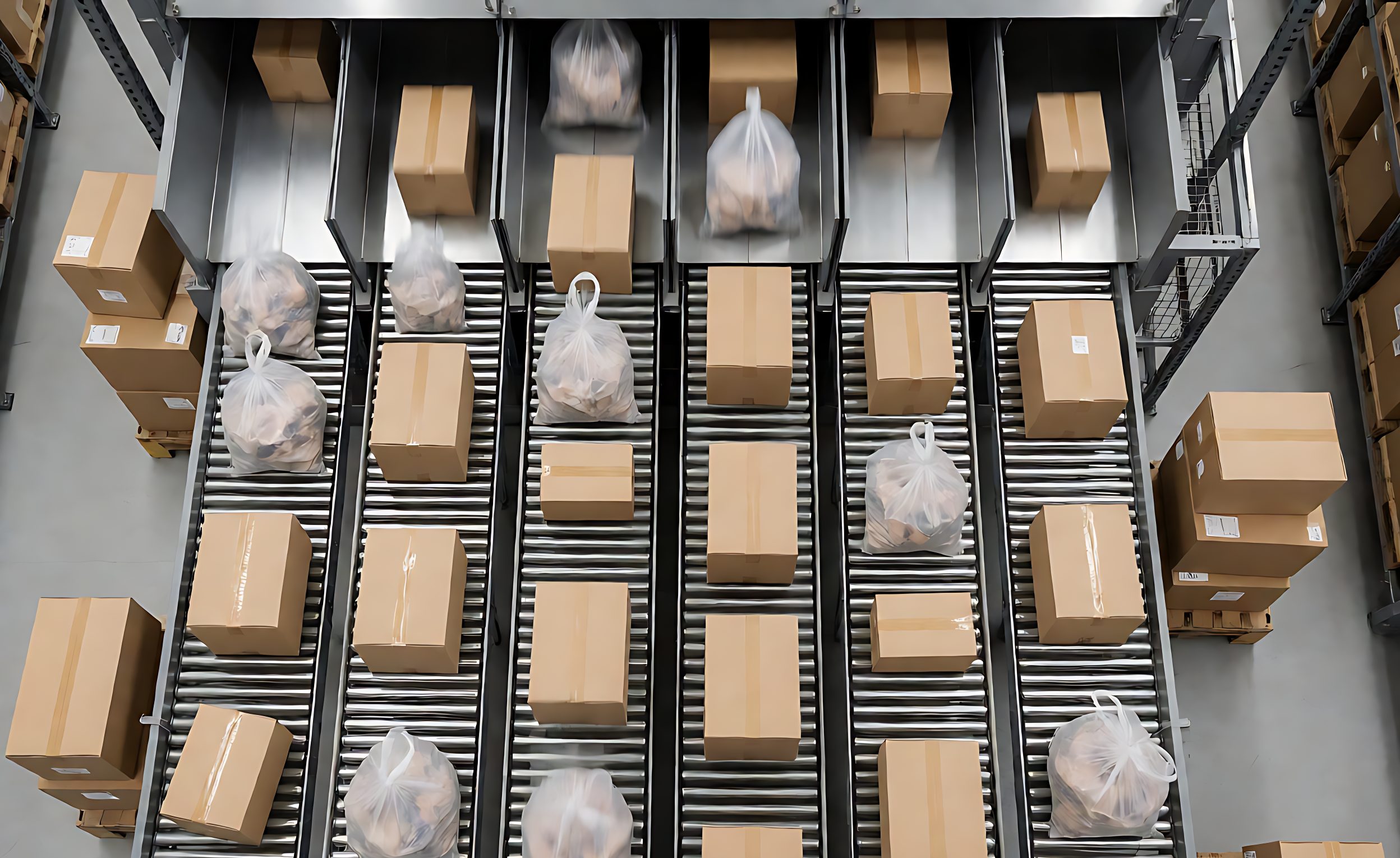
The sorter is the famous part, but the two ends of the line decide whether it ever reaches its rated rate. Induction is where cartons enter the stream; takeaway is where sorted output accumulates. A perfect sorter fed by a slow induction and drained by a small takeaway runs at the speed of its worst end. Yet buyers spec the middle and under-design the ends.
Key Takeaways
- Induction is the usual first constraint: manual induction caps rate well below sorter capacity.
- Auto-induction raises the ceiling but needs singulation and scanning reliability.
- Takeaway must buffer the slowest destination or the whole sorter stops.
- Chute count and size are set by destination volume skew, not by average.
- The ends are where most realised-rate gaps are found.
Induction: Manual Versus Automatic
Induction is the act of placing cartons onto the sorter at a steady, singulated pace with a readable barcode presented.
| Mode | Rate ceiling | Trade-off |
|---|---|---|
| Manual induction | Limited by people | Flexible, low capital |
| Semi-auto | Higher | Needs singulation aid |
| Auto induction | Near sorter capacity | High capital, needs clean inputs |
Manual induction is the most common ceiling. A sorter rated for thousands per hour is fed by operators who cannot sustain that pace, so the machine waits. Auto-induction closes the gap but only if cartons arrive singulated and scannable. The flow that delivers cartons to induction is covered in our layout guide.
Takeaway: Chutes, Lanes and Buffers
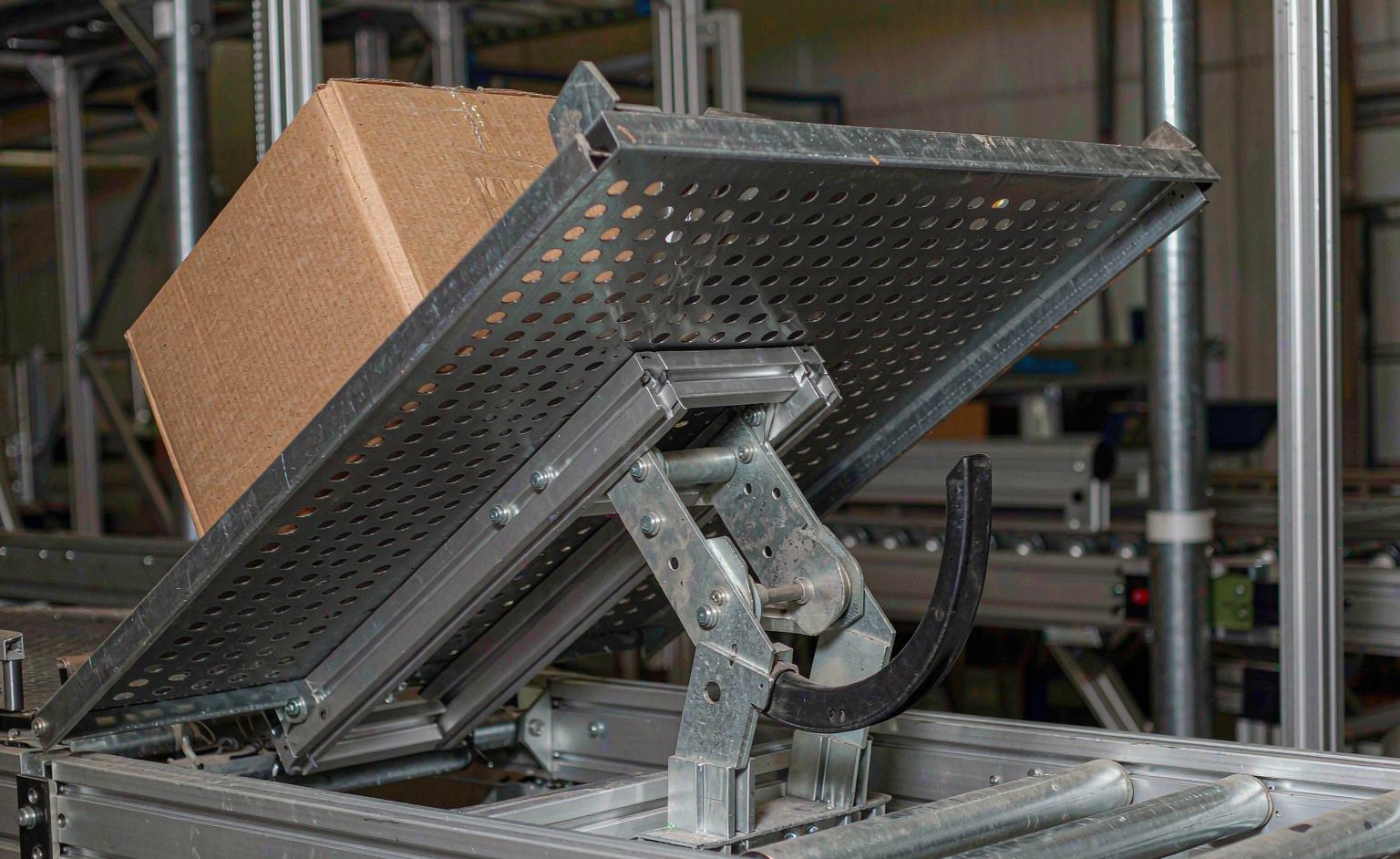
Takeaway is where each destination’s output collects. The design question is how much buffer each destination gets before it blocks the sorter.
| Design choice | Effect | Risk |
|---|---|---|
| Many small chutes | High destination count | Small buffer per chute |
| Few large lanes | Big buffer | Limited destinations |
| Dynamic buffer | Absorbs skew | More control logic |
Destination volume is skewed: a few destinations take most of the volume. Under-buffered chutes for those destinations fill first and, once full, force the sorter to stop. Buffer the skewed destinations generously. The commissioning checks that prove the takeaway holds are in our commissioning guide.
Rate and the Realised Ceiling
The realised rate is the minimum of induction rate, sorter rate and takeaway drain rate.
| End | Typical failure | Fix |
|---|---|---|
| Induction | Starved by manual pace | Auto-induction or more stations |
| Sorter | Rarely the limit | Usually fine |
| Takeaway | Chute full stops line | Bigger or dynamic buffer |
Most sites find the sorter was never the limit. The capital was spent on the middle while the ends capped the result, which also softens the payback modelled in our ROI guide. Fixing the ends is usually cheaper than buying a faster sorter.
Frequently Asked Questions
What is induction in sortation?
Induction is placing cartons onto the sorter at a steady, singulated pace with a scannable barcode. It is the entry point and usually the first rate constraint.
Why does manual induction cap the rate?
Operators cannot sustain the sorter’s rated pace, so the machine waits for cartons. The sorter’s speed is irrelevant if it is starved at the entry.
What does auto-induction require?
Cartons that arrive singulated (one at a time, spaced) and with readable barcodes. Without clean inputs, auto-induction mis-reads or jams and performs worse than manual.
Why does takeaway stop the sorter?
When a destination’s chute or lane fills, the sorter cannot divert into it and must stop or mis-route. Under-buffered skewed destinations are the usual cause.
How should chutes be sized?
By destination volume skew, not average. The few high-volume destinations need the largest buffers because they fill first and stop the line.
Is the sorter usually the bottleneck?
Rarely. The realised rate is set by the minimum of induction, sorter and takeaway. In practice the ends, not the machine, cap it.
Should I buy a faster sorter first?
Usually no. If induction or takeaway is the limit, a faster sorter just waits faster. Fix the ends, which is typically cheaper, before upgrading the middle.
Technical background: conveyor system, automation and throughput explain the mechanical and rate concepts referenced above.