

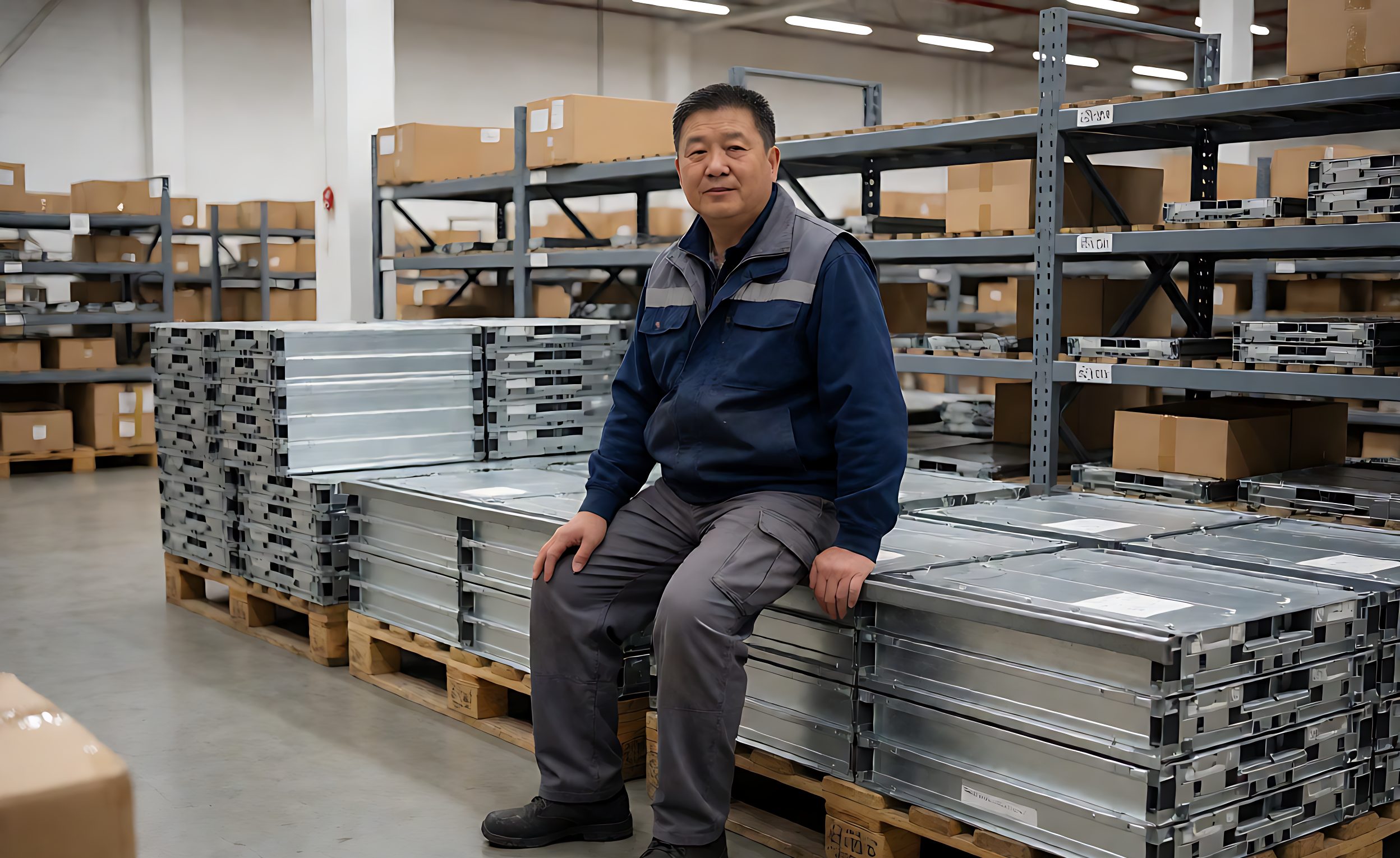


Every logistics operation is unique. The size of parcels, the layout of warehouses, and the speed of delivery—all vary from one business to another. Standard equipment often cannot meet these diverse requirements. That’s why customized solutions are essential. A tailored logistics solution integrates conveyors, sorters, scanners, and packing systems into one seamless workflow. Instead of isolated machines, businesses gain a connected system that adapts to their real-world challenges. Key benefits of customized solutions: Flexibility: Designed around specific warehouse space and parcel types. Integration: Smooth connection with existing IT and ERP systems. Scalability: Future-proof design for business growth. Performance: Measurable improvements in throughput and accuracy. At TRUELISORT, we believe every customer deserves more than equipment—they deserve a complete solution. Our engineering team works closely with clients to turn operational pain points into opportunities for efficiency and growth. The right solution doesn’t just solve today’s problems—it builds tomorrow’s advantage.
Customise or Standardise: A Decision Table
“Customised solutions” sounds like care and invoices like risk. When to customise, when to accept the standard kit:
| Decision area | Customise when | Standardise when |
|---|---|---|
| Building fit | Columns, mezzanines, height bands force it | Greenfield or shell built to spec |
| Parcel profile | Genuinely unusual mix dominates volume | Mix sits inside the tested envelope |
| Software rules | Business logic is your differentiation | Logic is industry-standard plumbing |
| Mechanical core | Almost never | Proven loop beats bespoke loop, always |
The last row is the discipline most buyers learn the expensive way. Mechanical customisation multiplies every downstream cost — spare parts, service skills, upgrade paths — while delivering value only in the rare case where physics, not preference, demands it. Software customisation is the mirror image: cheap to iterate, dangerous only when it buries business logic where neither side can maintain it. The negotiation that works treats customisation as a budget with a purpose: spend it where your operation genuinely differs, and bank the standard elsewhere. Vendors respect buyers who know that line, and the resulting contracts are shorter, clearer and better supported. The anatomy showing where customisation lands is in component groups and their specs, and the maturity ladder it should match in find your maturity level. Reference: mass customisation and standardisation.
The budget-with-a-purpose framing also disciplines the customisation conversation internally. Customisation requests originate in operations for good reasons and in habit for bad ones, and the table’s rows give both a shared test: does this request reflect a genuine difference in physics, profile or business logic, or a preference dressed as one? The filter works best when applied early — in design workshops, before quotations harden — because a customisation removed at workshop stage costs a conversation, while the same customisation discovered at FAT costs a delay. Operations that institutionalise the filter find their customisation budgets shrinking and their standard-system satisfaction rising, which is the pattern mature buyers recognise. Reference: requirements analysis and scope creep.
Tailored Beats Biggest
The tailored answer beats the biggest answer in almost every real building: floor geometry, parcel mix and destination structure vary enough that the right-sized cell outperforms the larger one bought early. The tailoring framework — and what it trades away — is the substance of the tailored solutions guide.