

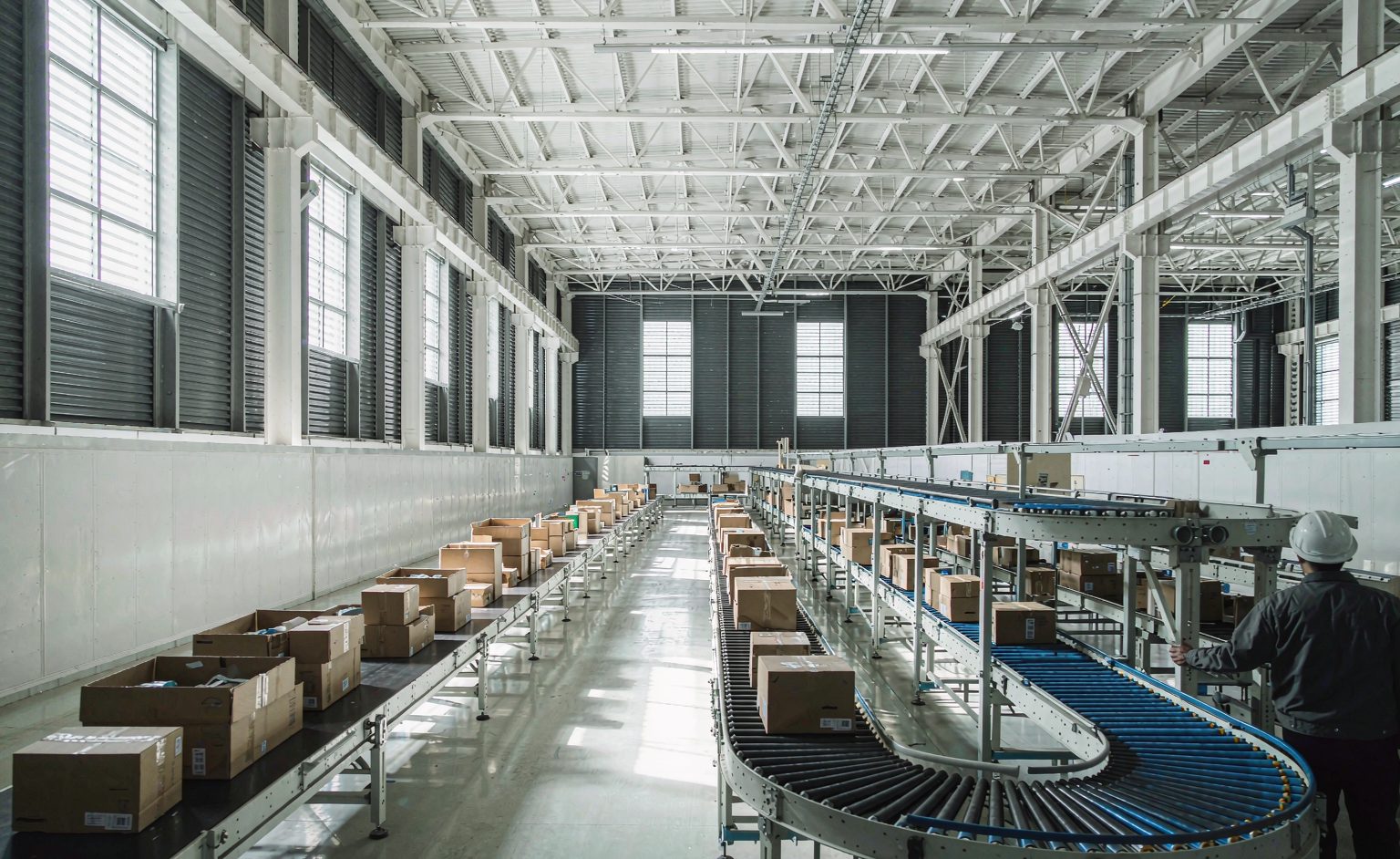
In today’s fast-paced e-commerce and logistics landscape, speed, accuracy, and scalability are no longer luxuries—they are essential. Smart warehousing, powered by automation, is becoming the new standard for competitive logistics operations.
Automated sorting systems, robotic arms, AI-driven tracking software, and conveyor networks have dramatically reduced human error and labor costs. These technologies enable 24/7 operation, faster order fulfillment, and real-time inventory management.
Companies investing in intelligent warehousing solutions are experiencing shorter delivery times, improved accuracy, and stronger customer satisfaction. For instance, the integration of dynamic weighing systems and five-sided scanning tunnels can sort up to 10,000 parcels per hour with exceptional precision.
The future of logistics lies in flexibility, modular design, and data-driven decision-making. Businesses that adopt automated warehousing systems today are positioning themselves for long-term success in a rapidly evolving global market.
Keywords: smart warehouse, automation, parcel sorting system, logistics technology, warehouse efficiency
Warehouse Intelligence Has Levels: Find Yours Before You Buy
“Smart warehouse” describes a ladder, not a state. Five maturity levels, and the sorting investment appropriate to each:
| Level | Operation profile | Right sorting step |
|---|---|---|
| L0 – paper | Manual everything, whiteboards | Process discipline first; equipment later |
| L1 – scanned | Barcodes tracked, spreadsheets rule | Single sorter on the dominant flow |
| L2 – connected | WMS-driven, flows share data | Backbone sorter across two-plus flows |
| L3 – orchestrated | WCS balances live; exceptions managed | Full loop with predictive maintenance |
| L4 – adaptive | Profile changes absorbed in software | Multi-site network optimisation |
Buying above your level fails quietly: the L1 warehouse that installs an orchestrated-grade loop uses a fraction of it, because its WMS still releases work in batches the sorter cannot pace against. Buying below your level fails loudly: the L3 operation that bought a single-flow sorter now routes its growth through manual workarounds. The honest inventory is data first — what your systems already know and share — because sorting automation amplifies whatever data discipline exists, good or bad. Every level transition is a project with its own change management; the equipment is the visible half. The flows a backbone serves are mapped in five flows, one backbone, and the horizons beyond L4 in automation horizons. Reference: warehouse management systems and maturity models.
One caution about the ladder itself: it describes capability, not virtue. An L2 operation running brilliantly is worth more than an L4 operation drowning in its own telemetry, and the ladder’s only honest use is diagnosing the next useful step — never as a scoreboard between sites. Operations that climb deliberately, consolidating each level’s gains before the next investment, consistently outperform those that skip levels; the skipped levels reappear later as integration debt with interest. The sequencing discipline behind this is in the sequencing rule. Reference: capability maturity models and organisational effectiveness.
The Warehouse-Scale View
Zoom out from the sorter and the warehouse-scale picture appears: induction feeds, singulation, sortation, dispatch waves — a chain whose rate is its slowest honest link. The warehouse-level framing of that chain, and where sorting sits inside it, is in the warehouse automation solutions.