
In modern logistics and warehouse automation, sorting efficiency has become one of the most important competitive advantages in supply chain operations. As e-commerce volumes continue to grow, delivery expectations tighten, and labor costs rise globally, businesses are under increasing pressure to process more parcels, cartons, and products with greater speed and accuracy.
At the center of this transformation is the automated sorting system.
Among the many technologies available today, three sorting solutions dominate high-throughput distribution centers and fulfillment operations:
- Cross-Belt Sorters
- Sliding Shoe Sorters
- Tilt-Tray Sorters
Each system is designed around different operational priorities. Some excel in handling fragile items, others dominate high-speed parcel sorting, while some provide superior flexibility for mixed SKU environments.
Choosing the wrong system can result in:
- Bottlenecks
- Product damage
- High maintenance costs
- Poor scalability
- Excessive labor dependency
Choosing the right system, however, can dramatically improve throughput, operational stability, and long-term profitability.
This guide explores the engineering principles, strengths, weaknesses, cost structures, and ideal use cases of cross-belt, sliding shoe, and tilt-tray sorting systems to help businesses make informed automation decisions.
1. Why Sorting System Selection Matters More Than Ever
Sorting systems are no longer optional upgrades in modern logistics—they are operational infrastructure.
Today’s warehouses face several major challenges:
- SKU explosion from e-commerce
- Faster same-day and next-day delivery expectations
- Labor shortages
- Rising return volumes
- Mixed package dimensions and materials
Manual sorting struggles to maintain consistency under these conditions.
Automation solves this by enabling:
- Continuous flow processing
- Higher accuracy rates
- Predictable throughput
- Reduced handling damage
- Better labor optimization
However, not all sorting systems solve the same problem.
2. Understanding the Three Main Sorting Technologies
Before comparing systems, it is important to understand how each one fundamentally works.
3. Cross-Belt Sorters: Precision and High-Speed Flexibility
Cross-belt sorters are among the most advanced and versatile automated sorting technologies available today.
How cross-belt sorters work
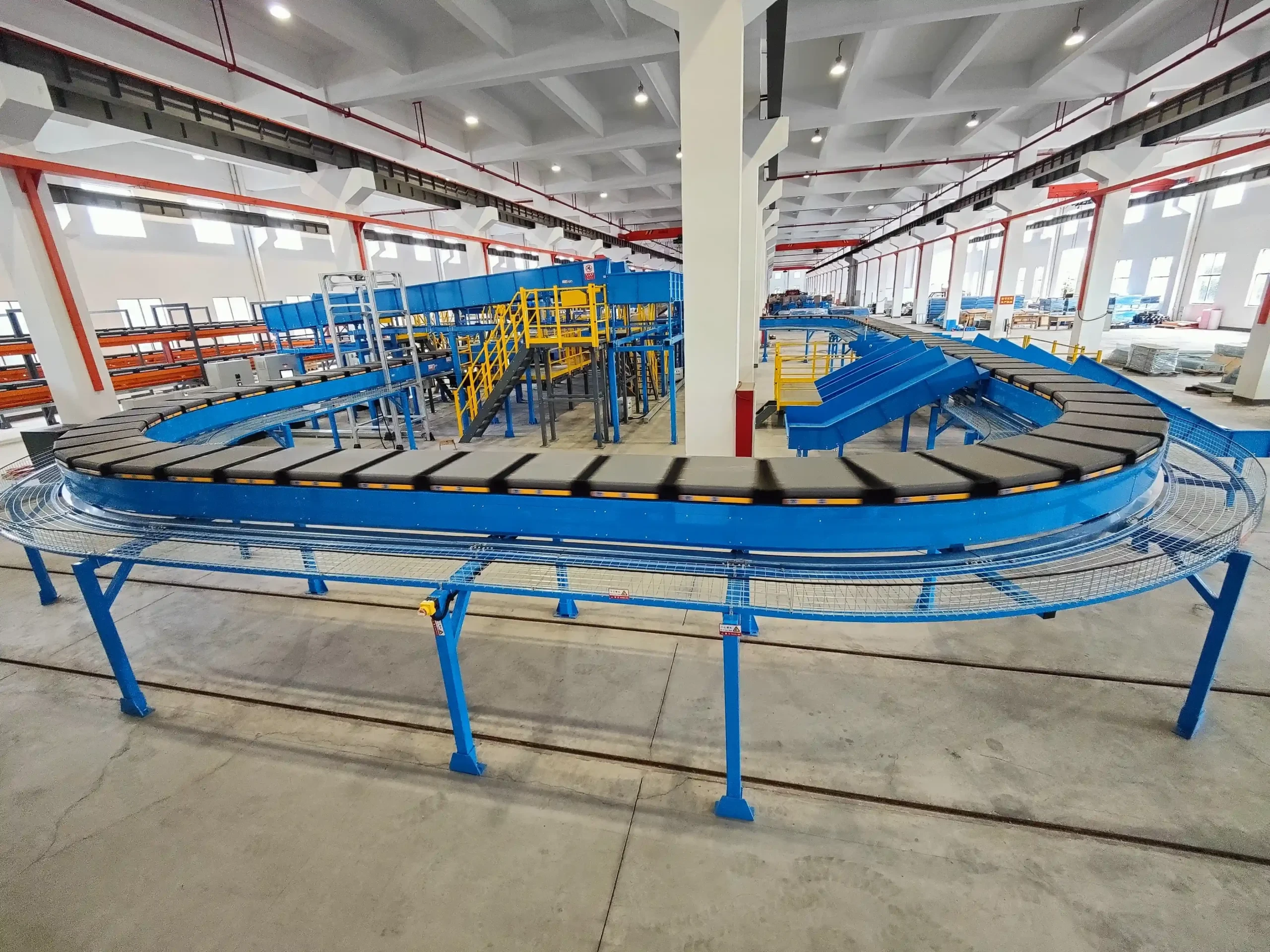
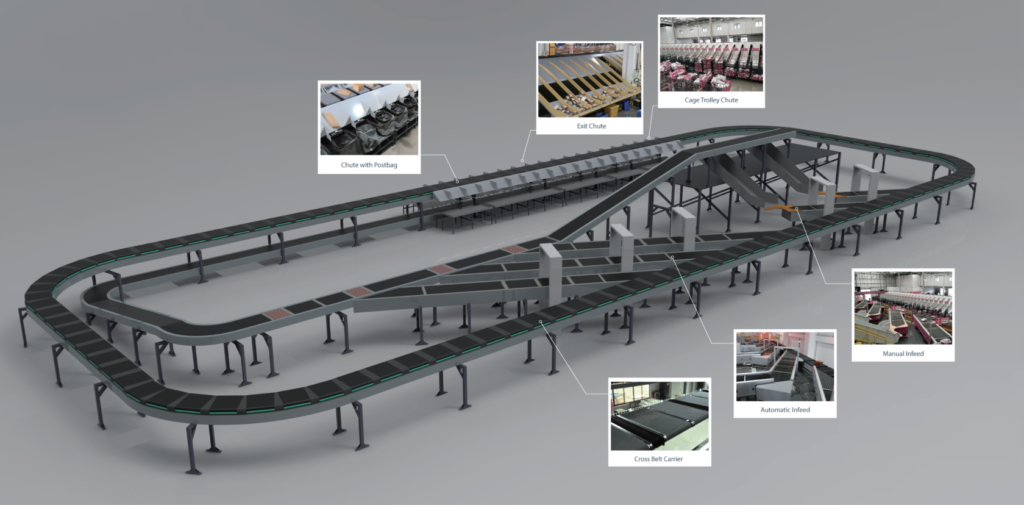
Each carrier on the sorter contains a small conveyor belt mounted perpendicular to the main conveyor direction.
When a product reaches its destination:
- The belt activates
- The item is gently transferred sideways into a chute or lane
This controlled discharge process allows highly precise handling.
Key advantages of cross-belt sorters
1. Excellent handling of fragile products
Because products are transferred smoothly rather than pushed or dropped, cross-belt systems are ideal for:
- Cosmetics
- Electronics
- Pharmaceuticals
- Glass items
- Small consumer goods
2. High sorting accuracy
Cross-belt systems maintain excellent positioning control even at high speeds.
This reduces:
- Mis-sorts
- Product collisions
- Chute overflow issues
3. Superior mixed-SKU compatibility
Cross-belt sorters can handle:
- Small packages
- Irregular items
- Lightweight goods
- Polybags
- Cartons of varying dimensions
This flexibility makes them highly attractive for e-commerce fulfillment centers.
4. High throughput capability
Modern cross-belt systems can process:
- Thousands to tens of thousands of items per hour
depending on system configuration.
Weaknesses of cross-belt sorters
1. High initial investment
Cross-belt systems are among the most expensive sorting solutions due to:
- Complex carrier mechanisms
- Advanced controls
- High precision engineering
2. More maintenance points
Each carrier contains moving parts, motors, or drive systems.
This increases:
- Maintenance complexity
- Spare part requirements
- Technical expertise needs
3. Larger system complexity
Installation and integration are more sophisticated compared to simpler sorter types.
4. Sliding Shoe Sorters: High-Speed Parcel Distribution Specialists
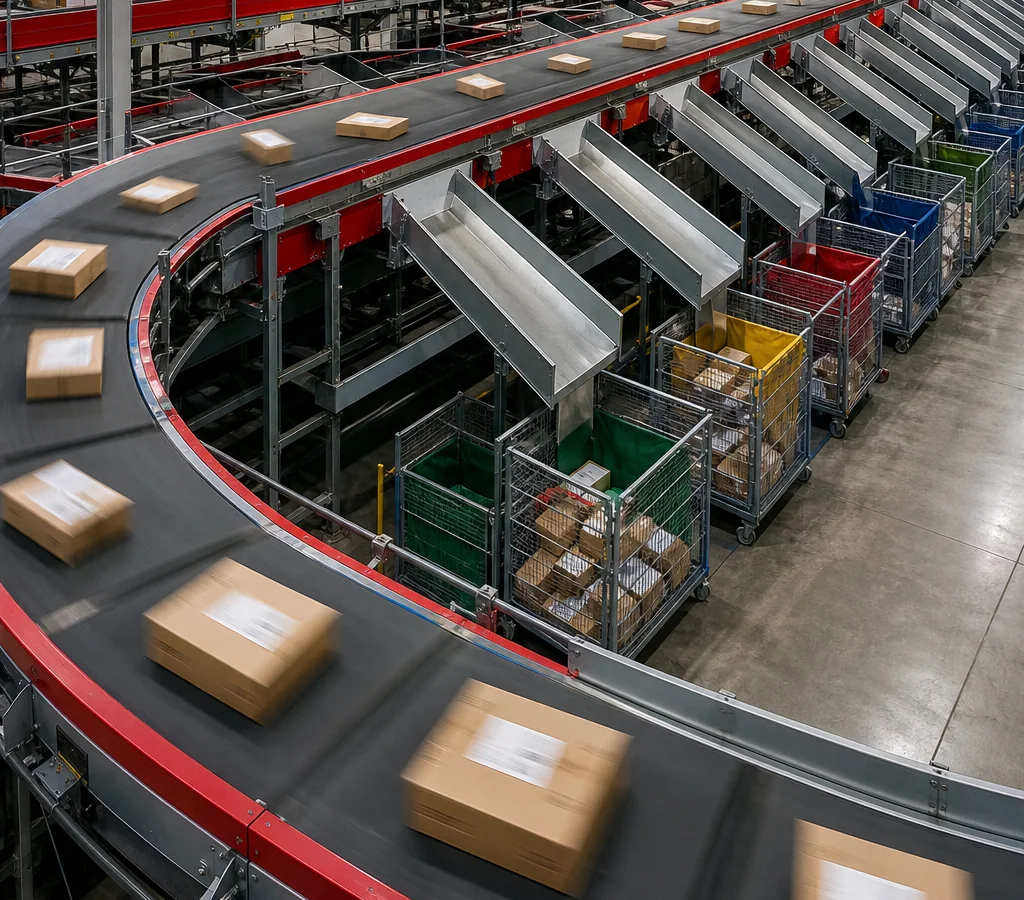
Sliding shoe sorters are widely used in parcel hubs, courier systems, and large-scale carton sorting environments.
How sliding shoe sorters work
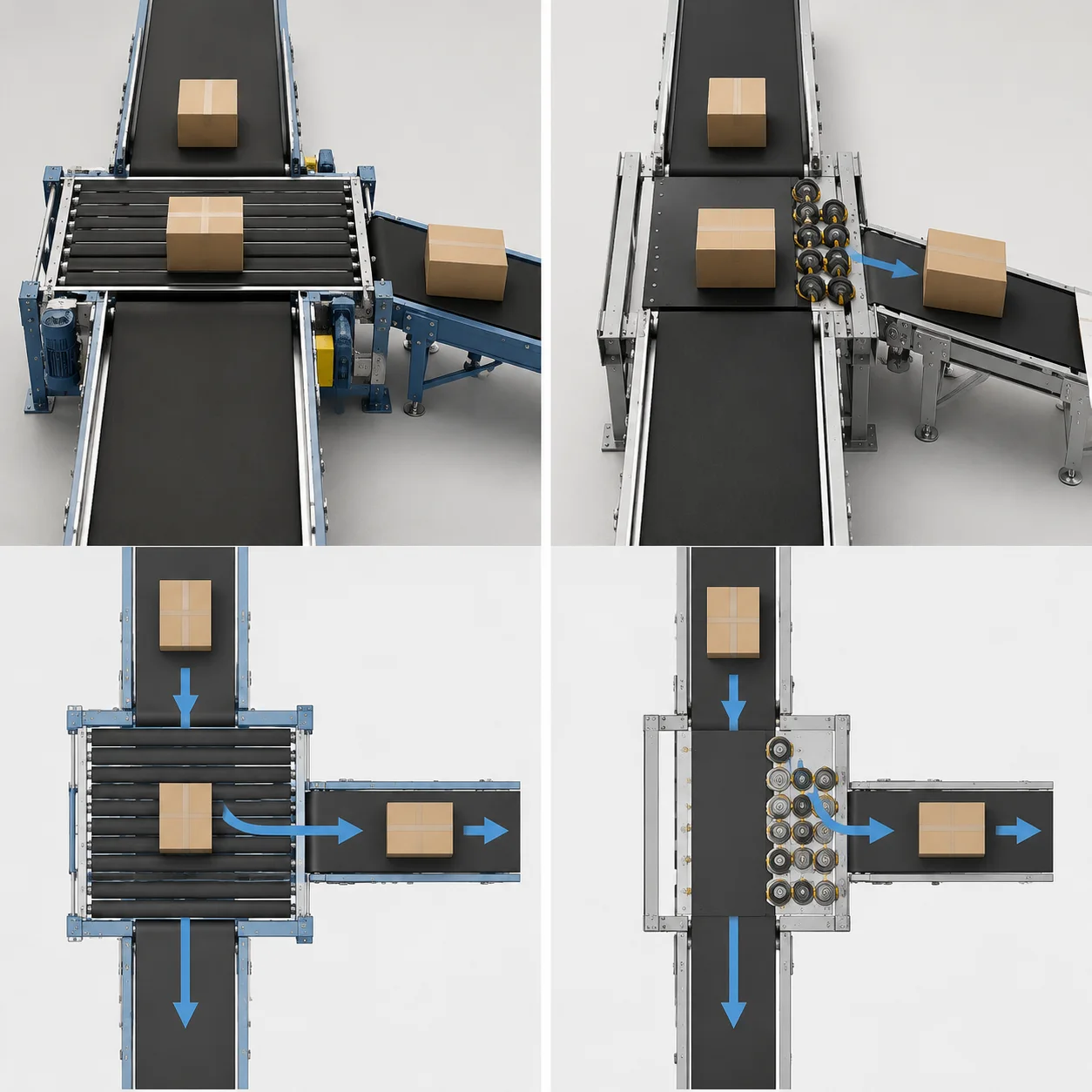
Products travel on slats while “shoes” slide diagonally across the conveyor surface, pushing items into designated lanes.
The system relies on controlled lateral movement rather than lifting or tilting.
Key advantages of sliding shoe sorters
1. Extremely high throughput
Sliding shoe systems are built for speed.
They excel in environments with:
- Massive parcel volumes
- Continuous flow operations
- High carton uniformity
2. Gentle compared to traditional push sorters
Although products are pushed sideways, the motion is relatively controlled and smooth.
This reduces product damage compared to harsher mechanical diversion methods.
3. Strong reliability in parcel operations
Sliding shoe systems are highly proven in:
- Postal centers
- Courier networks
- Distribution hubs
They are optimized for repetitive carton handling at scale.
4. Efficient for medium-to-large packages
They perform especially well with:
- Corrugated cartons
- Standard shipping boxes
- Stable package geometries
Weaknesses of sliding shoe sorters
1. Less effective for irregular products
Very small or unstable items may experience:
- Rotation issues
- Misalignment
- Reduced sorting accuracy
2. Limited compatibility with ultra-light products
Polybags or lightweight flexible packaging can be difficult to control consistently.
3. Requires product spacing discipline
Packages need proper induction spacing to avoid collisions during diversion.
5. Tilt-Tray Sorters: Flexible Multi-Destination Sorting Systems
Tilt-tray sorters have been used for decades in industries requiring flexible destination routing.
How tilt-tray sorters work
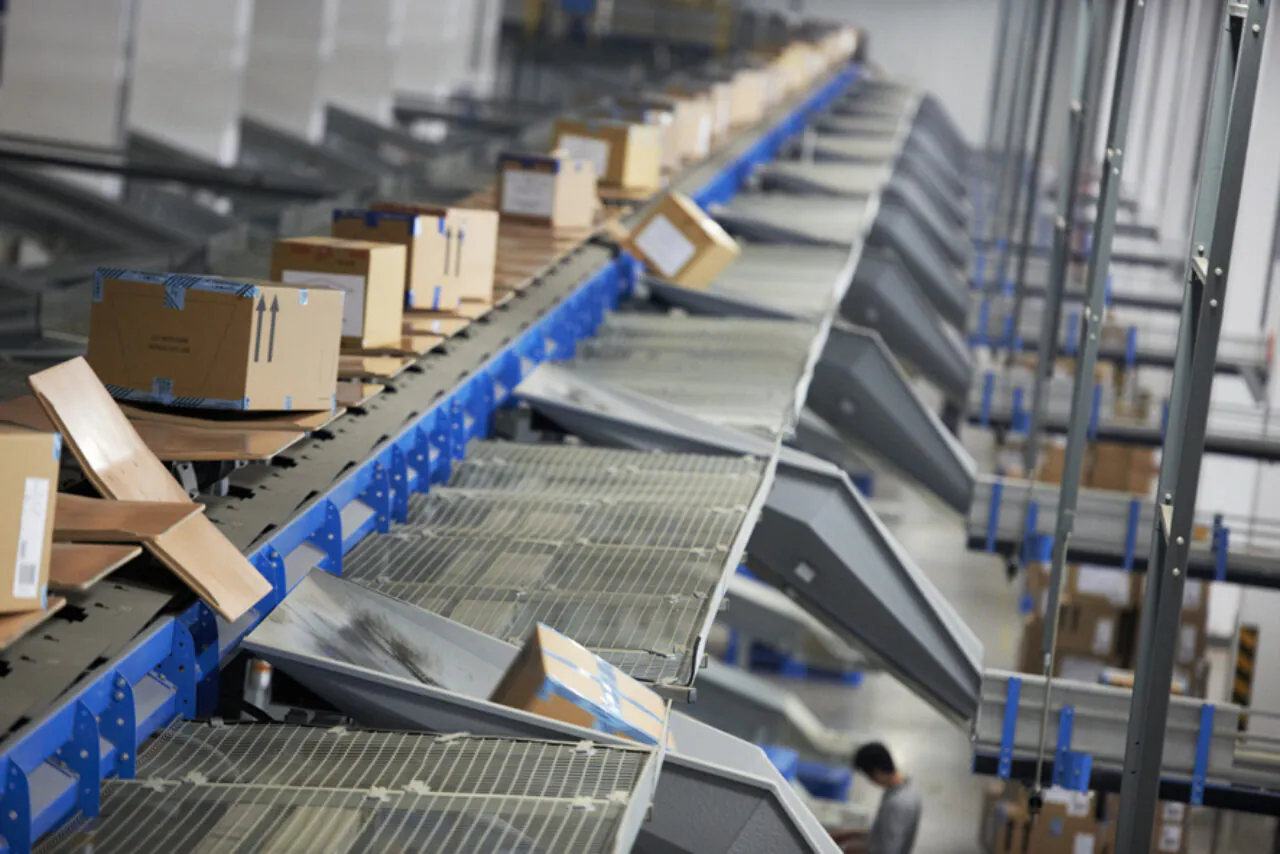
Products sit on trays mounted to a moving conveyor loop.
At the assigned destination:
- The tray tilts mechanically
- The product slides into the discharge chute
Key advantages of tilt-tray sorters
1. Flexible destination configurations
Tilt-tray systems support:
- Multiple discharge locations
- Complex routing layouts
- Long sorter loops
2. Good for mixed operational environments
They are often used in:
- Airport baggage handling
- Retail distribution
- Apparel fulfillment
3. Moderate handling gentleness
Compared to aggressive pushing systems, tilt trays provide relatively controlled discharge.
4. Strong scalability
Additional destinations can often be integrated efficiently.
Weaknesses of tilt-tray sorters
1. Product stability limitations
Items can shift or bounce during tray movement if not properly stabilized.
2. Lower precision than cross-belt systems
Small or highly irregular items may not discharge consistently.
3. Noise and mechanical wear
The repeated tilting action introduces:
- Mechanical stress
- Higher operational noise
- Wear on tray pivot systems
6. Throughput Comparison: Which System Handles the Highest Volume?
Cross-Belt
Excellent throughput with strong precision.
Best for:
- High SKU diversity
- E-commerce complexity
Sliding Shoe
Often delivers the highest pure parcel throughput.
Best for:
- Standardized shipping cartons
- Courier networks
Tilt-Tray
Moderate-to-high throughput with strong routing flexibility.
Best for:
- Multi-destination environments
- Retail logistics
7. Product Type Compatibility Comparison
Cross-Belt Sorters
Best compatibility:
- Fragile goods
- Small items
- Mixed dimensions
- Irregular products
Sliding Shoe Sorters
Best compatibility:
- Medium-to-large cartons
- Stable packaging
- Parcel-heavy operations
Tilt-Tray Sorters
Best compatibility:
- Apparel
- Retail goods
- Luggage
- General merchandise
8. Space Requirements and Facility Layout Impact
Sorting systems significantly affect warehouse design.
Cross-Belt Layout Considerations
- Compact footprint relative to throughput
- Excellent for dense automation environments
- Flexible chute placement
Sliding Shoe Layout Considerations
- Longer straight runs often preferred
- Requires efficient induction systems
- High-capacity discharge lanes needed
Tilt-Tray Layout Considerations
- Large loop structures common
- Strong for multi-level routing
- Useful in facilities with distributed destinations
9. Maintenance and Operational Complexity
Maintenance directly impacts long-term ownership costs.
Cross-Belt Maintenance
Most complex due to:
- Carrier mechanics
- Multiple drive systems
- Sensor integration
Requires skilled technical teams.
Sliding Shoe Maintenance
Generally robust and proven.
Key wear points:
- Sliding shoe assemblies
- Slat systems
- Diverter tracks
Tilt-Tray Maintenance
Mechanical tilting components require:
- Regular inspection
- Lubrication
- Pivot maintenance
10. Energy Consumption Considerations
Energy efficiency matters increasingly in large-scale operations.
Cross-Belt Systems
Higher energy consumption due to:
- Numerous active belts
- Distributed motors
Sliding Shoe Systems
Efficient for high-volume parcel flow.
Tilt-Tray Systems
Moderate energy usage depending on:
- Tray count
- Loop size
- Mechanical design
11. Industry-Specific Selection Recommendations
E-Commerce Fulfillment Centers
Best choice: Cross-Belt
Why:
- SKU diversity
- Fragile item handling
- Rapid order variability
Courier and Postal Hubs
Best choice: Sliding Shoe
Why:
- Massive carton throughput
- Standard package consistency
- High-speed operations
Airports and Baggage Handling
Best choice: Tilt-Tray
Why:
- Flexible routing
- Large loop configurations
- Destination complexity
Apparel Distribution
Best choice: Tilt-Tray or Cross-Belt
Depends on:
- Product fragility
- Throughput targets
- Packaging consistency
12. Scalability: Planning for Future Growth
Many companies underestimate future sorting demand.
A system that works today may become a bottleneck within three years.
Cross-Belt Scalability
Excellent for:
- SKU expansion
- Omnichannel growth
- Automation integration
Sliding Shoe Scalability
Excellent for:
- Volume scaling
- Parcel network expansion
Tilt-Tray Scalability
Excellent for:
- Destination growth
- Routing complexity
13. Integration with Warehouse Automation Ecosystems
Modern sorters rarely operate alone.
They integrate with:
- Warehouse Management Systems (WMS)
- Robotics
- Vision scanning systems
- Automated storage systems
- Conveyor networks
Cross-Belt Integration Strength
Strongest compatibility with:
- AI vision systems
- Robotic induction
- Dynamic routing software
Sliding Shoe Integration Strength
Excellent for:
- Barcode-based parcel routing
- Courier hub operations
Tilt-Tray Integration Strength
Useful for:
- Distributed fulfillment layouts
- Retail store replenishment systems
14. Cost Analysis: Initial Investment vs Long-Term ROI
Cross-Belt
Highest upfront cost
But potentially strongest flexibility and future-proofing.
Sliding Shoe
Strong cost efficiency for parcel-heavy operations
Excellent ROI in high-volume shipping environments.
Tilt-Tray
Moderate investment profile
Often balanced between flexibility and cost.
15. The Future of Sorting Technology
The next generation of sorting systems is evolving rapidly.
Emerging trends include:
- AI-driven dynamic routing
- Vision-guided induction
- Predictive maintenance systems
- Autonomous robotic feeding
- Real-time traffic balancing
- Digital twin simulation
Cross-belt systems currently align most closely with advanced intelligent fulfillment models, but sliding shoe and tilt-tray systems remain dominant in many large-scale industrial applications.
Conclusion: The Best Sorting System Depends on Your Operational DNA
There is no universally “best” sorting technology.
The ideal solution depends on:
- Product characteristics
- Throughput requirements
- Facility layout
- Growth strategy
- Labor structure
- Budget priorities
Choose cross-belt sorters if your operation prioritizes:
- Precision
- SKU flexibility
- Fragile product handling
- E-commerce complexity
Choose sliding shoe sorters if your operation prioritizes:
- Maximum parcel throughput
- Standardized cartons
- Courier-scale efficiency
Choose tilt-tray sorters if your operation prioritizes:
- Routing flexibility
- Multi-destination handling
- Retail or baggage distribution
In the end, successful automation is not about buying the most advanced machine. It is about selecting the system whose engineering logic best matches the operational realities of your business.