

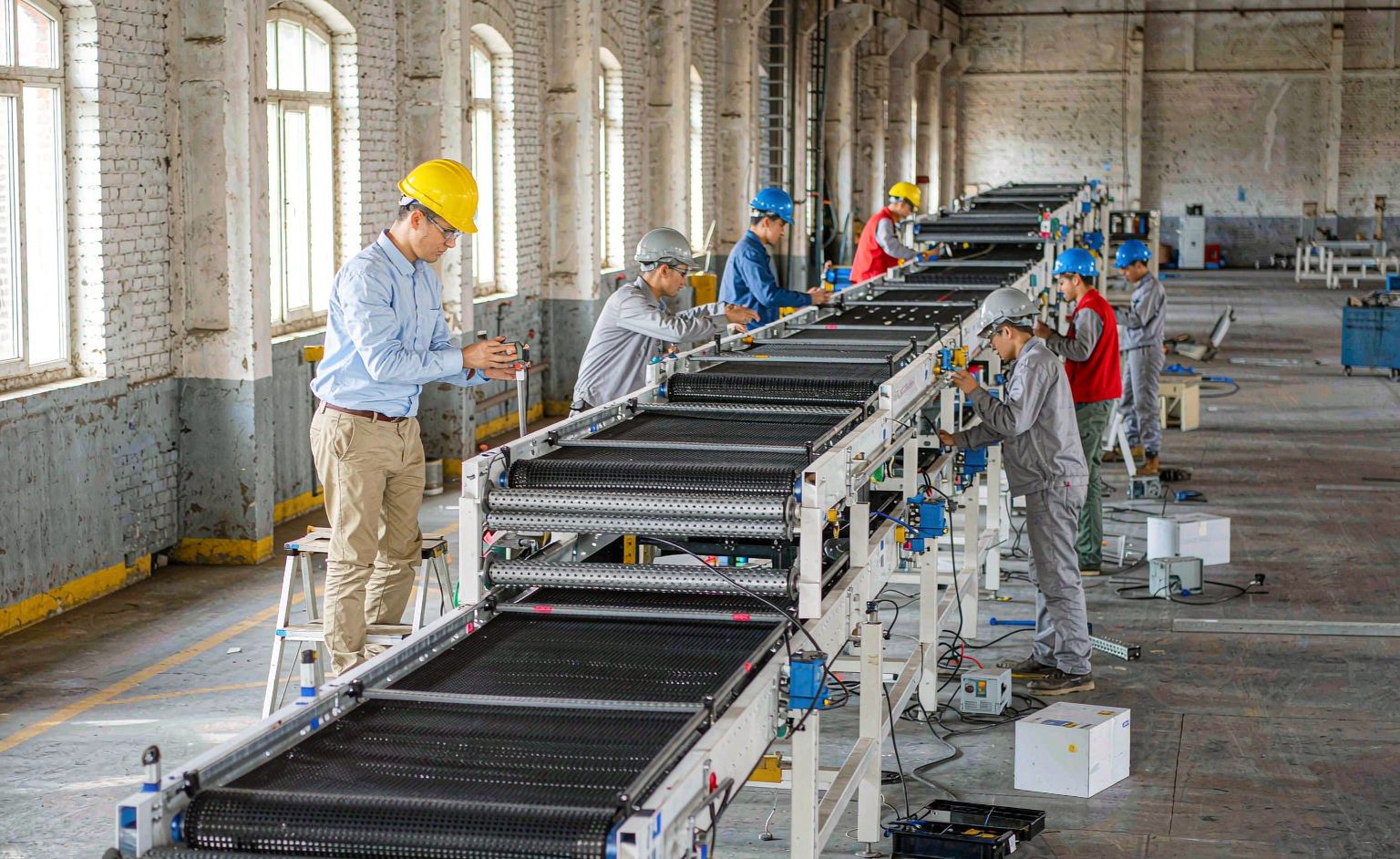


A cross belt sorter is the highest-throughput option in the parcel sortation family, and it is priced accordingly. Buyers who approach it as a machine purchase are surprised by the project it actually is: the sorter is one line in a budget that includes infeed, chutes, controls, integration and commissioning. Sizing it correctly — by throughput and chute logic rather than by the cheapest available machine — is what separates a system that pays back from one that constrains the operation for a decade. This guide covers how the specification is built.
Key Takeaways
- Throughput, not price, is the sizing input: peak-hour parcel rate drives belt speed, carrier pitch and induction count.
- Chute count is a logistics decision (destinations, returns, re-circulation), not a machine feature — it is often the real budget driver.
- Cross belt is the high-throughput choice; narrow belt and swivel wheel suit different volume and parcel profiles.
- The machine quote is a minority of the installed cost: infeed, controls, integration and commissioning sit outside it.
- Peak, not average, volume is the number that must be sized for — a system sized for average fails every peak season.
Sizing by Throughput, Not by Catalogue
The first question is not which sorter, but what rate the sorter must sustain. Throughput is parcels per hour at the busiest hour of the peak day, not the daily average.
| Input | What it determines | How to get it |
|---|---|---|
| Peak-hour parcel rate | Required system throughput | Peak-day hourly profile, not monthly average |
| Parcel size and weight envelope | Carrier and belt width | Measure the largest and heaviest items in the mix |
| Induction pattern | Number of induction stations | Manual vs automatic singulation before the sorter |
| Growth horizon | Whether to buy headroom now or later | Three-to-five-year volume plan |
The distinction between average and peak is where most under-sizing happens. A facility moving a comfortable daily average can still have a peak hour at two or three times that rate, and a sorter sized for the average will be the constraint on exactly the days that matter. Size for the peak hour, then decide whether the shoulder hours justify the headroom.
Cross Belt vs the Alternatives
Cross belt sorters are chosen for throughput and gentle handling; the other families trade throughput for cost or footprint. Knowing the boundary keeps the specification honest.
| Family | Strength | Typical fit | Trade-off |
|---|---|---|---|
| Cross belt | Highest throughput, gentle diversion | High-volume hubs and parcel networks | Highest capital and footprint |
| Narrow belt | Good throughput at lower cost | Mid-volume distribution and e-commerce | Lower ceiling than cross belt |
| Swivel wheel | Compact, gentle, lower cost | Smaller items, space-constrained sites | Limited to lighter, smaller parcels |
| Put wall | Batch sorting without a loop sorter | Smaller operations, store replenishment | Labour-intensive at high volume |
The family comparison is developed further in our narrow belt sorter guide and our swivel wheel sorter guide; the parcel-profile logic that decides between them is the subject of our parcel sortation overview.
Chute Count: The Real Budget Driver
Chutes look like a configuration detail and behave like the largest scope variable. Every destination needs one: carrier lanes, postal destinations, regional sort groups, returns and re-circulation.
| Chute driver | What it adds | Question to ask |
|---|---|---|
| Carrier count | One chute per carrier lane | How many carriers ship from this site today? |
| Destination granularity | More chutes for finer sort | Does the sort need to be regional or postcode-level? |
| Returns flow | Dedicated chutes and re-circulation | What share of volume is inbound returns? |
| Overflow / reject | Reject chute and handling station | What happens to no-reads and oversize items? |
A useful planning exercise: draw the sort matrix on paper — destinations down one side, shift patterns across the top — and count the distinct destinations that need physical separation. That count, not the machine’s maximum, sets the chute requirement, and the chute requirement sets a large part of the installed cost.
What Sits Outside the Machine Quote
The sorter itself is one line. A realistic budget includes everything needed to make it operate.
| Scope item | Why it is separate | Common underestimate |
|---|---|---|
| Infeed and singulation | Separate equipment, often separate supplier | Manual induction assumed when automation is needed |
| Chutes and conveyors | Fabrication and installation scope | Chute count decided after the quote |
| Controls and integration | WMS/PLC interface work | Integration treated as plug-and-play |
| Installation and commissioning | Mechanical, electrical and acceptance testing | Site preparation and downtime cost |
| Training and spares | Operator training and initial spares kit | Spares and service contract priced later |
The integration scope deserves particular attention. A sorter must exchange data with the warehouse management system in both directions — receiving sort instructions and reporting completion — and that interface is a software project with its own timeline. The questions to ask before signing are covered in our parcel singulator guide, which addresses the feeding side that determines whether the sorter ever reaches rated throughput.
Planning the Budget
Build the budget as three layers. The machine and its immediate scope, which the supplier quotes directly. The surrounding material handling, which is usually quoted separately and is proportional to layout. And the project costs — integration, installation, training, spares and the downtime to cut it in. Asking for all three in writing, from the same scope definition, is what makes two proposals comparable.
Then test the decision against the alternative. If the peak-hour requirement is modest, or the parcel profile is light and small, a lower-throughput family may serve the same volume at a materially lower installed cost. The comparison is not cross belt versus nothing; it is cross belt versus the family that fits the profile.
Frequently Asked Questions
How is cross belt sorter throughput determined?
By the peak-hour parcel rate, not the daily average. That rate drives belt speed, carrier pitch and the number of induction stations the system needs.
How many chutes does a cross belt sorter need?
One per destination that requires physical separation: each carrier lane, sort region, returns flow and a reject chute. The count comes from the sort matrix, not from the machine specification.
Cross belt or narrow belt sorter?
Cross belt for the highest throughput and gentle handling; narrow belt for mid-volume operations at lower capital cost. The decision follows from the peak-hour rate and parcel profile.
What is not included in a sorter quote?
Usually infeed and singulation, chutes and conveyors, WMS/PLC integration, installation and commissioning, training and spares. These are frequently larger than buyers expect.
How much floor space does a cross belt sorter need?
More than a narrow belt or swivel wheel system of the same throughput, because of the loop and chute arrangement. Layout planning must include footprint, flow direction and expansion space.
Should I size for future volume?
Only if the growth plan is credible. Buying headroom costs capital now; under-sizing costs a retrofit later. The honest answer depends on the three-to-five-year volume forecast.
What determines whether a sorter reaches rated throughput?
The feeding side. Singulation quality and induction rate determine whether the sorter’s rated capacity is ever achievable, which is why infeed design is part of the specification, not an afterthought.
Technical background: sorting systems, conveyor systems and material handling equipment explain the system context referenced above.