


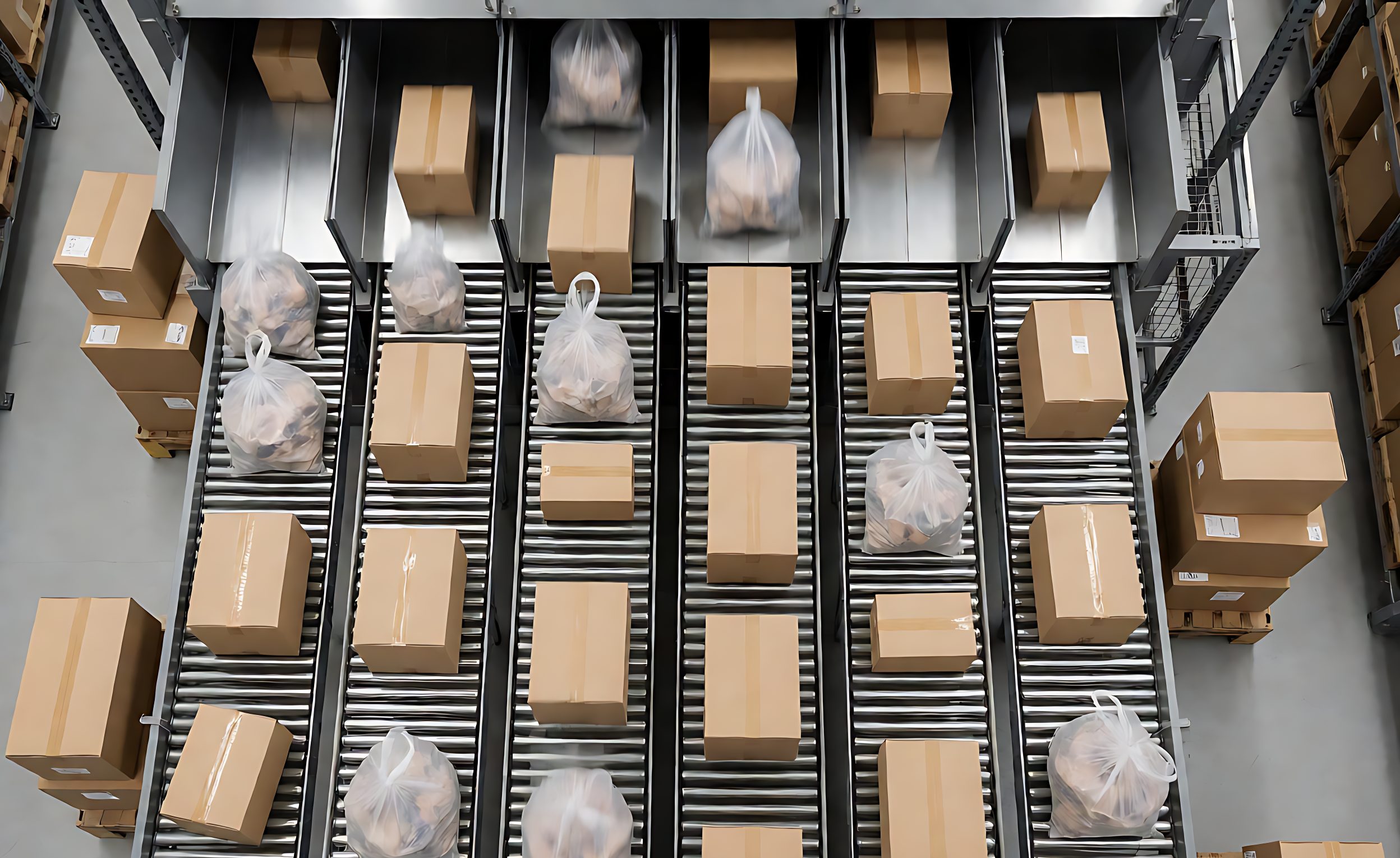
In recent years, the logistics and e-commerce industries have been undergoing rapid transformation. As parcel volumes continue to grow, businesses are demanding higher efficiency, flexibility, and accuracy in their sorting systems. Among the many automation technologies available today, **narrow-belt sorters** and **cross-belt sorters** have emerged as two of the most efficient and widely adopted solutions for modern distribution centers. 1. From Manual Sorting to Intelligent Automation Traditional manual sorting methods are labor-intensive, error-prone, and slow. With the rise of e-commerce, this approach can no longer meet the demands of real-time order fulfillment. The introduction of narrow-belt and cross-belt sorters has revolutionized the way goods are handled—significantly improving throughput, reducing human error, and increasing overall operational accuracy. 2. Narrow-Belt Sorters: Compact, Precise, and Scalable Narrow-belt sorters are designed for **high-speed, small-parcel handling** with a modular structure. Their compact footprint makes them ideal for warehouses with limited space. Equipped with smart diverter shoes or small trays, these systems can smoothly sort items of different shapes and sizes onto designated chutes or conveyors. They are especially popular in **e-commerce fulfillment centers, postal facilities, and 3PL warehouses**, where flexibility and cost-effectiveness are critical. 3. Cross-Belt Sorters: Powering Large-Scale Distribution For facilities handling larger items or higher volumes, cross-belt sorters offer an unparalleled level of precision and speed. Each cart is equipped with a small conveyor belt that can discharge items to either side, allowing for **multi-directional sorting**. Advanced models, like the **dual-layer cross-belt sorter**, maximize capacity while minimizing space usage—making them a preferred choice for **national sorting hubs and international logistics companies**. 4. Integration with Smart Systems Modern sorting systems are no longer standalone machines. They are part of a connected ecosystem that integrates **barcode scanning, OCR recognition, dimensioning, and weighing (DWS systems)**. Through data-driven control, these sorters not only move products but also collect valuable information, supporting intelligent warehouse management and real-time monitoring. 5. Looking Ahead As global logistics networks become more complex, the need for flexible and reliable automation will only grow. Future developments will focus on **energy efficiency, AI-driven decision-making, and predictive maintenance**, ensuring that every parcel moves faster, safer, and smarter. Truelisort continues to innovate in the field of intelligent sorting solutions, delivering advanced narrow-belt and cross-belt systems tailored for global customers. Our goal is simple: to help businesses achieve faster throughput, higher accuracy, and greater efficiency in every step of their logistics operation.
Sorter Evolution: What Each Generation Teaches
Sorter technology has evolved through recognisable generations, each teaching its lesson:
| Generation | What it introduced | Lesson it left |
|---|---|---|
| Mechanical diverters | Fixed arms, single profile | Hardware decides slowly; design for the long run |
| Sliding shoe sorters | Higher rate, smoother handling | Rate without flexibility ages visibly |
| Crossbelt platforms | Carried parcels, many destinations | Handling quality is an economic quantity |
| Software-defined systems | Destinations as configuration | The last upgrade is the control layer |
The software-defined lesson is the generation’s inheritance: earlier generations froze decisions in steel — a diverter’s angle, a shoe’s track — and every profile change became a maintenance project, while the control-layer generation makes change a configuration edit with an audit trail. The handling-quality lesson compounded across generations: each step that carried rather than threw the parcel converted handling damage from an accepted cost into a differentiator, and buyers now price gentleness into evaluations their predecessors never wrote down. Evolution also warns against collector logic — keeping one of each generation on the floor multiplies the maintenance skill set without multiplying capability, which is why estate consolidation usually precedes modernisation profitably. The current generation’s trends are graded in intelligent trends graded, and the family choice in narrow belt vs cross belt. Reference: conveyor evolution and automation generations.