
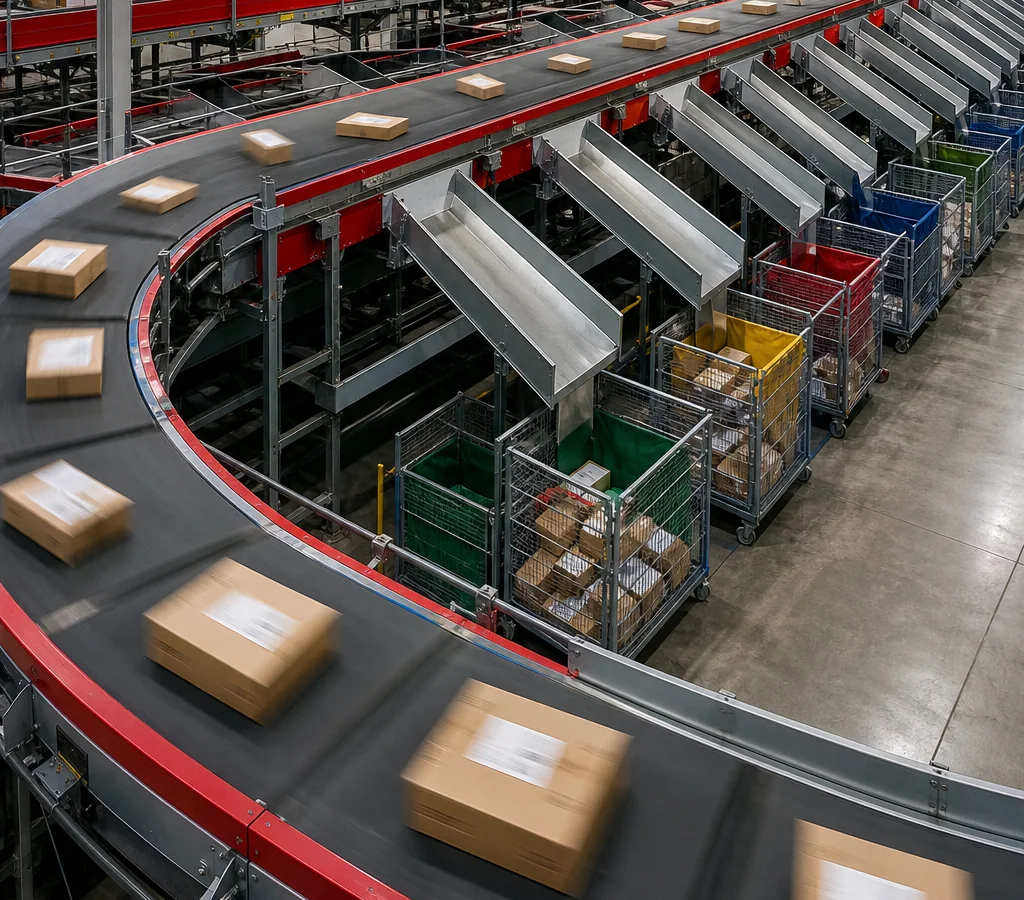
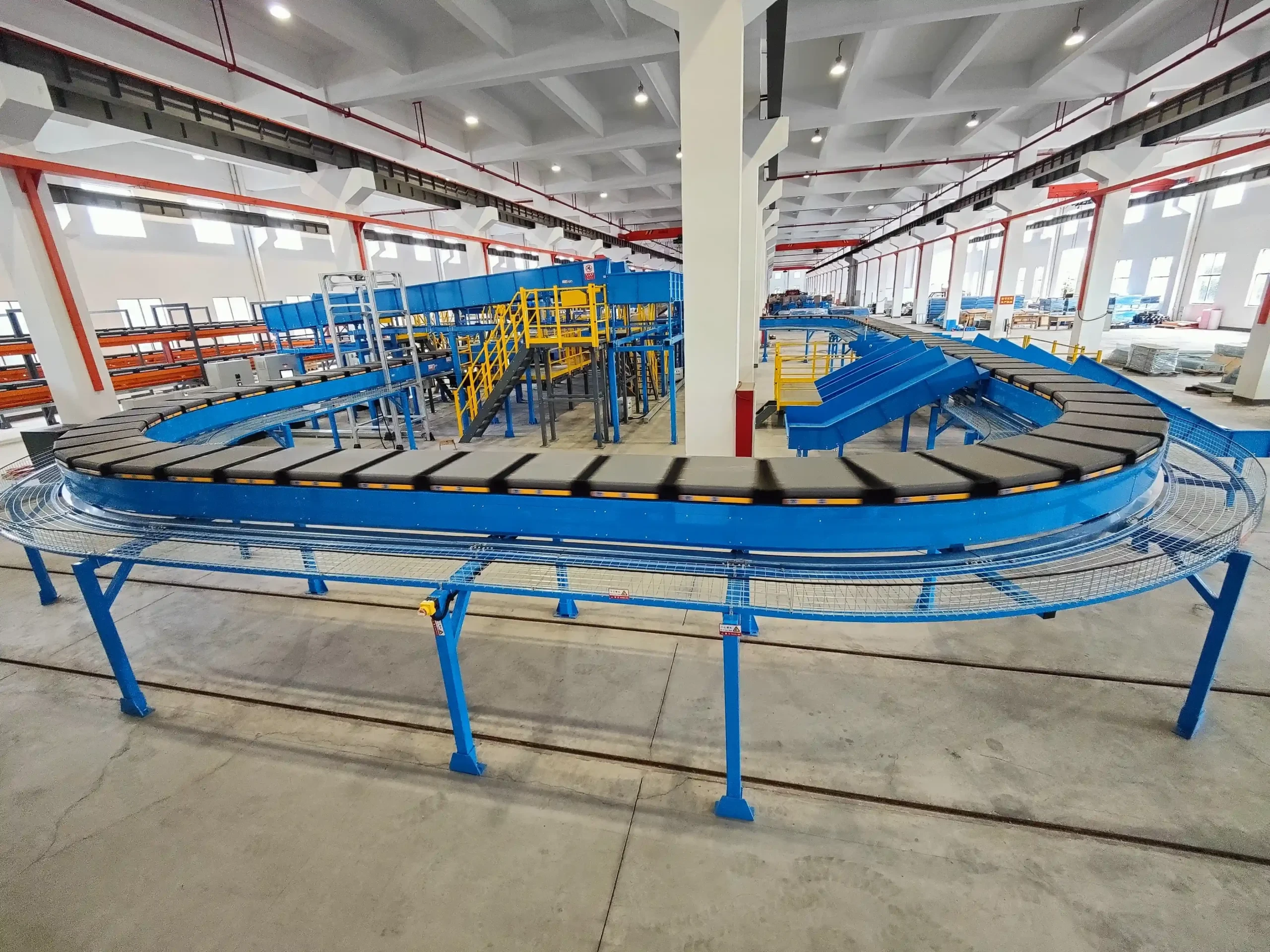
A unit sorter is an automated material handling machine designed to identify, route, and sort individual items (units) rather than full cases or pallets. Operating at high speed, these parcel sortation systems use conveyor mechanisms and barcode scanners to divert individual products, polybags, or small cartons into specific order bins, chutes, or shipping lanes with 99.9% accuracy.
As we navigate the logistics landscape in 2026, e-commerce order profiles have drastically changed. Consumers are ordering fewer items per transaction but expecting faster deliveries. According to the 2026 Logistics Automation Report by Gartner, order fragmentation has increased by 42% over the last three years. This shift makes traditional case-picking obsolete for many operations and pushes unit sortation to the forefront of warehouse automation.
Whether you are upgrading an existing facility or building a new fulfillment center, understanding how to implement high speed automated parcel sortation equipment is crucial. In this comprehensive guide, our engineering team at Truelisort will walk you through exactly what a unit sorter is, how it works, and how to choose the right technology for your sortation center.
📋 What You Will Learn in This Guide:
- The core definition of unit sortation.
- A step-by-step breakdown of how a unit sorter works.
- A comparison of different parcel sortation systems.
- Common sorting errors and how to troubleshoot them.
- Expert tips for integrating sorters into your warehouse control systems (WCS).
1. What is Unit Sortation?
Unit sortation is the process of separating and routing individual products, parcels, or components to specific destinations within a distribution center. Unlike case sortation (which handles large, uniform boxes), unit sortation deals with a chaotic mix of shapes, sizes, and packaging types—ranging from fragile electronics in blister packs to apparel in flexible polybags.
A modern unit sorter is the beating heart of an e-commerce fulfillment center, often consolidating items for multi-item orders (order sortation) or directing packed parcels to specific outbound carrier doors (shipping sortation).
2. How Does a Unit Sorter Work? (A Step-by-Step Tutorial)
Understanding the mechanics behind high speed sortation is essential for optimizing your facility. Here is the standard 4-step process of how modern parcel sortation systems operate.
Step 1: Induction
Induction is the process of feeding items onto the sorter. This can be done manually by operators or automatically via injection conveyors. For high-speed applications, automated induction lines are used to ensure items are perfectly spaced (gapped) to prevent collisions.
Step 2: Scanning and Identification (DWS)
Once on the sorter, the item passes through a DWS (Dimensioning, Weighing, and Scanning) tunnel. High-speed 6-sided camera scanners read the item’s barcode. In 2026, advanced systems also use AI vision to detect the item’s dimensions and weight instantly.
Step 3: High-Speed Transport
The system’s Warehouse Control System (WCS) communicates with the scanner to determine the item’s destination. The unit sorter then transports the item along the main track at speeds up to 2.5 meters per second.
Step 4: Diverting / Discharge
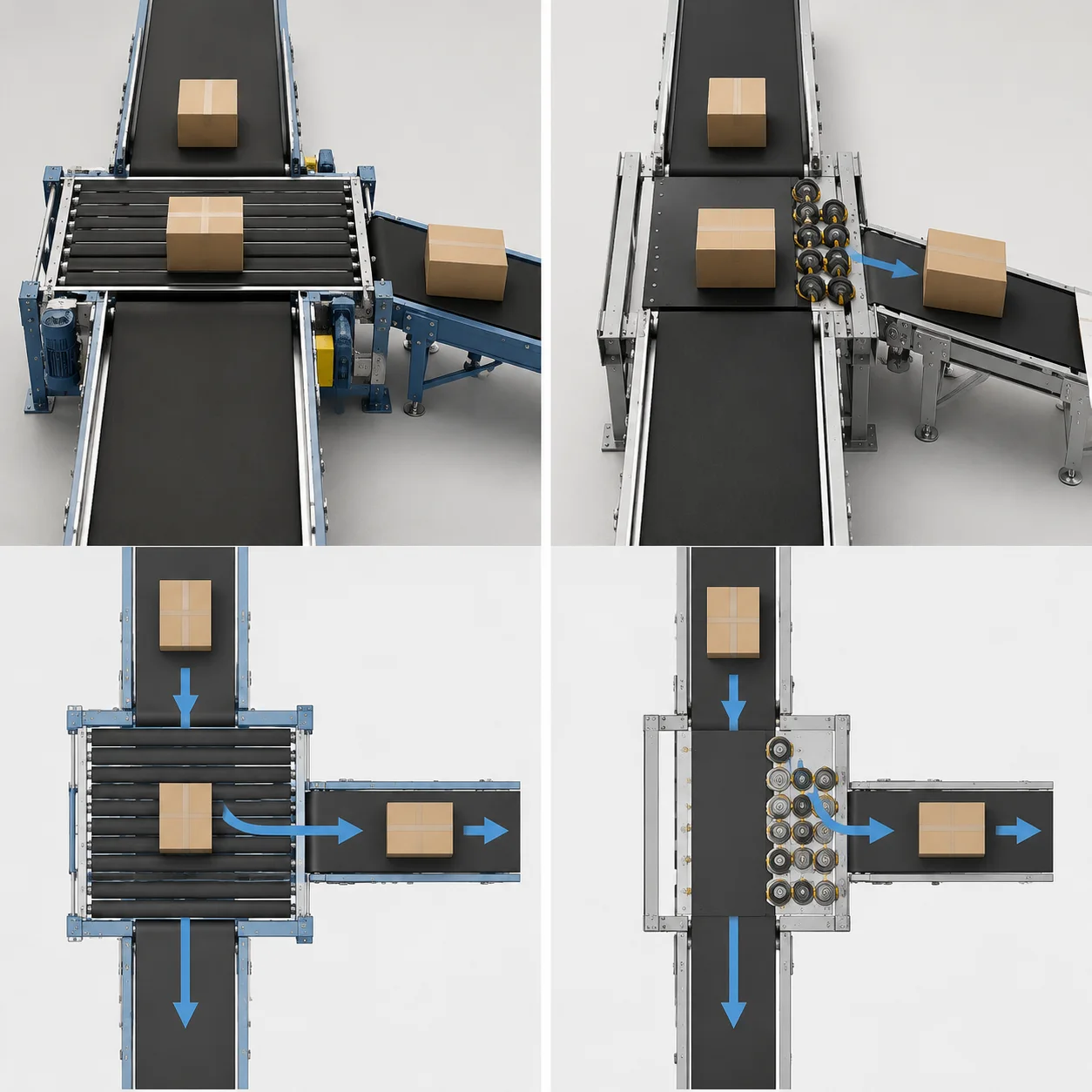
When the item reaches its assigned destination chute or bin, the sorter’s mechanism activates, gently pushing or rolling the item off the main line. The precision of this discharge determines the overall accuracy of the parcel sortation systems.
3. Types of High-Speed Parcel Sortation Systems
Not all automated parcel sortation equipment is created equal. The right choice depends on your product mix, available floor space, and required throughput. Here are the leading technologies in 2026:
A. Cross Belt Sorters (Best for High Throughput & Polybags)
A cross belt sorter uses individual carrier carts moving in a continuous loop. Each cart has its own mini conveyor belt that fires perpendicular to the track to discharge the item. Because the item rests entirely on the belt, it is the best unit sortation method for fragile items, round objects, and thin polybags.
👉 Pro Tip: For large-scale hubs requiring up to 20,000+ parcels per hour, solutions like the Cross Belt Sorter TR500-1100 offer unparalleled precision and durability.
B. Narrow Belt Sorters (Best for Cartons & Cost-Efficiency)
Narrow belt sorters use a series of parallel, thin belts. When a parcel needs to be diverted, pop-up rollers rise between the belts to lift and transfer the parcel at an angle. These are highly modular and cost-effective but require items with flat, rigid bottoms (like cartons or totes).
👉 Pro Tip: For mid-sized operations sorting standard boxes, the Narrow Belt Sorter TR300-1750 or the compact Narrow Belt Sorter TR200-1000 provides an excellent ROI and easy integration into existing conveyor lines.
4. Common Errors in Unit Sortation & Troubleshooting
Even the most advanced parcel sortation systems can encounter operational hiccups. Below is a troubleshooting matrix developed by Truelisort engineers to help facility managers quickly resolve common issues.
| Common Issue | Likely Cause | Solution / Fix |
|---|---|---|
| Scanner “No-Reads” | Damaged barcodes, poor lighting, or incorrect item orientation. | Upgrade to 6-sided camera tunnels; clean scanner lenses daily. |
| Item Jamming at Divert | Items are too close together (poor gapping at induction). | Adjust induction conveyor speed; calibrate WCS gapping logic. |
| Mis-sorts (Wrong Chute) | Encoder slippage or delayed mechanical divert response. | Check drive belt tension; update WCS timing parameters. |
| Polybags Falling Off Track | Using a roller/shoe sorter for non-rigid packaging. | Switch to a cross belt sorter for handling flexible polybags. |
5. Expert Tips: Optimizing Your Sortation Center in 2026
To maximize the ROI of your automated material handling investments, keep these three crucial strategies in mind:
- Implement Predictive Maintenance: Modern sorters come with IoT sensors. Monitor motor vibration and temperature to replace parts before they fail during peak seasons like Cyber Monday.
- Optimize Your Chute Design: The sorter is only as fast as its takeaway system. Ensure destination chutes are designed with gravity rollers or sensors to alert operators when a bin is full, preventing cascade jams.
- Software is as Important as Hardware: Ensure your WCS (Warehouse Control System) integrates seamlessly with your WMS. Real-time data routing allows the system to instantly reassign chutes if one lane becomes overloaded.
6. Frequently Asked Questions (FAQ)
Q: What is the difference between order sortation and shipping sortation?
A: Order sortation involves routing individual items to a consolidation area so they can be packed together into a single customer order. Shipping sortation takes place after packing, routing the sealed parcels to specific outbound truck doors based on the carrier (e.g., FedEx, UPS, DHL) or postal code.
Q: What is the fastest automated parcel sortation equipment?
A: Cross belt sorters are generally the fastest, capable of achieving throughputs exceeding 20,000 to 30,000 items per hour depending on the loop length and the number of automatic induction stations used.
Q: How much space does a unit sorter require?
A: Space requirements vary wildly. A linear narrow belt sorter can be retrofitted into existing straight conveyor lines, taking up minimal extra width. A high-capacity cross belt loop sorter requires a dedicated footprint, often spanning tens of thousands of square feet, sometimes installed on a mezzanine to save floor space.
7. Ready to Upgrade Your Fulfillment Operation?
Implementing high speed automated parcel sortation systems is a complex engineering task, but the operational efficiency and labor savings are transformative. If your facility is struggling to keep up with increasing order volumes, it might be time to transition from manual picking to automated unit sortation.
Need expert guidance? Contact the Truelisort engineering team today. We specialize in designing bespoke sortation solutions tailored to your unique throughput data and facility layout.
Connect with Truelisort
Email: business@truelisort.com | WhatsApp: +86 18658557670
Follow our latest innovations on LinkedIn, YouTube, and Facebook.