


In the context of global trade and the rapid growth of e-commerce, traditional warehouse logistics models face significant challenges. The increase in demand, the complexity of orders, and customers’ growing expectations for speed and accuracy are driving the need for innovation and improved efficiency. Automated sorting technology, particularly the cross-belt sorter, has emerged as the ideal solution to address these challenges.
**The Current Landscape and Challenges of Automated Sorting**
With the rise in order volume, particularly in e-commerce, traditional manual sorting methods are becoming less viable. Manual sorting requires large labor forces and is prone to errors, leading to inaccurate inventories and delayed shipments. Automated sorting systems, especially cross-belt sorters, offer an efficient, precise, and scalable alternative that addresses these issues effectively.
**How Cross-Belt Sorters Work and Their Advantages**
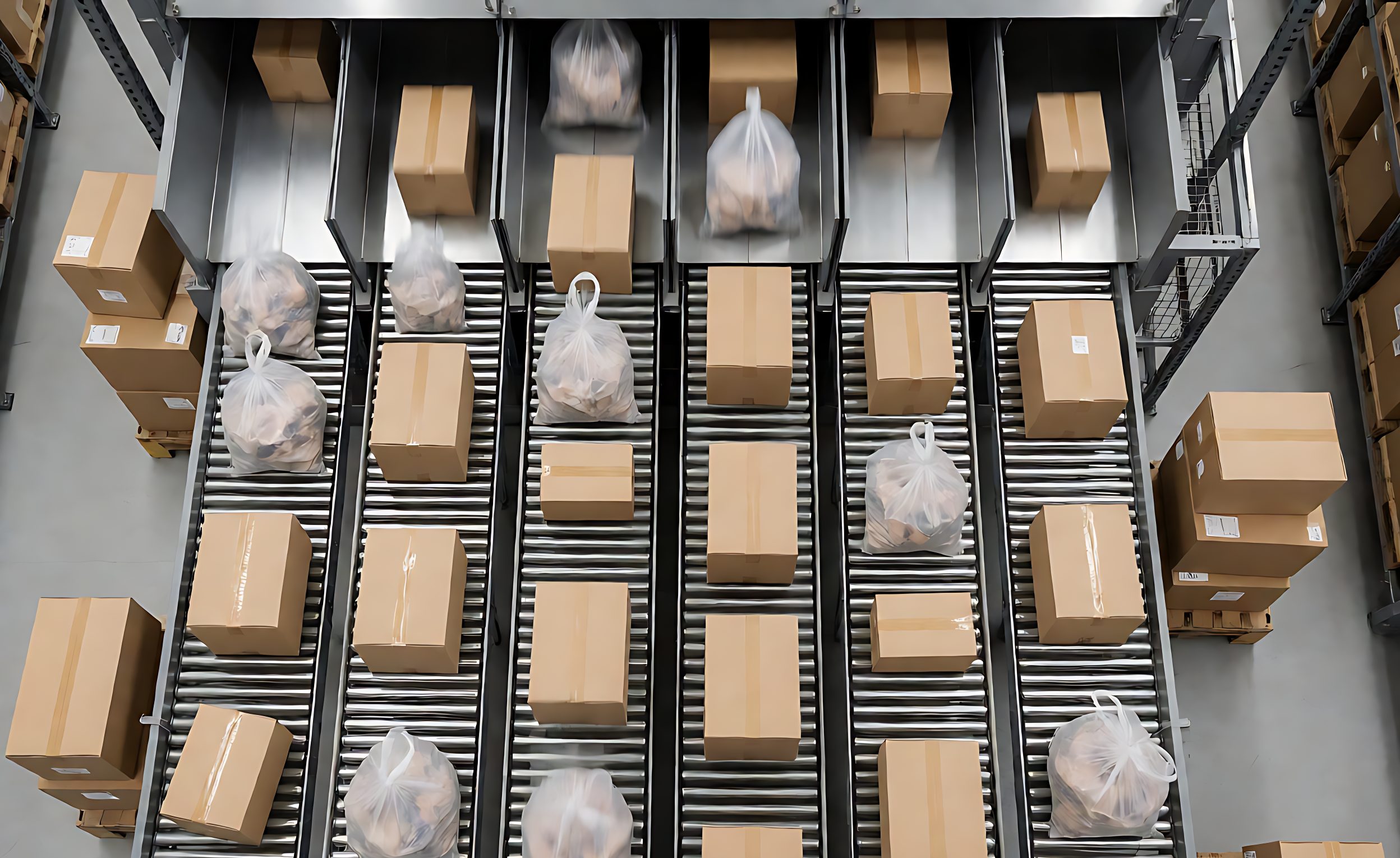
Cross-belt sorters work by using a series of high-speed, precise belt-driven transfer devices to automatically sort items based on predetermined rules and pathways. The main advantage of this system lies in its flexibility and adaptability. Whether dealing with small items, large packages, or irregularly shaped goods, cross-belt sorters ensure accurate and efficient sorting at high speeds.
**Improving Operational Efficiency and Customer Experience**
Compared to traditional gravity-based sorting systems, cross-belt sorters offer a significant improvement in both processing capacity and precision. They are capable of processing large volumes of orders in a short period, ensuring each package is delivered to the correct location with high accuracy. This improvement in efficiency and accuracy directly impacts the customer experience, particularly in industries like e-commerce and fast-moving consumer goods, where timely deliveries are crucial to customer satisfaction.
**The Trend Towards Smart Sorting: Data-Driven and AI Integration**
As technology progresses, cross-belt sorters are becoming more intelligent. By integrating Artificial Intelligence (AI) and big data analytics, modern systems not only improve sorting efficiency but can also monitor equipment status in real time, predicting potential failures and preventing downtime. This smart technology ensures better operational stability and provides businesses with the real-time data they need to optimize operations.
**How Companies Can Choose the Right Automated Sorting System**
When selecting the right automated sorting system, businesses must consider several factors, including the type of products, the size of the goods, the complexity of the transport network, and the scalability of the system. Truelisort’s cross-belt sorters, with their high efficiency and precision, have become the preferred solution for many large warehouses and e-commerce platforms. By carefully analyzing the specific needs of each client, Truelisort offers customized sorting solutions that help businesses improve warehouse efficiency and overall competitiveness.
**Conclusion**
Automated sorting technology is reshaping the warehouse and logistics industry. As a leader in this field, Truelisort is committed to driving the development of intelligent, automated logistics systems that offer the best sorting solutions worldwide. As industry demands continue to evolve, automated sorting will be a key component in achieving more efficient, precise, and scalable logistics operations.
Revolution, Measured: What Sorting Technology Actually Changed
“Revolutionizing” invites measurement. What sorting technology actually changed, in numbers that hold:
| Changed quantity | Before-and-after shape | What drove it |
|---|---|---|
| Sort accuracy | Manual mid-90s to machine 99.9% | Read-and-route without fatigue |
| Cost per sort | Labour-bound to machine-bound | Rate without proportional heads |
| Promise reliability | Best-effort to SLA-grade | Accuracy compounded into planning |
| Peak capacity | Headcount-bound to designed headroom | Machines rehearse; humans improvise |
The reliability row is the revolution’s commercial face: sort accuracy at machine grade turned delivery promises from aspirations into schedulable commitments, and entire business models — next-day retail, subscription boxes — rest on that conversion. The cost row changed who can compete: sortation at machine economics let mid-size operations offer service levels once reserved for national networks, which is the revolution’s most democratic effect. The peak row is the quiet one: capacity that rehearsees instead of improvises converts the industry’s most stressful weeks into its most planned ones, and the operators who lived both eras describe that change as the biggest of all. Measured this way, the revolution holds up — not because the technology was magic, but because each changed quantity compounded into the next. The constraint-removal view is in 2025’s reshaping trends, and the efficiency numbers in the baselines. Reference: industrial automation and warehouse transformation.