

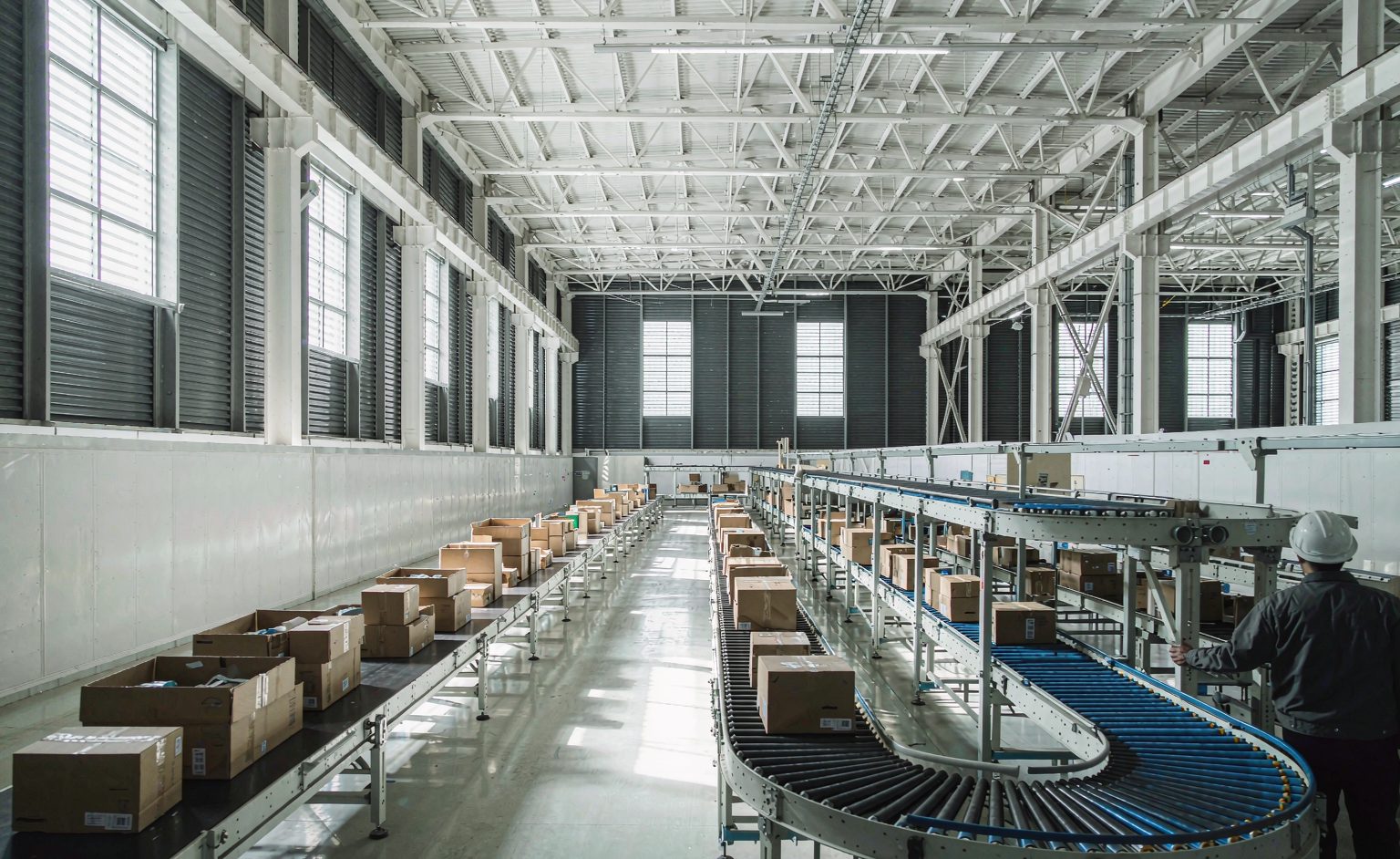
As global supply chains continue to evolve at unprecedented speed, logistics operations are under increasing pressure to achieve higher efficiency, accuracy, and scalability. Automation has become the cornerstone of modern logistics transformation. In 2025, companies worldwide are accelerating the adoption of intelligent sorting systems, data-driven workflows, and robotics to stay competitive in an era defined by fast-growing e-commerce and rising labor challenges.
1. Intelligent Sorting Systems Lead the Upgrade
High-speed automated sorting solutions — including cross belt sorters, narrow belt sorters, and swivel wheel sorters — are rapidly becoming the standard in distribution centers.
These systems enable large-volume, continuous, and precise parcel processing, helping enterprises reduce manual errors, stabilize output, and support peak-season throughput.
Flexible, modular sorter designs also allow facilities to expand capacity with minimal disruption.
2. Data-Driven Operations Become the New Foundation
Warehousing is entering a new stage where digital intelligence plays a central role.
Through IoT sensors, cloud platforms, and AI analytics, companies can monitor equipment status, track parcel flow in real time, and generate data insights for better decision-making.
This evolution not only elevates operational transparency but also enables predictive maintenance and cost optimization.
3. Rapid Growth of AMRs and Robotics
Automated Mobile Robots (AMRs) and robotic picking technologies are reshaping in-warehouse movement and handling.
AMRs integrate seamlessly with conveyors, sorters, and warehouse management systems to enhance material transport, replenishment, and order picking efficiency.
With improved navigation and AI-driven perception, robots are handling more tasks traditionally done by manual labor, ensuring long-term productivity and safety.
4. Advanced DWS Systems Enhance Visibility and Compliance
Dimensioning, Weighing, and Scanning (DWS) solutions are now essential for billing accuracy, data compliance, and parcel traceability.
Modern DWS systems support OCR for names and labels, high-resolution imaging, real-time data upload, and precise volume measurement.
These features provide logistics operators with reliable information throughout the entire shipping journey.
5. Sustainability Becomes a Driving Force for Automation
Environmental responsibility has become a strategic priority for global logistics.
Automated equipment — particularly electric-powered sorters, energy-efficient conveyors, and smart control systems — helps reduce operational energy consumption and minimize carbon footprint.
Sustainable automation solutions support both business performance and ESG objectives.
6. Scalable Systems to Support Global E-commerce Growth
As cross-border parcels continue to surge, logistics companies are investing in scalable and modular automation systems.
From compact facilities serving local delivery to large international hubs, solutions such as cross belt sorters, multi-level spiral chutes, and intelligent conveyor networks allow businesses to grow at any stage while maintaining consistent performance.
Conclusion
The logistics automation landscape in 2025 is defined by intelligence, flexibility, and sustainability.
Companies that invest early in automated sorting, DWS integration, robotics, and digital systems will be better prepared for future demand, rapid market growth, and global competition.
2025’s Reshaping Trends, Read from the Dock
Industry trend lists are written in boardrooms; the dock reads them differently:
| 2025 trend | What the dock actually sees | Dock-level posture |
|---|---|---|
| E-commerce normalization | Every parcel is now a retail parcel | Cosmetic handling as default |
| Automation cost decline | Mid-size facilities can now sort | Re-quote what was priced out |
| Labour market tightening | Sorting roles unfilled at any wage | Automate the unattractive task |
| Sustainability pressure | Load-optimising sort profiles | Measure volume per vehicle |
The labour row is the trend reshaping fastest: sorting roles that operations assumed refillable now sit open, and the automation decision that waited on payback arithmetic is being made by the labour market instead — not because robots got cheaper but because the alternative got unavailable. The normalisation row changes handling culture: when every parcel is a consumer’s purchase, the carton that was industrial freight yesterday is a gift box today, and cosmetic handling stops being a premium service. The cost-decline row rewards re-quoting: facilities that priced out sortation three years ago are often inside the line now, and the quotation that failed in 2022 deserves a 2025 hearing. Trends read from the dock convert headlines into line items — and line items are what budgets actually move. The adoption-speed context is in regional adoption speeds, and the reshaping pattern in automation reshaping logistics. Reference: logistics industry trends and e-commerce logistics.