
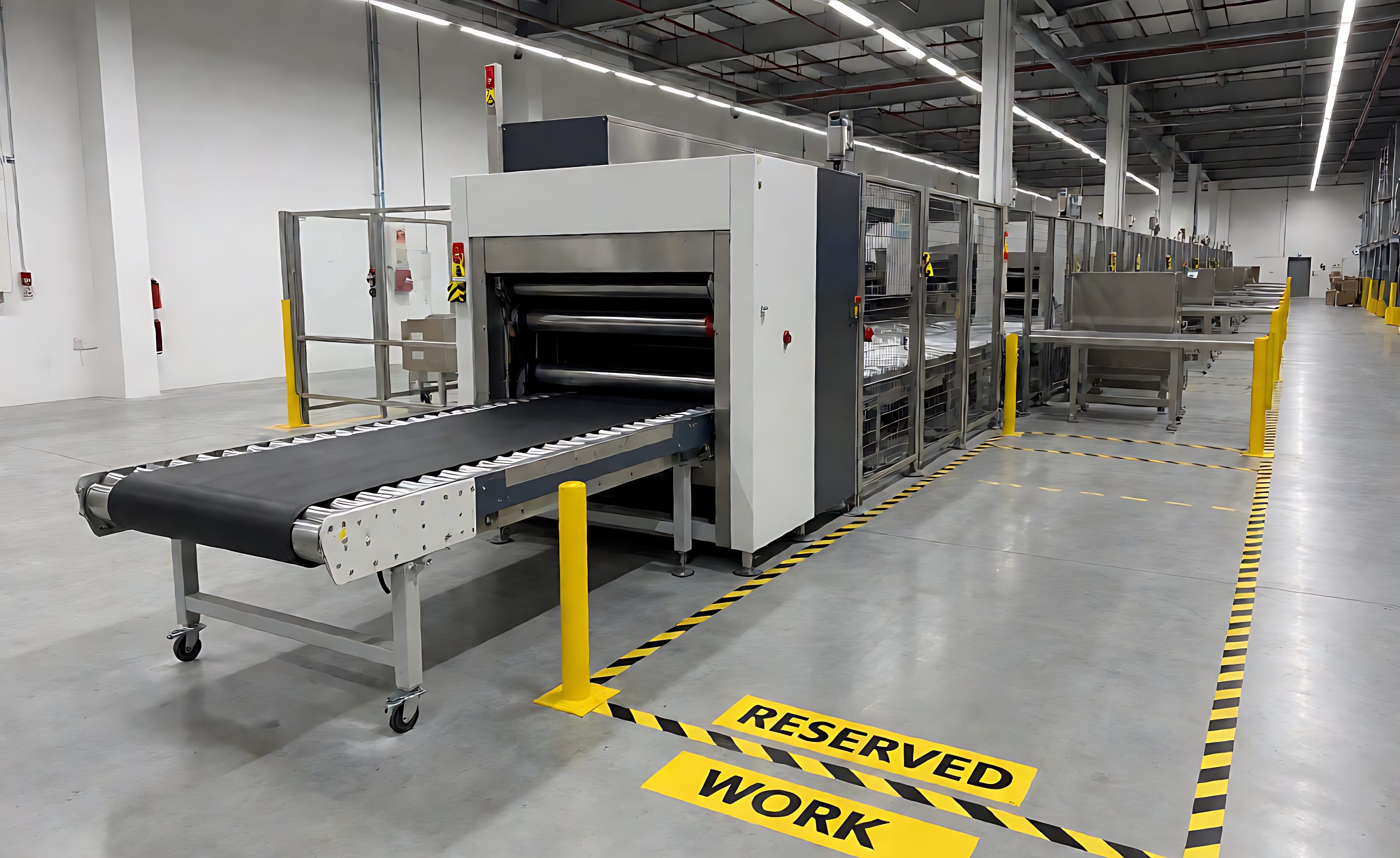


The logistics industry is undergoing a major transformation. As global trade expands and customer expectations for faster delivery continue to rise, companies are turning to **automated sorting systems** to boost efficiency and reduce costs.
However, automation today is not only about speed — it’s also about **sustainability and smart integration**. Modern sorting systems are designed with energy-efficient motors, modular components, and intelligent control software that optimize power consumption and minimize waste.
Solutions such as **narrow belt sorters, cross-belt sorters, and parcel wheel sorters** have become the backbone of automated warehouses. These systems enable continuous, high-speed operations while maintaining accuracy and flexibility for various parcel types.
In addition, the combination of **IoT sensors and predictive maintenance** allows operators to monitor system performance in real time. This reduces downtime, extends equipment life, and ensures stable operations — key elements for sustainable growth.
As we move forward, the integration of automation and environmental responsibility will define the future of logistics. Smart, green, and efficient sorting solutions are no longer optional — they are the new industry standard.
The New Standards: Where Automation Meets Sustainability Targets
Sustainability standards now arrive in logistics tenders with numbers attached. Where sorting automation carries those numbers:
| Tender requirement | Sorting contribution | Evidence to hold |
|---|---|---|
| Carbon per order | Consolidated loops cut re-handling journeys | kWh per thousand parcels, sub-metered |
| Waste to landfill | Accuracy cuts damage; damage cuts waste | Damaged-parcel rate trend by quarter |
| Space intensity | Vertical sorters absorb growth without new builds | Throughput per square metre, year on year |
| Equipment lifetime | Software upgrades extend mechanical life | Age of oldest loop still running current software |
The carbon-per-order row is quietly becoming the commercial one. Retail customers increasingly allocate volume by Scope 3 performance, and a sorter’s sub-metered consumption curve is exactly the evidence their reporting needs — granular, continuous, auditable. Operations that cannot produce it lose the allocation to those that can, whatever their relative delivery performance. The lifetime row compounds the same logic: every year a software-upgraded loop avoids replacement is embodied carbon that never gets spent, a figure now entering some tenders as a scored criterion. Sustainability in sorting has crossed from brochure language to bid tables, and the operations best positioned for that crossing are the ones that started metering years ago for cost reasons — the same sub-meter answers both questions. The metering habit itself is in the meter justifies the movement, and the auditable claim structure in sustainability that survives audit. Reference: carbon accounting and ESG criteria.
Energy metrics earn their keep when trended per order rather than per month. Per-order energy normalises for volume, exposes drift early, and translates directly into the sustainability reporting the audit trail wants — three views from one meter read consistently. Reference: energy conservation practice and metering infrastructure.
The Sustainability Dividend
One line of this argument deserves its own column: fuller vehicles. Destination-dense sortation builds loads that ship the same volume on fewer trips, and the sustainability dividend arrives as a by-product of density arithmetic rather than as a separate program — measured honestly in volume per vehicle per shift.