

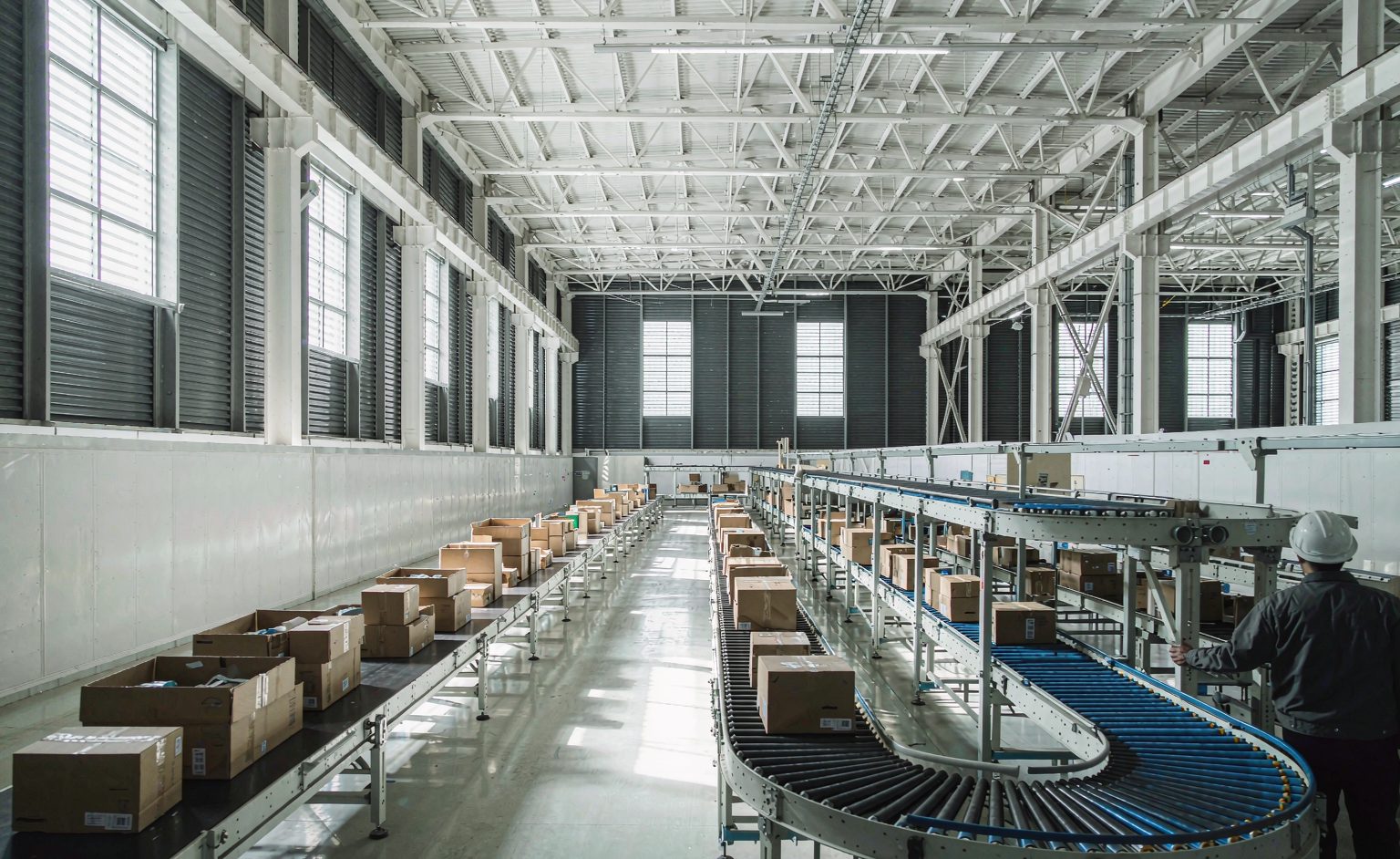
In today’s fast-paced supply chain environment, efficiency and accuracy are no longer optional—they are essential. Logistics automation is transforming the way warehouses and distribution centers operate, driving a shift towards smarter, faster, and greener solutions.
Automated sorting systems, conveyor lines, and intelligent software integration are reducing manual labor while significantly increasing throughput. With technologies like AI-driven recognition, real-time tracking, and modular designs, businesses can now achieve higher productivity and improved space utilization.
Sustainability is also becoming a core driver. Automated equipment not only optimizes energy consumption but also minimizes errors and reduces waste, helping companies align with global environmental goals.
As e-commerce continues to expand and customer expectations rise, automation will remain at the heart of logistics innovation. Companies that embrace flexible, scalable systems today are positioning themselves for long-term success in tomorrow’s competitive market.
Smarter, Faster, Greener: What Each Word Now Means
The three adjectives have hardened into measurable claims. What each one means on a 2020s sorting line:
| Claim | 2020s meaning | Proof to ask for |
|---|---|---|
| Smarter | Vision-led singulation and predictive jam avoidance | Exception rate per 10,000 parcels, trend by month |
| Faster | Sustained rate at real parcel mix, not demo mix | Rate at YOUR profile during FAT, witnessed |
| Greener | Consumption per thousand parcels, standby discipline | kWh per 1,000 at production profile |
The useful discovery of recent years is that the three are not trade-offs but allies. Vision that prevents jams removes the re-induction energy and the idling loop waiting for clearance; sustained-rate honesty removes the oversized motor running half-loaded; standby discipline saves most where volume is most variable. Sites that measure consumption per thousand parcels typically find the number falls as accuracy rises — the same mis-sorts that irritate customers also ride the loop twice on someone else’s electricity. Green that cannot be metered is decoration; insist on the meter. The data infrastructure behind smarter is in the data ladder of smart logistics, and the quantified efficiency case in efficiency numbers that move. Reference: artificial intelligence in industry and energy conservation.
The Meter Justifies the Movement
Every claim in the smarter-faster-greener table eventually meets the same referee: the meter. Installing one is cheaper than arguing about one. A sub-metered feed to the sorter loop, logged at minute intervals, costs a fraction of a percent of the project and settles every energy conversation with data instead of brochure citations — before purchase, when the vendor’s consumption table needs verification, and for the decade after, when standby discipline either happened or quietly did not. The same logging answers the greener question’s awkward twin: what does one more destination, one more recirculation loop, one more induction lane cost per thousand parcels? Growth plans live or die on that number, and facilities that measure it from day one negotiate expansions from evidence. Green credentials that survive an audit trace back to exactly this habit: measure at the component, publish at the facility, and let the trend line make the argument the marketing department only borrows.
Smarter, Faster, Greener — In That Order
The three adjectives are sequential: smarter systems produce faster flows, and faster flows produce greener logistics because density rises before fleet changes. Operations chasing the third adjective directly usually find the first two buy it — the green gain falls out of the efficiency work rather than beside it.