
The rapid expansion of e-commerce, omnichannel retail, and same-day delivery services has fundamentally changed the way warehouses and distribution centers operate. Just a decade ago, many fulfillment facilities could rely on manual sorting and conventional conveyor systems to meet customer demand. Today, however, businesses are expected to process thousands—or even millions—of individual orders every day with exceptional speed and accuracy.
In this environment, order picking efficiency has become one of the most critical factors determining warehouse productivity. A delay of just a few seconds per package can accumulate into hours of lost productivity over the course of a shift. Likewise, a small increase in sorting accuracy can dramatically reduce costly returns, shipping errors, and labor expenses.
To meet these growing operational demands, companies are increasingly turning to advanced warehouse automation technologies. Among the most effective and widely adopted solutions is the cross-belt sorter system. Known for its high throughput, gentle product handling, flexible sorting capabilities, and intelligent integration with digital warehouse platforms, the cross-belt sorter has become a cornerstone of modern logistics infrastructure.
This article explores the technology behind cross-belt sorting systems, examines their key technical advantages, and explains how they help businesses improve picking efficiency, reduce operational costs, and build a more agile supply chain.
What Is a Cross-Belt Sorter?
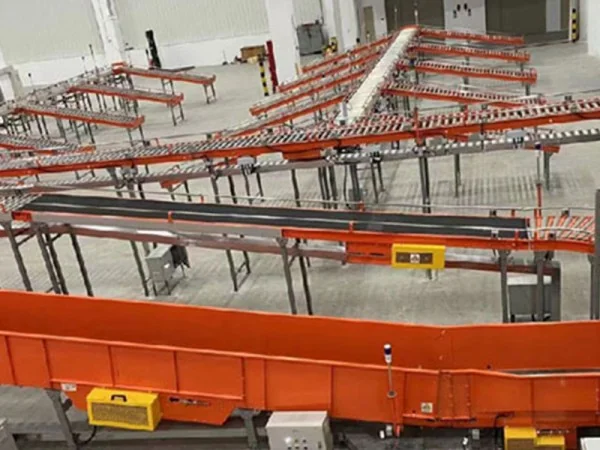
A cross-belt sorter is a highly automated material handling system designed to identify, transport, and direct items to designated destinations with exceptional speed and precision.
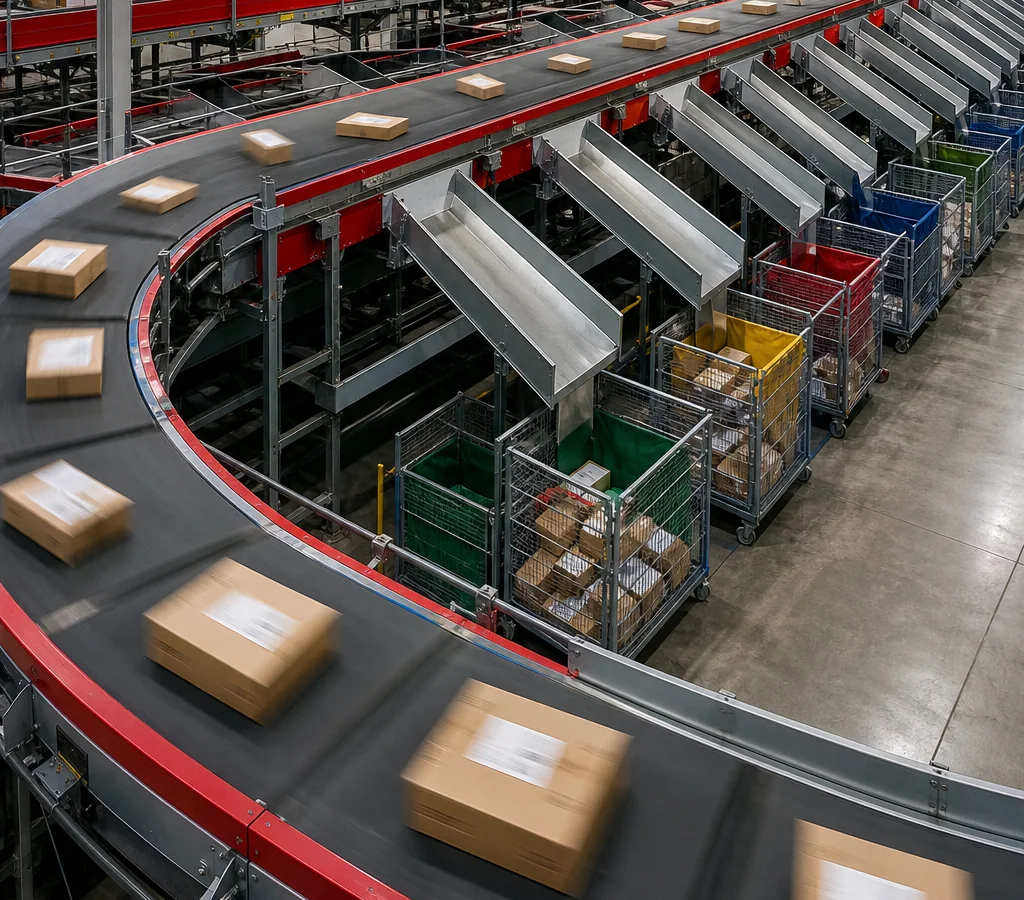
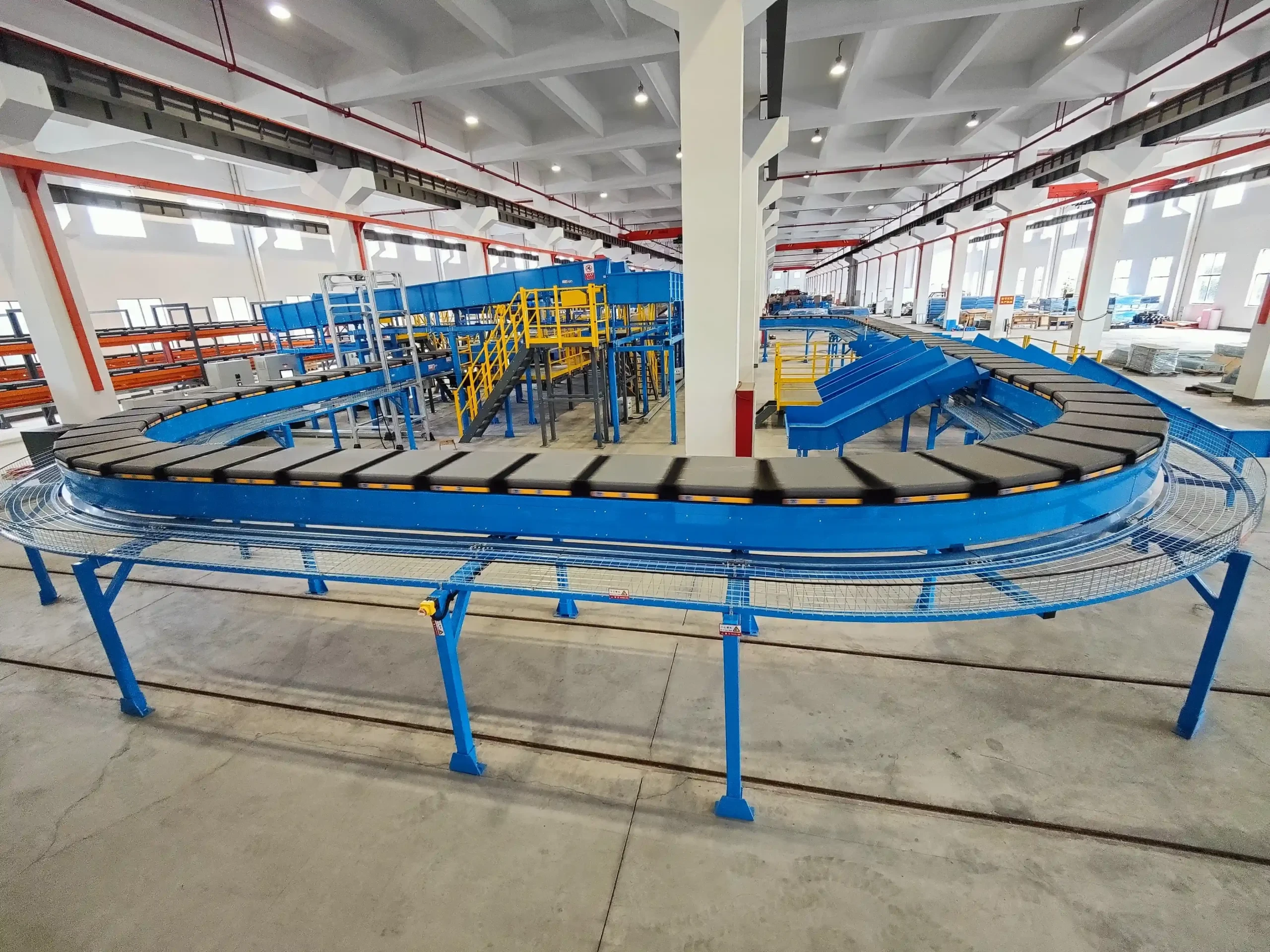
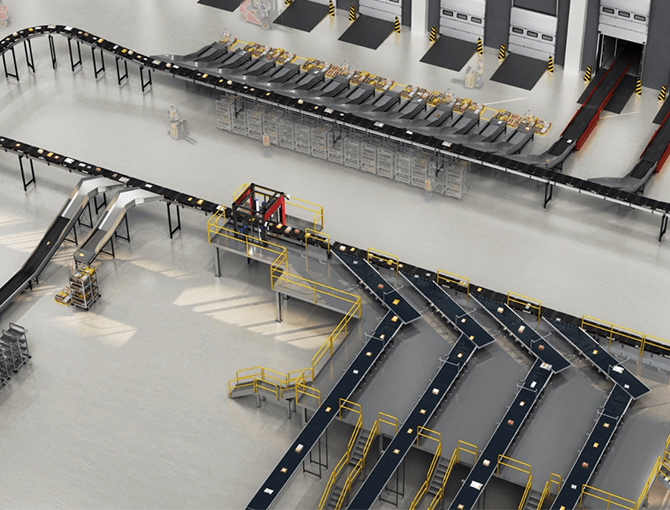
Unlike traditional conveyor systems that move products along fixed paths, a cross-belt sorter consists of a series of independent carriers mounted on a continuously moving loop. Each carrier features a miniature conveyor belt that can rotate in either direction, allowing products to be discharged to the left or right at precisely the correct location.
The typical workflow includes:
- Products enter the sorting line.
- Barcode scanners, RFID readers, or machine vision systems identify each item.
- Warehouse control software determines the correct destination.
- The item is loaded onto an available cross-belt carrier.
- The carrier travels along the sorter loop.
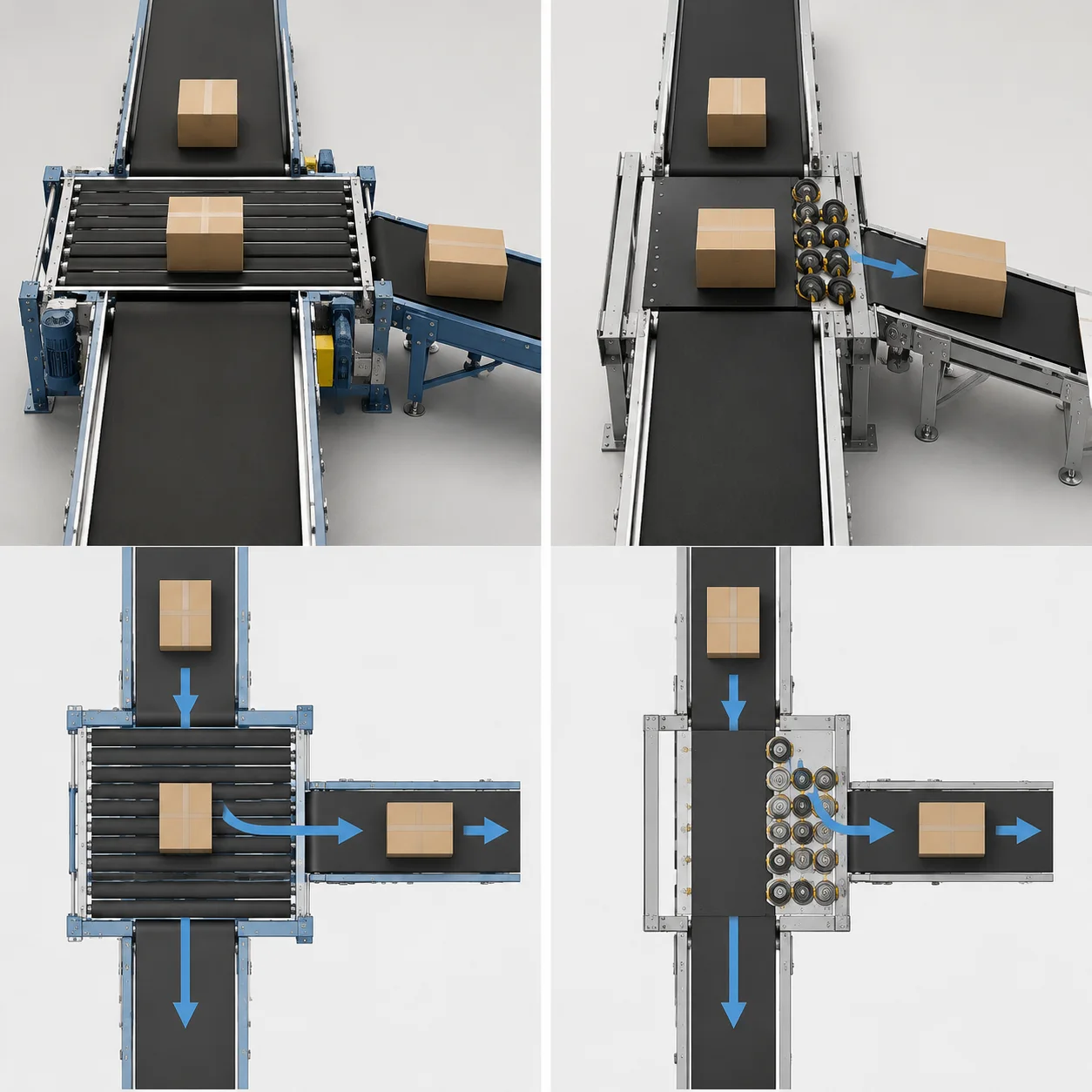
- At the designated output station, the mini conveyor activates and transfers the item smoothly to the appropriate chute or lane.
- The product moves to packing, shipping, storage, or additional processing.
This automated process dramatically reduces manual handling while maintaining high sorting accuracy across a diverse range of products.
The Connection Between Picking Efficiency and Warehouse Performance
Order picking is one of the most labor-intensive and expensive operations in warehouse management. Industry studies often estimate that picking activities account for more than half of total warehouse operating costs.
Several challenges affect traditional picking operations:
- Increasing order volumes.
- Growing SKU diversity.
- Labor shortages.
- Shorter delivery windows.
- Rising customer expectations for accuracy.
When manual workflows cannot keep pace, warehouses experience:
- Order backlogs.
- Increased overtime expenses.
- Higher mis-sort rates.
- Delayed shipments.
- Reduced customer satisfaction.
Cross-belt sorting systems address these challenges by accelerating product flow and minimizing manual intervention throughout the fulfillment process.
Technical Advantage #1: Exceptional High-Speed Sorting Capability
The most obvious advantage of cross-belt technology is its ability to process extremely large volumes of products at high speed.
Continuous Carrier Movement
Unlike stop-and-go manual processes, cross-belt carriers move continuously around the sorter loop. As soon as one item is discharged, the carrier becomes available for the next assignment.
This uninterrupted operation eliminates many of the delays associated with traditional conveyor or manual sorting systems.
High Throughput Capacity
Depending on configuration and product type, modern cross-belt sorters can process many thousands of items per hour. This makes them particularly valuable for:
- E-commerce fulfillment centers.
- Parcel and courier hubs.
- Apparel distribution facilities.
- Pharmaceutical logistics.
- Retail replenishment centers.
High throughput directly improves picking efficiency by reducing bottlenecks and enabling downstream operations to maintain a steady pace.
Maintaining Performance During Peak Seasons
Holiday shopping events, flash sales, and promotional campaigns can create sudden spikes in order volume. Manual operations often struggle under these conditions, while cross-belt systems maintain stable performance even during periods of heavy demand.
Technical Advantage #2: Outstanding Sorting Accuracy
Speed alone is not enough. In modern logistics, accuracy is equally important.
Every incorrectly sorted package creates additional costs through:
- Return processing.
- Re-shipment expenses.
- Customer service interactions.
- Delayed deliveries.
- Inventory discrepancies.
Automated Identification Systems
Cross-belt sorters integrate with technologies such as:
- Barcode scanning.
- QR code recognition.
- RFID identification.
- Optical character recognition.
- Machine vision systems.
These automated identification methods reduce dependence on manual scanning and significantly decrease the likelihood of routing errors.
Intelligent Routing Algorithms
Warehouse Control Systems (WCS) continuously analyze incoming product data and dynamically assign sorting destinations. Because routing decisions are software-driven, the process remains consistent regardless of shift changes or workforce fluctuations.
Reduced Human Error
Manual sorting requires workers to repeatedly identify and place products into the correct destination bins. Fatigue and repetitive tasks naturally increase the risk of mistakes.
By automating these decisions, cross-belt sorters improve consistency and reduce costly human error.
Technical Advantage #3: Gentle Product Handling
Many warehouses process products that are fragile, irregularly shaped, or easily damaged. Traditional sorting technologies may expose these items to sudden drops, abrupt directional changes, or mechanical impact.
Cross-belt sorters are specifically designed for smooth handling.
Controlled Lateral Transfer
Instead of dropping or pushing products aggressively, each mini conveyor belt gently transfers items sideways into the designated chute.
This controlled movement helps protect:
- Consumer electronics.
- Cosmetics.
- Pharmaceutical products.
- Apparel.
- Books and printed materials.
- Small packaged goods.
Handling Diverse Product Types
Cross-belt systems can efficiently process a broad variety of package dimensions and weights within the same operating cycle, reducing the need for separate sorting lines.
This flexibility is particularly valuable in e-commerce environments where product diversity is constantly expanding.
Technical Advantage #4: Flexible and Scalable System Architecture
Modern warehouses must adapt quickly to changing business requirements. A rigid automation system can become obsolete as order volumes grow or product mixes evolve.
Cross-belt sorters offer significant scalability advantages.
Modular Expansion
Many systems are built using modular designs, allowing operators to:
- Add additional carriers.
- Increase the number of discharge lanes.
- Extend sorter loops.
- Integrate new induction points.
This approach supports gradual expansion without requiring complete infrastructure replacement.
Adaptability to Business Growth
As businesses expand into new markets or add product categories, cross-belt sorters can accommodate increased complexity while maintaining operational efficiency.
Technical Advantage #5: Seamless Integration with Warehouse Management Systems
A cross-belt sorter is most effective when integrated into a broader digital warehouse ecosystem.
Warehouse Management System (WMS) Integration
The sorter communicates directly with the WMS, enabling real-time exchange of information regarding:
- Inventory status.
- Order priorities.
- Shipping deadlines.
- Product locations.
- Carrier assignments.
Warehouse Control System (WCS) Coordination
The WCS acts as the operational brain, coordinating:
- Conveyor speeds.
- Carrier assignments.
- Product tracking.
- Chute balancing.
- Exception handling.
This intelligent coordination ensures optimal use of system resources.
Enterprise Resource Planning (ERP) Connectivity
Integration with ERP platforms allows businesses to synchronize warehouse activity with procurement, inventory planning, and customer order management.
Technical Advantage #6: Labor Optimization and Workforce Efficiency
Labor remains one of the largest expenses in warehouse operations. At the same time, many regions continue to face labor shortages and increasing wage pressures.
Automating Repetitive Tasks
Cross-belt sorters reduce the need for workers to perform repetitive manual sorting activities. Instead, employees can focus on higher-value responsibilities such as:
- Quality assurance.
- Inventory management.
- Exception handling.
- Equipment supervision.
- Customer-specific packaging tasks.
Reducing Physical Strain
Manual sorting often involves repetitive lifting, bending, reaching, and carrying. Automation helps minimize these physical demands, potentially improving workplace ergonomics and reducing fatigue-related errors.
Improving Workforce Flexibility
Because automated systems handle baseline sorting volume, warehouses can better absorb seasonal fluctuations without requiring massive temporary labor increases.
Technical Advantage #7: Supporting Omnichannel Fulfillment
Today’s warehouses often serve multiple sales channels simultaneously, including:
- Direct-to-consumer e-commerce.
- Brick-and-mortar retail replenishment.
- Wholesale distribution.
- Marketplace fulfillment.
- Business-to-business orders.
Each channel may have different packaging requirements, shipping deadlines, and routing logic.
Cross-belt sorters excel in omnichannel environments because they can process mixed-order streams while automatically directing products to different fulfillment workflows.
Technical Advantage #8: Data Collection and Operational Visibility
Modern automation systems generate valuable operational data that helps managers continuously improve performance.
Real-Time Monitoring
Operators can monitor:
- Items processed per hour.
- Carrier utilization rates.
- Chute occupancy.
- Sort accuracy.
- System downtime.
- Order backlog status.
Historical Analytics
Long-term data analysis helps identify:
- Peak demand periods.
- Bottleneck locations.
- Maintenance requirements.
- Staffing optimization opportunities.
Predictive Maintenance
Sensors embedded throughout the sorter system monitor equipment health and identify potential issues before they lead to failures. Predictive maintenance reduces unplanned downtime and improves equipment availability.
Cross-Belt Sorters and E-Commerce Fulfillment
The explosive growth of online shopping has made cross-belt technology particularly valuable.
Managing SKU Explosion
Large e-commerce warehouses often carry hundreds of thousands of unique products with varying sizes, packaging formats, and shipping requirements.
Cross-belt sorters can process these mixed-item streams efficiently without requiring extensive manual separation.
Supporting Same-Day and Next-Day Delivery
Fast delivery depends on compressing internal warehouse processing times. By accelerating sorting and reducing bottlenecks, cross-belt systems help businesses meet increasingly aggressive shipping deadlines.
Efficient Carrier Consolidation
Packages destined for different shipping providers can be automatically grouped into dedicated outbound lanes, streamlining trailer loading and reducing dispatch delays.
Sustainability Benefits of Cross-Belt Sorting Systems
Automation can also contribute to broader sustainability goals.
Reduced Energy Consumption Through Intelligent Operation
Advanced control systems optimize motor speeds and equipment usage based on workload, minimizing unnecessary energy consumption.
Lower Return Rates
Improved sorting accuracy reduces shipping errors and unnecessary reverse logistics activity, helping lower transportation-related emissions.
Better Space Utilization
High-density automated sorting layouts allow warehouses to maximize the use of available floor space, reducing the need for facility expansion.
Extended Equipment Lifespan
Predictive maintenance and optimized operation help extend equipment life and reduce material waste associated with premature replacement.
Common Industries That Benefit from Cross-Belt Sorters
Although closely associated with e-commerce, cross-belt sorting technology is used across many sectors.
Parcel and Courier Logistics
National and regional carriers rely on automated sorting systems to process millions of packages every day.
Apparel and Fashion Distribution
Gentle handling protects garments and footwear while maintaining high throughput.
Pharmaceutical Distribution
Precise sorting supports the accurate movement of medical supplies and healthcare products.
Consumer Electronics
Sensitive electronic products benefit from low-impact handling and accurate routing.
Food and Beverage Logistics
Automated sorting helps accelerate order fulfillment for packaged food and grocery operations.
Future Trends: The Next Generation of Cross-Belt Sorting Technology
The future of warehouse automation is becoming increasingly intelligent.
Emerging innovations include:
- Artificial intelligence-driven routing optimization.
- Machine vision quality inspection.
- Autonomous mobile robot integration.
- Digital twin simulation for warehouse planning.
- Machine learning-based predictive maintenance.
- Real-time workload balancing across multiple sorter lines.
As these technologies mature, cross-belt sorters will become even more adaptive, efficient, and capable of handling increasingly complex logistics operations.
How to Evaluate Whether a Cross-Belt Sorter Is Right for Your Business
Not every warehouse requires the same level of automation. Before investing, businesses should evaluate:
- Current and projected order volumes.
- SKU diversity.
- Labor availability and costs.
- Delivery service commitments.
- Existing warehouse layout.
- Integration requirements with current software platforms.
Facilities experiencing rapid growth, high order complexity, or persistent labor challenges often realize the greatest benefits from cross-belt sorting systems.
Conclusion: Why Cross-Belt Sorters Are Transforming Warehouse Efficiency
In the era of e-commerce, omnichannel retail, and increasingly demanding customer expectations, warehouse performance depends on far more than storage capacity alone. Success is increasingly determined by how quickly, accurately, and efficiently products can move through the fulfillment process.
Cross-belt sorter systems have emerged as one of the most effective technologies for meeting these challenges. Their combination of high-speed operation, exceptional sorting accuracy, gentle product handling, digital integration, and scalable architecture enables businesses to dramatically improve order picking efficiency while controlling labor costs and reducing operational risk.
More importantly, cross-belt sorters do not simply automate an existing process—they fundamentally reshape the way warehouses operate. By creating a seamless flow of products from receiving to shipping, they help organizations build more resilient, flexible, and future-ready supply chains.
As global commerce continues to evolve and delivery expectations become even more demanding, the companies that invest in intelligent automation and high-performance sorting technologies will be best positioned to compete. For many modern distribution centers, the cross-belt sorter is no longer just a piece of equipment—it is the engine that powers fast, accurate, and scalable logistics operations.