
Quick answer: Parcel sorter throughput planning should use the actual arrival pattern, parcel mix, routing destinations, recirculation and exception workload rather than a single daily average. Define the measurement window and operating assumptions, then ask the integrator to show how the proposed design handles representative peak periods. Record what is included in the rate and which conditions remain to be validated during trials.
1. Define the throughput measure
Ask whether a stated rate counts inducted parcels, successful sort decisions, completed destinations or another event. Set the measurement window and exclude or include downtime, breaks and exception handling consistently. A headline value without a definition cannot be compared across proposals. Write the intended operating measure in the project brief and name the owner who will validate it. If the system has multiple zones, state whether the rate applies to one area or the full line. Clear definitions help operations, engineering and procurement review the same capacity question.
2. Use arrival profiles instead of one daily total
Collect arrival data by time interval and identify normal, busy and unusual periods. Record the source, date range, operating calendar and any known seasonal effect. A daily total hides short peaks that create queues even when average volume appears manageable. Include shifts, inbound cutoffs and planned service levels in the profile. If reliable records are not available, state the assumption and plan a measurement or validation step. This gives the integrator a practical basis for modeling accumulation and release rather than designing around a single estimated number.
3. Describe the parcel mix and difficult items
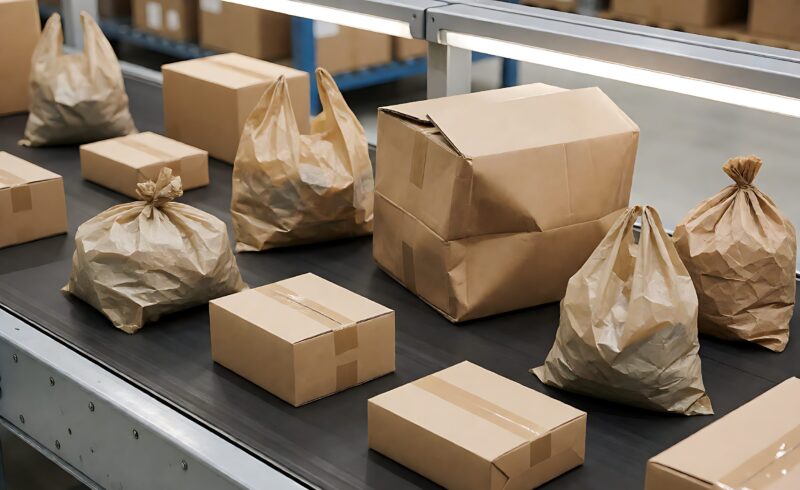
Summarize the expected distribution of parcel sizes, weights, packaging types, labels and handling conditions using observed samples. Include irregular, unstable, soft-sided or hard-to-read items when they are part of the operation. Explain whether any category is routed to a manual process. Avoid describing the flow only by an average size. The mix affects induction, spacing, scanning, divert behavior and exception workload. Ask the supplier to identify which classes are included in the capacity estimate and which require a separate trial or design decision.
4. Map destinations and routing complexity
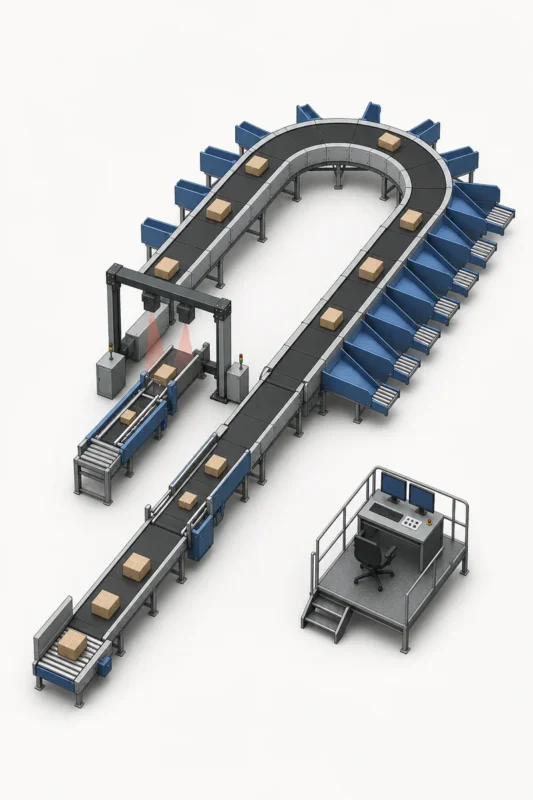
List destinations, chute or lane count, routing logic, sort plans and any period when multiple plans run at once. Identify how the system handles an unknown destination, no-read, closed chute or unavailable downstream point. A high destination count can change the workload even when parcel volume stays the same. Keep the route plan tied to the current operation and note anticipated growth as a separate scenario. This helps the design team distinguish installed capacity from a future option that may require equipment or layout changes.
5. Account for recirculation and exceptions
Record why parcels recirculate and how often exceptions are expected, using site data where available. Include manual resolution, label correction, damage handling and re-induction steps in the operational model. Do not assume every inducted parcel becomes a successful first-pass sort. Ask the integrator to show how recirculation affects congestion and where exceptions are removed from normal flow. Clear assumptions make the throughput estimate more realistic and show which process improvements could raise effective capacity without changing the sorter itself.
6. Review buffer, accumulation and downstream release
Map where parcels queue, how each buffer is controlled and what event releases work to the next process. Confirm how the system behaves when a destination fills or downstream flow stops. Ask operations to provide realistic recovery cases and identify any safe manual bypass. Buffer space can protect against short disruptions but does not remove a persistent capacity constraint. A documented queue and release plan helps the team understand whether the sorter, upstream induction or downstream dispatch is likely to limit the actual service rate.
7. Validate assumptions with representative trials
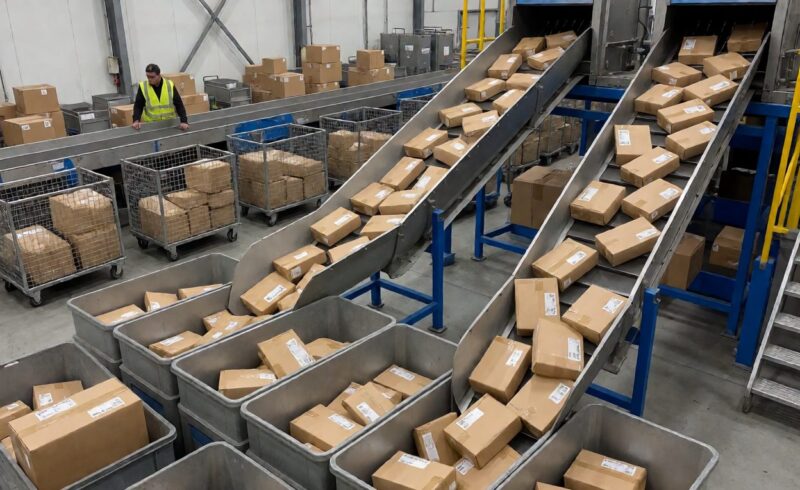
Agree on the sample parcel set, arrival pattern, route plan, measurement method and exception rules for a trial. Record the system configuration and conditions used. Include enough variation to evaluate normal operation as well as a known difficult parcel class. Report observed rate, recirculation, held items and any manual intervention. Do not promote a trial result as a guaranteed site rate unless the contract and acceptance plan define it that way. A transparent trial record helps the buyer compare the proposal with the actual operation.
8. Keep a capacity model that can be updated
Store the arrival profile, parcel mix, route plan, calculation assumptions, trial results and owner for each input. Revisit them when volume, destination count, shift pattern or parcel type changes. Track actual performance with the same measure used in the design review. If observed flow differs from the model, identify whether the cause is equipment, process, staffing, data or arrival timing before changing the capacity target. A dated model supports future expansion decisions and helps operations explain why an earlier estimate changed.
For buyers comparing available product and supplier options, see TrueLiSort parcel sorting systems.
Questions buyers often ask
Why is a daily average not enough for sorter planning?
It can hide short peak windows that create queues and reduce the service rate during the periods that matter.
What parcel information should be shared with an integrator?
Provide a representative mix of sizes, weights, packaging, labels, difficult items, arrival profile and routing destinations.
Should recirculation be included in a throughput estimate?
Yes. Record the expected or observed recirculation and exception workload so the estimate reflects the full process.
How should a trial rate be reported?
State the measurement event, window, configuration, sample mix, exceptions and operating assumptions used.