

Quick answer: Cross belt sorter induction planning should connect the parcel profile, spacing method, scan data, destination rules and exception handling to the proposed operating rate. Buyers should share representative items and arrival conditions with the integrator, define how induction and sort success are measured, and document assumptions that need a site trial. A sorter rate is not meaningful unless its measurement boundary and parcel mix are clear.
1. Describe the induction process and operating window
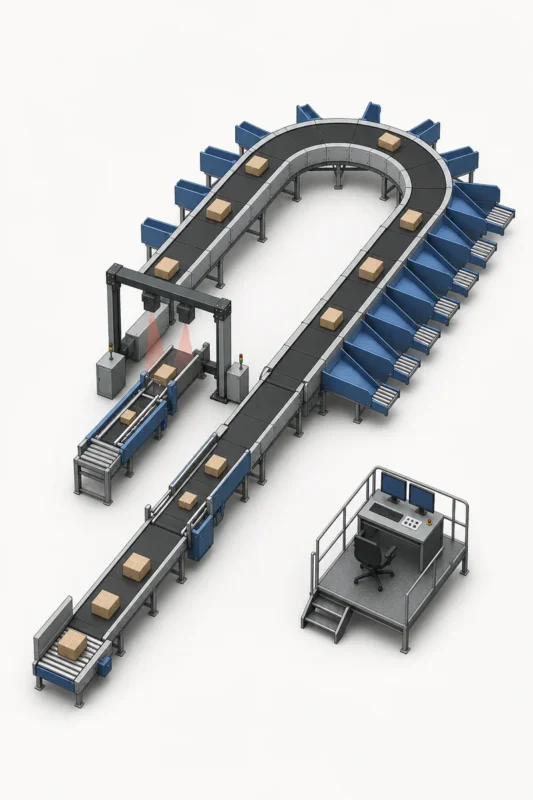
Map how parcels arrive, where they are buffered and how an operator presents each item to the sorter. State the shift pattern, working window, upstream release rule and any known peak period. Identify whether the design must support manual or automated induction. Use actual site observations where available and label estimates clearly. This gives the integrator a process context instead of an isolated volume number and helps the buyer see which assumptions must be measured before the layout is finalized.
2. Share a representative parcel set
Summarize the size, weight, packaging and label conditions expected in the flow, including irregular or difficult cases. Provide a sample set or documented distribution and state which categories are outside the trial. Identify whether parcels arrive in a consistent orientation or need a separate handling step. An average parcel dimension can hide the items that drive induction and spacing. A representative mix helps the integrator determine whether the proposed infeed and carrier interaction match the operation the site intends to run.
3. Define spacing and presentation assumptions
Explain how parcels are separated before induction and what operator or equipment step maintains spacing. Record which assumptions depend on upstream conveyance, manual placement or a control rule. Ask the integrator to show how gaps, touching parcels and irregular orientation are treated. Do not rely on a single perfect demonstration item to describe everyday conditions. A written spacing rule helps operations and engineering discuss whether additional singulation or accumulation is needed before the sorter.
4. Map scan data and label conditions
Identify where destination data comes from, what barcode or label condition the site expects and how the scanner reports a no-read. Share representative labels with normal print variation and placement. Confirm whether data quality is in scope for the sorter design or owned by an upstream process. A scan event should be tied to the parcel identifier and route outcome used in the site’s records. This makes it easier to compare scan performance and investigate a miss without mixing equipment behavior with incomplete or unreadable source data.
5. Specify route and destination rules
List the destinations, chute or lane identifiers, service groups and plan changes expected during the operating window. Explain what happens when a destination is closed, full or absent from the current plan. Keep a versioned route map and identify who approves changes. If the destination count may grow, show the current requirement and future scenario separately. This prevents a design discussion from mixing installed scope with unapproved expansion assumptions and gives the controls team a defined basis for configuration.
6. Plan how exceptions re-enter the flow
Describe how no-read parcels, unknown destinations, damaged items and manual review cases leave the primary path. Name the owner responsible for each exception and state whether items return to induction or move to a separate process. Record how exception volume is included in the operating model. A sorter can route only from the data and conditions it receives, so exception handling should be visible in the process map. This helps operations assess labor and prevents the headline rate from omitting work that occurs outside normal sort lanes.
7. Choose trial measures and conditions
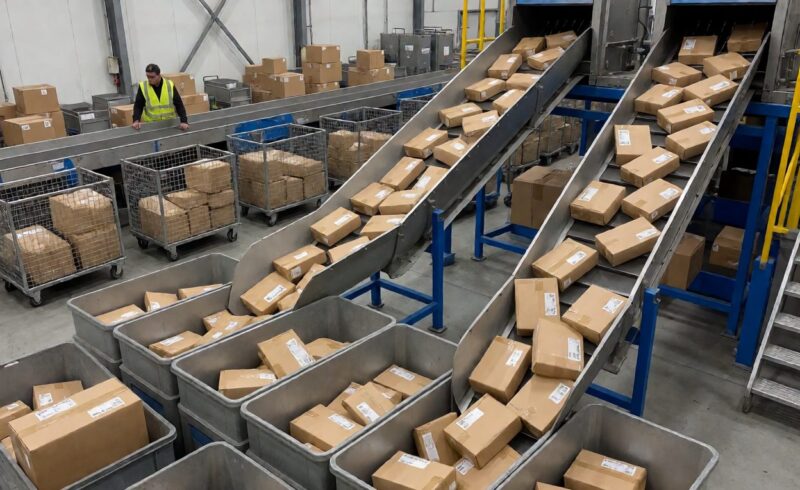
Agree on the sample set, run duration, active route plan, measurement event and treatment of recirculation before a site trial. Record system configuration, staffing and any intervention that affects the result. Separate inducted items, successful destinations, no-reads and manually resolved parcels in the report. Do not label one short test as a guaranteed daily rate unless the agreement defines that acceptance measure. A transparent trial lets the buyer compare performance with the design assumptions and identify what needs adjustment.
8. Keep the induction model current
Store parcel profiles, arrival conditions, scan assumptions, route maps, exception volumes and trial results under dated revisions. Revisit the model when upstream equipment, label standards, service destinations or work shifts change. Compare actual flow with the same event definitions used in design and acceptance. If actual results diverge, identify whether the cause is data, process, staffing, controls or equipment before changing the capacity target. A maintained record supports future changes without losing the basis for the original sorter layout.
For buyers comparing available product and supplier options, see TrueLiSort cross belt sorter systems.
Questions buyers often ask
Why is parcel mix important to cross belt sorter induction?
Item size, packaging and label variation affect presentation and spacing, so the design should use representative samples.
What should a sorter induction trial measure?
Record inducted items, successful destinations, no-reads, exceptions, recirculation and the operating conditions used.
Who owns no-read parcel handling?
The site and integrator should name an owner and define where each exception goes and how it is recorded.
When should the induction plan be updated?
Review it when parcel mix, arrival pattern, scan data, destinations or upstream equipment changes.