
In today’s fast-moving global economy, logistics is no longer just a back-end function—it’s a strategic advantage. Whether you’re a growing eCommerce brand, a mid-sized manufacturer, or an enterprise managing complex supply chains, choosing the right freight forwarding partner can directly impact your costs, delivery speed, and customer satisfaction.
Over the past decade, a new category has emerged: digital freight forwarders. These technology-driven platforms promise transparency, automation, and efficiency. Meanwhile, traditional freight forwarders—long-standing players with deep industry relationships—continue to offer personalized service and expertise.
So, which one is better for your business?
The answer isn’t as simple as picking one over the other. It depends on your operational complexity, shipment volume, risk tolerance, and long-term growth strategy. In this guide, we’ll break down both models in detail, compare their strengths and weaknesses, and help you determine the best fit for your logistics needs.
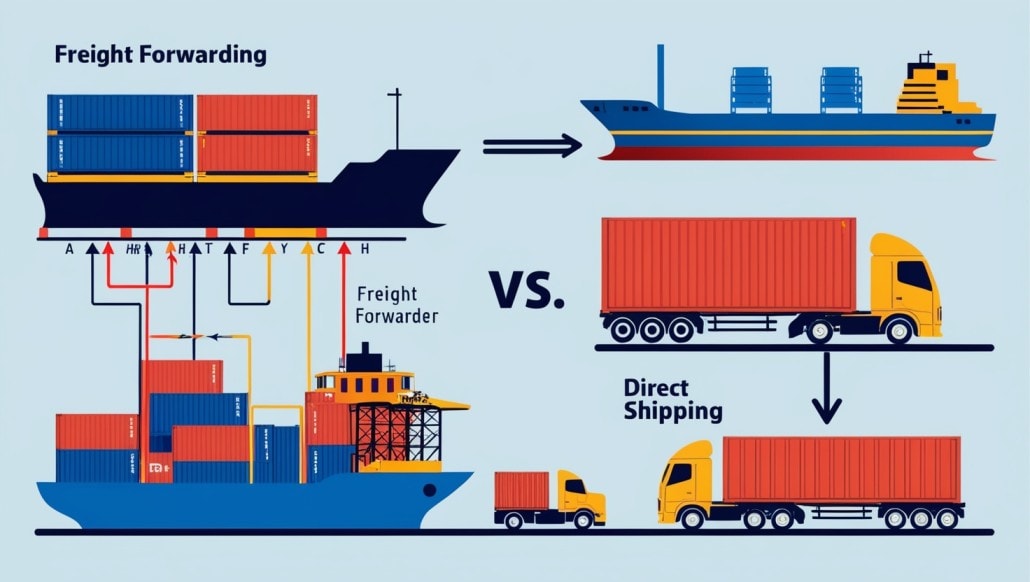
Understanding Freight Forwarding
Before diving into the comparison, it’s important to understand what freight forwarders actually do.
A freight forwarder acts as an intermediary between shippers and transportation services. They coordinate the movement of goods from origin to destination, handling tasks such as:
- Booking cargo space
- Negotiating shipping rates
- Managing customs clearance
- Preparing documentation
- Tracking shipments
- Coordinating last-mile delivery
In short, they simplify complex logistics processes so businesses can focus on their core operations.
What Is a Traditional Freight Forwarder?
Traditional freight forwarders have been the backbone of global trade for decades. These companies rely heavily on human expertise, long-term carrier relationships, and manual processes.
Key Characteristics
1. Relationship-Driven Operations
Traditional forwarders build strong relationships with shipping lines, airlines, customs brokers, and local agents. These relationships often translate into better problem-solving capabilities when issues arise.
2. Manual or Semi-Digital Processes
While many traditional forwarders have adopted some digital tools, much of their workflow still involves emails, spreadsheets, and phone calls.
3. Personalized Customer Service
Clients typically work with dedicated account managers who understand their business and provide tailored solutions.
4. Flexibility in Complex Situations
Traditional forwarders excel in handling unusual shipments, such as oversized cargo, hazardous materials, or multi-leg logistics routes.
What Is a Digital Freight Forwarder?
Digital freight forwarders are technology-first logistics providers that use software platforms to streamline operations and enhance visibility.
Key Characteristics
1. Online Platforms and Dashboards
Customers can get instant quotes, book shipments, and track cargo in real time through user-friendly interfaces.
2. Automation and Data Integration
Digital forwarders automate tasks like documentation, customs filings, and notifications, reducing manual errors.
3. Transparent Pricing
Rates are often displayed upfront, with fewer hidden fees.
4. Scalable Operations
These platforms are designed to handle high volumes efficiently, making them attractive for fast-growing businesses.
Head-to-Head Comparison
Let’s break down how digital and traditional freight forwarders stack up across key dimensions.
1. Pricing and Cost Structure
Digital Freight Forwarders
- Offer instant pricing through online tools
- Provide competitive rates due to data-driven optimization
- Reduce administrative costs through automation
However, pricing can sometimes lack flexibility for unique shipments.
Traditional Freight Forwarders
- Pricing is often negotiated manually
- May offer better deals for long-term partnerships
- Can adjust rates based on complex requirements
But costs may be less transparent and include hidden fees.
Verdict:
If you value transparency and quick comparisons, digital forwarders have the edge. If your shipments require negotiation and customization, traditional forwarders may offer better value.
2. Speed and Efficiency
Digital Freight Forwarders
- Instant quotes and booking
- Automated documentation
- Real-time tracking
These features significantly reduce turnaround time.
Traditional Freight Forwarders
- Slower quoting process
- Manual coordination can cause delays
- Tracking updates may not be real-time
Verdict:
Digital forwarders clearly outperform in speed and operational efficiency.
3. Customer Experience
Digital Freight Forwarders
- Self-service platforms
- 24/7 access to shipment data
- Standardized processes
However, customer support may feel less personal.
Traditional Freight Forwarders
- Dedicated account managers
- Personalized service
- Strong communication during disruptions
Verdict:
If you prefer hands-on support and human interaction, traditional forwarders are a better fit. If you prioritize convenience and control, digital platforms shine.
4. Visibility and Transparency
Digital Freight Forwarders
- Real-time tracking dashboards
- Automated alerts
- Centralized data
Traditional Freight Forwarders
- Limited visibility
- Updates often require manual follow-ups
Verdict:
Digital forwarders dominate in visibility and transparency.
5. Flexibility and Problem-Solving
Digital Freight Forwarders
- Best suited for standard shipments
- May struggle with complex logistics scenarios
Traditional Freight Forwarders
- Excel in handling exceptions
- Can quickly adapt to disruptions
- Leverage human expertise and relationships
Verdict:
Traditional forwarders are more reliable for complex or unpredictable shipments.
6. Scalability
Digital Freight Forwarders
- Built for scale
- Ideal for high-volume shippers
- Easily integrate with eCommerce platforms
Traditional Freight Forwarders
- Scaling often requires more manpower
- Processes may become inefficient at high volumes
Verdict:
Digital forwarders are better suited for rapid growth.‘’
7. Technology Integration
Digital Freight Forwarders
- API integrations with ERP, WMS, and eCommerce systems
- Data analytics and reporting
- Automation tools
Traditional Freight Forwarders
- Limited integration capabilities
- Often rely on legacy systems
Verdict:
Digital forwarders lead in technology and integration.
Pros and Cons Summary
Digital Freight Forwarders
Pros:
- Fast and efficient
- Transparent pricing
- Real-time visibility
- Scalable operations
- Strong tech integration
Cons:
- Limited flexibility for complex shipments
- Less personalized support
- May lack deep industry relationships
Traditional Freight Forwarders
Pros:
- Personalized service
- Strong problem-solving capabilities
- Expertise in complex logistics
- Established carrier relationships
Cons:
- Slower processes
- Less transparency
- Limited technology integration
- Harder to scale
Which One Is Right for Your Business?
The best choice depends on your specific needs. Let’s explore a few common business scenarios.
1. eCommerce Businesses
If you run an online store with frequent shipments and standardized products, a digital freight forwarder is often the better choice.
Why?
- Faster booking and processing
- Integration with online sales platforms
- Real-time tracking for customers
These features help improve customer satisfaction and streamline operations.
2. Small and Medium-Sized Businesses (SMBs)
SMBs often need a balance between cost and service.
- If your shipments are simple and frequent → go digital
- If your shipments are irregular or complex → go traditional
A hybrid approach may also work well.
3. Large Enterprises
Enterprises typically deal with complex supply chains involving multiple stakeholders.
- Traditional forwarders provide strategic support and customization
- Digital forwarders offer efficiency and data insights
Many large companies use both.
4. Businesses Shipping Specialized Cargo
If you handle:
- Hazardous materials
- Oversized goods
- Temperature-sensitive products
A traditional forwarder is usually the safer choice due to their expertise and flexibility.
5. Fast-Growing Startups
Startups need scalability and cost control.
Digital forwarders are ideal because they:
- Reduce operational overhead
- Provide instant access to logistics services
- Scale easily with business growth
The Rise of Hybrid Models
Interestingly, the line between digital and traditional freight forwarders is beginning to blur.
Many traditional forwarders are investing in digital tools, while digital platforms are adding human support teams.
This has led to the emergence of hybrid models that combine:
- Technology-driven efficiency
- Human expertise and customer service
For many businesses, this hybrid approach offers the best of both worlds.
Key Questions to Ask Before Choosing
To make the right decision, consider the following:
- How complex are your shipments?
- How important is real-time visibility?
- Do you need personalized support?
- What is your shipment volume?
- How fast is your business growing?
- Do you require system integrations?
Your answers will guide you toward the most suitable option.
Future Trends in Freight Forwarding
The logistics industry is undergoing rapid transformation. Here are a few trends shaping the future:
1. Increased Automation
Automation will continue to reduce manual processes and improve efficiency.
2. AI and Predictive Analytics
Advanced analytics will help businesses forecast demand and optimize routes.
3. Greater Transparency
Customers will expect full visibility into their supply chains.
4. Sustainability Initiatives
Eco-friendly logistics solutions will become a priority.
Digital forwarders are leading many of these trends, but traditional players are catching up.
Final Thoughts
Choosing between digital and traditional freight forwarders isn’t about finding a universal “best” option—it’s about finding the right fit for your business.
If your priority is speed, transparency, and scalability, digital freight forwarders offer a compelling solution. They streamline operations, reduce costs, and provide the tools needed to thrive in a fast-paced market.
On the other hand, if your logistics needs are complex, unpredictable, or require a high level of customization, traditional freight forwarders bring invaluable expertise and human support.
For many businesses, the smartest approach is not choosing one over the other, but leveraging both strategically. By combining the efficiency of digital platforms with the reliability of traditional expertise, you can build a resilient and adaptable supply chain.
In an increasingly competitive global landscape, your logistics strategy can be a powerful differentiator. Take the time to evaluate your needs, test different options, and build partnerships that align with your long-term goals.