



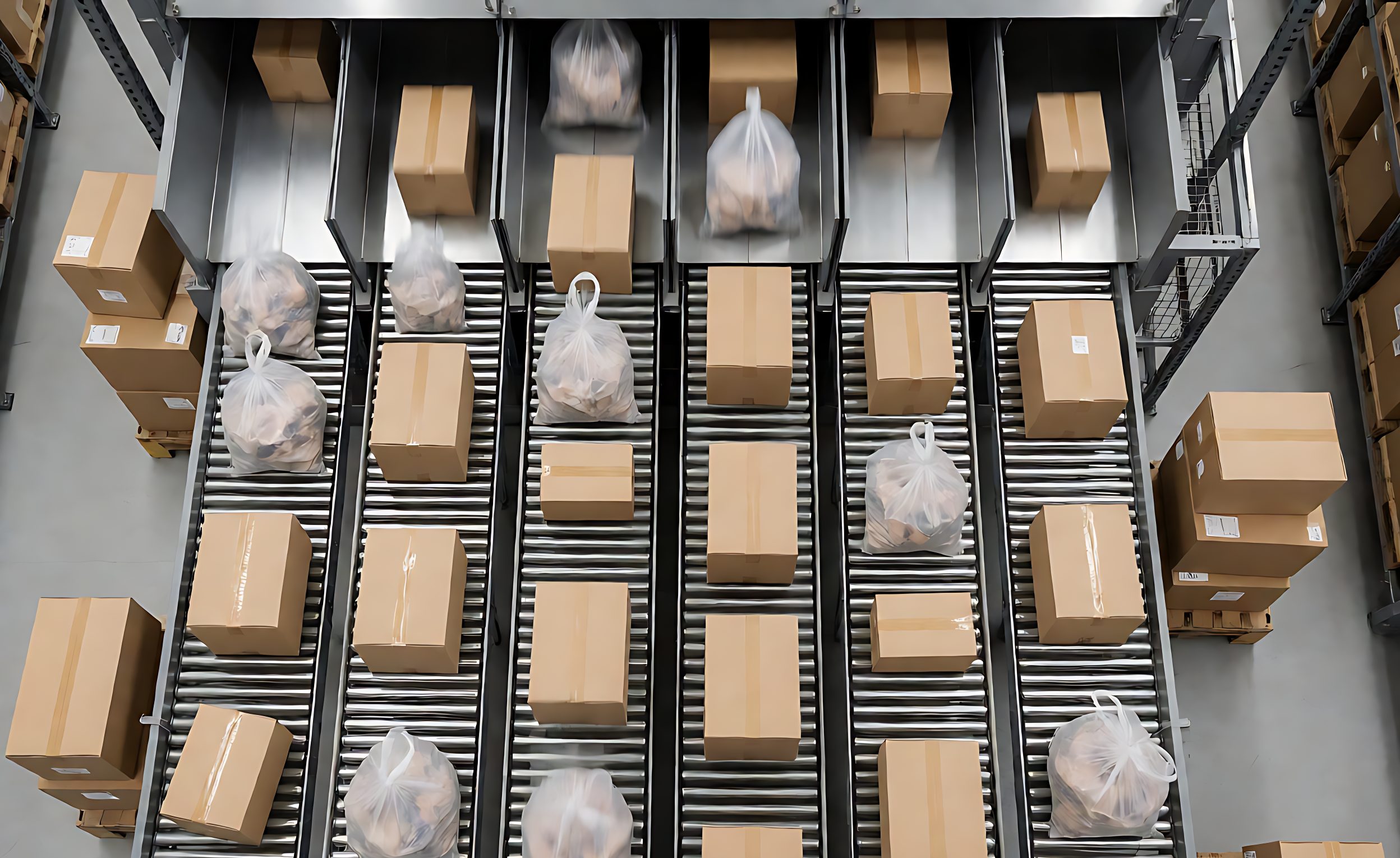
In today’s fast-moving supply chain environment, logistics operators face rising parcel volumes, labor shortages, and increasing customer expectations for faster, more accurate deliveries. To stay competitive, companies are accelerating the adoption of intelligent sorting systems that streamline operations from inbound to outbound.
As e-commerce grows, manual workflows can no longer keep pace with the demand for real-time order fulfillment. Automated solutions such as cross-belt sorters, narrow-belt sorters, DWS systems, and smart conveyor networks are reshaping warehouse operations. These technologies improve accuracy, reduce handling mistakes, and shorten delivery lead times—directly enhancing customer satisfaction.
Another major driver behind automation is labor optimization. Warehouses around the world are struggling with inconsistent labor availability and rising wages. Automated sorting equipment reduces reliance on manual labor, allowing teams to focus on higher-value tasks. With stable throughput and predictable performance, logistics operators gain more control over peak-season challenges.
Digitalization also plays a crucial role. Modern sorting lines are now integrated with warehouse management systems, enabling full data visibility and continuous monitoring. Real-time analytics help companies adjust sorting strategies, forecast bottlenecks, and optimize equipment utilization. As a result, decision-making becomes faster and more data-driven.
Looking ahead, logistics automation will continue to accelerate. Companies investing today in scalable sorting platforms will not only increase operational efficiency but also build long-term resilience. As global trade intensifies and e-commerce expands, intelligent sorting systems are no longer a luxury—they are the backbone of modern logistics infrastructure.
Why Intelligent Sorting Wins: The Compounding Logic of Small Accuracies
A single percentage point of accuracy sounds minor. Compounded across a logistics year, it is the difference between competitors:
| Accuracy level | Daily mis-sorts at 20k parcels | Year-end consequence |
|---|---|---|
| 99.0% | 200 misdirected parcels | Daily recovery crews; trust discount |
| 99.8% | 40 misdirected parcels | Exceptions handled in-rhythm |
| 99.95% | 10 misdirected parcels | Quality becomes a sales argument |
The compounding works through three multipliers. First, recovery cost: every mis-sort consumes labour disproportionate to the error — the parcel must be found, rerouted and often expedited, so the true cost runs several multiples of a normal handling. Second, service feedback: accuracy compounds into promise-keeping, which compounds into the commercial terms a shipper can defend. Third, learning: systems at high baseline accuracy generate clean data, and clean data improves the rules — the reason leaders pull further ahead each quarter rather than converging. The arithmetic also reframes investment: upgrading a 99.0% operation to 99.8% is not a four-fifths improvement but closer to a fivefold reduction in recovery burden, once the multipliers stack. Buyers who build their case from the compounding end up buying more sorter than the naive spreadsheet suggested — and right, in hindsight, every time. The data ladder feeding this compounding is in from sensor to decision, and the unlocking mechanics in what intelligent sorting unlocks. Reference: Six Sigma quality practice and compounding dynamics.
Compounding also has a starting condition: data cleanliness. Learning systems improve at the speed their error data is trustworthy, so the cheapest investment in future intelligence is not more sensors but disciplined labelling of what today’s exceptions actually were. Reference: data quality and virtuous cycles.