

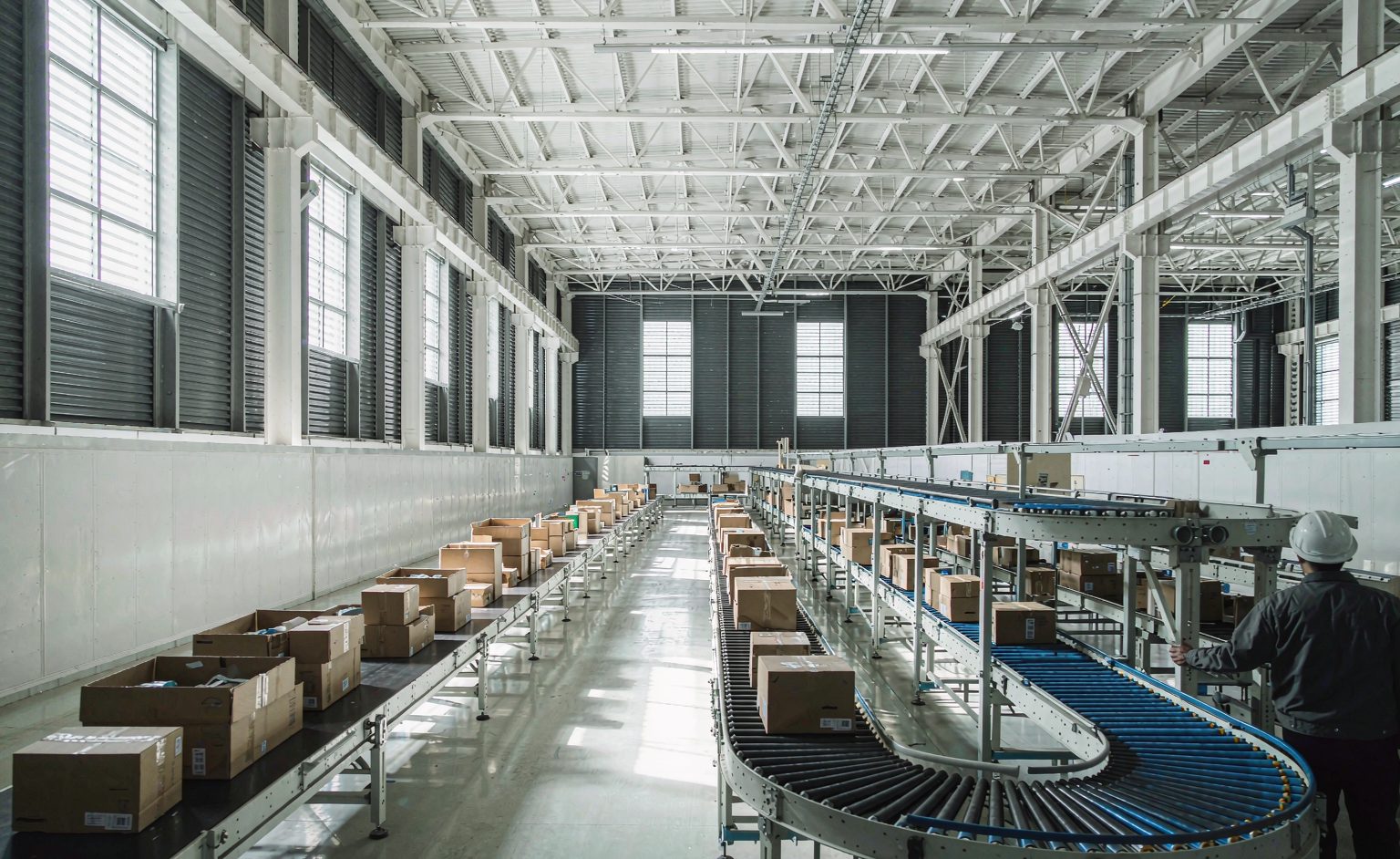
The logistics industry is evolving at unprecedented speed. Growing parcel volumes, tighter delivery windows, and increasing labor costs are pushing companies to seek smarter solutions. Intelligent sorting technology is becoming the key to overcoming these challenges.
Modern automated sortation systems integrate conveyor belts, cross-belt sorters, and dynamic scanning to ensure accuracy and high throughput. By reducing manual handling, businesses not only improve efficiency but also enhance workplace safety and consistency in operations.
Another crucial advantage lies in flexibility. From e-commerce parcels to retail distribution, automated solutions can be tailored to different product sizes, weights, and operational demands. This adaptability enables companies to scale quickly as market needs change.
Ultimately, logistics automation is not just about speed—it is about building resilience and delivering value to customers. With the right technology in place, companies can achieve faster deliveries, lower operational costs, and a sustainable competitive edge in the global market.
Unlocking Efficiency Is a Sequence, Not a Switch
Intelligent sorting unlocks efficiency in a strict order. Skip a step and the next one stalls:
| Step | Action | Unlocks |
|---|---|---|
| 1. Measure | Baseline the four numbers on the real mix | A payback case nobody can argue with |
| 2. Redesign | Fix flows and profiles before metal | A sorter sized to a designed process, not a mess |
| 3. Automate | Apply the loop where volume justifies | The step-change in rate and accuracy |
| 4. Optimise | Tune induction, rules, maintenance | The last 15% the brochure never mentions |
Step 4 is where vendor and operator part ways, and where the durable gains hide. The last fifteen percent — induction pacing that keeps the loop fed without flooding it, destination rules that learn the week’s rhythm, maintenance windows moved into valleys — belongs to the operator, not the supplier. Sites that treat go-live as the finish line plateau at brochure performance; sites that keep measuring, tuning and re-baselining climb past it. The sequence also explains failed projects: automation applied to an unre-designed flow simply moves the bottleneck upstream, where it costs more per parcel than it did before. The baseline metrics for step 1 are in the four numbers that move, and the maturity ladder for step 2 in warehouse intelligence levels. Reference: continuous improvement and bottleneck management.
Step 4’s ownership boundary deserves one more sentence: the last fifteen percent is not a gift from the vendor but a discipline of the site, and it needs a named owner from day one. Operations that assign the optimisation owner before go-live — a person with authority over rules, time for tuning, and a mandate to keep measuring — reach brochure performance within two quarters; operations that treat optimisation as everyone’s spare-time job never reach it at all. The role is the cheapest line item in the project budget and the one that most reliably converts capital into competitive advantage. Reference: accountability structures and continuous improvement.
Sensing, Deciding, Acting
The intelligence described here runs in three layers — sensing at induction, deciding in software, acting at the divert — and the layers are separable: shops can upgrade decision logic before hardware, capturing gains without capex. The layer-by-layer mechanics are in the intelligence layers guide.