



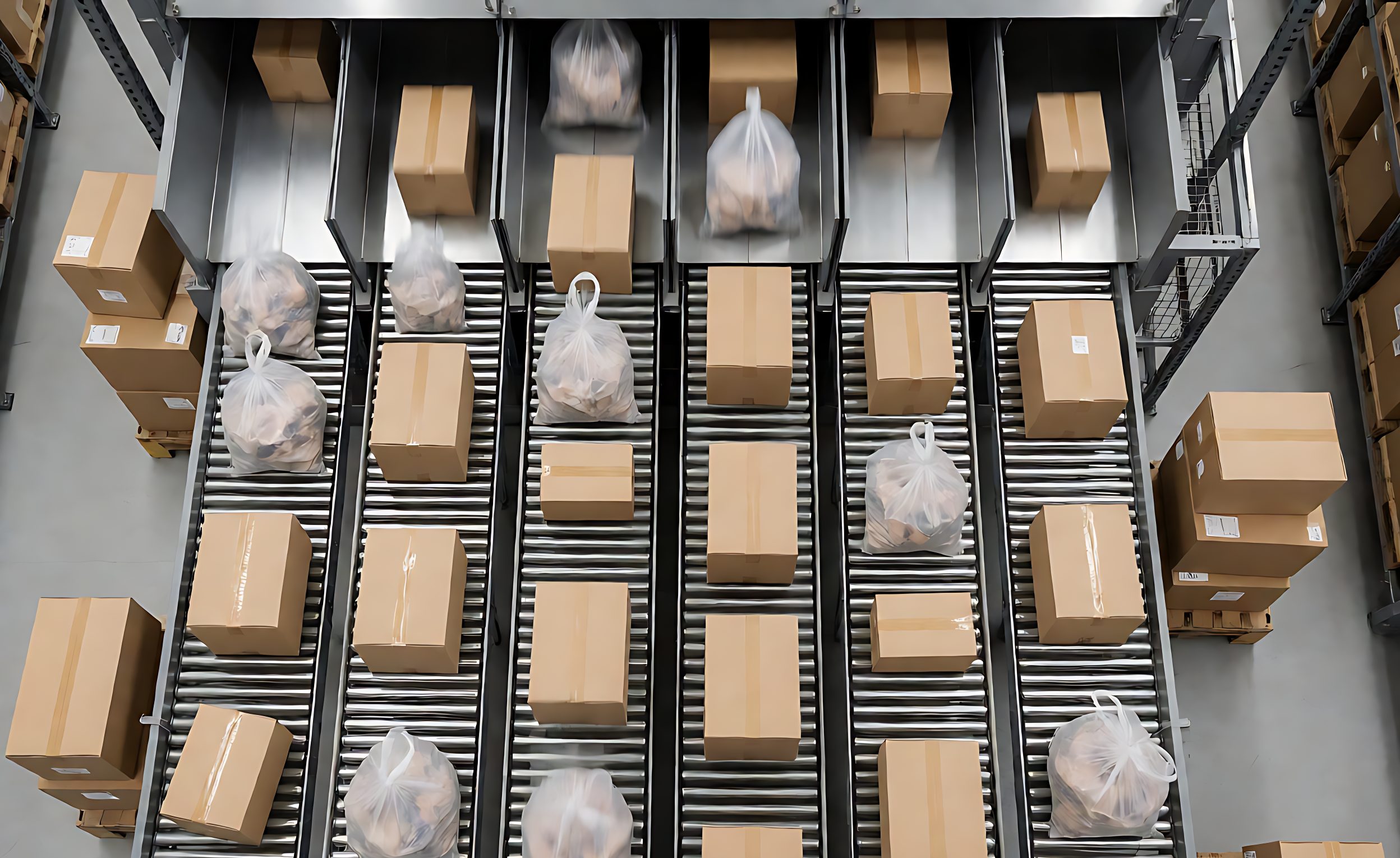
The rise of e-commerce and global trade has reshaped expectations for logistics. Customers demand faster, more reliable deliveries, and companies are turning to automation to keep up.
Technologies such as automated conveyors, parcel sorting systems, and DWS solutions are now central to modern warehouses. By streamlining operations, these systems improve accuracy, reduce costs, and ensure higher throughput.
Beyond efficiency, digital integration is becoming a key driver. The combination of AI, data analytics, and IoT provides real-time insights, helping businesses make smarter decisions and respond quickly to disruptions.
Sustainability is also shaping the future of logistics. Automation enables better use of space, lower energy consumption, and eco-friendly operations—benefiting both businesses and the environment.
As innovation accelerates, companies that invest in smart logistics solutions will gain a competitive edge in speed, service quality, and sustainability.
The Data Ladder: From Sensor to Decision
“Smart” logistics means decisions migrate from people to systems, and the migration follows a ladder where each rung owns a different latency class:
| Rung | Latency class | Decision owned there |
|---|---|---|
| PLC / segment control | Milliseconds | Divert timing, jam detection, motor health |
| WCS (warehouse control) | Seconds | Induction pacing, lane balancing, recirculation limits |
| WMS (warehouse mgmt.) | Minutes | Wave release, destination maps, exception queues |
| Analytics | Days | Capacity planning, profile changes, maintenance windows |
Integration problems live at the rung boundaries, and the failure pattern is predictable: the sorter runs beautifully on its own screen, the WMS reports flawlessly on its own, and between them a nightly CSV carries the truth badly. Buyers should demand the interface contract in writing — which fields, which direction, which latency, what happens when either side is down — because the contract is where the “smart” actually lives or dies. A system that cannot tell the WMS it is degraded is not smart; it is merely fast. The decision-making at each rung connects to the resilience picture in sorting as shock absorber, and the physical anatomy that carries this data in anatomy of a smart logistics solution. Reference: programmable logic controllers and telemetry.
When the Ladder Breaks: Failure Modes by Rung
Each rung of the data ladder fails in its own signature way, and knowing the signatures shortens every incident. PLC-level failures announce themselves — segments fault, lights flash, the loop stops loudly; the fix is local and the spare is on the shelf. WCS failures disguise themselves as throughput loss — induction paces oddly, lanes drift out of balance, nobody is down but everyone is slow; the tell is that the loop reports healthy while the numbers disagree. WMS failures masquerade as inventory problems — wrong destinations, phantom exceptions, waves that release with missing data; operations often spend a week auditing stock before noticing the interface went quiet. Analytics failures are silent by definition — dashboards keep rendering while the feed underneath went stale, which is why every dashboard deserves a freshness counter in the corner. Training supervisors to recognise these signatures converts integration outages from archaeology back into maintenance, and it costs one afternoon of cross-rung walkthroughs.
Guide index: related reading
- Smart Logistics Solutions: Building the Future of Supply Chains
- TRUELISORT: Driving Innovation in Smart Logistics Infrastructure
- The Future of Warehouse Logistics: How Next-Generation Cross-Belt Sorting Techno
- Global Supply Chain 101: Why Logistics Is the Lifeline of Modern Business
- Driving Efficiency in Modern Logistics: Why Intelligent Sorting Systems Matter
- The Future of Logistics: Embracing Automation and Smart Sorting
- Smart Warehousing: The Core of Modern Logistics Transformation
- Logistics Trends 2025: Smarter and Greener
- TRUELISORT – Smart Sorting for Faster Logistics
- The Future of Logistics Sorting: Driving Efficiency in Modern Supply Chains