
Warehousing is undergoing one of the most dramatic transformations in its history. What was once a labor-intensive, manually driven environment is rapidly evolving into a highly automated, data-rich ecosystem where speed, accuracy, and flexibility define competitive advantage. At the center of this shift sits cross-belt sorting technology—a system that is quietly becoming the backbone of intelligent logistics operations worldwide.
As global commerce accelerates, driven by e-commerce growth, same-day delivery expectations, and increasingly complex supply chains, warehouses are no longer static storage spaces. They are now dynamic fulfillment engines. In this new environment, cross-belt sorters are not just helpful tools—they are becoming foundational infrastructure.
The Evolution of Modern Warehousing
To understand why cross-belt sorting has become so important, it helps to look at how warehousing has evolved.
Traditional warehouses were designed primarily for storage. Goods arrived in bulk, were stored for long periods, and later shipped out in relatively large, predictable batches. The focus was on space utilization rather than speed or precision.
That model began to change with the rise of large-scale retail distribution and globalized supply chains. Companies like Walmart pioneered more efficient distribution networks, pushing suppliers toward faster replenishment cycles.
Then came the e-commerce revolution. The rise of Amazon fundamentally reshaped customer expectations. Delivery times shrank from days to hours in some regions. Order volumes exploded, while order sizes decreased. Instead of pallet-level shipping, warehouses now process millions of individual items per day.
This shift created a new problem: how to sort and route massive numbers of small, diverse packages quickly and accurately. Manual sorting simply could not scale. Conveyor-based systems helped, but they were still limited in flexibility and throughput.
This is where cross-belt sorting technology emerged as a game-changer.
What Is Cross-Belt Sorting Technology?
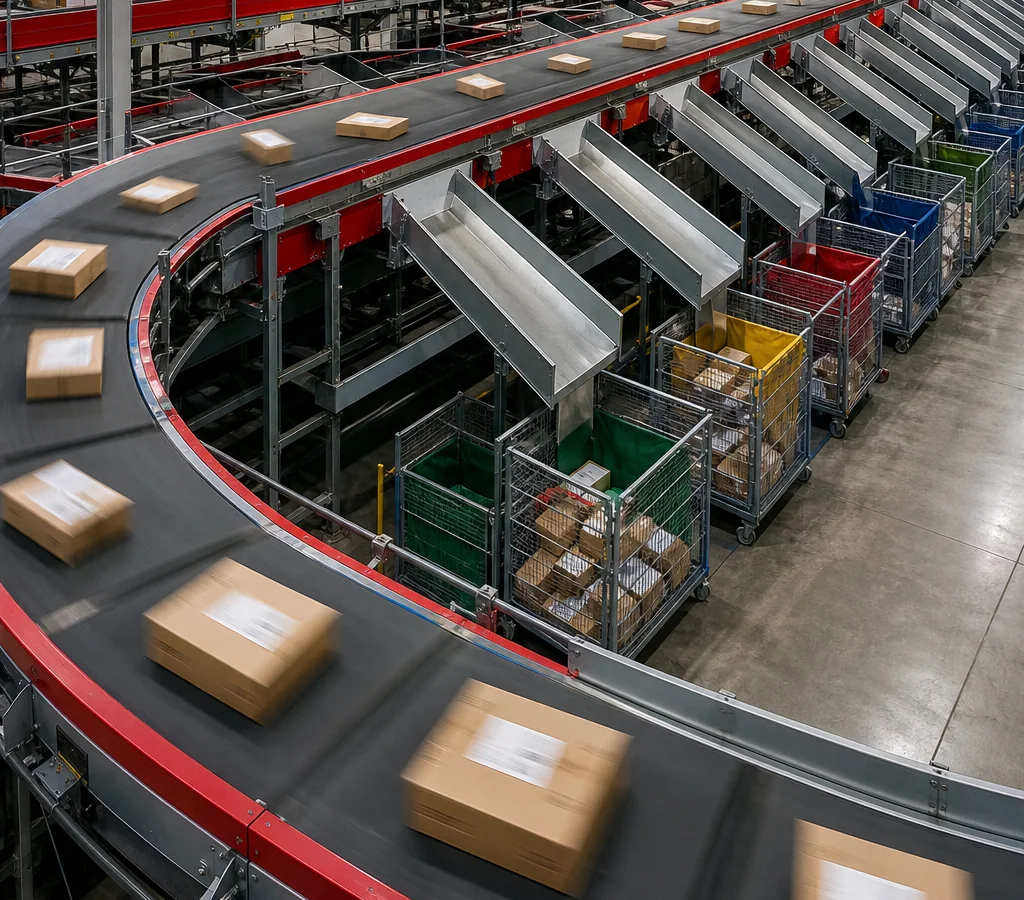
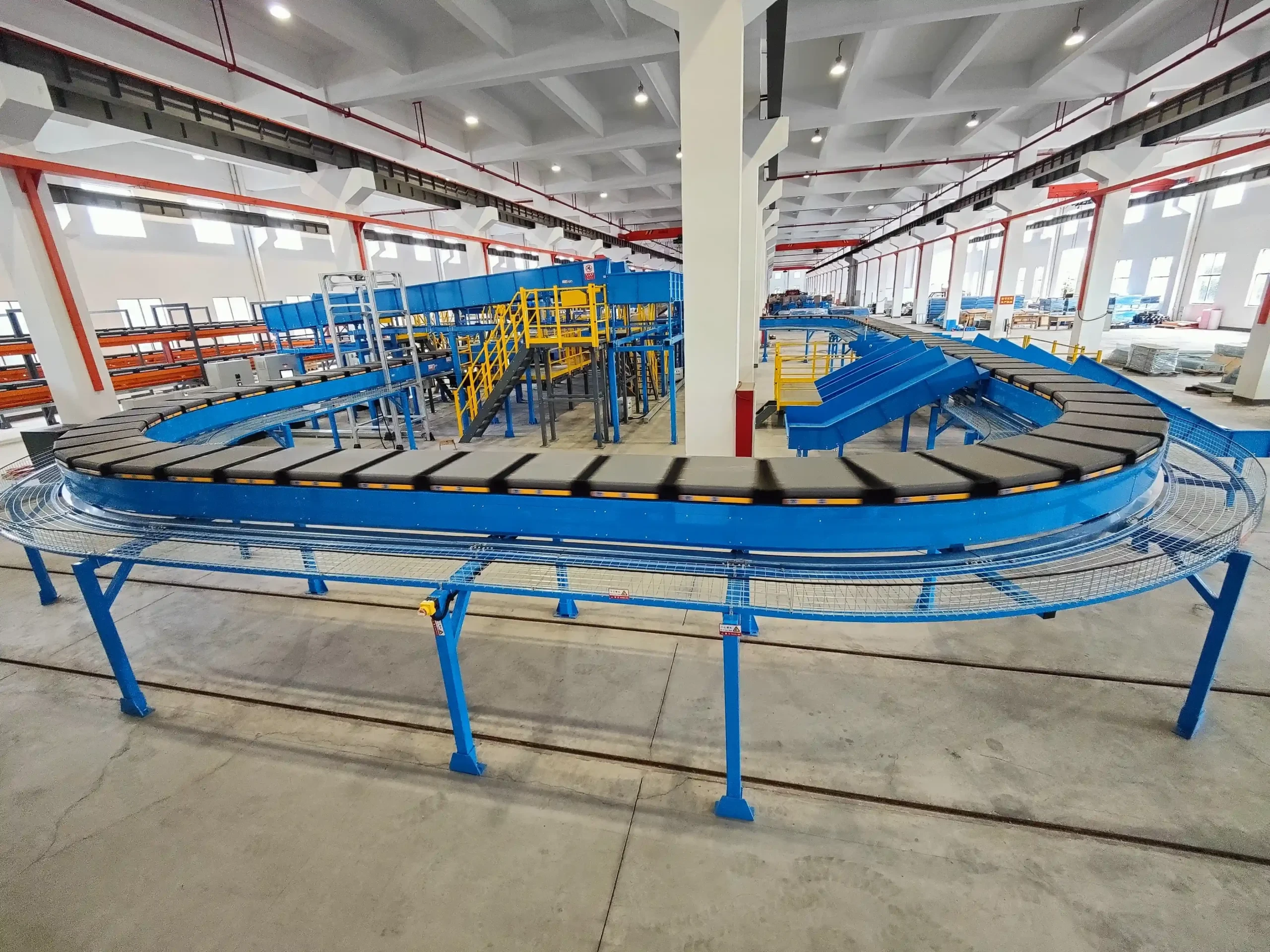
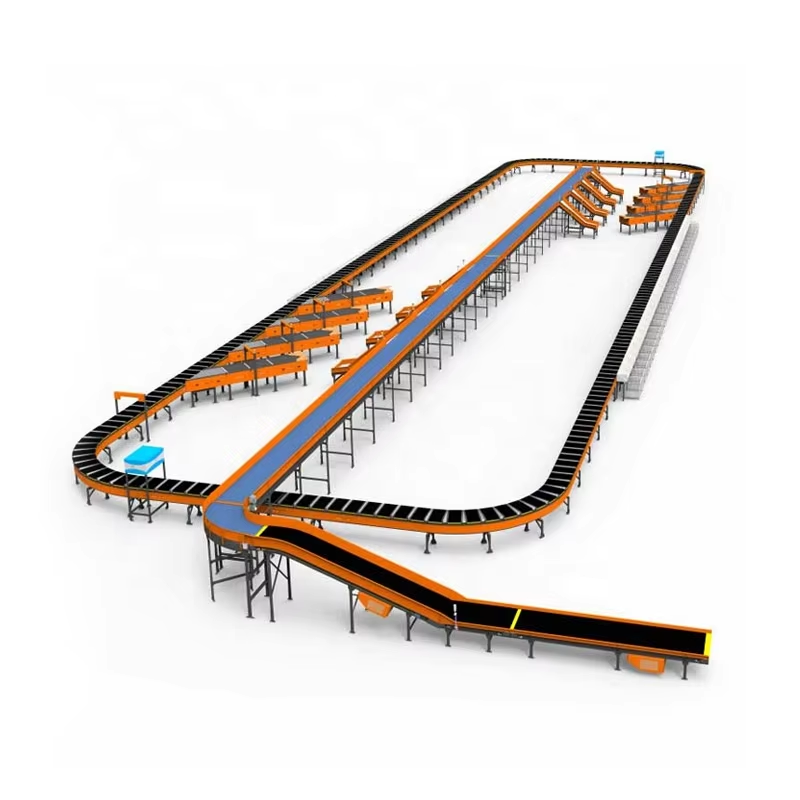
Cross-belt sorters are automated material handling systems designed to transport and distribute individual items at extremely high speed and precision.
Each item is placed on a small conveyor belt mounted on a looped system. These belts move along a track, and when the system reaches the correct destination chute, the belt reverses direction to gently discharge the item into the correct bin or lane.
Unlike traditional tilt-tray systems, cross-belt sorters offer:
- Higher accuracy
- Gentler handling for fragile goods
- Greater flexibility for different product types
- Continuous, high-speed operation
At a high level, the system works like this:
- Items enter the sorter via induction points.
- Sensors and scanning systems identify each item.
- The warehouse management system assigns a destination.
- The cross-belt transports the item through the loop.
- At the correct position, the belt ejects the item into a chute.
This process happens in seconds, repeated thousands or even tens of thousands of times per hour.
Major logistics automation providers such as Dematic, Daifuku, and Honeywell Intelligrated have refined these systems into highly scalable solutions for global distribution centers.
Why Cross-Belt Sorting Is Becoming Central to Smart Logistics
The rise of intelligent logistics is defined by three major demands:
1. Speed at Scale
Consumers expect rapid fulfillment, often within the same day. To meet this demand, warehouses must process massive order volumes without bottlenecks.
Cross-belt systems enable continuous, non-stop sorting that dramatically increases throughput compared to manual or semi-automated systems.
2. Accuracy in High-Variety Environments
Modern warehouses handle thousands of SKUs with varying shapes, sizes, and handling requirements. Mistakes in sorting lead to costly returns and customer dissatisfaction.
Cross-belt systems integrate with advanced scanning and vision systems to ensure near-perfect accuracy rates, often exceeding 99.9%.
3. Labor Optimization
Labor shortages and rising wages in logistics-heavy regions have pushed companies to automate repetitive tasks.
Rather than replacing workers entirely, cross-belt systems shift human roles toward exception handling, maintenance, and system supervision.
Integration with Artificial Intelligence and IoT
Cross-belt sorting technology becomes even more powerful when integrated into a broader intelligent logistics ecosystem.
AI-Driven Decision Making
Modern warehouses use AI algorithms to dynamically assign sorting priorities based on:
- Delivery deadlines
- Carrier schedules
- Package dimensions
- Destination clustering
For example, if a system detects a surge in same-day delivery orders, it can automatically prioritize those items in the sorting queue.
IoT-Enabled Visibility
Sensors embedded throughout the warehouse provide real-time data on:
- Conveyor speed
- Package location
- System health
- Energy consumption
This constant data flow allows predictive maintenance, reducing downtime and preventing costly breakdowns.
Warehouse Management Systems (WMS)
Cross-belt systems are tightly integrated with WMS platforms that coordinate the entire fulfillment process—from inventory storage to outbound shipping.
This integration ensures that sorting decisions are not made in isolation but as part of a fully synchronized logistics network.
Real-World Applications in Global Logistics Networks
Cross-belt sorting is already widely deployed across major logistics networks.
Amazon Fulfillment Centers
Amazon has heavily invested in automation across its fulfillment infrastructure. Cross-belt systems help manage millions of daily orders, enabling rapid sorting for last-mile delivery.
These systems are particularly important during peak demand periods such as holiday seasons, when order volumes spike dramatically.
DHL Global Operations
DHL uses advanced sorting systems in its distribution hubs to manage international parcel flows. Cross-belt technology helps streamline customs-bound shipments and regional distribution.
FedEx Express Hubs
FedEx operates large-scale sorting hubs where packages from air and ground networks converge. Cross-belt systems help ensure rapid transfer between inbound and outbound routes.
UPS Sorting Facilities
UPS relies on high-speed automation in its hubs to maintain tight delivery windows, especially for time-sensitive shipments.
Key Benefits of Cross-Belt Sorting Systems
1. Extremely High Throughput
Cross-belt systems can process tens of thousands of items per hour, depending on configuration. This makes them ideal for high-volume distribution centers.
2. Reduced Damage Rates
Because items are gently discharged rather than dropped or pushed, fragile goods experience less handling damage.
3. Scalability
Systems can be expanded with additional modules, making them suitable for growing operations without complete redesigns.
4. Operational Consistency
Unlike manual labor, automated systems maintain consistent performance regardless of shift length or labor availability.
5. Space Efficiency
High-density sorting reduces the need for large manual sorting areas, freeing up warehouse space for storage or additional automation.
Challenges and Limitations
Despite their advantages, cross-belt systems are not without challenges.
High Initial Investment
The upfront cost of installation can be significant, making it a barrier for smaller operators.
Complex Maintenance
These systems require specialized technical expertise for maintenance and troubleshooting.
Integration Complexity
Connecting cross-belt systems with legacy warehouse infrastructure can be technically demanding.
Limited Flexibility for Oversized Items
While highly effective for parcels and small packages, extremely large or irregular items may require alternative handling systems.
The Role of Robotics and Autonomous Systems
Cross-belt sorters are increasingly part of a larger ecosystem of robotics and automation.
Robotic picking arms, autonomous mobile robots (AMRs), and automated storage and retrieval systems (AS/RS) all work in coordination with sorting systems.
Companies like Siemens and KION Group are actively developing integrated automation platforms that combine multiple technologies into unified logistics ecosystems.
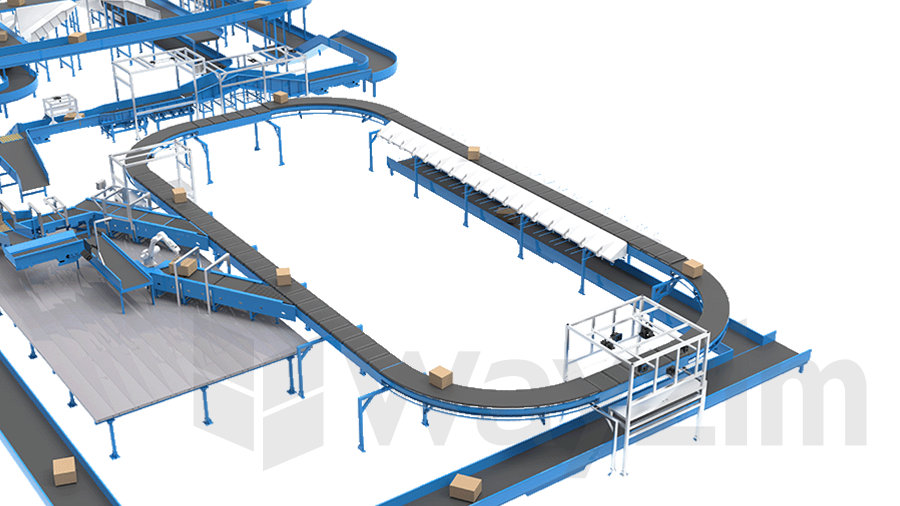
In these environments, cross-belt systems act as the central “traffic controller,” directing the flow of goods between different automated subsystems.
Data-Driven Optimization in Smart Warehousing
One of the most powerful aspects of modern cross-belt systems is their ability to generate and use data.
Every item processed creates data points such as:
- Processing time
- Routing path
- Destination accuracy
- System load at time of processing
Over time, this data is used to:
- Improve routing efficiency
- Reduce congestion
- Optimize energy consumption
- Predict peak demand periods
This feedback loop transforms warehouses into self-optimizing systems.
Sustainability and Energy Efficiency
Sustainability is becoming a critical factor in logistics design.
Cross-belt systems contribute to greener operations by:
- Reducing unnecessary movement
- Optimizing energy usage per item
- Minimizing re-handling and waste
- Supporting consolidated shipping strategies
When integrated with renewable energy sources and smart building systems, they help reduce the overall carbon footprint of distribution operations.
Future Trends in Cross-Belt Sorting Technology
The future of cross-belt sorting will likely be shaped by several key trends:
1. Full Autonomy
Warehouses will increasingly operate with minimal human intervention, relying on AI-driven orchestration systems.
2. Edge Computing Integration
Decision-making will shift closer to the hardware, reducing latency and improving responsiveness.
3. Modular Micro-Fulfillment Centers
Smaller, decentralized warehouses will use compact cross-belt systems to enable ultra-fast local delivery.
4. Adaptive Sorting Algorithms
AI systems will continuously adjust sorting logic based on real-time demand patterns.
5. Human-Robot Collaboration
Rather than full replacement, human workers will collaborate with automated systems in supervisory and exception-handling roles.
Conclusion
Cross-belt sorting technology has moved far beyond being just another piece of warehouse equipment. It has become a central pillar of modern intelligent logistics, enabling the speed, accuracy, and scalability required by today’s global supply chains.
As e-commerce continues to grow and consumer expectations rise, the importance of highly efficient sorting systems will only increase. Combined with AI, robotics, and IoT technologies, cross-belt systems are helping redefine what warehousing means in the 21st century.
The warehouses of the future will not simply store goods—they will think, adapt, and optimize in real time. And at the heart of that transformation, cross-belt sorting will remain one of the most critical technologies driving the entire system forward.