
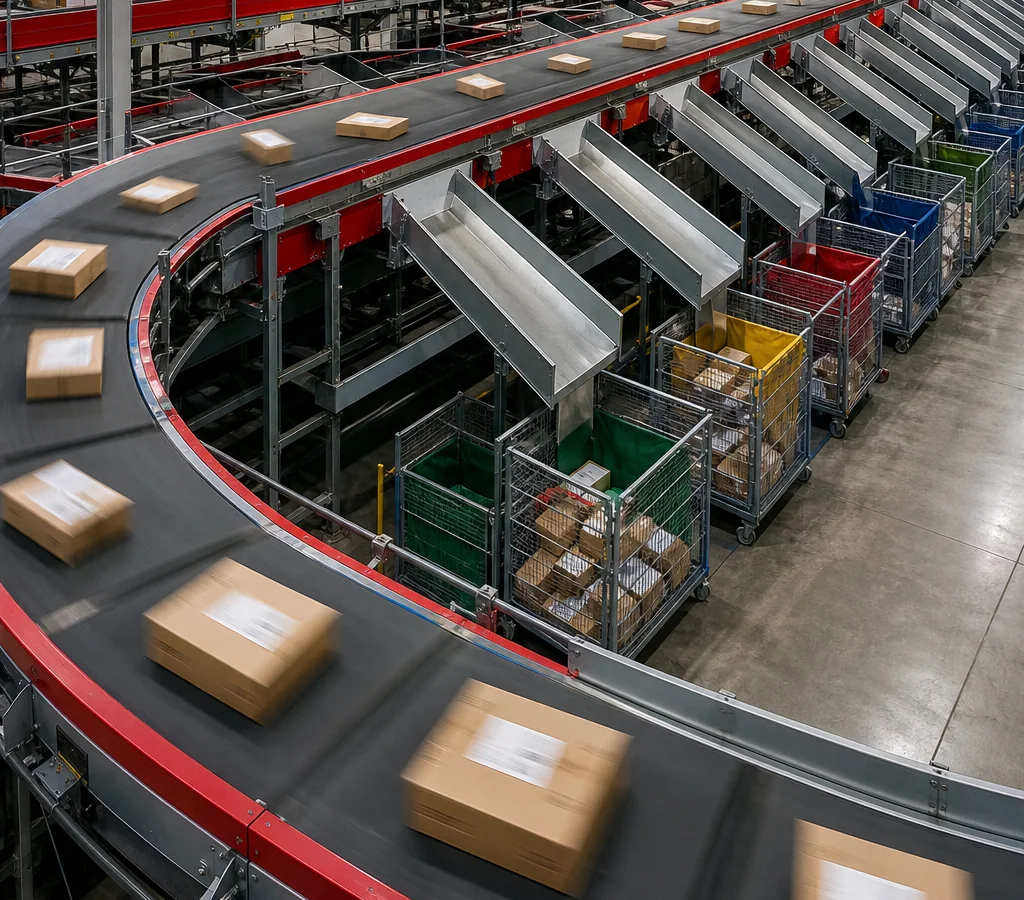
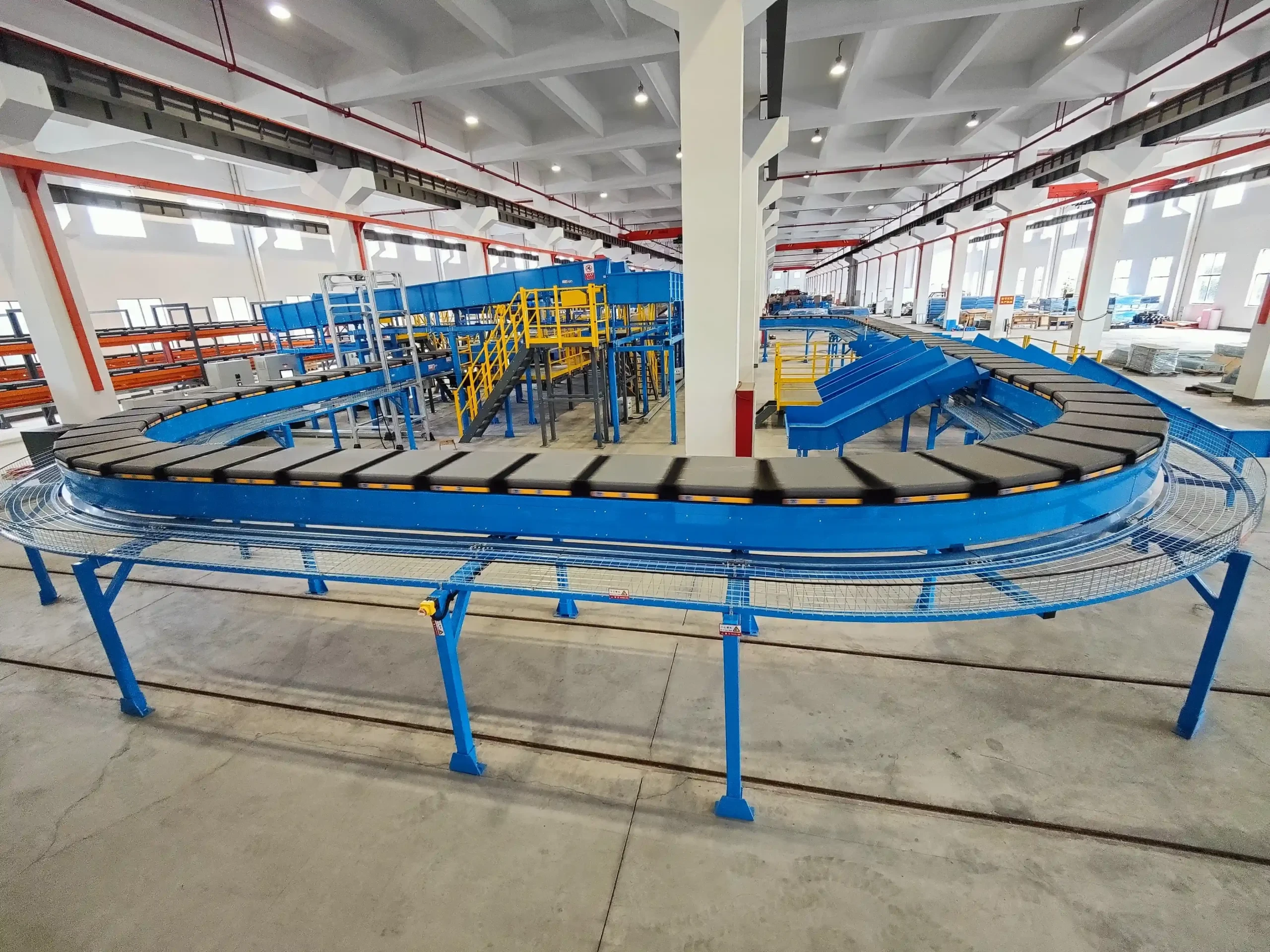
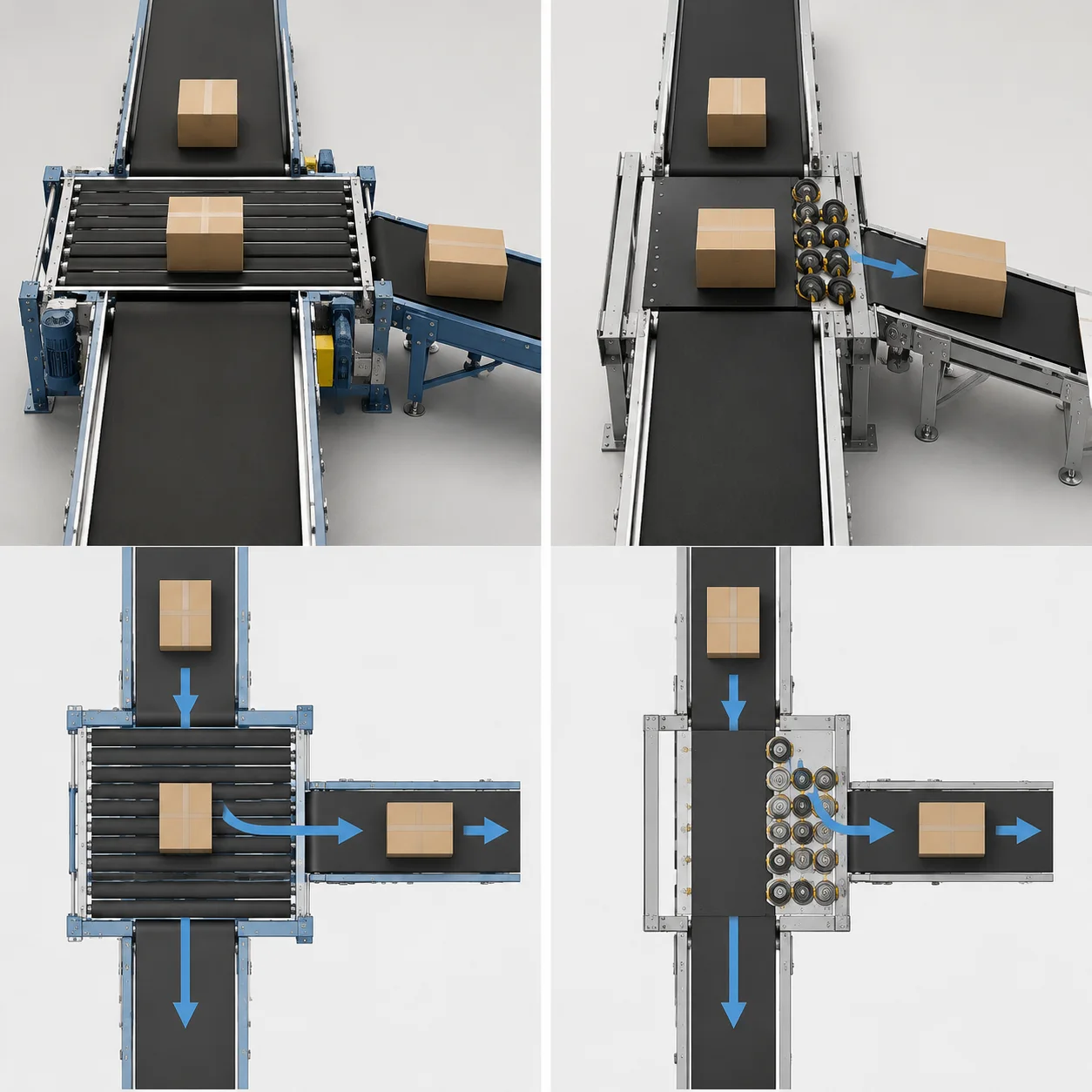
Modern logistics facilities depend heavily on automation speed, precision, and uptime. Among the most critical technologies powering high-volume parcel handling and warehouse automation today is the cross-belt sorter. From e-commerce fulfillment centers and airport baggage systems to courier hubs and distribution warehouses, cross-belt sorting systems are responsible for moving thousands of items per hour with remarkable accuracy.
However, behind every smooth-running sorter lies a complex mechanical ecosystem that demands precise calibration and continuous maintenance. One of the most overlooked yet technically critical aspects of sorter performance is belt tensioning and alignment adjustment.
Improper belt tension or poor alignment can trigger a chain reaction of operational problems, including:
- Belt drift
- Increased motor load
- Premature bearing wear
- Parcel instability
- Noise and vibration
- Sensor errors
- Unexpected downtime
- Reduced sorting accuracy
- Belt edge damage
- Roller failure
For maintenance engineers, automation technicians, and facility managers, mastering cross-belt sorter belt tension and alignment calibration is essential for ensuring long-term operational stability and minimizing maintenance costs.
This comprehensive guide explores the engineering principles, adjustment methods, troubleshooting techniques, preventive maintenance strategies, and advanced calibration practices behind cross-belt sorter belt tensioning and alignment systems.
Understanding How Cross-Belt Sorters Work
Before discussing calibration techniques, it is important to understand the basic operating principles of a cross-belt sorter.
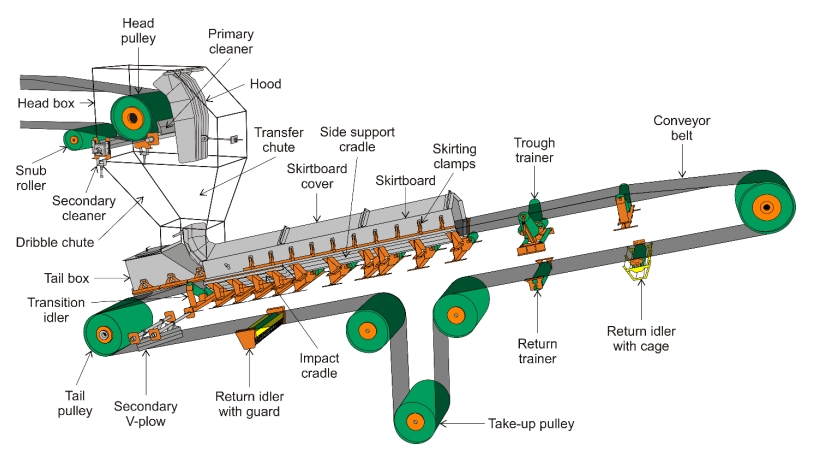
A cross-belt sorter typically consists of:
- A circulating carrier platform
- Individual belt conveyors mounted on each carrier
- Drive motors
- Roller assemblies
- Belt tracking systems
- Sensors and controls
- Transfer chutes
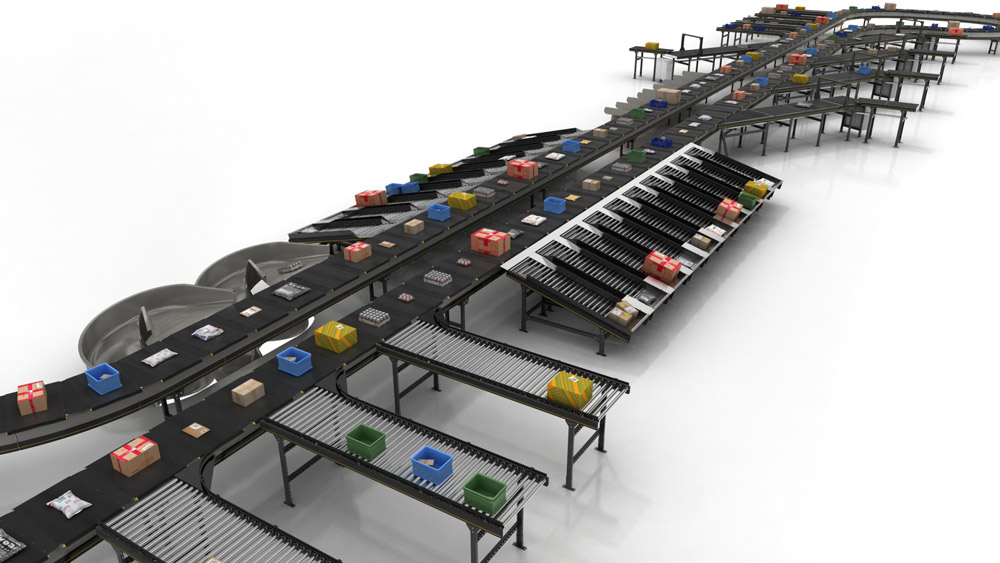
Each carrier belt moves parcels laterally to discharge products into designated destinations while the main sorter loop continues moving forward.
Because these systems operate continuously at high speed, even small alignment deviations can escalate rapidly.
Why Belt Tension and Alignment Matter So Much
Cross-belt sorter systems rely on highly consistent belt tracking and rotational balance.
Improper tension or alignment affects nearly every aspect of system performance.
Key Functions of Proper Belt Tension
Correct belt tension helps ensure:
- Stable tracking
- Efficient power transmission
- Reduced slippage
- Smooth acceleration
- Consistent parcel movement
- Reduced component wear
Key Functions of Proper Alignment
Proper alignment ensures:
- Straight belt travel
- Balanced roller loading
- Uniform belt wear
- Reduced vibration
- Stable discharge accuracy
Even slight misalignment may create long-term reliability issues.
Common Causes of Belt Misalignment
Belt tracking problems rarely occur randomly.
Most alignment failures develop gradually due to mechanical or environmental factors.
1. Uneven Roller Installation
Misaligned rollers are among the most common causes of belt drift.
If rollers are not perfectly parallel:
- Belt tension becomes uneven
- Lateral tracking forces increase
- Belt edges experience stress
2. Frame Deformation
Sorter frames may deform over time because of:
- Heavy impact
- Improper installation
- Structural fatigue
- Thermal expansion
- Floor settlement
Even small structural deviations can affect belt geometry.
3. Uneven Belt Wear
As belts age, surface wear may become asymmetrical.
This creates:
- Uneven traction
- Tracking instability
- Variable belt tension zones
4. Contamination and Debris
Dust, tape residue, oil, and package debris can accumulate on rollers and pulleys.
Contamination alters friction behavior and tracking consistency.
5. Improper Tension Adjustment
Over-tightening or under-tightening belts often creates alignment instability.
Tension calibration must balance:
- Grip force
- Flexibility
- Mechanical load
The Engineering Principles Behind Belt Tracking
Many technicians attempt to correct tracking without fully understanding the underlying physics.
Belt tracking behavior is heavily influenced by:
- Friction distribution
- Roller geometry
- Tension differentials
- Dynamic loading
- Rotational inertia
Belts naturally migrate toward areas of higher tension.
Understanding this principle is critical for accurate calibration.
Symptoms of Incorrect Belt Tension
Cross-belt systems usually provide warning signs before catastrophic failure occurs.
Under-Tensioned Belt Symptoms
A loose belt may cause:
- Belt slipping
- Delayed acceleration
- Inconsistent discharge
- Belt flutter
- Increased vibration
- Heat buildup
Over-Tensioned Belt Symptoms
Excessive tension creates:
- Bearing overload
- Premature roller wear
- Increased motor current
- Belt stretching
- Higher energy consumption
Over-tensioning is one of the most damaging maintenance mistakes.
Symptoms of Belt Misalignment
Tracking issues often become visible before severe damage occurs.
Common Signs Include:
- Belt edge fraying
- Uneven wear patterns
- Belt wandering
- Noise increases
- Roller hot spots
- Package instability
- Repeated emergency stops
Why Cross-Belt Systems Are More Sensitive Than Standard Conveyors
Cross-belt sorters operate under unique dynamic conditions.
Unlike conventional conveyors, cross-belt systems involve:
- High-speed directional changes
- Continuous acceleration
- Rapid start-stop cycles
- Multiple transfer points
- High carrier counts
This complexity increases sensitivity to even minor calibration errors.
Belt Tensioning Methods Used in Cross-Belt Sorters
Different sorter designs use different tensioning systems.
Manual Screw Tensioners
These use threaded adjustment bolts to control roller position.
Advantages
- Simple design
- Low cost
- Easy maintenance
Limitations
- Requires periodic manual adjustment
- Less adaptive to dynamic changes
Spring-Loaded Tensioners
Spring systems automatically compensate for minor belt elongation.
Benefits
- More stable tension
- Reduced maintenance frequency
Pneumatic Tensioning Systems
Advanced sorters may use air-cylinder-based tension control.
Advantages
- Precise adjustment
- Dynamic compensation
- Better high-speed stability
Automatic Smart Tensioning Systems
Modern Industry 4.0 systems increasingly include automated monitoring.
These systems may use:
- Load sensors
- Position encoders
- Motor feedback
- AI-based diagnostics
Step-by-Step Belt Alignment Calibration Process
Proper calibration requires a structured process.
Step 1: Lockout and Safety Isolation
Before performing maintenance:
- Disconnect power
- Follow lockout/tagout procedures
- Verify zero-energy state
Safety is critical because sorter systems contain many pinch points and moving assemblies.
Step 2: Inspect Belt Condition
Check for:
- Cracks
- Fraying
- Uneven wear
- Delamination
- Surface contamination
A damaged belt should not be recalibrated without repair or replacement.
Step 3: Verify Roller Parallelism
Use precision tools such as:
- Laser alignment systems
- Straightedges
- Dial indicators
Even small angular deviations affect tracking behavior significantly.
Step 4: Measure Existing Tension
Tension measurement methods include:
- Deflection testing
- Sonic tension meters
- Load-cell systems
Manufacturer specifications should always guide adjustment targets.
Step 5: Perform Incremental Adjustments
Never make large sudden changes.
Small symmetrical adjustments allow:
- Controlled tracking observation
- Reduced overcorrection risk
Step 6: Run Dynamic Testing
After adjustment:
- Operate system at normal speed
- Observe tracking behavior
- Monitor vibration and noise
Dynamic conditions often reveal issues not visible during static inspection.
Why Laser Alignment Technology Is Becoming Standard
Traditional visual alignment methods lack precision for high-speed sorters.
Laser systems improve:
- Accuracy
- Repeatability
- Calibration speed
- Predictive diagnostics
Advanced facilities increasingly rely on laser-based alignment tools.
Understanding Belt Crown Effects
Many rollers use slight crowning to improve belt centering.
What Is Roller Crowning?
The roller center diameter is slightly larger than the edges.
This encourages the belt to self-center naturally.
Problems Caused by Improper Crown Geometry
Incorrect crowning may cause:
- Belt oscillation
- Unstable tracking
- Edge wear
Belt Material Selection and Tracking Stability
Different belt materials behave differently under tension.
Common Cross-Belt Materials
- PVC
- PU (polyurethane)
- Rubber composites
- Fabric-reinforced belts
Each material has unique:
- Stretch characteristics
- Friction coefficients
- Thermal behavior
Thermal Expansion and Seasonal Calibration Issues
Temperature fluctuations affect belt behavior significantly.
Why Temperature Matters
Heat may cause:
- Belt elongation
- Frame expansion
- Tension variation
Cold environments may increase stiffness and tracking instability.
Dynamic Load Effects in Parcel Sorting
Cross-belt systems rarely operate under perfectly uniform loading.
Different package characteristics affect calibration performance.
Challenging Package Types
- Irregular cartons
- Poly bags
- Heavy parcels
- Fragile products
- Uneven loads
Dynamic loading creates constantly shifting forces on the belt system.
Bearing Health and Belt Alignment
Many tracking problems actually originate from failing bearings.
Signs of Bearing Issues
- Noise
- Heat generation
- Vibration
- Roller resistance
Worn bearings alter roller geometry and destabilize tracking.
Vibration Analysis for Advanced Diagnostics
Predictive maintenance programs increasingly use vibration monitoring.
Benefits of Vibration Analysis
Engineers can detect:
- Misalignment
- Bearing degradation
- Roller imbalance
- Tension instability
before catastrophic failure occurs.
The Relationship Between Belt Tracking and Energy Consumption
Poor alignment increases friction and motor load.
Consequences include:
- Higher power usage
- Increased heat
- Reduced motor efficiency
Well-calibrated systems operate more efficiently.
Sensor Calibration and Belt Position Monitoring
Modern sorters use sensors extensively.
Common Sensor Types
- Optical sensors
- Proximity switches
- Encoder systems
- Edge tracking sensors
Improper belt alignment may trigger false sensor readings.
Noise as a Diagnostic Indicator
Experienced technicians often identify problems through sound changes.
Common Noise Clues
Squealing
May indicate slippage.
Rhythmic Clicking
May suggest roller damage.
High-Frequency Vibration Noise
Often linked to tension imbalance.
Why Preventive Maintenance Is Critical
Reactive maintenance is extremely costly in high-throughput logistics operations.
Preventive Maintenance Benefits
- Reduced downtime
- Lower repair costs
- Improved throughput stability
- Extended component lifespan
Recommended Inspection Intervals
Inspection frequency depends on:
- Operating hours
- Throughput volume
- Environmental conditions
High-volume systems may require:
- Daily visual inspections
- Weekly tracking checks
- Monthly tension verification
Environmental Factors Affecting Belt Calibration
Industrial environments introduce many external variables.
Common Environmental Challenges
- Dust accumulation
- Humidity
- Oil contamination
- Static electricity
- Temperature swings
Each factor influences belt performance.
Static Electricity and Belt Tracking
High-speed synthetic belts may generate static charge.
Static buildup can:
- Attract dust
- Affect sensors
- Increase contamination
Anti-static belt materials help reduce these risks.
Common Technician Mistakes During Calibration
Mistake #1: Overcorrecting Tracking Problems
Large adjustments often worsen instability.
Mistake #2: Ignoring Frame Geometry
Adjusting rollers without checking frame alignment wastes time.
Mistake #3: Uneven Tensioning
Asymmetrical adjustments create lateral pull forces.
Mistake #4: Skipping Dynamic Testing
Static alignment alone is insufficient for high-speed systems.
Why Documentation Matters
Professional facilities maintain detailed maintenance records.
Important data includes:
- Tension values
- Alignment measurements
- Component replacements
- Vibration trends
Historical data improves predictive maintenance accuracy.
AI and Smart Diagnostics in Modern Sorter Maintenance
Advanced logistics systems increasingly integrate artificial intelligence.
AI-based systems may analyze:
- Motor current
- Sensor drift
- Vibration signatures
- Thermal imaging
- Tracking behavior
This allows earlier fault detection and smarter maintenance scheduling.
The Future of Self-Calibrating Conveyor Systems
Emerging technologies may eventually allow sorters to self-adjust automatically.
Potential innovations include:
- Adaptive roller positioning
- Real-time tension balancing
- Autonomous calibration algorithms
- Smart wearable maintenance diagnostics
Automation is rapidly transforming maintenance engineering.
Training and Technician Skill Development
Even advanced systems still depend heavily on technician expertise.
Proper training should include:
- Mechanical fundamentals
- Belt dynamics
- Alignment physics
- Sensor diagnostics
- Predictive maintenance methods
The best technicians combine practical experience with analytical thinking.
Building a Reliable Calibration Strategy
An effective maintenance strategy combines:
- Regular inspections
- Precision measurement tools
- Predictive diagnostics
- Proper documentation
- Skilled personnel
- Preventive maintenance schedules
Consistency is more important than emergency correction.
Final Thoughts
Cross-belt sorter belt tensioning and alignment calibration are far more than simple maintenance tasks — they are core engineering disciplines that directly affect system reliability, throughput efficiency, component lifespan, and operational profitability.
In high-speed logistics environments, even minor tension imbalance or tracking deviation can trigger cascading mechanical problems that lead to costly downtime and reduced sorting accuracy. By understanding belt dynamics, alignment geometry, tension principles, and predictive maintenance techniques, engineers and technicians can dramatically improve sorter performance and long-term system stability.
From laser alignment tools and vibration diagnostics to smart tensioning systems and AI-driven monitoring, modern calibration practices continue evolving alongside increasingly sophisticated logistics automation technologies.
Ultimately, the most successful cross-belt sorter operations are not those that react to failures after they happen, but those that build stable, proactive maintenance systems capable of preventing problems before they interrupt production.