
Introduction: Inside the Engine of Modern Parcel Sorting
In today’s high-speed logistics environment, cross-belt sorters are the silent workhorses that keep parcels moving with precision and speed. While their performance is often measured in throughput and accuracy, the real story lies beneath the surface—in the hardware architecture that makes it all possible.
Understanding how a cross-belt sorter works isn’t just for engineers. For operators, maintenance teams, and decision-makers, knowing the system’s core components and how they interact can lead to better performance, fewer breakdowns, and smarter investments.
This guide takes a deep dive into the hardware of cross-belt sorting systems, breaking down each key component and explaining how they collaborate to deliver seamless, continuous operation.
The Big Picture: What Is a Cross-Belt Sorter?
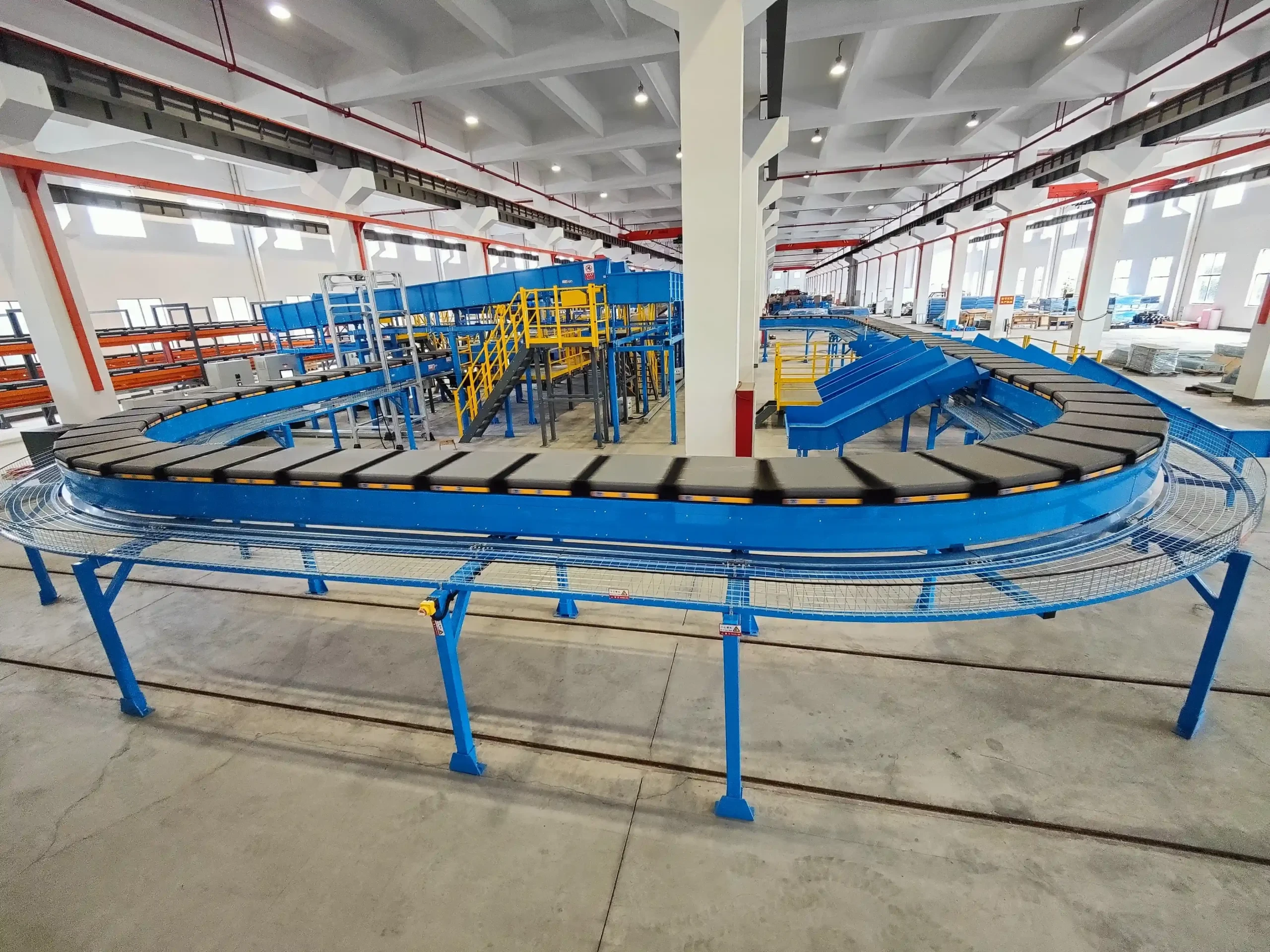
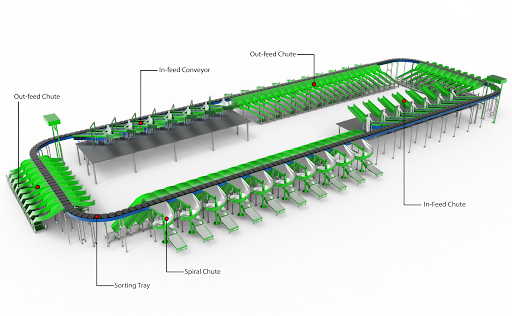
A cross-belt sorter is an automated system designed to transport and sort items—typically parcels—into designated destinations at high speed. It consists of a continuous loop of carriers, each equipped with a small conveyor belt mounted perpendicular to the direction of travel.
As items move through the system:
- They are inducted onto carriers
- Identified and assigned a destination
- Transported along the loop
- Discharged via the cross belt into the correct chute
This process happens rapidly and repeatedly, often handling thousands of items per hour.
Core Component #1: The Carrier System
What It Is
Carriers are the individual units that move along the track, each equipped with a cross belt.
Key Features
- Compact design
- High durability
- Integrated mini conveyor (cross belt)
- Mounting interface with the track
Role in the System
Carriers are responsible for:
- Holding parcels
- Transporting them through the system
- Executing precise discharge actions
Engineering Considerations
- Load capacity
- Stability at high speeds
- Resistance to wear and vibration
Core Component #2: Cross Belts (Mini Conveyors)
What They Do
Each carrier includes a small conveyor belt that moves parcels sideways (left or right) into a chute.
Key Characteristics
- Bidirectional movement
- High responsiveness
- Consistent surface grip
Why They Matter
The cross belt is what enables precise sorting. Without it, the system would only transport items—not direct them.
Performance Factors
- Belt tension
- Motor response time
- Surface condition
Core Component #3: Track and Rail System
Structure
The track forms a continuous loop, guiding carriers through the sorting process.
Components
- Rails
- Curves and straight sections
- Support structures
Function
- Maintains carrier alignment
- Ensures smooth, controlled movement
- Supports high-speed operation
Challenges
- Wear over time
- Alignment precision
- Vibration control
Core Component #4: Drive System
What Powers the System
The drive system moves carriers along the track.
Main Elements
- Electric motors
- Drive belts or chains
- Gearboxes
Responsibilities
- Maintain consistent speed
- Handle varying loads
- Enable acceleration and deceleration
Critical Considerations
- Energy efficiency
- Heat management
- Reliability under continuous operation
Core Component #5: Induction System
Entry Point for Parcels
The induction system is where items enter the sorter.
Components
- Feed conveyors
- Alignment mechanisms
- Singulation devices
Purpose
- Ensure parcels are properly spaced
- Orient items correctly
- Prevent overlaps or jams
Importance
Poor induction leads to:
- Sorting errors
- System congestion
- Reduced throughput
Core Component #6: Discharge Chutes
Where Items Exit
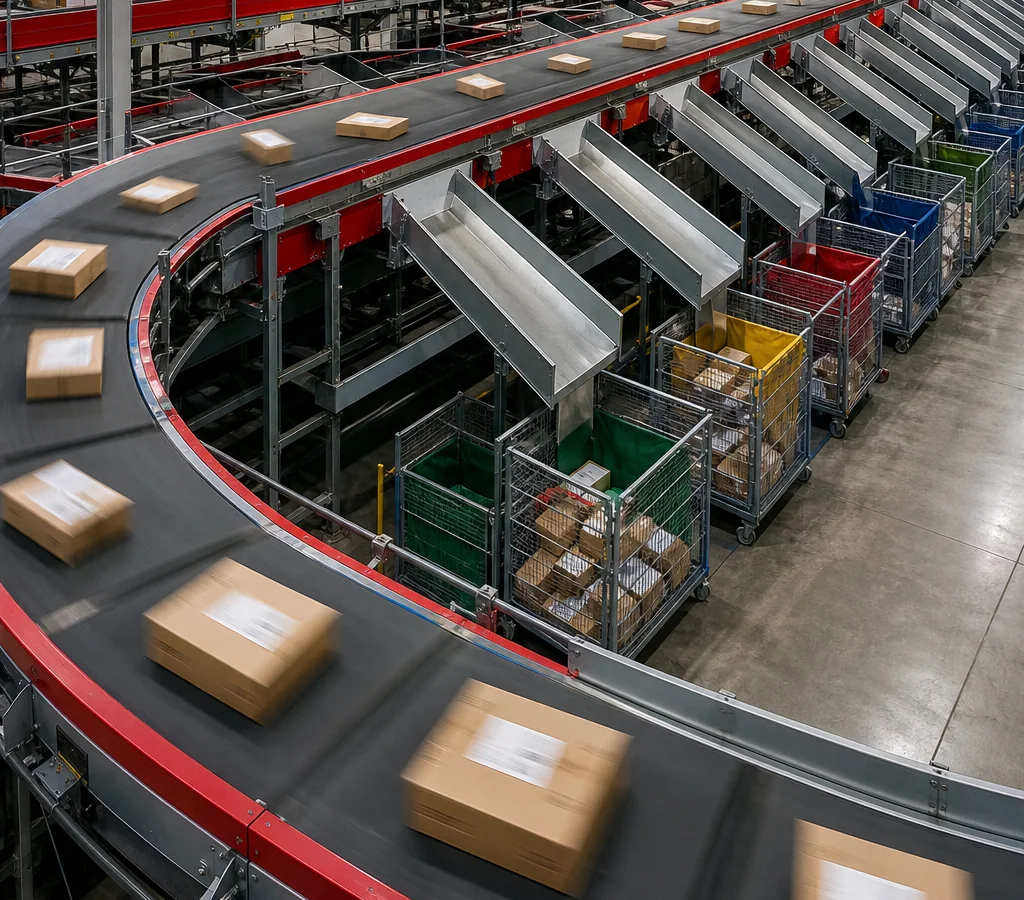
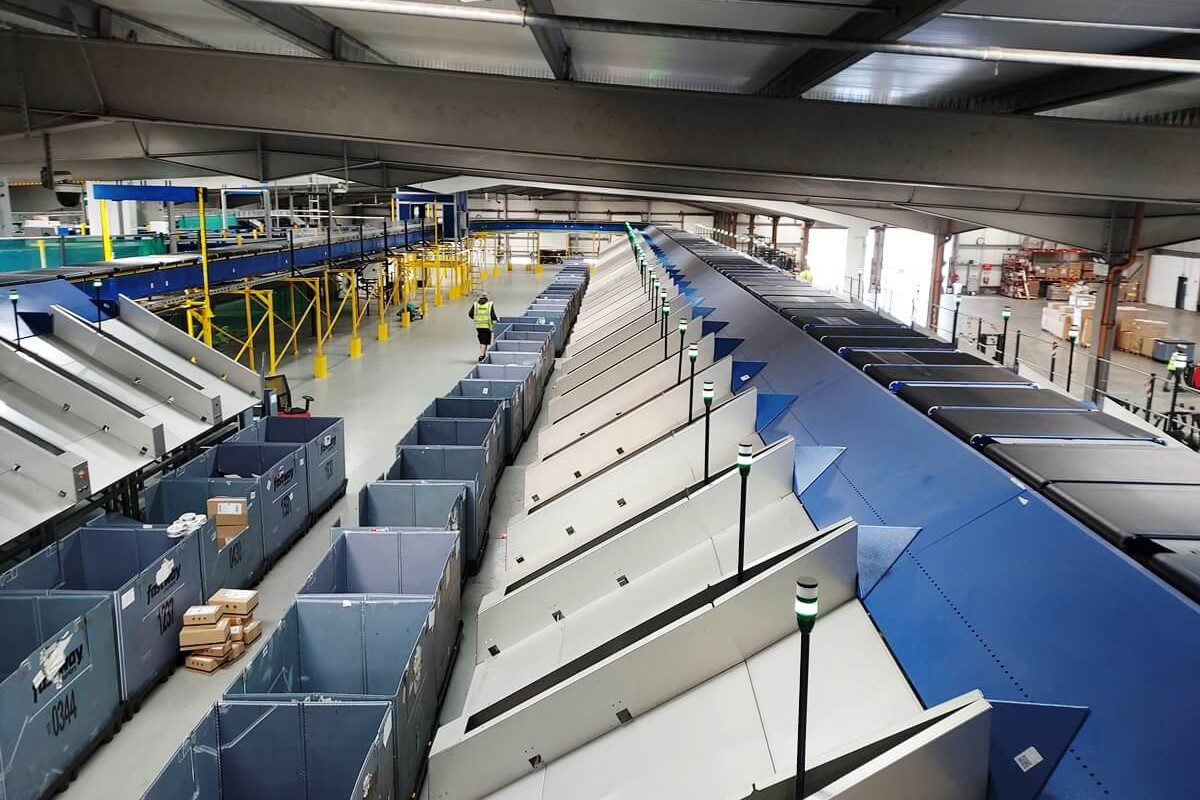
Chutes receive parcels from the cross belts.
Design Features
- Angled surfaces
- Shock absorption
- Capacity for accumulation
Function
- Guide parcels safely to their destination
- Prevent damage during transfer
Considerations
- Proper alignment with carriers
- Handling of different parcel sizes
Core Component #7: Sensor and Scanning System
The System’s “Eyes”
Sensors and scanners identify parcels and track their position.
Types of Sensors
- Barcode scanners
- Optical sensors
- Position sensors
Responsibilities
- Read parcel data
- Track carrier location
- Trigger discharge actions
Accuracy Is Everything
Even minor sensor errors can lead to:
- Mis-sorts
- Delays
- Customer dissatisfaction
Core Component #8: Control System (PLC and Software)
The Brain of the Operation
The control system coordinates all hardware components.
Key Functions
- Assign destinations
- Synchronize carrier movement
- Manage timing of cross-belt activation
Software Capabilities
- Real-time tracking
- Error detection
- Performance optimization
Integration
Connects with:
- Warehouse management systems (WMS)
- Transportation systems
- Data analytics platforms
Core Component #9: Power and Electrical System
Energy Distribution
Provides power to:
- Motors
- Sensors
- Control units
Components
- Power supplies
- Cables and wiring
- Control panels
Reliability Factors
- Stable voltage
- Protection against surges
- Efficient energy use
Core Component #10: Safety Systems
Protecting People and Equipment
Safety is built into every layer of the system.
Features
- Emergency stop buttons
- Safety guards
- Light curtains
Purpose
- Prevent accidents
- Ensure compliance
- Minimize downtime
How Everything Works Together: The Sorting Cycle
Understanding individual components is only half the story. The real power lies in how they interact.
Step 1: Parcel Induction
- Parcel enters via feed conveyor
- Alignment system positions it correctly
- Sensor reads barcode
Step 2: Data Processing
- Control system assigns destination
- Carrier is selected
Step 3: Transport
- Drive system moves carrier along track
- Sensors track position in real time
Step 4: Discharge
- At the correct point, cross belt activates
- Parcel moves into chute
Step 5: Reset
- Carrier continues loop
- Ready for next parcel
Synchronization: The Key to Efficiency
Every component must operate in perfect timing.
Timing Precision
- Millisecond-level coordination
- Real-time adjustments
Feedback Loops
Sensors provide continuous data to:
- Adjust speed
- Correct errors
- Optimize flow
Common Bottlenecks and Hardware Impacts
Even well-designed systems can face challenges.
Induction Issues
Cause:
- Poor spacing
- Misalignment
Impact:
- Reduced throughput
Belt Wear
Cause:
- Continuous use
Impact:
- Inconsistent discharge
Sensor Failure
Cause:
- Dust or misalignment
Impact:
- Sorting errors
Maintenance Implications
Understanding hardware helps guide maintenance strategies.
High-Wear Components
- Cross belts
- Bearings
- Drive systems
Critical Inspection Points
- Sensor alignment
- Track condition
- Electrical connections
Scalability and Modularity
Cross-belt systems are designed for growth.
Modular Design
Allows:
- Adding carriers
- Expanding destinations
- Upgrading components
Benefits
- Flexibility
- Cost efficiency
- Future-proofing
Environmental Considerations
Operating conditions affect hardware performance.
Dust
- Impacts sensors
- Increases wear
Humidity
- Affects electrical systems
- Promotes corrosion
Temperature
- Influences material behavior
- Affects motor efficiency
Future Innovations in Hardware
The next generation of cross-belt systems will include:
Smarter Sensors
- Higher accuracy
- Self-calibration
Energy-Efficient Drives
- Reduced power consumption
- Improved sustainability
Advanced Materials
- Longer-lasting belts
- Lightweight carriers
Conclusion: A System Built on Precision and Collaboration
A cross-belt sorter is more than a collection of parts—it’s a highly coordinated system where every component plays a critical role. From carriers and cross belts to sensors and control software, each element contributes to a seamless flow of parcels.
Understanding this hardware ecosystem provides valuable insights into:
- System performance
- Maintenance priorities
- Operational efficiency
In high-demand logistics environments, success depends on reliability. And reliability comes from knowing how your system works—down to every moving part.
When each component operates in harmony, the result is a sorting system that delivers speed, accuracy, and consistency—24 hours a day, seven days a week.