
Introduction: The New Reality of Parcel Logistics
The parcel logistics industry has entered a new phase of evolution. What used to be a game dominated by large-scale distribution centers with massive automation budgets is now rapidly shifting. Today, small and mid-sized sorting hubs are facing pressures that were once reserved for global giants—rising e-commerce volumes, tighter delivery windows, labor shortages, and customer expectations that leave no room for inefficiency.
In response, these smaller facilities are rethinking their operational models. One of the most notable trends is the growing adoption of cross-belt sorting systems. Once considered too expensive or complex for smaller operations, cross-belt technology is now becoming a practical and strategic investment.
This shift is not accidental. It reflects deeper structural changes in logistics, technology accessibility, and cost dynamics. Understanding why smaller sorting centers are adopting cross-belt systems requires examining both the challenges they face and the advantages this technology offers.
The Pressure on Small and Mid-Sized Sorting Centers
E-commerce Growth Is Not Slowing Down
Online shopping has permanently altered parcel flows. Smaller regional sorting hubs are no longer handling predictable volumes. Instead, they must manage sharp spikes during peak seasons, flash sales, and promotional events.
Unlike large distribution centers, smaller hubs often lack buffer capacity. When volumes surge, manual sorting processes quickly become bottlenecks.
Labor Challenges Are Intensifying
Labor availability has become one of the most significant constraints in logistics. Sorting parcels manually is repetitive, physically demanding, and increasingly difficult to staff.
Even when workers are available, training time, error rates, and turnover all add hidden costs. For smaller facilities, these inefficiencies can erode margins quickly.
Speed Expectations Are Rising
Consumers now expect faster delivery as a standard, not a premium service. Same-day and next-day delivery models require faster sorting cycles and higher accuracy.
Manual processes struggle to meet these expectations consistently, especially as order complexity increases.
What Is a Cross-Belt Sorting System?
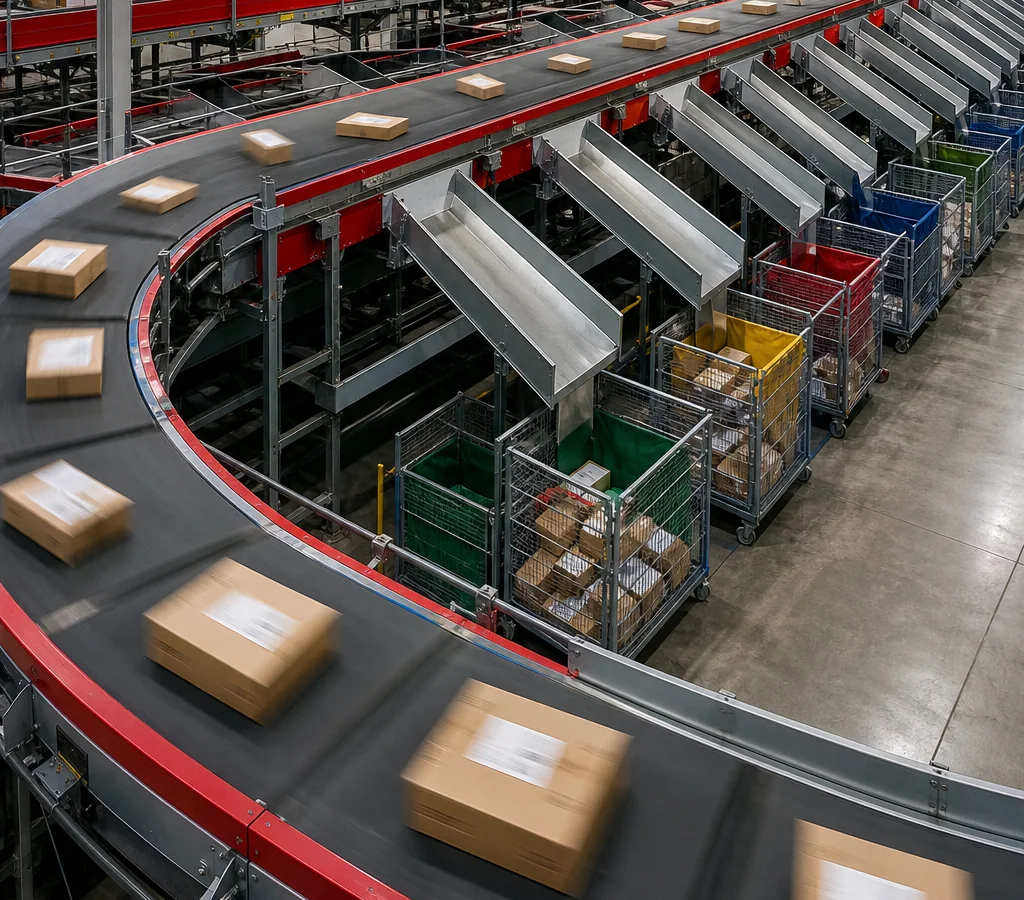
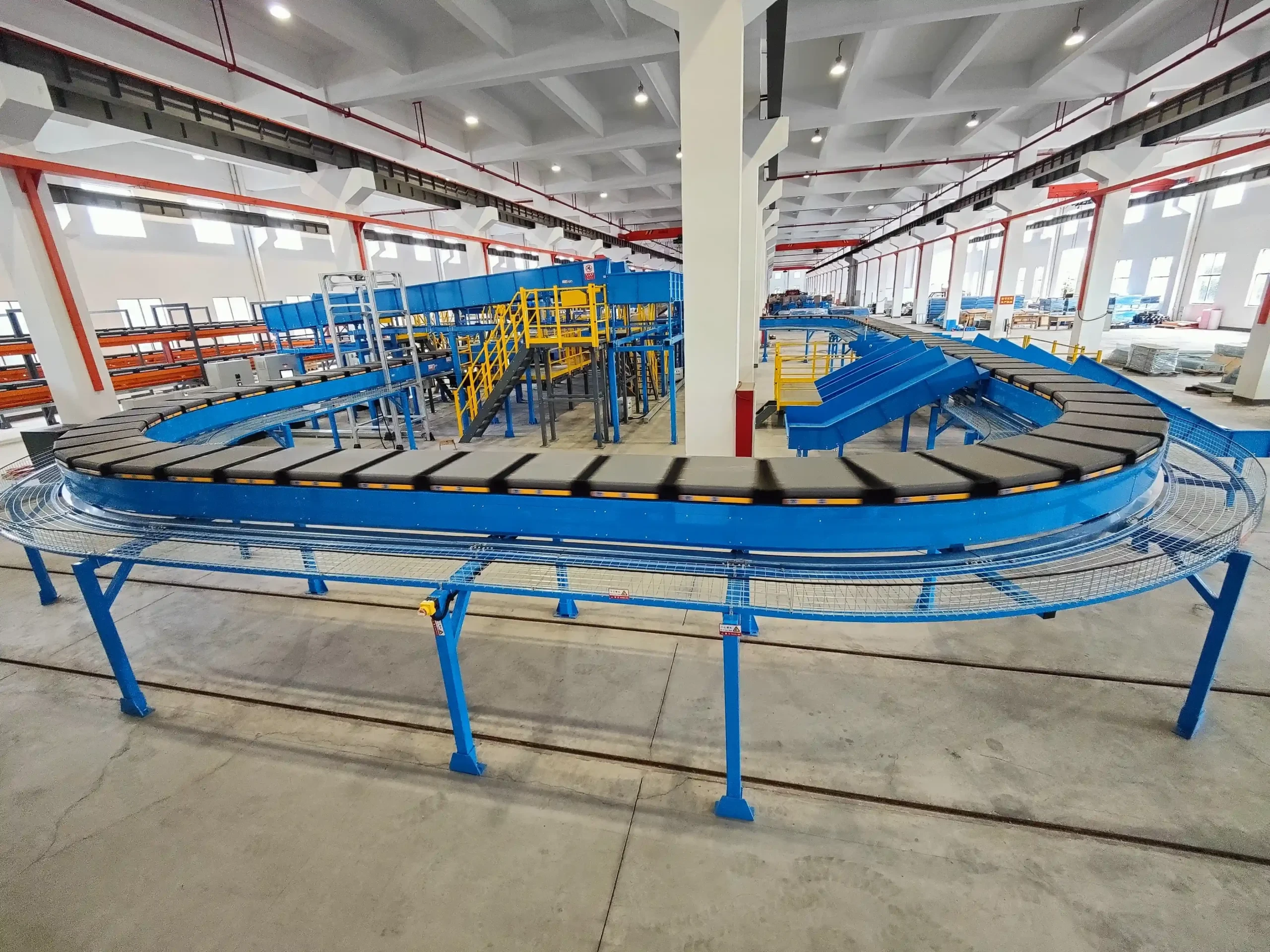
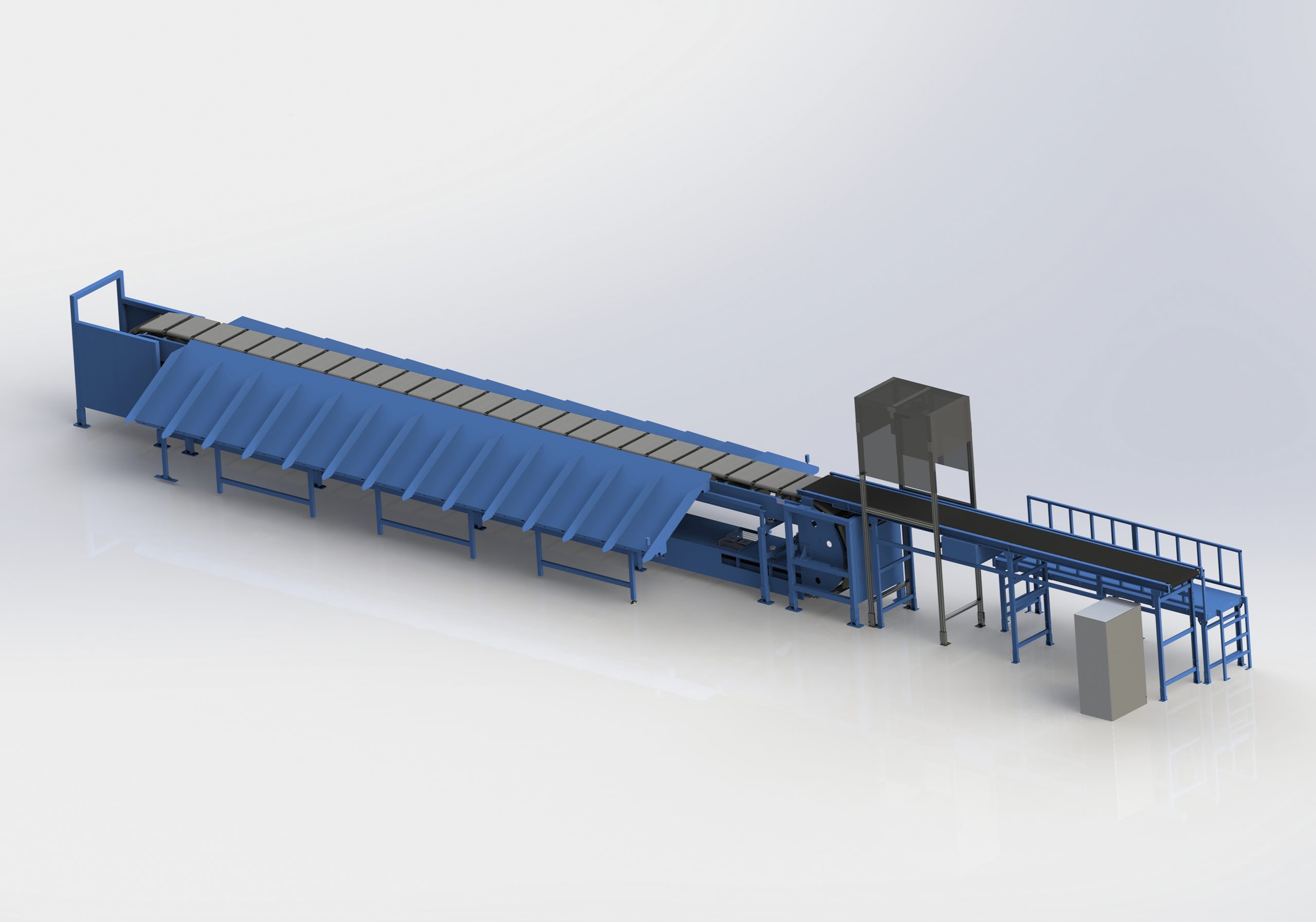
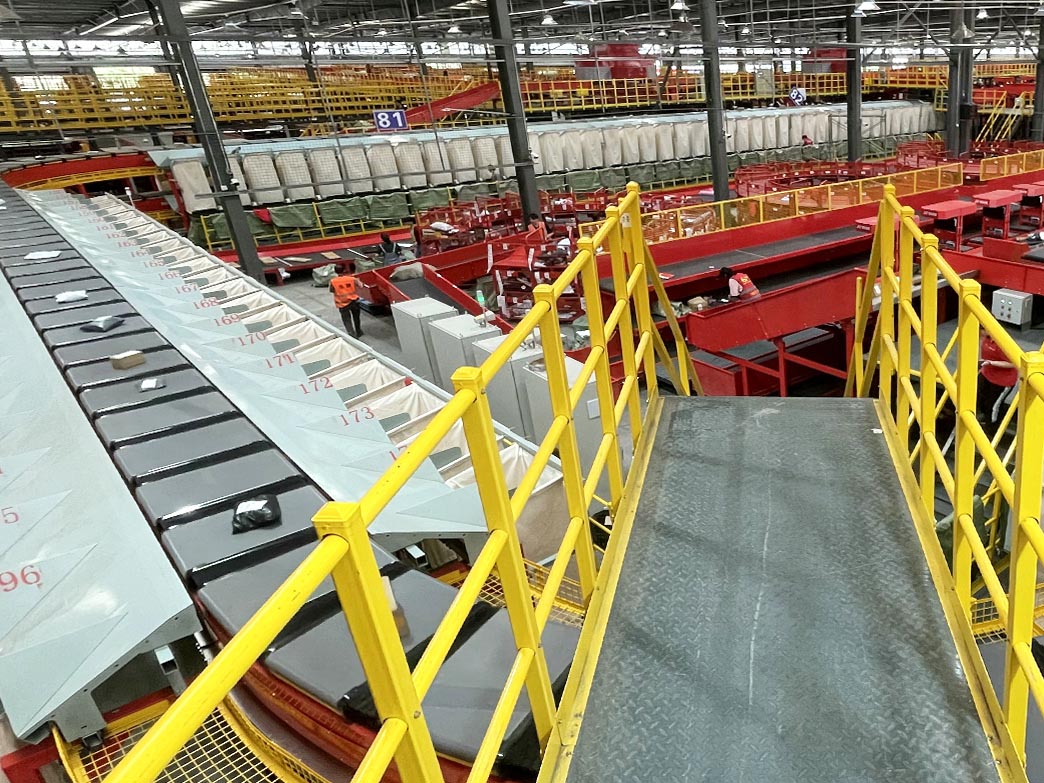
A cross-belt sorter is an automated material handling system designed to sort parcels quickly and accurately. It consists of carriers mounted on a loop track, each equipped with a small conveyor belt (the “cross belt”).
As parcels move along the system:
- They are scanned and identified
- Assigned a destination chute
- Automatically discharged at the correct point via the cross belt
This design enables high-speed sorting with precise control over parcel movement.
Why Cross-Belt Systems Are Gaining Traction
1. Scalability Without Massive Footprint Expansion
One of the biggest misconceptions about automation is that it requires large facilities. Cross-belt systems are modular, allowing smaller centers to scale gradually.
Instead of building a massive system upfront, operators can:
- Start with a compact loop
- Add carriers as volume increases
- Expand sorting destinations over time
This flexibility makes cross-belt systems far more accessible to mid-sized operations than traditional automation.
2. High Throughput in Limited Space
Space constraints are a major challenge for smaller sorting hubs. Cross-belt systems are designed to maximize throughput within a compact footprint.
Compared to manual sorting or simpler conveyor-based systems, cross-belt sorters can handle:
- Thousands of parcels per hour
- Mixed parcel sizes and weights
- High-density sorting layouts
This efficiency allows facilities to process more volume without relocating or expanding significantly.
3. Improved Sorting Accuracy
Sorting errors are costly. Misrouted parcels lead to delays, customer complaints, and additional handling costs.
Cross-belt systems use advanced scanning and control software to ensure accurate sorting. Each parcel is tracked in real time, reducing the risk of misplacement.
For smaller operators, this level of precision can significantly improve service quality and brand reputation.
4. Labor Reduction and Optimization
Automation does not eliminate labor—it transforms how it is used.
With a cross-belt system, workers are no longer required to:
- Manually read labels
- Physically route parcels
- Perform repetitive sorting tasks
Instead, labor can be reallocated to:
- System monitoring
- Exception handling
- Value-added services
This shift not only reduces labor costs but also improves working conditions, making roles easier to fill and retain.
5. Faster Processing Times
Speed is a competitive advantage in logistics. Cross-belt systems operate continuously and consistently, unlike manual processes that vary with worker performance.
Faster sorting means:
- Shorter processing cycles
- Earlier dispatch times
- Better alignment with tight delivery windows
For regional hubs, this can make the difference between meeting and missing service commitments.
Technology Advancements Lowering Barriers
Cost Has Become More Accessible
Historically, cross-belt systems required significant upfront investment. Today, costs have decreased due to:
- Standardized components
- Improved manufacturing efficiency
- Increased competition among suppliers
Additionally, financing options such as leasing and pay-per-use models have made automation more attainable.
Integration Is Easier Than Ever
Modern cross-belt systems are designed with integration in mind. They can connect seamlessly with:
- Warehouse management systems (WMS)
- Transportation management systems (TMS)
- Order management platforms
This interoperability allows smaller operators to implement automation without overhauling their entire IT infrastructure.
Smarter Software Enhances Performance
Software has become a critical component of sorting systems. Advanced algorithms optimize:
- Parcel routing
- Carrier utilization
- System throughput
Real-time data analytics also provide visibility into operations, enabling continuous improvement.
Comparing Cross-Belt Systems to Alternatives
Manual Sorting
Manual sorting offers flexibility but struggles with:
- Scalability
- Consistency
- Labor dependency
As volumes grow, manual systems become increasingly inefficient.
Tilt-Tray Sorters
Tilt-tray systems are another form of automation but are less suitable for mixed parcel types and smaller facilities.
They often require more space and are less flexible when handling irregular items.
Sliding Shoe Sorters
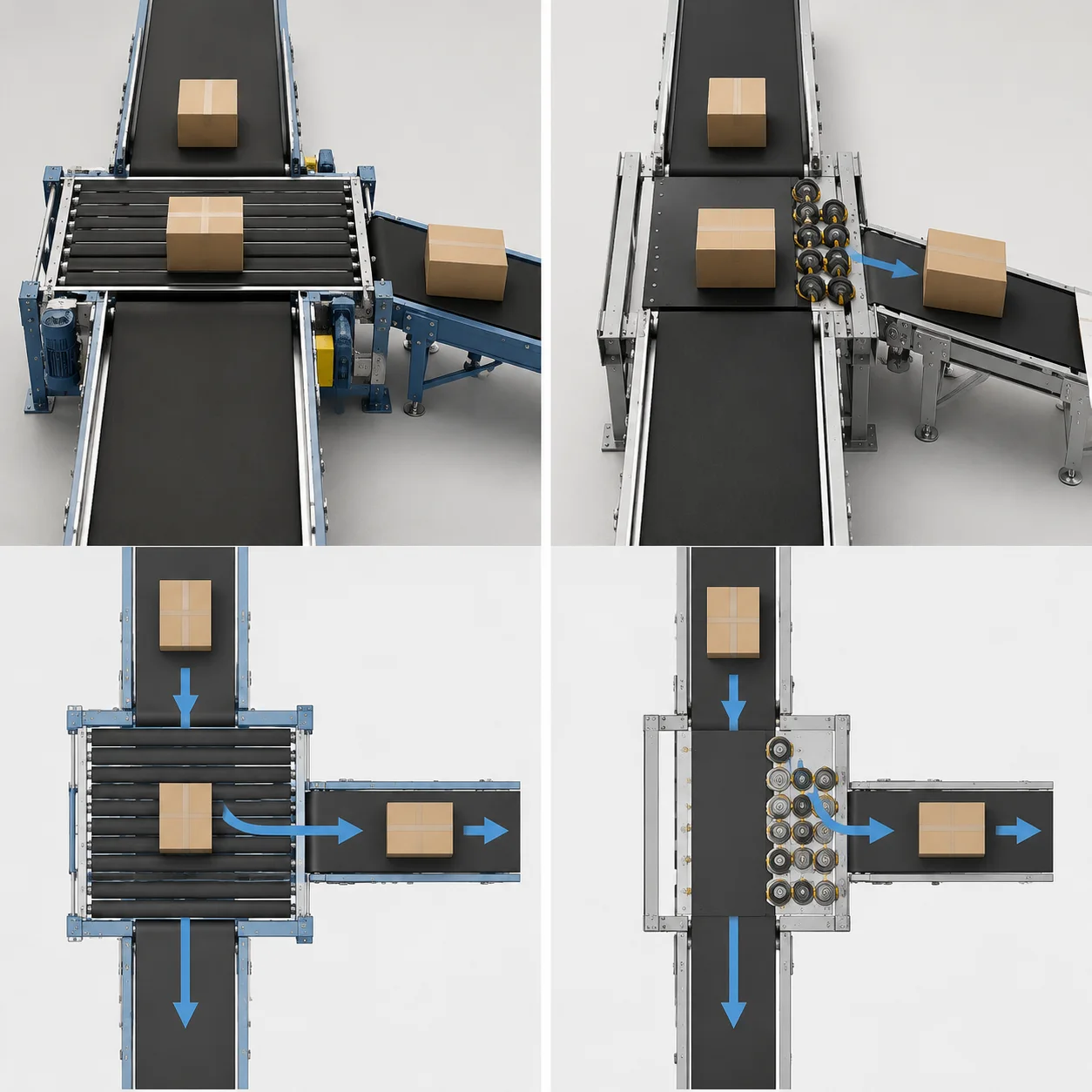
Sliding shoe sorters are effective for certain applications but may not offer the same level of precision and versatility as cross-belt systems.
They are typically better suited for uniform items rather than diverse parcel streams.
Real-World Benefits for Smaller Facilities
Handling Volume Growth Without Chaos
Cross-belt systems allow smaller hubs to absorb volume increases without operational breakdowns.
Instead of adding more workers during peak periods, facilities can rely on consistent system performance.
Enhancing Customer Satisfaction
Accurate and timely deliveries directly impact customer satisfaction. By reducing errors and delays, cross-belt systems help smaller operators compete with larger players.
Supporting Business Expansion
Automation enables growth. With a cross-belt system in place, smaller companies can:
- Expand service areas
- Take on new clients
- Offer faster delivery options
This capability opens new revenue streams.
Challenges and Considerations
Initial Investment
Even with reduced costs, cross-belt systems still require capital investment. Operators must carefully evaluate return on investment based on:
- Current volume
- Growth projections
- Labor savings
Maintenance and Technical Expertise
Automated systems require ongoing maintenance. Smaller facilities need access to:
- Technical support
- Spare parts
- Skilled personnel
However, many vendors now offer comprehensive service packages to address these needs.
Change Management
Transitioning from manual to automated processes can be challenging. Employees must adapt to new roles, and workflows need to be redesigned.
Proper training and communication are essential to ensure a smooth transition.
The Future of Parcel Sorting
Automation Will Continue to Democratize
As technology becomes more accessible, automation will no longer be limited to large-scale operations. Smaller facilities will increasingly adopt advanced systems to remain competitive.
Hybrid Models Will Emerge
Not all processes need to be fully automated. Many facilities will adopt hybrid models that combine automation with manual flexibility.
Cross-belt systems can serve as the backbone of these hybrid operations.
Data-Driven Operations Will Dominate
Data will play a central role in logistics. Cross-belt systems generate valuable insights that can be used to:
- Optimize workflows
- Predict demand
- Improve decision-making
Conclusion: A Strategic Shift, Not Just a Trend
The adoption of cross-belt sorting systems by small and mid-sized parcel hubs is not simply a technological upgrade—it is a strategic shift.
Faced with growing volumes, labor challenges, and rising customer expectations, these facilities are recognizing that traditional methods are no longer sufficient.
Cross-belt systems offer a balanced solution: high performance, scalability, and adaptability without requiring the scale of large distribution centers.
As costs continue to decline and technology advances, the question is no longer whether smaller sorting centers should adopt automation—but how quickly they can do so to stay competitive.
In a logistics landscape defined by speed, accuracy, and efficiency, cross-belt systems are no longer a luxury. They are becoming a necessity—one that even the smallest hubs can no longer afford to ignore.