


The rapid expansion of global e-commerce has rewritten the rules of warehouse management. Traditional manual workflows are no longer capable of supporting today’s demand for faster delivery, higher accuracy, and continuous peak-season performance. As a result, automation technologies are becoming essential infrastructure across the logistics industry.
1. Smarter Material Flow for Higher Efficiency
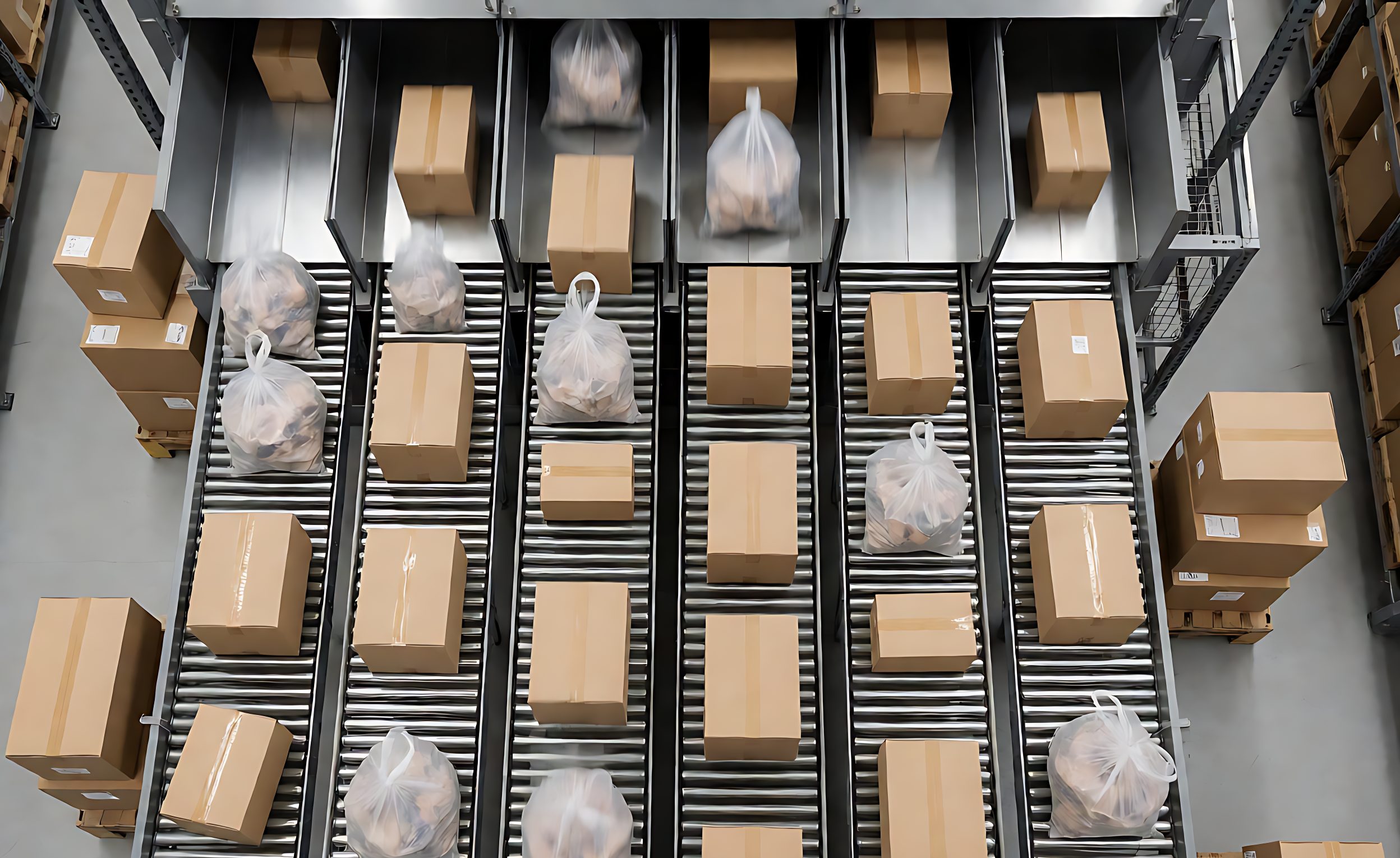
Automated conveying and sorting systems ensure that parcels move through facilities with minimal human intervention. Gravity roller conveyors, motorized conveyors, and automated diverter systems now work together to maintain smooth, uninterrupted product flow. These solutions help reduce bottlenecks and keep operations running at consistent high capacity.
2. Data as the New Driver
Modern warehouses rely heavily on real-time data to optimize decision-making. Sensors, scanners, and DWS units capture parcel dimensions, weight, and label information instantly. By integrating this data with warehouse execution systems (WES) or WMS platforms, operators gain full visibility and control over their processes, improving both productivity and accuracy.
3. Automation Reduces Labor Pressure
Labor shortages continue to challenge warehouse operations worldwide. Automation significantly reduces reliance on manual labor for repetitive and physically demanding tasks. Systems like cross-belt sorters, narrow-belt sorters, and sliding-shoe solutions eliminate unnecessary manual handling while improving safety and reducing operational fatigue.
4. Scalability Through Modular Design
Warehouse automation is becoming increasingly modular. Businesses can start with foundational systems — such as conveyors or basic sortation — and scale up to advanced solutions as volumes grow. Modular engineering reduces installation time and ensures that capacity can expand without disrupting daily operations.
5. Improving Customer Experience
Consumers expect reliable, fast delivery. Automated logistic systems help businesses meet these expectations by reducing errors, increasing throughput, and supporting real-time tracking. As automation improves fulfillment speed, companies can offer better service levels and strengthen their market competitiveness.
Conclusion
The future of warehousing lies in intelligent automation. By adopting advanced conveying, scanning, and sorting technologies, logistics providers can build resilient, scalable, and data-driven operations. Those who embrace this transformation early will be better positioned to compete in an increasingly demanding global marketplace.
Transformation in Operations: The Daily Changes Nobody Films
Automation transformation gets filmed at ribbon-cuttings. The daily changes that decide whether it worked go unfilmed:
| Daily change | What it looks like on the floor | What it replaced |
|---|---|---|
| Morning starts with data | Supervisor reviews overnight exceptions first | Walking the floor to discover |
| Exception handled at a bench | Photo, decision, reroute in minutes | Parcels hunted by hand |
| Peak discussed as profile | “Which destinations get chutes” | “Who works overtime” |
| Maintenance scheduled by data | Counters trigger service | Failures trigger apologies |
The profile row marks the cultural summit of warehouse automation: when peak conversations shift from labour allocation to destination mapping, the operation has internalised that the sorter is the primary instrument and staffing is its support — a complete inversion of the manual era’s instincts. The bench row compounds daily in minutes that never make headlines but always make payroll: every exception resolved in three minutes at a bench is a fifteen-minute hunt that never happened, and the arithmetic compounds into shifts of recovered labour per month. None of these changes appear in vendor case studies, which is precisely why operations should collect their own — the unfilmed changes are the ones the investment actually bought. The shift-by-shift arc is in operations transformed shift by shift, and the dashboard habit in from sensor to decision. Reference: workplace culture change and warehouse management.