

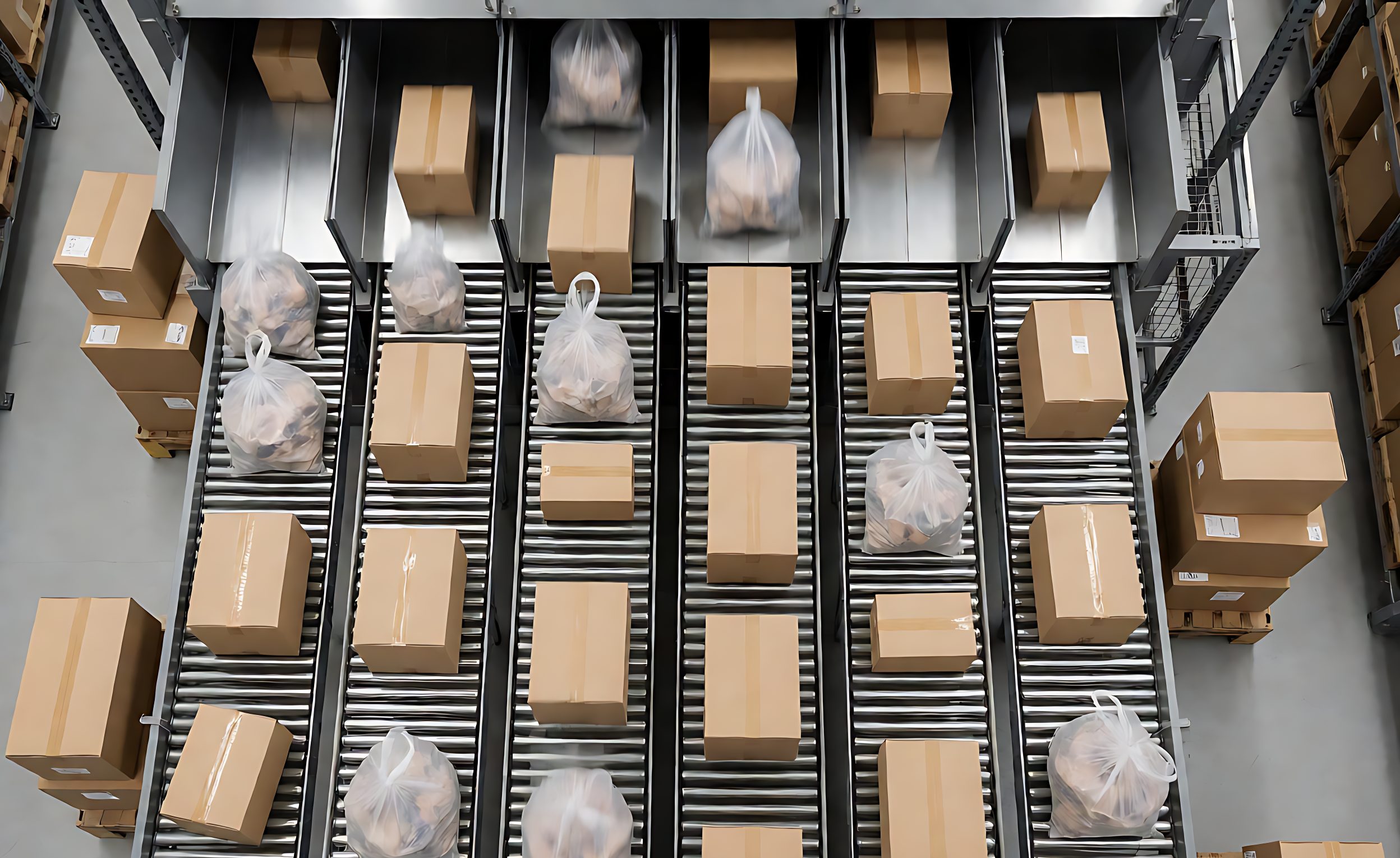
In recent years, the rapid growth of e-commerce and global logistics has brought unprecedented challenges to warehouse operations. Speed, accuracy, and flexibility have become the key factors that define competitiveness. To meet these demands, intelligent sorting systems have emerged as a consequential solution for modern warehouses. A smart sorting system goes beyond mechanical automation. It combines AI algorithms, vision systems, and data analytics to achieve real-time identification, classification, and tracking of goods. With technologies such as OCR, barcode scanning, and volume measurement, each parcel can be automatically recognized and directed to its correct destination within seconds. The advantages are clear: Higher efficiency — processing thousands of parcels per hour. Reduced labor dependency — minimizing repetitive and error-prone manual tasks. Accurate data collection — supporting intelligent warehouse management and predictive analytics. Furthermore, modern sorting systems are designed with modular and scalable structures, allowing businesses to easily upgrade or expand as order volumes grow. When integrated with warehouse management systems (WMS) and IoT platforms, these systems can create a truly **connected logistics ecosystem**, improving transparency and operational control across the entire supply chain. As warehouse automation continues to evolve, intelligent sorting technology will play a central role in achieving smart, data-driven logistics. Companies that adopt these solutions early will gain a significant edge in efficiency, cost savings, and customer satisfaction. At TRUELISORT, we believe that intelligent sorting is not just about machines—it’s about building smarter, faster, and more connected warehouses for the future of global logistics.
Transform, Not Replace: Where Humans Sit in the Modern Warehouse
Warehouse transformation discussions oscillate between two caricatures. The practical answer assigns humans where judgement compounds:
| Work type | Best owner | Why |
|---|---|---|
| Repetitive divert decisions | Sorting system | Accuracy holds at hour eight |
| Exception triage | Trained operator | Patterns need judgement |
| Preventive maintenance | Skilled technician | Early detection saves weeks |
| Profile rule design | Operations analyst | Business context beats raw data |
The exception row is where modern warehouses actually create their human advantage. As sorting automates the routine, the people who remain concentrate on everything the machine flags — and operations that deliberately develop this tier report something counterintuitive: post-automation roles become more attractive, not less, because triage work engages judgement instead of exhausting wrists. Ergonomics improves in parallel and measurably: the repetitive-lift injuries that plagued manual sorting decline, which shows up in insurance and attendance long before it shows up in any automation business case. The transformation framing matters for hiring too — warehouses that advertise “we automate the repetitive so you handle the interesting” recruit differently than those that promise nothing changes, and the first group’s honesty pays in retention. The warehouse future this staffing model serves is in what smart warehouses embrace, and the business value in value creation mechanics. Reference: collaborative robotics and workplace ergonomics.
The human tier also deserves a ladder, not just a role: triage operator, then profile analyst, then automation supervisor — each step with visible skills and pay. Warehouses that publish the ladder recruit better and keep the people their sorting investment trained. Reference: career development and skills pathways.