


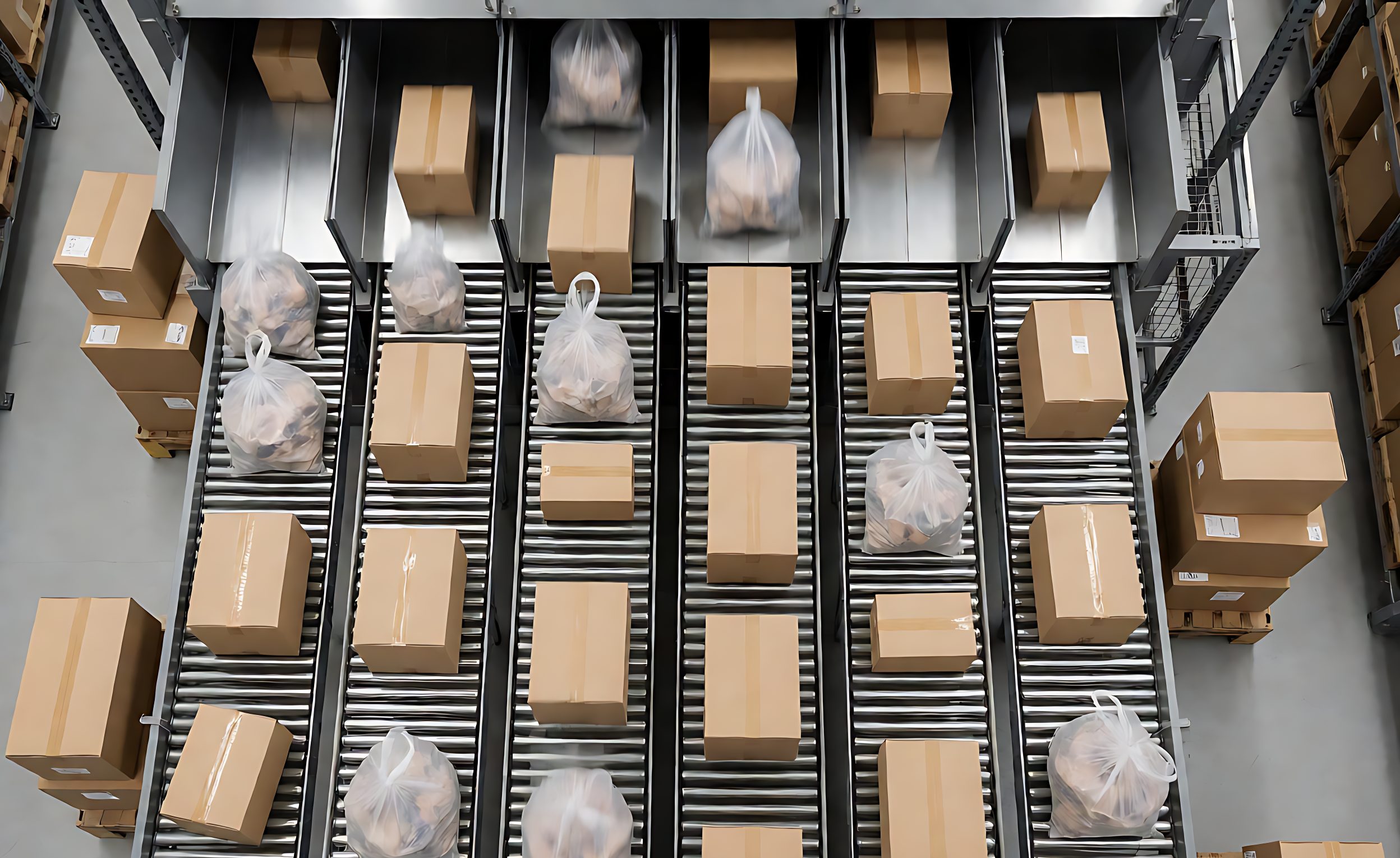
In today’s logistics centers, sorting systems have become the backbone of operations. Whether in e-commerce warehouses or express hubs, sorting is no longer just about “moving parcels”—it is about boosting efficiency and accuracy across the entire process. 1. Improved Efficiency: While manual sorting is limited in speed, automated systems can process tens of thousands of parcels per hour, even at peak times. 2. Higher Accuracy: With advanced scanning, recognition, and intelligent control, sorting accuracy can reach 99.9%, greatly reducing error rates. 3. Lower Labor Costs: As labor costs continue to rise, automation provides a sustainable way to reduce long-term operational expenses. 4. Scalability: Sorting systems can be flexibly expanded to match the growth of business demand. In an increasingly competitive logistics market, companies that adopt efficient sorting solutions early will be able to respond faster to customer needs and gain a significant competitive edge.
Four Layers of Value a Sorting System Creates
Sorting systems are justified on hard savings and then paid back in softer ones. The value stack has four layers, and mature buyers read the whole stack:
| Layer | Value created | How it shows up |
|---|---|---|
| Direct cost | Labour hours per parcel fall | Payroll line, month one |
| Quality | Mis-sorts and damage rates drop | Fewer claims, refunds, apology emails |
| Experience | Cut-offs held, tracking stable | Carrier scorecards, repeat orders |
| Strategic | Volume growth without re-papering the operation | New contracts signed at fixed service terms |
The strategic layer is the one spreadsheets miss and CFOs eventually appreciate: a business that can absorb double the volume into the same footprint can sign contracts a competitor must refuse. Every layer above it feeds that option — the cost curve that scales flat, the quality that survives peaks, the experience that wins renewals. When the payback case is written, the direct-cost layer usually clears the hurdle alone; the three layers above it are the equity upside the equipment quietly builds. Operations that track claims per thousand parcels and carrier scorecard trends alongside payroll discover the full return months before the depreciation schedule ends. The metrics behind the first two layers are in the four numbers that move, and the capacity horizon in automation horizons. Reference: return on investment and customer experience.
Measuring the experience layer deserves a practical note. Carrier scorecards and repeat-order rates are lagging indicators — they confirm value months after the sorter created it. The leading indicators live closer to the machine: departure completeness by hour, exception-resolution time, first-pass accuracy by shift. Operations that instrument the leading indicators can explain the lagging ones before finance asks, which is precisely the position a capital-investing operation wants to occupy. The dashboard that carries them is in the operator side of the dashboard. Reference: leading and lagging indicators and performance measurement.
Priced In, Not Promised
The value described here becomes real only when it is measured: throughput per shift, accuracy per thousand, labour hours reallocated, promises kept per wave. Operations that instrument all four registers convert the claims in this article into a baseline their next vendor must beat — the measurement frame lives in the value measurement frame.