


As global logistics continues to evolve, the need for faster and smarter warehouse operations has never been greater. Traditional manual sorting is no longer sufficient to keep up with the pace of modern e-commerce. That’s where intelligent sorting systems come in — offering an advanced solution that combines automation, precision, and digital control.
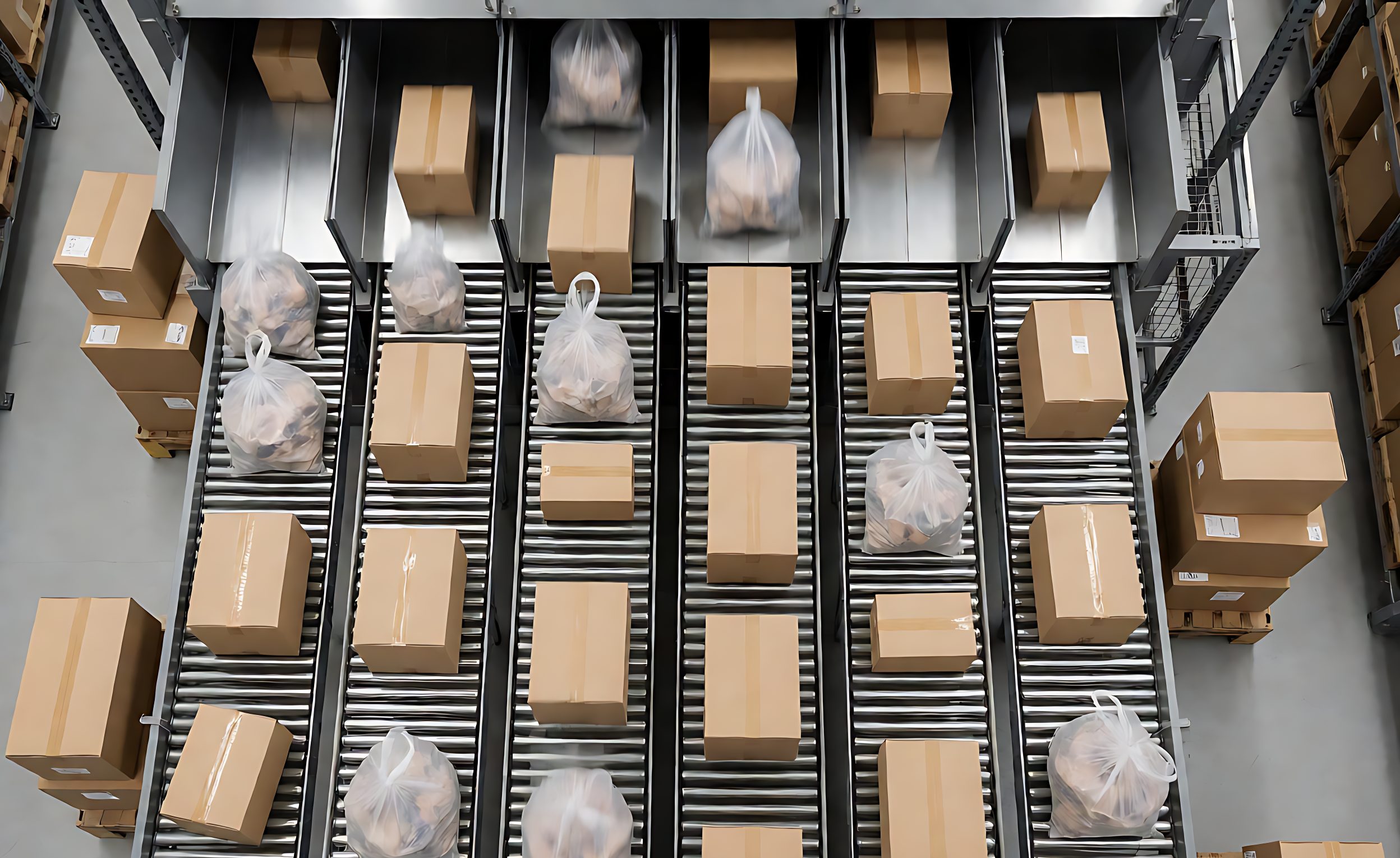
Intelligent sorting systems integrate conveyors, sensors, scanners, and software to automatically identify, measure, and route parcels. This eliminates human error and significantly increases throughput. With modular and scalable designs, these systems can easily adapt to warehouses of any size or product range, providing flexibility for future expansion.
By applying technologies such as AI, computer vision, and data analytics, smart sorting lines can optimize every step of the process — from package identification to route planning. The result is improved accuracy, lower operating costs, and faster delivery performance. These advantages allow logistics companies to remain competitive in an increasingly digital marketplace.
TRUELISORT specializes in developing and manufacturing high-performance sorting and conveying solutions. Our product range includes DWS systems, cross-belt sorters, wheel sorters, and intelligent conveyors, all designed to help global customers achieve efficient and automated warehouse operations.
Efficiency Transformed: The Four Constraints a Sorter Removes
Warehouse efficiency has always been governed by constraints. Intelligent sorting removes four of them, and each removal changes what the warehouse can promise:
| Old constraint | How it bounded the operation | What removal unlocks |
|---|---|---|
| Memory of the pickers | Knowledge of SKUs and zones lived in heads | Seasonal staff productive on day one |
| Paper sequencing | Order flow followed paper queues | Waves re-cut mid-shift by rule |
| Physical walking | Travel consumed 50%+ of pick time | Consolidated sort removes return legs |
| Shift-length fatigue | Accuracy decayed after hour six | Stable accuracy across all shifts |
The memory constraint is the subtle one. Warehouses that ran on veteran knowledge were fragile in ways throughput metrics hid — one resignation could degrade an operation for weeks. When the sorter and its software hold the sequencing knowledge, the veterans stop being single points of failure and become teachers, and seasonal peaks stop being reliability gambles. The walking constraint shows the arithmetic most clearly: every consolidated move that eliminates a return leg pays back on every order, every day, forever — which is why efficiency cases built on travel analysis survive scrutiny while enthusiasm-based projections do not. Together the four removals explain the pattern buyers report: the warehouse does not merely work faster, it becomes easier to staff, schedule and scale. The flow architecture enabling this is in five flows, one backbone, and the quantified baselines in the four numbers that move. Reference: order picking and warehouse operations.
The four constraints also have a removal order, and the right order differs by site. A warehouse drowning in exceptions gains most from accuracy; one bleeding labour from walking gains most from consolidation. Sequencing removals by local pain — rather than by vendor’s showcase — is what separates transformations that compound from those that merely modernise. Reference: constraint theory and critical path thinking.