
In the highly competitive intralogistics landscape of 2026, data is just as critical as physical material handling. Modern fulfillment centers are no longer just moving boxes; they are processing massive streams of information. At the center of this information flow is the DWS system. But a standalone DWS is merely a data collection tool. The true operational multiplier occurs when you seamlessly integrate DWS technology with an automated conveyor and high-speed automated sorting equipment. In this analytical guide, our engineering data team at Truelisort breaks down the quantitative impact of DWS integration, backed by 2026 performance metrics, to show you exactly how it transforms warehouse profitability.
- Throughput Increase: Facilities integrating in-motion DWS systems onto their main automated conveyor lines report a 38% increase in overall throughput compared to static weighing stations.
- Revenue Recovery: Precise dimensional scanning recovers an average of $0.12 to $0.18 per parcel by preventing carrier chargebacks.
- Error Reduction: Real-time WCS (Warehouse Control System) data-feeding reduces routing errors in automated sorting by 47%.
- Adoption Rate: According to the 2026 Global Material Handling Automation Index, 82% of Tier-1 logistics hubs now mandate dynamic DWS for all inbound receiving lines.
*Data Source: Compiled from 2026 industry intralogistics reports and Truelisort internal system deployment metrics. Updated: May 2026.
1. The Mathematical Impact of DWS on Automated Conveyor Systems
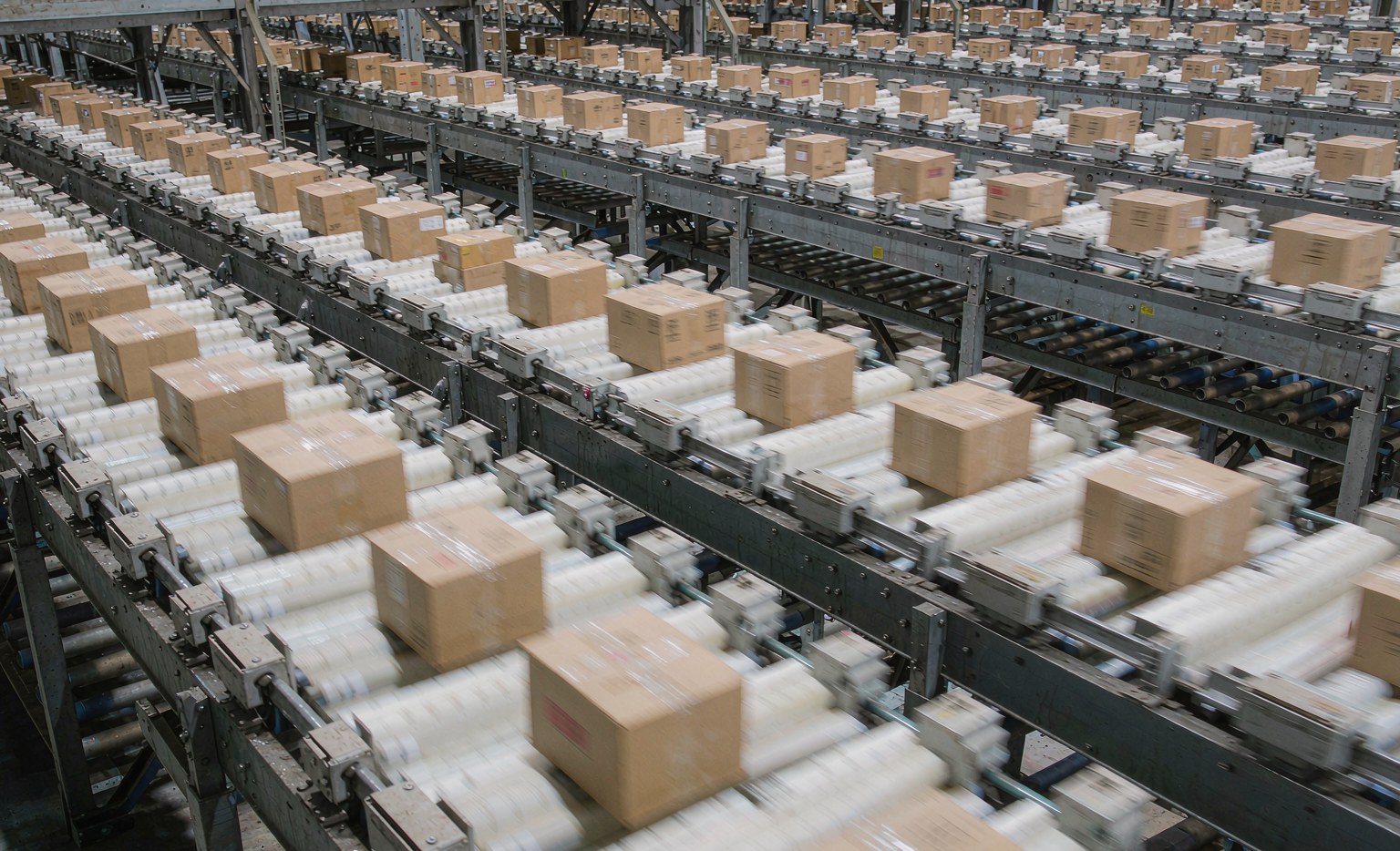
To understand the value of an integrated DWS, we must analyze the time-motion data of parcel processing. Traditional static dimensioning requires an operator to lift a parcel, place it on a scale, scan a barcode, wait for the software, and move the parcel back to the line. This process takes an average of 8 to 12 seconds per item. By contrast, an in-motion DWS system—integrated directly into an automated conveyor—performs all these tasks simultaneously as the parcel moves through a scanning tunnel. Let’s look at the comparative data:
| Metric | Static Manual DWS | Automated Conveyor DWS | Statistical Improvement |
|---|---|---|---|
| Processing Time Per Item | 10.5 seconds | 0.8 seconds | 92% Faster |
| Max Hourly Throughput (PPH) | 350 – 400 items | 3,000 – 9,000+ items | 1,500%+ Increase |
| Data Capture Accuracy | 96.5% (Human error factor) | 99.9% (Machine vision) | Near-Perfect Precision |
Trend Analysis: As the table indicates, scaling up a fulfillment center is mathematically impossible using static stations without adding massive labor costs. Integrating DWS over an automated conveyor systems for warehouse operations shifts the bottleneck from data capture to the physical limit of the conveyor belt speed.
2. Technical Synergy: How DWS Feeds Automated Sorting
How does a DWS tunnel actually communicate with an automated sorting machine? The secret lies in the microsecond data exchange via the concept system architecture of your WCS. Here is the sequence of events as captured by our integration logs:
- Gap Control: As items approach the DWS, induction conveyors ensure a precise 500mm gap between parcels.
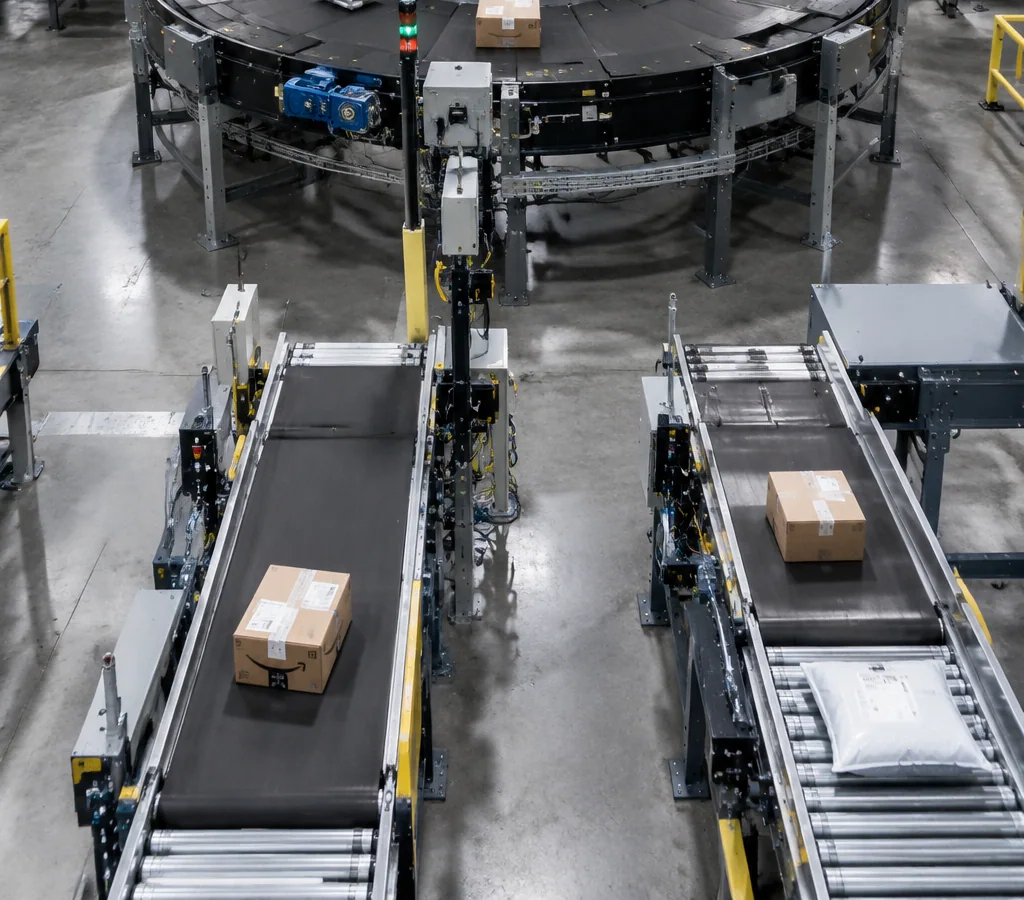
- Simultaneous Capture: At 2.5 m/s, overhead 3D cameras capture the Length, Width, and Height (LWH). In-belt dynamic scales calculate the weight to an accuracy of ±20 grams. 6-sided camera tunnels read the 1D/2D barcode.
- Data Transmission (Latency < 50ms): The profile is instantly sent to the WCS.
- Routing Decision: The WCS looks up the order. Is the item too heavy for a specific chute? Is it assigned to FedEx or UPS based on DIM weight?
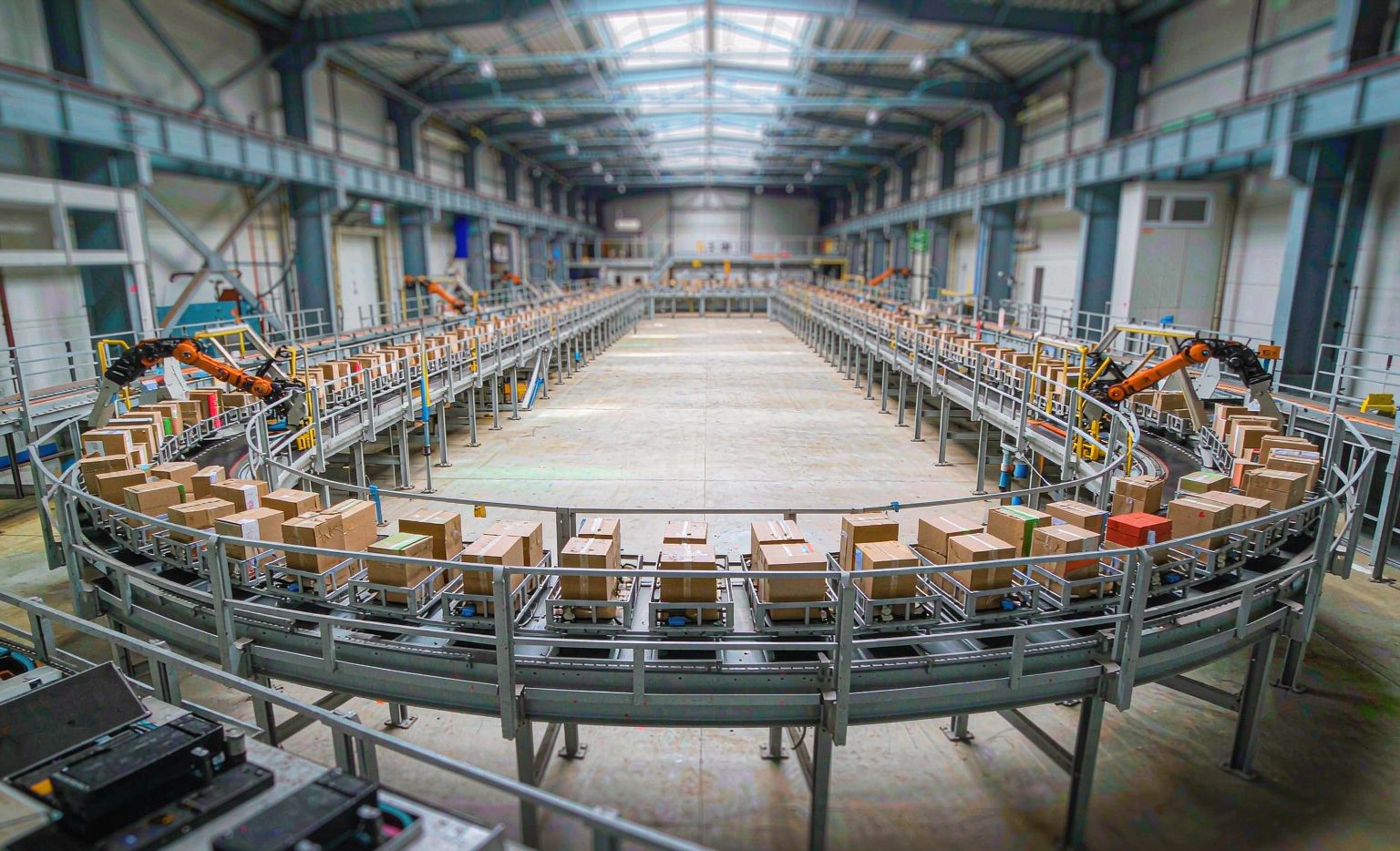
- Execution: The item reaches the cross belt sorter, which receives the exact divert command, utilizing the DWS data to drop the parcel into the precise shipping bag.
3. Revenue Recovery Analytics: The ROI of DIM Weight Profiling
One of the most compelling data points for integrating a DWS is direct revenue recovery. In 2026, major carriers (UPS, FedEx, DHL) heavily penalize shippers for inaccurate dimensional weight declarations. This is known as a carrier chargeback or revenue leakage.
4. Application Architecture: Best Practices for DWS Integration
Based on our deployment data across global logistics hubs, where you place the DWS on the automated conveyor network determines its effectiveness. There are two primary industry applications for DWS placement:
A. Inbound Receiving (The Data Foundation)
Placing a DWS at the receiving dock ensures that every SKU entering the facility is master-filed accurately. If the warehouse software knows the exact dimensions of an item, it can automatically select the perfectly sized carton for packing later, saving corrugated cardboard costs and reducing dunnage (fill material) by up to 18%.
B. Outbound Shipping (The Freight Auditor)
This is the most common integration. Positioned just before the final automated sorting system, the outbound DWS acts as the final quality control check and freight auditor. It verifies the final packed weight against the theoretical weight to detect missing items, then routes the package to the cheapest carrier lane.
5. Real-World Data: A Truelisort Integration Case Study
To ground these statistics, let’s examine a 2025/2026 automated sorting integration project handled by our team. A prominent cross-border e-commerce 3PL approached us needing comprehensive custom sortation solutions.
- The Problem: They were processing 60,000 parcels daily using manual weighing and a rudimentary narrow belt sorter, resulting in severe bottlenecks during peak hours and high carrier penalty fees.
- The Solution: Truelisort integrated a high-speed in-motion DWS tunnel seamlessly feeding into our high-capacity TR-series cross belt sorter.
- The Data Outcome:
- Throughput surged from 4,500 PPH to 12,000 PPH on a single line.
- Chargebacks were reduced by 98.4%.
- The physical footprint of the weighing operation was reduced by 60%, freeing up space for more outbound dock doors.
6. Frequently Asked Questions (FAQ)
Q: Will an in-motion DWS slow down my automated conveyor?
A: No. Modern dynamic DWS systems are designed to operate at the same speed as your main line. High-end systems can capture dimensions, weight, and barcodes at speeds exceeding 2.5 to 3.0 meters per second, ensuring zero bottlenecks before the automated sorting phase.
Q: How accurate is the dynamic weighing on an automated conveyor?
A: Highly accurate. Using advanced load cells and vibration-filtering algorithms, a quality in-motion scale can achieve an accuracy of ±20g to ±50g at high speeds, which is sufficient for legal-for-trade (NTEP/OIML) certification in most jurisdictions.
Q: Can a DWS system handle irregular shapes and polybags?
A: Yes. While traditional infrared light-curtain dimensioners struggled with non-cuboidal shapes, 2026-era 3D vision systems and LiDAR cameras effortlessly calculate the true volume and smallest bounding box of polybags, cylinders, and irregular objects.
7. Conclusion: Data-Driven Material Handling
The data is unequivocal. A DWS system operating in isolation is a missed opportunity. Integrating DWS technology directly into an automated conveyor to feed real-time data to your automated sorting systems is the cornerstone of a highly profitable, error-free fulfillment center. Are you ready to audit your current throughput and discover how much revenue an integrated DWS solution could recover for your facility? Contact Truelisort’s data engineering team today. Let us run the numbers and build a custom sortation architecture that scales with your 2026 growth goals.

Truelisort Systems
Global innovators in intelligent intralogistics and high-speed parcel sortation systems.
✉️ business@truelisort.com | 📱 WhatsApp: +86 18658557670 🔗 Connect on: LinkedIn | YouTube | Facebook