
As global e-commerce, pharmaceutical logistics, luxury retail, and precision manufacturing continue to expand, distribution centers are handling more fragile and high-value products than ever before. From medical devices and luxury electronics to premium cosmetics, glass products, laboratory equipment, and collectible goods, modern logistics operations face increasing pressure to deliver packages quickly while minimizing damage.
Among the most important technologies in high-speed parcel handling is the cross-belt sorting system. Known for its speed, scalability, and routing precision, the cross-belt sorter has become a core component in modern automated distribution centers.
However, while cross-belt systems dramatically improve throughput efficiency, improper physical interaction between parcels and the sorting system can create significant risks. Excessive vibration, impact forces, unstable package movement, chute collisions, sudden acceleration, and poor induction handling can all contribute to product damage, cosmetic defects, internal component failures, and customer dissatisfaction.
Reducing sorting loss is no longer just about preventing catastrophic breakage. In premium logistics environments, even minor packaging dents, label scratches, or product misalignment can result in expensive claims, returns, brand damage, and lost customer trust.
This article explores how logistics operators can optimize physical contact throughout cross-belt sorting systems to reduce parcel damage, improve handling quality, and protect high-value shipments in modern automated facilities.
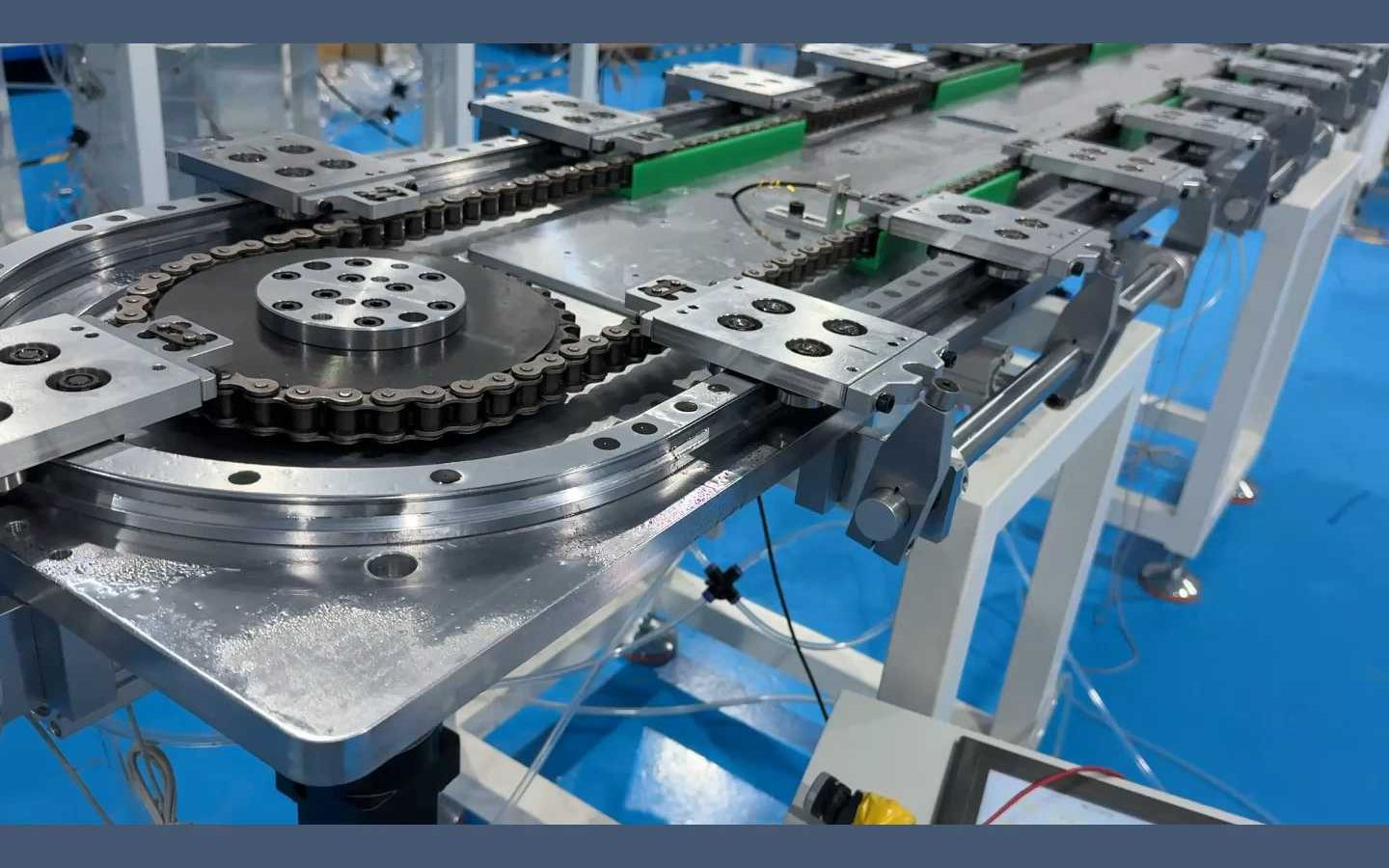
Understanding Sorting Damage in Modern Logistics
Sorting damage refers to any physical degradation that occurs during automated material handling and parcel routing.
Types of Sorting Damage
Damage can include:
- Crushed packaging
- Scratched surfaces
- Internal component shock
- Broken seals
- Product deformation
- Glass breakage
- Electronic failure
- Corner compression
- Surface abrasion
- Label tearing
Some damage is immediately visible, while other forms remain hidden until the customer opens the package.
Why Damage Rates Matter
Even small damage rates create major operational consequences.
Sorting damage can lead to:
- Customer complaints
- Product returns
- Warranty claims
- Brand reputation loss
- Regulatory problems
- Repackaging costs
- Insurance disputes
For high-value goods, a single damaged shipment may cost hundreds or thousands of dollars.
What Makes Cross-Belt Sorters Different?
Cross-belt sorting systems differ significantly from traditional tilt-tray or sliding-shoe sorters.
Core Cross-Belt Design
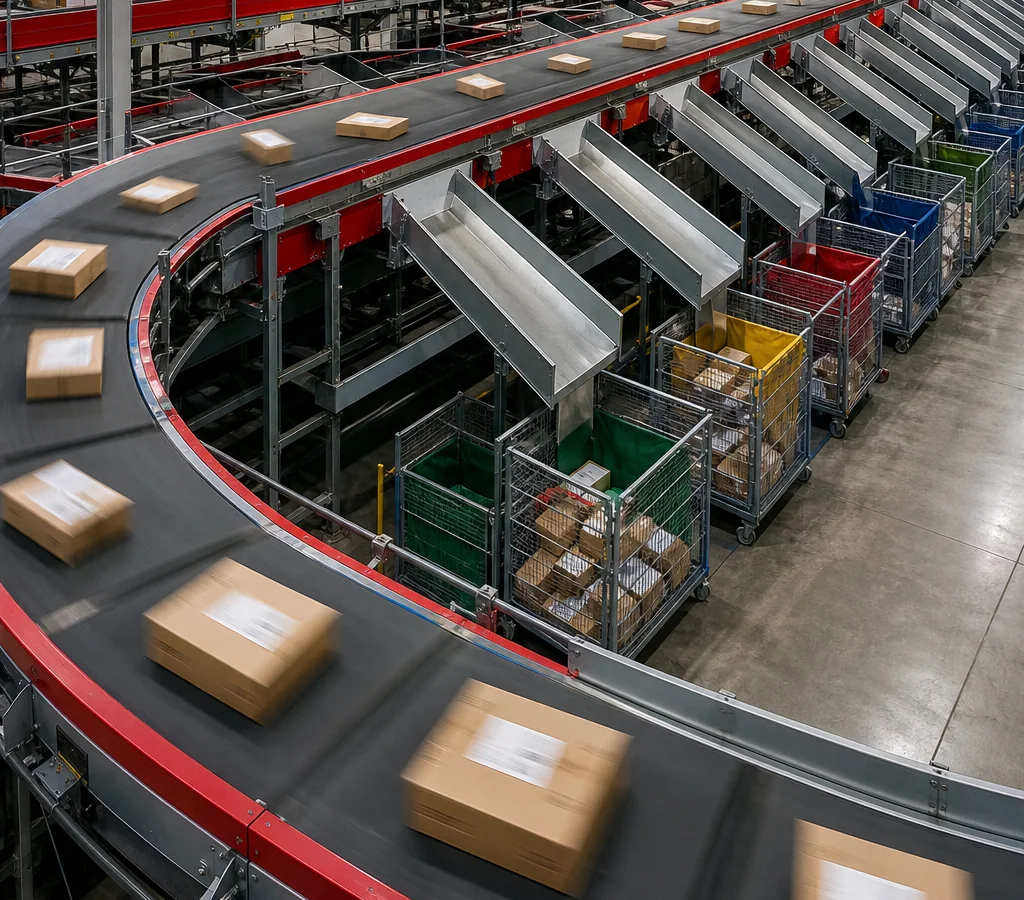
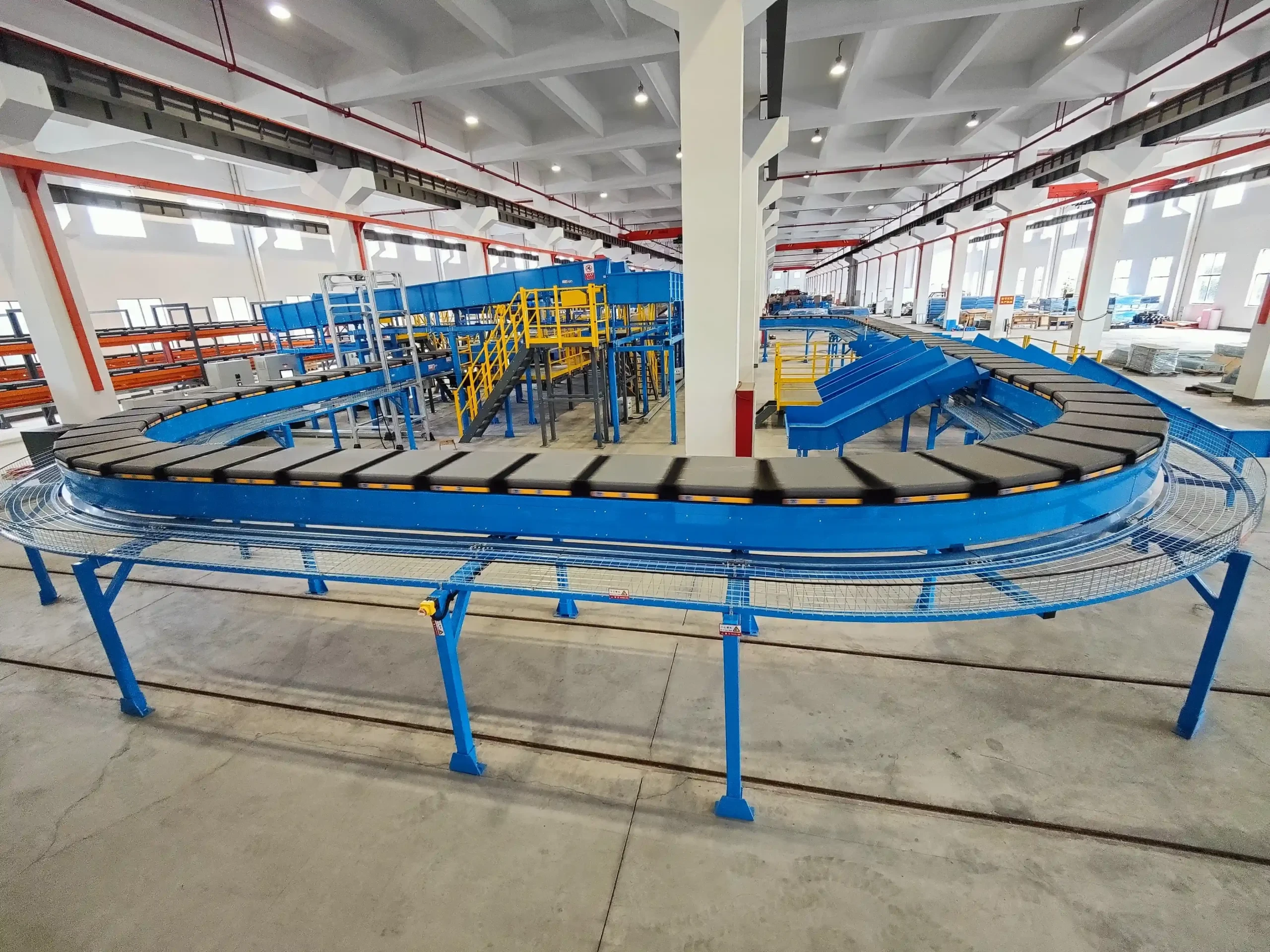
A cross-belt sorter uses individual carrier modules equipped with small conveyor belts.
These belts move parcels sideways into destination chutes.
The design offers:
- Gentle directional control
- Precise parcel placement
- High-speed throughput
- Stable item transport
Why Cross-Belt Systems Are Preferred for Fragile Goods
Compared to many alternative systems, cross-belt sorters provide:
- Lower impact forces
- Better parcel orientation control
- Reduced drop height
- Improved handling stability
However, optimization is still essential.
Even advanced systems can create damage if:
- Speeds are too aggressive
- Package flow is unstable
- Chute geometry is poorly designed
- Contact surfaces are inappropriate
The Physics of Parcel Damage
To reduce sorting damage, operators must understand the physical forces acting on parcels.
Key Mechanical Forces in Sorting Systems
Parcels experience several types of stress during automated handling:
- Impact force
- Friction
- Compression
- Vibration
- Sudden acceleration
- Deceleration shock
- Rotational instability
These forces interact continuously throughout the sorting process.
Why Fragile Parcels Fail
Damage often occurs because packaging absorbs force unevenly.
Examples include:
- Glass products experiencing concentrated impact stress
- Electronics suffering vibration-related component damage
- Luxury packaging deforming under compression
Even when outer cartons appear intact, internal products may be compromised.
Critical Contact Points in Cross-Belt Sorting
Protecting parcels requires analyzing every physical interaction point.
Main Contact Stages
Important physical contact zones include:
- Induction area
- Belt transport surface
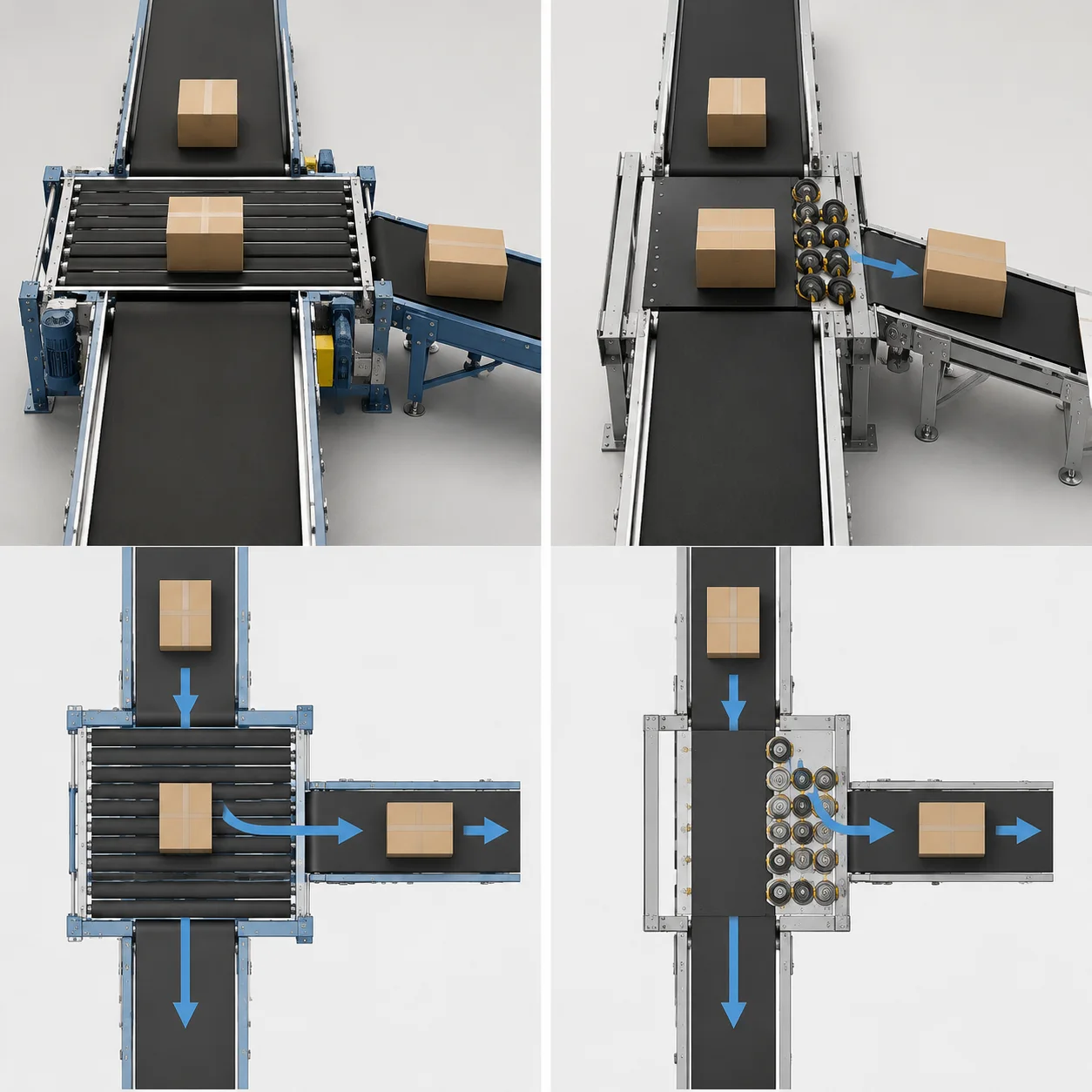
- Transfer interfaces
- Carrier acceleration zones
- Chute discharge areas
- Collection bins
- Merge points
Each stage presents unique risks.
Optimizing Parcel Induction
Induction is one of the most important stages for preventing downstream damage.
Why Induction Quality Matters
Improper induction creates instability that persists throughout the system.
Common induction problems include:
- Crooked placement
- Parcel overlap
- Excessive spacing variation
- Sudden impact during loading
Controlled Parcel Orientation
Parcels should enter the sorter:
- Centered on the carrier
- Properly aligned
- Stable and balanced
Automated singulation systems help ensure consistency.
Speed Synchronization
The induction conveyor and cross-belt carrier must operate at synchronized speeds.
Poor synchronization creates:
- Sliding
- Sudden jolts
- Rotational instability
Smooth speed matching reduces shock transfer dramatically.
Belt Surface Engineering
The physical characteristics of belt materials strongly influence parcel handling quality.
Friction Optimization
Belt surfaces require carefully balanced friction.
Too little friction causes:
- Sliding
- Unstable positioning
- Rotational movement
Too much friction creates:
- Abrasion
- Sudden stopping forces
- Surface wear on packaging
Soft-Touch Belt Materials
Modern cross-belt systems increasingly use specialized belt surfaces designed for delicate handling.
These materials may include:
- Soft polymer coatings
- Cushioned surfaces
- Anti-static layers
- Low-abrasion compounds
Anti-Static Protection
Electrostatic discharge can damage:
- Electronics
- Medical devices
- Semiconductor products
Anti-static belt surfaces help protect sensitive goods.
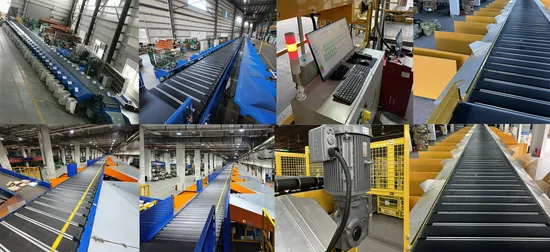
Minimizing Vibration During Transport
Vibration is one of the most underestimated causes of parcel damage.
Why Vibration Matters
Repeated vibration can loosen:
- Internal components
- Product seals
- Protective inserts
- Packaging structures
Long-duration micro-vibration may damage products even without visible external impact.
Sources of Vibration
Common causes include:
- Mechanical imbalance
- Worn rollers
- Poor belt tension
- High-speed carrier transitions
- Structural resonance
Vibration Reduction Strategies
Operators can reduce vibration through:
- Precision maintenance
- Dynamic balancing
- Shock-absorbing supports
- Smooth drive systems
- Controlled acceleration profiles
Modern servo systems also improve motion smoothness.
Managing Acceleration and Deceleration Forces
Sudden speed changes generate high stress.
G-Forces in Automated Sorting
Parcels experience acceleration forces during:
- Carrier startup
- Directional changes
- Ejection sequences
- Conveyor transfers
High-value products often require lower force thresholds.
Smooth Motion Profiles
Advanced motion control systems use:
- Gradual acceleration curves
- Controlled deceleration ramps
- Adaptive speed algorithms
These systems reduce shock loads significantly.
Product-Specific Speed Zones
Some distribution centers dynamically adjust sorter speeds depending on product category.
Fragile products may travel at:
- Reduced belt speeds
- Lower ejection velocity
- Gentler discharge settings
Improving Parcel Stability on Cross-Belt Carriers
Parcel instability increases collision risk.
Causes of Instability
Instability often results from:
- Uneven weight distribution
- Oversized packages
- Improper carton dimensions
- High center of gravity
Stabilization Techniques
Solutions include:
- Wider carrier surfaces
- Side stabilization guides
- Dynamic positioning systems
- Improved package design standards
Intelligent Load Detection
Some advanced systems use sensors to analyze:
- Package shape
- Weight distribution
- Stability characteristics
This allows the system to optimize handling parameters automatically.
Chute Design and Impact Reduction
Parcel discharge is one of the highest-risk stages in sorting.
Why Chute Impacts Cause Damage
Poorly designed chutes create:
- Hard collisions
- Abrupt stopping forces
- Product pileups
- Edge compression
Optimizing Chute Geometry
Modern chute designs focus on:
- Controlled descent angles
- Energy absorption
- Smooth directional transitions
- Reduced parcel congestion
Soft-Landing Technologies
Protective chute systems may include:
- Cushioned surfaces
- Impact dampeners
- Controlled sliding materials
- Pneumatic deceleration systems
These features reduce parcel shock significantly.
Parcel Spacing and Flow Control
Package congestion increases damage risk.
Why Parcel Spacing Matters
Insufficient spacing can cause:
- Mid-system collisions
- Chute pileups
- Transfer interference
- Compression damage
Dynamic Flow Management
Modern cross-belt systems use intelligent software to regulate:
- Carrier spacing
- Chute loading rates
- Traffic density
- Merge timing
This creates smoother parcel movement.
Machine Vision and Parcel Monitoring
Vision systems play a growing role in damage prevention.
Real-Time Parcel Observation
Machine vision cameras monitor:
- Parcel orientation
- Package deformation
- Surface damage
- Unstable movement
AI-Based Risk Detection
Artificial intelligence systems can identify:
- Potential jams
- Unstable loads
- Improper induction
- Misaligned packages
This allows proactive correction before damage occurs.
Packaging Design and Sorter Compatibility
Even the best sorting systems cannot fully compensate for poor packaging.
Why Packaging Matters
Packaging must withstand:
- Vibration
- Compression
- Acceleration
- Drop forces
- Friction
Designing Packaging for Automation
Automation-friendly packaging includes:
- Reinforced corners
- Stable geometry
- Shock-absorbing inserts
- Proper weight distribution
Right-Sizing Cartons
Oversized cartons increase movement inside the package.
This can amplify internal product damage.
Reducing Damage to Luxury and Premium Goods
Luxury products require special handling standards.
Why Cosmetic Damage Matters
Minor defects may be unacceptable for:
- Luxury electronics
- Designer products
- Cosmetics
- Jewelry
- High-end retail packaging
Soft-Contact Logistics
Premium fulfillment centers increasingly adopt:
- Soft-touch conveyors
- Controlled handling speeds
- Specialized packaging lanes
- Dedicated fragile-item routing
The goal is preserving both product function and presentation quality.
Pharmaceutical and Medical Device Protection
Medical logistics presents unique challenges.
Sensitive Healthcare Products
Products may include:
- Diagnostic equipment
- Surgical tools
- Injectable medications
- Temperature-sensitive products
Shock Sensitivity
Many medical devices contain:
- Precision calibration systems
- Delicate optics
- Sensitive electronics
Even small impacts may compromise performance.
Regulatory Considerations
Damage prevention also supports:
- Compliance standards
- Product traceability
- Sterility protection
- Chain-of-custody integrity
Environmental Conditions and Parcel Protection
The surrounding environment affects parcel handling quality.
Temperature Effects
Extreme temperatures influence:
- Belt flexibility
- Packaging rigidity
- Adhesive performance
- Plastic brittleness
Humidity and Static Electricity
Dry environments increase electrostatic risks.
High humidity may weaken packaging materials.
Dust and Contamination
Dust buildup increases:
- Friction inconsistency
- Mechanical wear
- Sensor failures
Clean operating environments improve system reliability.
Maintenance as a Damage Prevention Strategy
Poor maintenance is a major cause of parcel damage.
Mechanical Wear Issues
Worn components can create:
- Uneven motion
- Increased vibration
- Sharp surface edges
- Belt tracking problems
Preventive Maintenance Programs
Effective maintenance includes:
- Roller inspection
- Belt replacement schedules
- Lubrication control
- Alignment calibration
- Sensor verification
Predictive Maintenance Technology
Modern facilities increasingly use sensors to predict:
- Bearing failure
- Vibration abnormalities
- Drive system wear
This reduces unexpected handling problems.
Data Analytics and Damage Reduction
Data-driven operations improve handling quality.
Tracking Damage Trends
Operators analyze:
- Damage frequency
- Chute-specific incidents
- Product category vulnerabilities
- Shift-based variations
Root Cause Analysis
Analytics help identify:
- High-risk handling zones
- Problematic package types
- Mechanical inconsistencies
Continuous optimization reduces long-term losses.
Robotics and Smart Parcel Handling
Robotics is reshaping automated logistics.
Robotic Induction Systems
Robots provide:
- Consistent parcel placement
- Controlled handling force
- Repeatable movement quality
AI-Driven Motion Optimization
Artificial intelligence can optimize:
- Speed profiles
- Carrier allocation
- Ejection timing
- Flow balancing
This improves both efficiency and parcel protection.
Sustainability and Reduced Waste
Reducing sorting damage also supports sustainability goals.
Environmental Benefits
Lower damage rates reduce:
- Product waste
- Repackaging materials
- Reverse logistics emissions
- Disposal costs
Extending Packaging Efficiency
Better handling may allow companies to:
- Use lighter packaging
- Reduce excessive filler materials
- Improve shipping efficiency
This supports more sustainable logistics operations.
Human Factors in Automated Systems
Even highly automated facilities rely on human oversight.
Operator Training
Employees should understand:
- Fragile product requirements
- Proper induction techniques
- Damage risk indicators
- Emergency intervention procedures
Human-Machine Collaboration
The best systems combine:
- Automation precision
- Human judgment
- Real-time monitoring
Together, these create stronger quality control.
Future Trends in Damage-Free Sorting
The future of cross-belt logistics focuses increasingly on intelligent gentle handling.
Smart Adaptive Systems
Next-generation sorters may automatically adjust handling based on:
- Product fragility
- Weight distribution
- Packaging material
- Environmental conditions
Digital Twins and Simulation
Virtual modeling allows operators to simulate:
- Parcel movement
- Impact forces
- Congestion behavior
- Chute performance
This helps optimize systems before physical deployment.
Hyper-Personalized Parcel Handling
Future systems may customize handling parameters for every individual package.
This could include:
- Unique acceleration profiles
- Dynamic routing speeds
- Product-specific contact control
Building a Low-Damage Cross-Belt Strategy
Reducing sorting damage requires a holistic approach.
Key Components of a Successful Strategy
High-performance operations combine:
- Optimized induction
- Soft-contact surfaces
- Controlled acceleration
- Smart chute design
- Machine vision monitoring
- Preventive maintenance
- Packaging collaboration
Continuous Improvement Culture
Damage reduction is not a one-time project.
Facilities must continuously evaluate:
- Mechanical performance
- Parcel behavior
- Customer feedback
- Emerging technologies
Long-term optimization produces the best results.
Final Thoughts
Cross-belt sorting systems are among the most advanced technologies in modern logistics, offering exceptional speed, routing accuracy, and operational scalability. However, as parcel values rise and customer expectations increase, minimizing physical handling damage has become just as important as maximizing throughput.
Protecting high-value parcels requires understanding the physics of movement, impact, vibration, friction, and package stability throughout the entire sorting process. Every physical contact point—from induction to chute discharge—must be carefully engineered to reduce unnecessary stress on products.
Modern distribution centers achieve the best results by combining intelligent software, advanced machine vision, precision mechanical design, soft-contact materials, predictive maintenance, and data-driven optimization.
Ultimately, the future of logistics is not simply faster automation. It is smarter, gentler, and more adaptive automation capable of moving millions of parcels efficiently while protecting even the most delicate and valuable products.
For companies handling premium goods, fragile electronics, pharmaceuticals, luxury products, or precision equipment, optimizing cross-belt physical contact is no longer optional. It is a core competitive advantage in modern fulfillment operations.