

Quick answer: A sorting machine no-read process should identify the scan event, exception route, responsible owner, reprocessing rule and audit record for each unresolved parcel. Buyers should distinguish a scanner result from an upstream data issue and agree how repeats, damaged labels and unknown destinations are reported. A no-read is only manageable when the sorter and operations team can trace what happened to the item after it leaves the normal route.
1. Define what counts as a no-read
State whether a no-read means no code detected, multiple codes, invalid data, unknown destination or another agreed condition. Identify the scanner location and event that creates the exception. Avoid using one broad label for several different cases because each may have a different cause and response. The site and integrator should use the same terms in controls, work instructions and reports. Clear definitions help the team compare event counts and assign a corrective action to the actual step where information was lost.
2. Review source labels and data before equipment tuning
Collect examples of labels with normal print variation, placement, curvature or damage. Confirm the source system sends the expected destination and identifier fields. Separate a missing or malformed value from a scanning failure. The data owner should confirm which validation occurs before an item reaches the sorter. A system trial should include real examples rather than only clean test labels. This lets the project identify whether an exception originates in label creation, application, scanning or destination mapping.
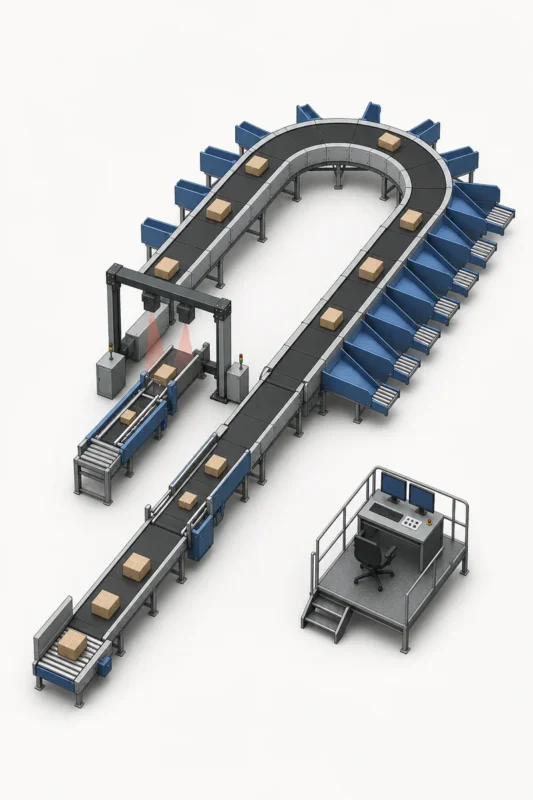
3. Map the physical exception path
Show where a no-read item is diverted, held or removed from the primary flow. Identify the lane, container or work area and the person who receives it. Define what happens when the exception point fills or the normal process is unavailable. If an item can be re-inducted, state who confirms its identity and which rule authorizes a second attempt. A physical map makes it easier for operations to handle exceptions without guessing or returning an item to the sorter with the same unresolved data.
4. Assign ownership for investigation and correction
Name who checks the label, who updates destination data, who authorizes a manual route and who closes a repeat issue. Keep authority boundaries clear so an operator does not invent a destination. Record the item identifier and event time in the case record. If a software or control issue is suspected, route it to the approved technical owner. An assigned owner shortens handoffs and makes it possible to distinguish a one-off handling error from a recurring equipment or data problem.
5. Define repeat, override and reprocessing rules
Agree what evidence is needed before an item is scanned again, manually routed or held for customer service. Specify when a supervisor or system owner must approve an override. Record the original result and the final disposition rather than replacing the first event. A repeat scan should have a clear reason, operator or equipment source and destination outcome. This protects the audit trail and helps the site understand whether a process change reduces unresolved parcels or only moves them to another queue.
6. Measure no-reads with a useful denominator
Report the number of no-read events against a defined population, such as scans attempted or parcels inducted within a stated window. Separate unique parcels from repeated scan events and classify likely causes. Do not compare two periods if one includes recirculation and the other excludes it. The site and integrator should agree which measures inform acceptance and which are operational monitoring. A consistent denominator makes the trend useful for deciding whether label, process or equipment changes improved the outcome.

7. Rehearse exceptions before launch
During commissioning, use sample cases that represent unreadable, duplicate, invalid and missing destination information where those cases apply. Walk operators through the diversion and correction steps, then confirm records can be found by a supervisor. Keep trial cases separate from real customer orders. Capture questions and unclear boundaries as open items. A short rehearsal can reveal a missing label, confusing instruction or unavailable exception owner before normal volume enters the system.
8. Maintain the no-read rule set as data changes
Store the event definitions, route map, work instruction, report logic and approval owners together. Review them when scanners, label formats, destination rules or upstream systems change. Keep a dated change history and verify that operators can locate the current instruction. Use recurring no-read patterns to assign a corrective action and check whether the same category falls afterward. A maintained process makes exceptions traceable and gives the site a basis for improving its sorting workflow.
For buyers comparing available product and supplier options, see TrueLiSort sorting machine solutions.
Questions buyers often ask
What is a no-read in a sorting machine process?
Define it for the project, distinguishing missing codes, invalid data, unknown destinations and multiple-code cases.
Should a no-read item be scanned repeatedly?
Use an approved rule that identifies when another scan is valid, who authorizes it and how the original event is retained.
How should a no-read rate be calculated?
Compare events to a defined population and report repeat events separately from unique parcels.
What should be tested before launch?
Rehearse exception routes, operator ownership, data correction and case records using representative sample cases.