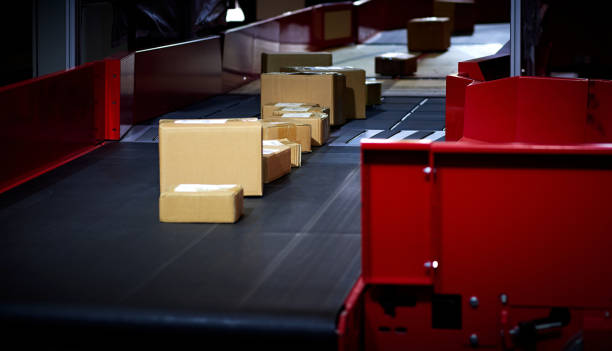
Custom Parcel Sorting Systems. Engineered for Real Operations.

Cross belt sorters suit e-commerce fulfillment centers, courier and express hubs and cross-border transit facilities where small to large parcels must be routed to many destinations at sustained speed. They handle the widest item range and offer very good gentle handling.
When destination counts are moderate or floor space is tight, a narrow belt sorter may be a better fit; for lighter cartons on an existing conveyor, see the swivel wheel sorter.
Two constraints eliminate sorter families fastest: rate and item envelope. Cross belt leads on throughput and handles the widest weight and size range with very good gentle handling, but it has the largest footprint and capital cost.
Verify a throughput claim with the actual item mix, the measurement window and a named sign-off. An item heavier or larger than the envelope will not sort correctly regardless of budget; oversize items need a different family or a manual route.
Select a cross-belt concept from parcel dimensions, destination count, peak profile, building layout and maintenance access evidence. Similar names or photographs do not establish mechanical fit, software behavior, service coverage or compliance.
| Evidence Record Required | Named Configuration to Compare | Verification Status Rule |
|---|---|---|
| Parcel-size distribution | Carrier count, belt pitch & divert design | Mark as Standard, Optional, or Unverified |
| Destination matrix | Loop size & chute arrangement | Check physical chute density limits |
| Throughput profile (sustained vs. peak) | Induction points & scanning speed | Verify under actual parcel mix & window |
| Building survey & clearance drawing | Access platforms & maintenance clearance | Confirm safe recovery & service access |
Parcels are inducted onto carriers, identified by scanning and dimensioning, then diverted at the assigned chute by the belt on each carrier. Induction method, parcel spacing and sustained versus peak throughput are confirmed during engineering review. A throughput rating must be verified against the actual item mix and measurement window, not quoted as a standalone figure.
Induction is where spacing and orientation are set. Scanning must reliably read the parcel identity at line speed, and the route plan must map each destination to a chute without conflicts at peak.
Damaged items, incomplete labels, no-reads and alarms each get a safe hold condition, reason code and escalation contact.
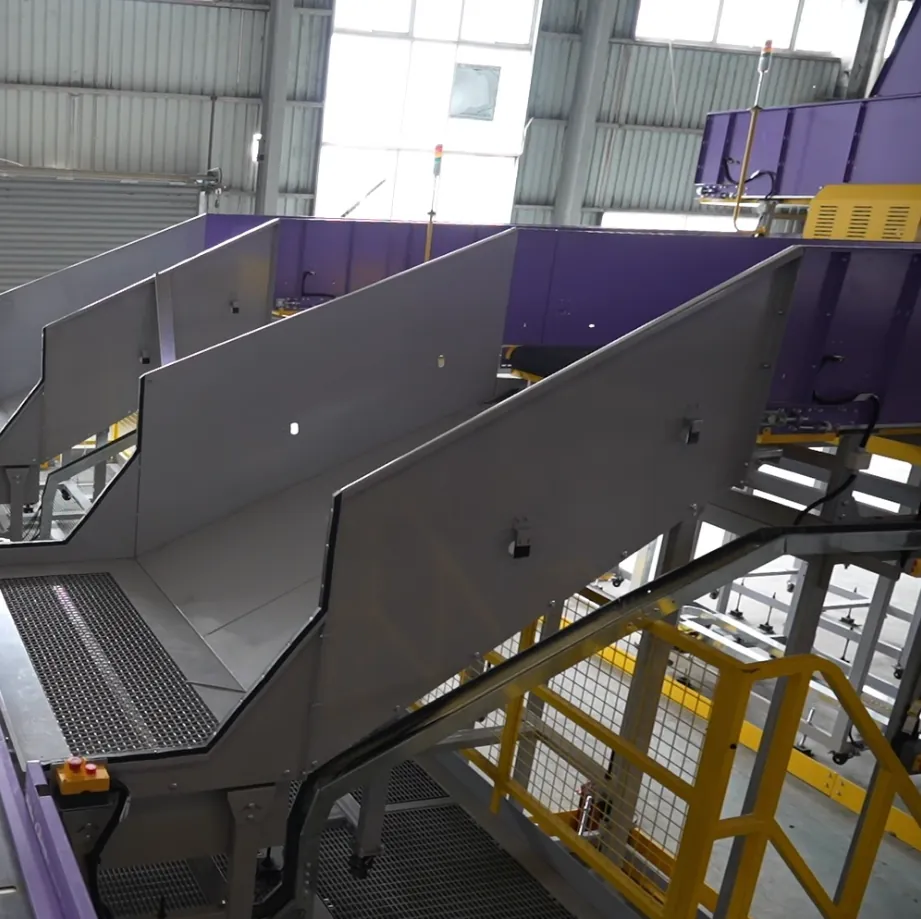
Destination count drives chute density, and chute density has physical limits. We verify how many destinations the loop can serve, where expansion is possible and what footprint must be reserved for peak-season growth.
The concept design process covers survey and layout, and our conveyor systems connect the sorter into one flow. Every project follows six structured stages:
Over a five-year life, energy consumption, carrier and chain wear, spare parts and planned downtime matter as much as the purchase price. Build a maintenance plan from actual failure modes and supplier instructions, with inspection triggers, qualified owners and return-to-service checks.
Share your parcel dimensions, weight range, throughput target and destination count. We will confirm the divert layout and interface requirements, and explain what evidence supports the recommendation.