Fulfillment centers, regional distribution hubs, and express courier networks globally face intense pressure to accelerate processing speeds. As daily order volumes scale, relying on manual labor to sort, organize, and dispatch parcels is no longer operationally sustainable. Human sorters face physical fatigue limits, leading to a drop in sorting speeds and a sharp increase in errors during peak shifts. To break through these operational bottlenecks, modern logistics facilities are turning to parcel automation. An automated parcel sorting system integrates mechanical handling, optical data capture, and high-speed control software to organize shipments at rates that manual teams cannot match. This guide examines the mechanical and software mechanisms that drive these throughput and accuracy gains, offering a structured roadmap for logistics operations directors evaluating automation upgrades.
Section 1: The Bottlenecks and Financial Costs of Manual Sortation
Before implementing a technical solution, we must define the physical limitations and financial impact of manual sorting operations. Many warehouses attempt to manage volume spikes by simply hiring more seasonal labor, which introduces several operational issues:
- The Physical Bottleneck of Speed: A skilled manual sorter can accurately identify and route approximately 1,000 to 1,500 packages per hour, depending on package weight and layout spacing. Attempting to force higher manual speeds leads directly to eye strain, fatigue, and physical drops in performance.
- The Financial Cost of Mis-Sorts: In a manual operation, the typical error rate ranges from 2% to 5%. If a facility processes 50,000 packages per day, a 3% error rate represents 1,500 mis-sorted packages daily. Each mis-sort triggers an expensive sequence of corrective actions: reverse shipping charges, manual re-processing labor, re-packaging costs, and in many cases, lost customer lifetime value due to delayed delivery.
- Labor Market Volatility: Relying on large seasonal workforces exposes logistics hubs to labor shortages, rising minimum wages, and high training costs associated with continuous worker turnover.
Section 2: How an Automated Sorter Resolves the Throughput Bottleneck
An automated parcel sorting system eliminates human physical speed limits by replacing manual handling with continuous, synchronized machine movements. It transforms the chaotic flow of mixed packages into a highly organized, high-speed stream of routed goods.
Key Mechanical Steps to Scaling Throughput:
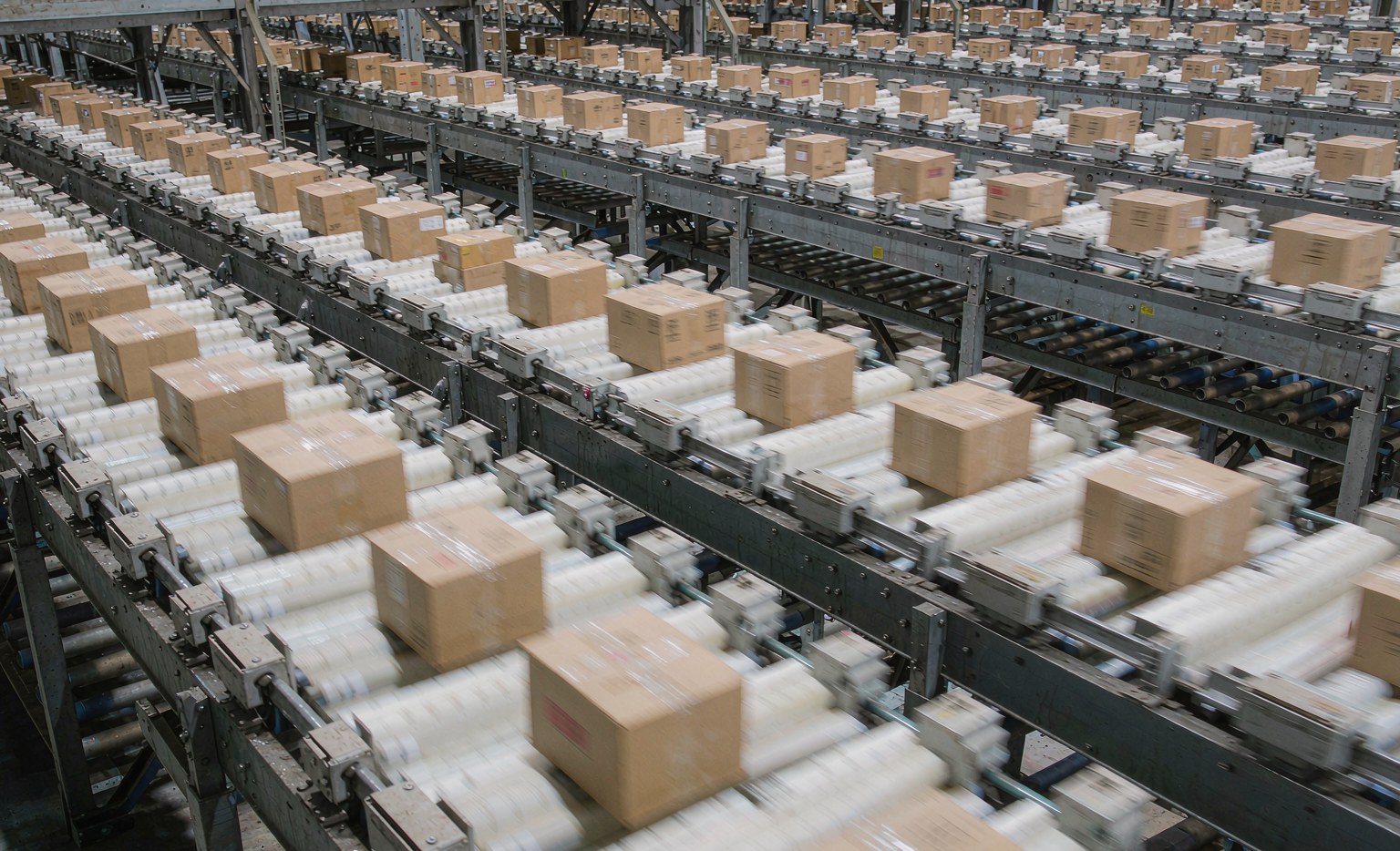
- High-Speed Transport: Automated conveyors and sorters operate at high linear speeds, often ranging from 1.5 to 2.5 meters per second. This allows a continuous stream of packages to travel through the warehouse without stopping for manual inspections.
- Optimized Carrier Pitch: By controlling the precise physical gap (pitch) between adjacent packages, automated control systems pack more items onto the main transport line, maximizing the utilization of every meter of conveyor track.
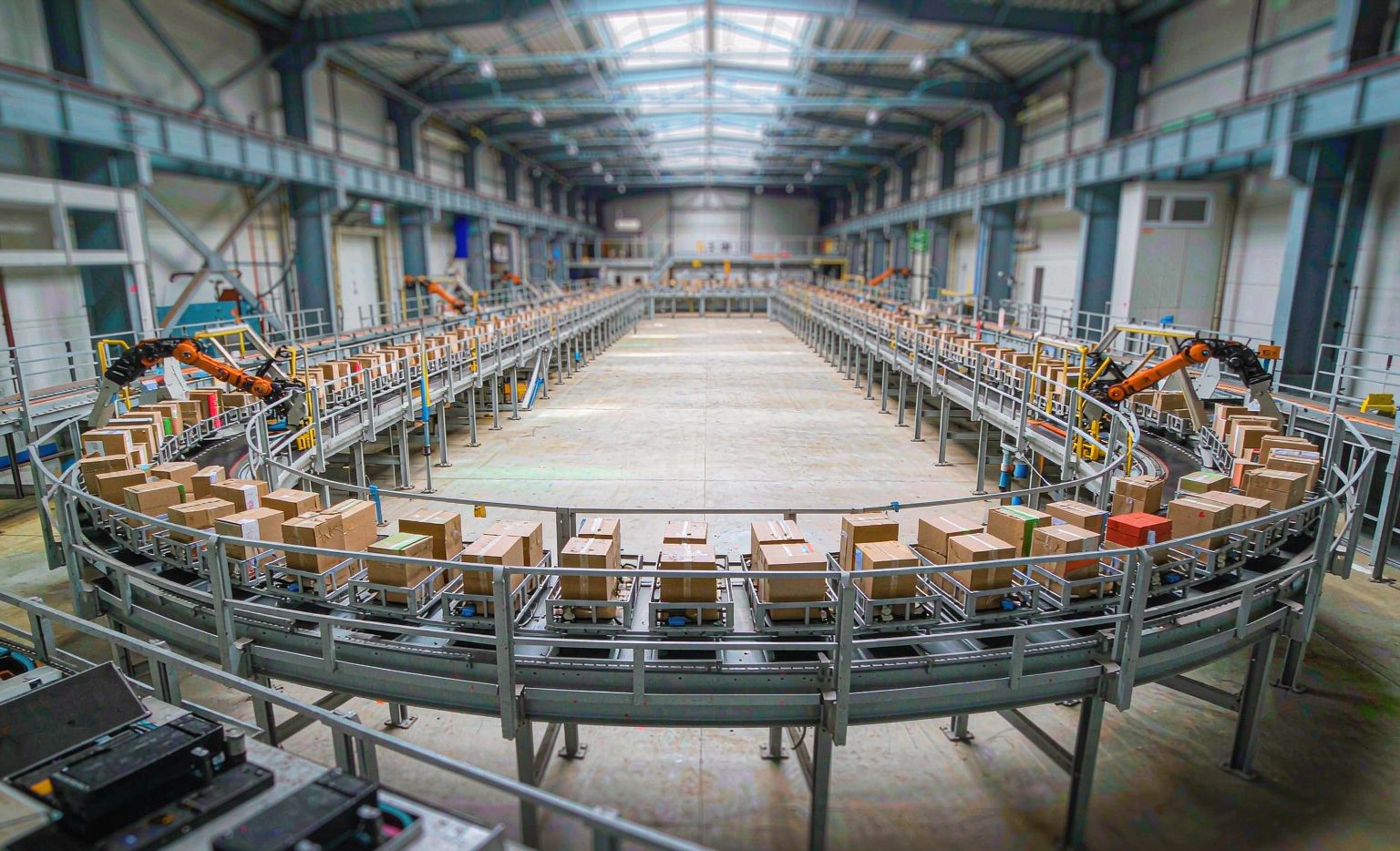
- Simultaneous Multi-Lane Induction: Loop-based automated sorters allow multiple induction lines to feed empty carriers concurrently. This multi-inlet design multiplies the system’s capacity, enabling sustained throughputs exceeding 15,000 to 20,000 PPH in high-volume hubs.
By removing human handling from the core transport and divert cycle, an automated sorting system operates continuously at rated speeds. The only manual input required is shifted to the unloading and final dispatch loading points, dramatically reducing overall labor dependency.
Section 3: Key Technologies Driving Throughput and Sorting Accuracy
The high performance of a modern automated sorter is made possible by the integration of four core technical modules: singulation, scanning, dimensioning, and software routing.
1. Dynamic Singulation & Gapping
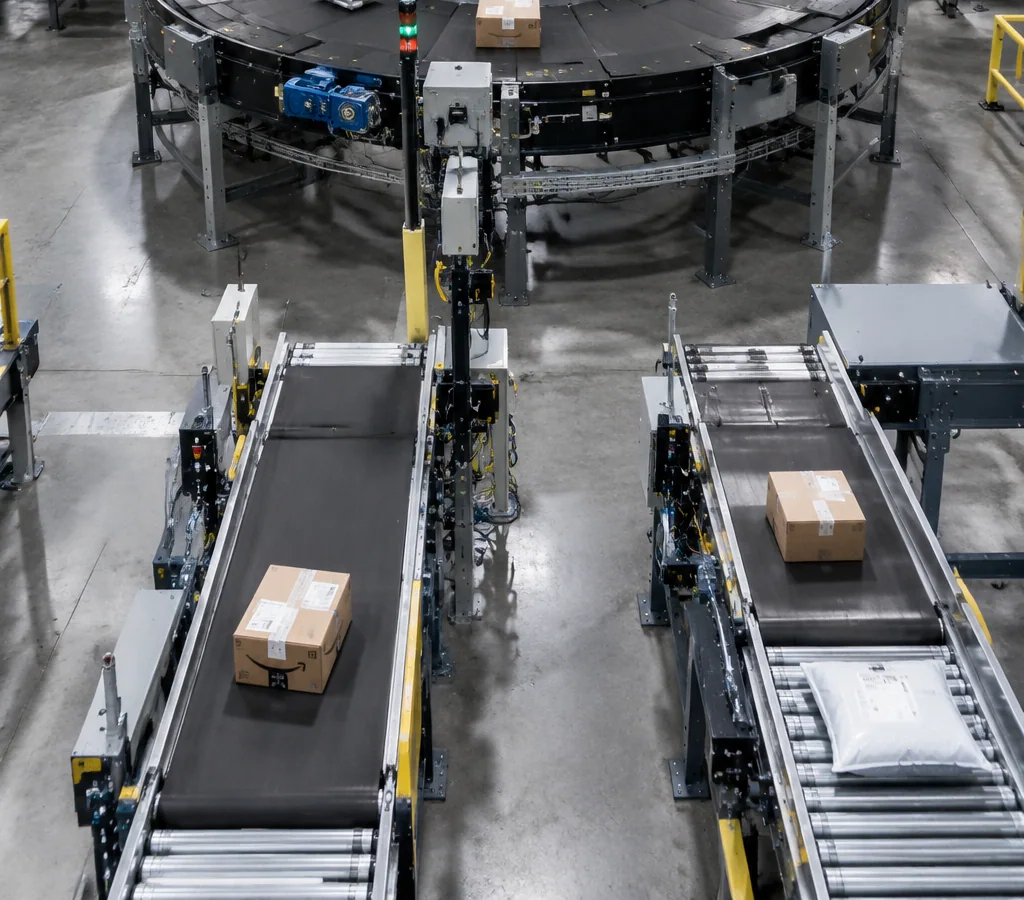
Sorting systems require parcels to arrive in a single-file line with precise gaps to scan and divert them accurately. If packages are fed side-by-side or double-stacked, scanners cannot isolate the tracking codes, resulting in system errors. To solve this, advanced facilities implement automated parcel singulators upstream of the sorting line. Singulators utilize a series of independently driven, speed-adjusting angled belts or rollers to separate clumped packages, aligning them into a single-file stream with consistent gaps. This mechanical organization is crucial to maximizing downstream scanning and sorting efficiency.
2. Multi-Sided Barcode Scanning & Vision Tunnels
In manual sorting, workers must physically locate the shipping label, rotate the package to face upward, and scan it with a handheld device. This process is slow and highly prone to error. Automated systems resolve this with high-speed barcode scanning tunnels. Equipped with multi-sided (5-side or 6-side) high-resolution camera arrays, these scanning tunnels capture and read tracking codes in milliseconds, regardless of package orientation. Advanced algorithms can decode crumpled, partially torn, or faded barcodes, keeping manual “no-read” redirects to an absolute minimum. 
3. Integrated Dimensioning, Weighing, and Scanning (DWS)
For modern logistics hubs, capturing physical package data is essential for both routing and billing verification. Integrated DWS systems use high-precision laser sensors, light curtains, and in-motion scales to capture three key metrics in real time:
- Dimensions: Measuring length, width, and height to calculate dimensional weight and verify space clearance on downstream conveyors.
- Weight: In-motion scale modules capture precise weight data without stopping the package flow.
- Identification: Associating the physical dimensions and weight data directly with the package’s barcode ID.
4. Real-Time WCS & PLC Execution Controls
The physical routing of each package is controlled by a high-speed Warehouse Control System (WCS) interfacing with Programmable Logic Controllers (PLCs). The entire data handshake occurs in milliseconds:
[DWS Scan Captured] –> (WCS Queries WMS for Destination) –> [WMS Returns Destination ID] –> (WCS Maps to Physical Chute ID) –> [PLC Tracks Carrier Position via Rotary Encoder] –> (PLC Triggers Divert at Target Chute)
If a barcode is unreadable, the control software automatically routes the package to a dedicated reject line for manual inspection, ensuring the main sorting line continues running at full speed.
Section 4: Sector Study: Automated Sorting in Courier Hubs
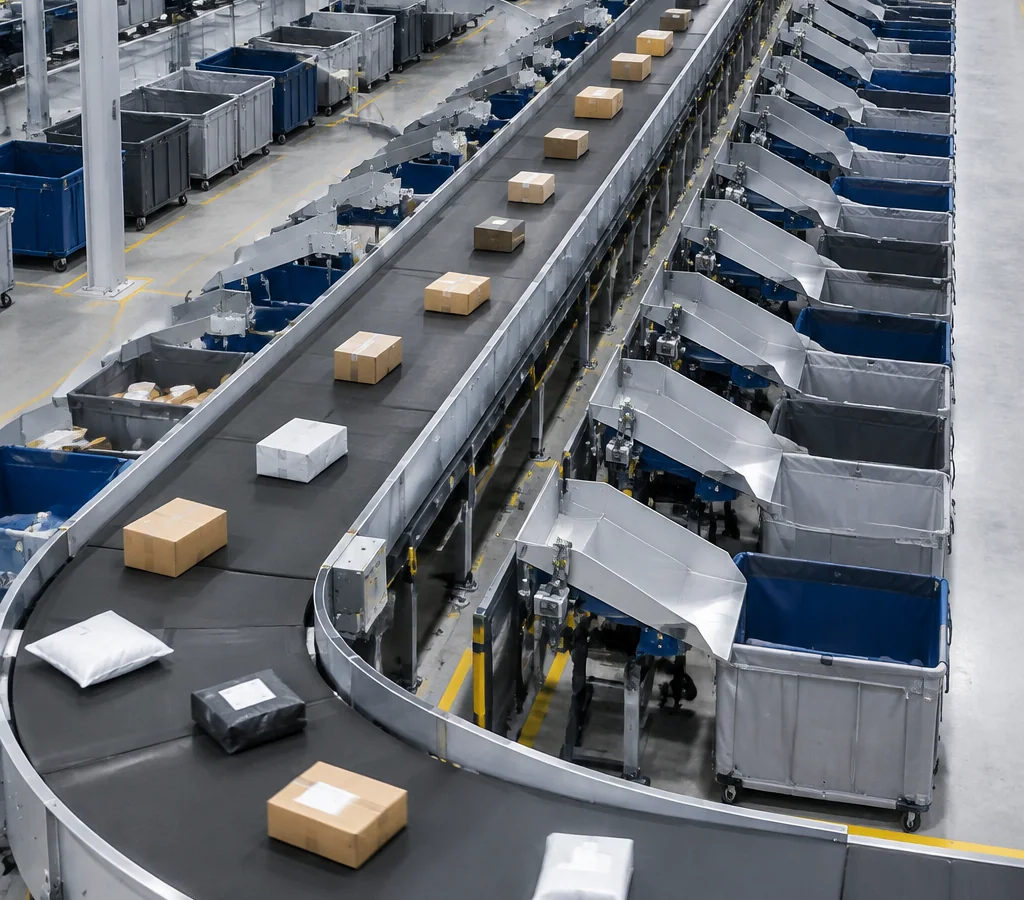
The operational demands of express courier networks and postal hubs represent one of the most challenging sortation environments. Courier hubs operate under strict transit windows, where thousands of inbound parcels must be sorted and loaded onto outbound delivery trucks in a matter of hours. Implementing a specialized express parcel sorting solution is critical to meeting these time-sensitive shipping deadlines. These systems are engineered to handle a highly volatile package mix, including heavy corrugated boxes, lightweight document envelopes, and flexible polybag mailers. By automating the sortation process, regional courier hubs can reliably handle tens of thousands of packages per hour during peak sorting windows, ensuring consistent, on-time delivery across their network.
Performance Note: Sorter throughput is highly dependent on package characteristics and induction design. While automated sorting systems can achieve high capacities with automatic induction lines, manual induction rates may limit overall system throughput if not properly balanced with the sorter’s capabilities.
Section 5: Calculating the ROI: A Quantitative Business Case
For B2B procurement managers, justifying the capital expenditure of an automated sorting system requires a clear financial return on investment (ROI) calculation. Let’s analyze a typical mid-sized fulfillment center processing an average of 60,000 packages per day.
1. Manual Sorting Cost Baseline
To sort 60,000 packages manually over two 8-hour shifts (totaling 16 hours), a facility requires a sustained manual sorting capacity of 3,750 PPH. Assuming an average sorting rate of 125 PPH per worker, the facility requires approximately 30 manual sorters per shift, or 60 workers daily.
- Daily Labor Cost: 60 workers × 8 hours × $18/hour = $8,640 per day
- Annual Labor Cost: $8,640 × 300 operational days = $2,592,000 per year
- Annual Error Cost (assuming a 3% mis-sort rate): 60,000 daily packages × 3% error rate = 1,800 errors per day. If each corrective action (handling, return shipping, re-processing) costs an average of $15: 1,800 errors × $15/error × 300 days = $8,100,000 per year in error costs
2. Automated Sorting Cost & Savings
Implementing a single loop cross belt sorter rated at 8,000 PPH allows the facility to complete the same daily volume in a single 8-hour shift, or process higher volumes within the existing two-shift window with significantly fewer workers.
- Labor Reductions: The automated system only requires induction operators and final chute loaders, reducing the required sorting staff from 30 workers per shift to approximately 8 workers per shift.
- Annual Automated Labor Cost: 16 workers daily × 8 hours × $18/hour × 300 days = $691,200 per year (a direct labor savings of $1,900,800 per year).
- Error Reduction Savings (achieving 99.9% sorting accuracy): The error rate drops from 3% to 0.1%, reducing daily mis-sorts from 1,800 to just 60 packages per day: 60 errors × $15/error × 300 days = $270,000 per year in error costs (a direct annual savings of $7,830,000).
💰 Combined Operational Savings Summary:
Total Annual Savings: $1,900,800 (Labor) + $7,830,000 (Error Reduction) = $9,730,800 per year!
For most mid-to-high-volume facilities, the initial CAPEX of an automated parcel sorting system is fully recovered within 12 to 18 months of commissioning.
Frequently Asked Questions
Q1: How does an automated parcel sorting system resolve the “no-read” barcode issue?
When a barcode scanning tunnel encounters a damaged, smudged, or missing label, it registers a “no-read” error. Instead of stopping the conveyor line, the automated control system routes the affected package via WCS instructions to a dedicated reject/no-read chute. Here, operators can manually inspect and re-label the package while the main sorting line continues to run at full speed, preserving overall system throughput.
Q2: What is the typical sorting accuracy rate of an automated system versus manual sorting?
Manual sorting operations typically experience error rates between 2% and 5%, which can spike higher during peak shifts due to operator fatigue. In contrast, an automated parcel sorting system integrated with high-resolution barcode scanning and precision mechanical diverts routinely achieves sorting accuracy rates exceeding 99.9%, virtually eliminating costly shipping errors and reverse logistics costs.
Q3: How do parcel singulators prepare packages for high-speed sortation?
Singulators receive chaotic bulk flows of packages from unload areas and utilize a series of independently driven, speed-adjusting angled belts or rollers to separate side-by-side or double-stacked items. By aligning them into a single-file line with precise physical gaps (pitch), singulation ensures that downstream barcode scanners and dimensioning sensors can isolate and identify each package accurately.
Q4: What is the role of WCS (Warehouse Control System) in parcel automation?
The WCS acts as the software bridge between physical PLC controllers on the conveyor lines and the warehouse WMS. When a package passes the DWS scanner, the WCS captures the parcel ID, queries the WMS for its routing destination, and instantly translates that logic into physical instructions (such as activating a specific cross-belt carrier or narrow-belt divert) executed by the PLC.
Plan Your Parcel Sorting Automation Project
Are you ready to eliminate manual bottlenecks, scale your daily throughput, and achieve 99.9% sorting accuracy? Our engineering team can help you design an optimal layout, select the right carrier capacities, and calculate accurate system throughput estimates. TrueliSort is a manufacturer and system solution provider specializing in customized parcel sorting systems, offering factory-direct design, manufacturing, and on-site support.
Contact TrueliSort for system planning and layout design or email us directly at business@truelisort.com to discuss your project parameters.