
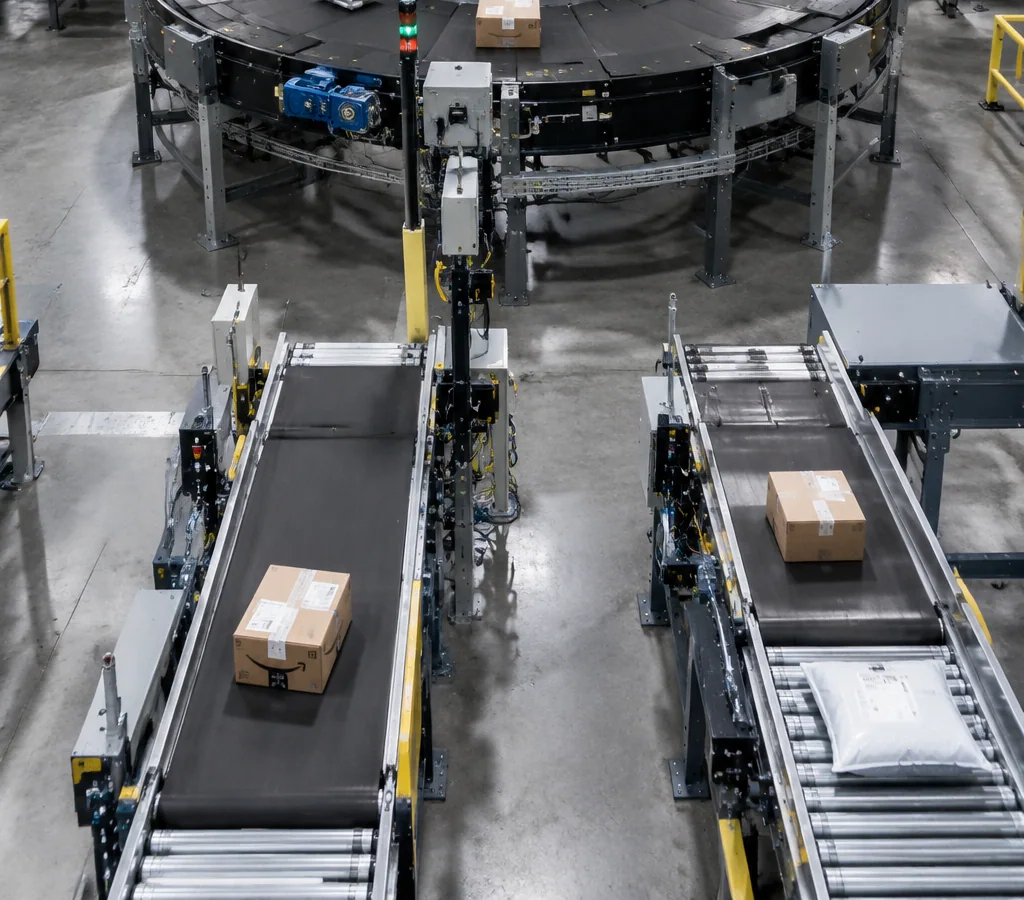
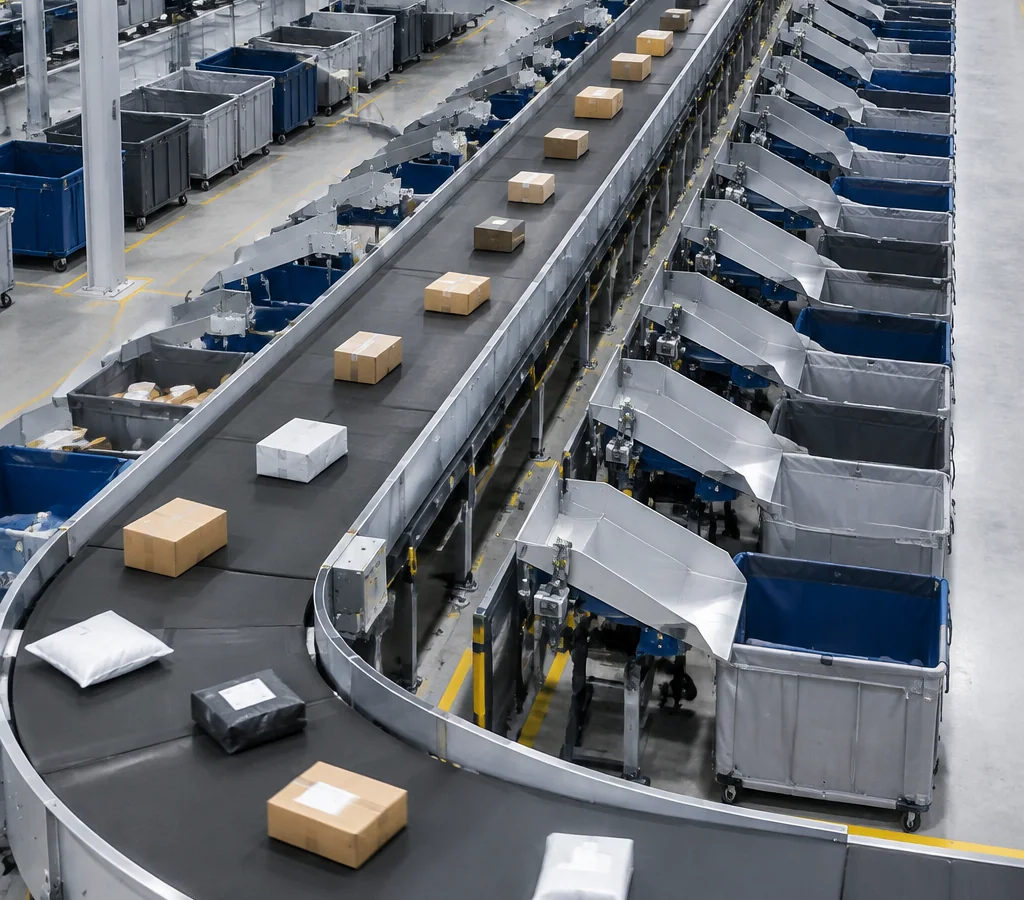
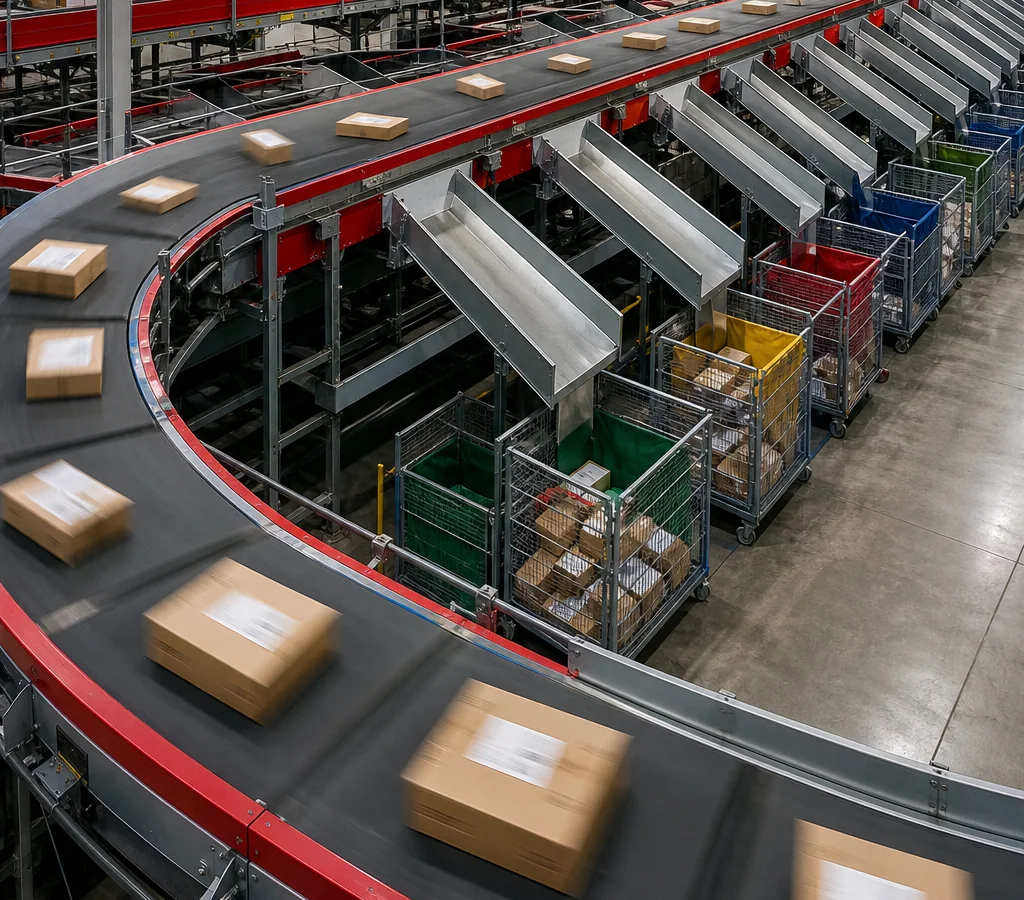
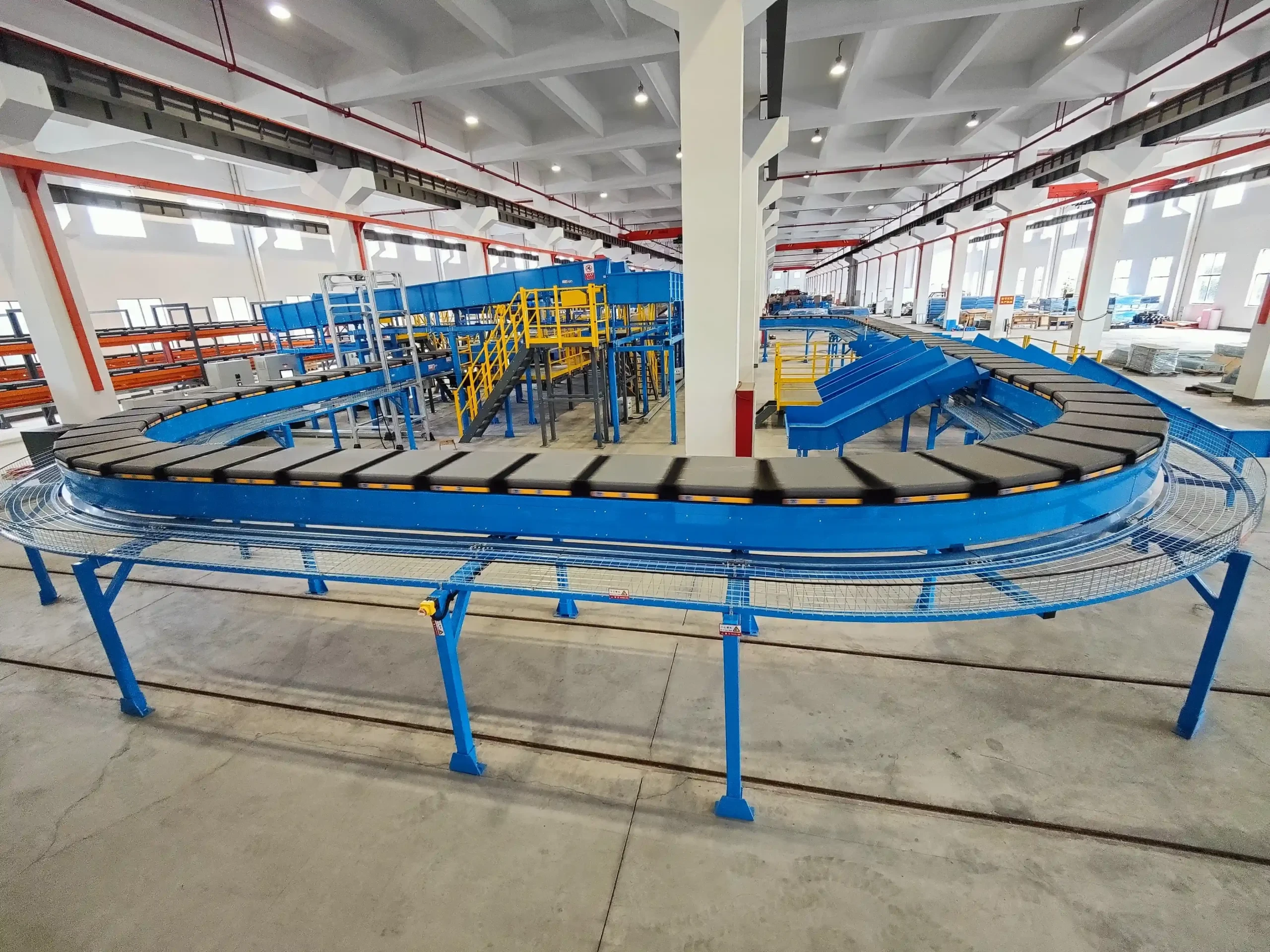
An automated parcel sorting system identifies, routes, and diverts packages to the correct destination using barcode, RFID, or optical scanning — replacing manual sort lines with high-speed conveyor-based or robotic sortation. The core loop is the same on every system: induction (packages enter spaced one-by-one) → identification (scan/DWS reads the label and destination) → sort/divert (a mechanism pushes the item to its chute). Published throughput for the main technologies spans roughly 2,000 units/hour for compact wheel diverters up to 27,000+ units/hour for high-speed loop sorters, with system-level accuracy commonly quoted at 99.9% or higher.
This guide compares the principal parcel-sorting technologies with real, published throughput and accuracy figures, then shows how to match one to your parcel profile, peak volume, and destination count. For TrueLiSort’s own equipment lineup and a six-criterion buying framework, see our Automated Package Sorter Buying Guide 2026.
The Main Parcel Sorting Technologies at a Glance
| Technology | Divert mechanism | Typical throughput | Best parcel profile | Sort destinations | Key consideration |
|---|---|---|---|---|---|
| Cross-belt sorter | Transverse belt on each carrier ejects the item sideways | 15,000–27,000 units/hr; up to 30,000/hr on fast loops | Mixed-size, small–medium, fragile e-commerce parcels | 100+ (high-destination hubs) | Gentle handling; supports either-side discharge |
| Tilt-tray sorter | Tray tips and gravity slides the item off | 10,000–27,000 units/hr; 8,000–40,000+/hr quoted | Varied mixes, apparel, postal, irregular items | 100+ | Mechanically simpler; proven for bulkier items |
| Sliding shoe sorter | Rows of shoes slide diagonally to push the item off | 3,000–5,000 units/hr; up to 175–400 cartons/min | Flat-bottom cartons, totes, polybags | Dozens (moderate) | Cost-effective for in-line carton flow |
| Swivel / pop-up wheel sorter | Wheels rise and spin to divert the item | 2,000–6,000 units/hr | Stable-base cartons and totes | Low–moderate | Modular building block; compact footprint |
| Put wall / put-to-light | Operators consolidate by lighted lane | Scales with number of operators | Mixed, non-conveyable, returns | Zone-based | Labor-assisted order consolidation |
| Robotic / AMR sorter | Autonomous robots carry and sort between zones | 30–60 parcels/min | Variable; infrastructure-light | Flexible | No fixed conveyor; phased scaling |
Throughput ranges compiled from published vendor and engineering references: Locus sortation explainer, SourceBySpec sorting-system encyclopedia, and Interroll parcel-hub guide. Always quote throughput at a stated item size, weight, and scan read-rate.
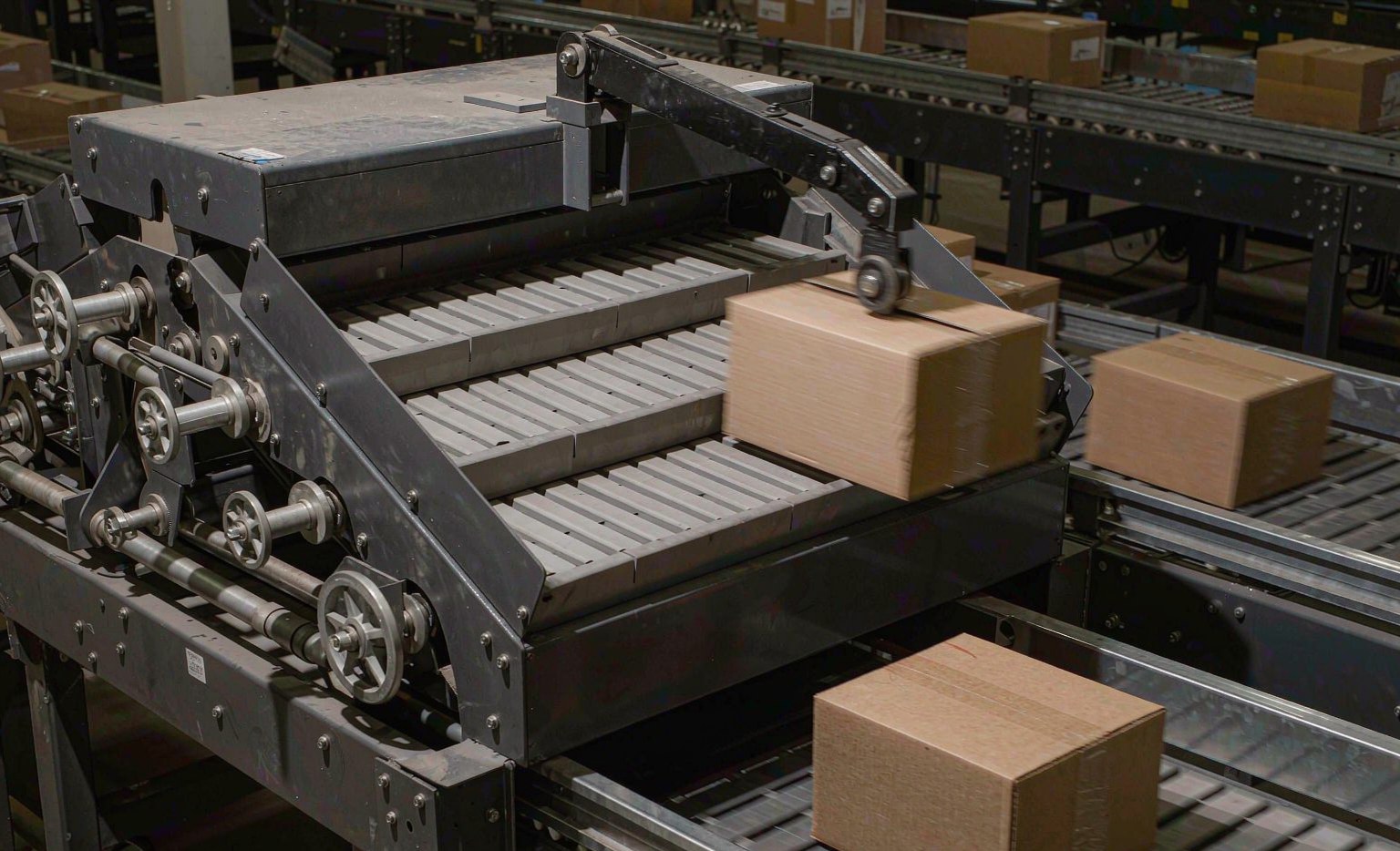
Cross-Belt Sorters: High Speed with Gentle Handling
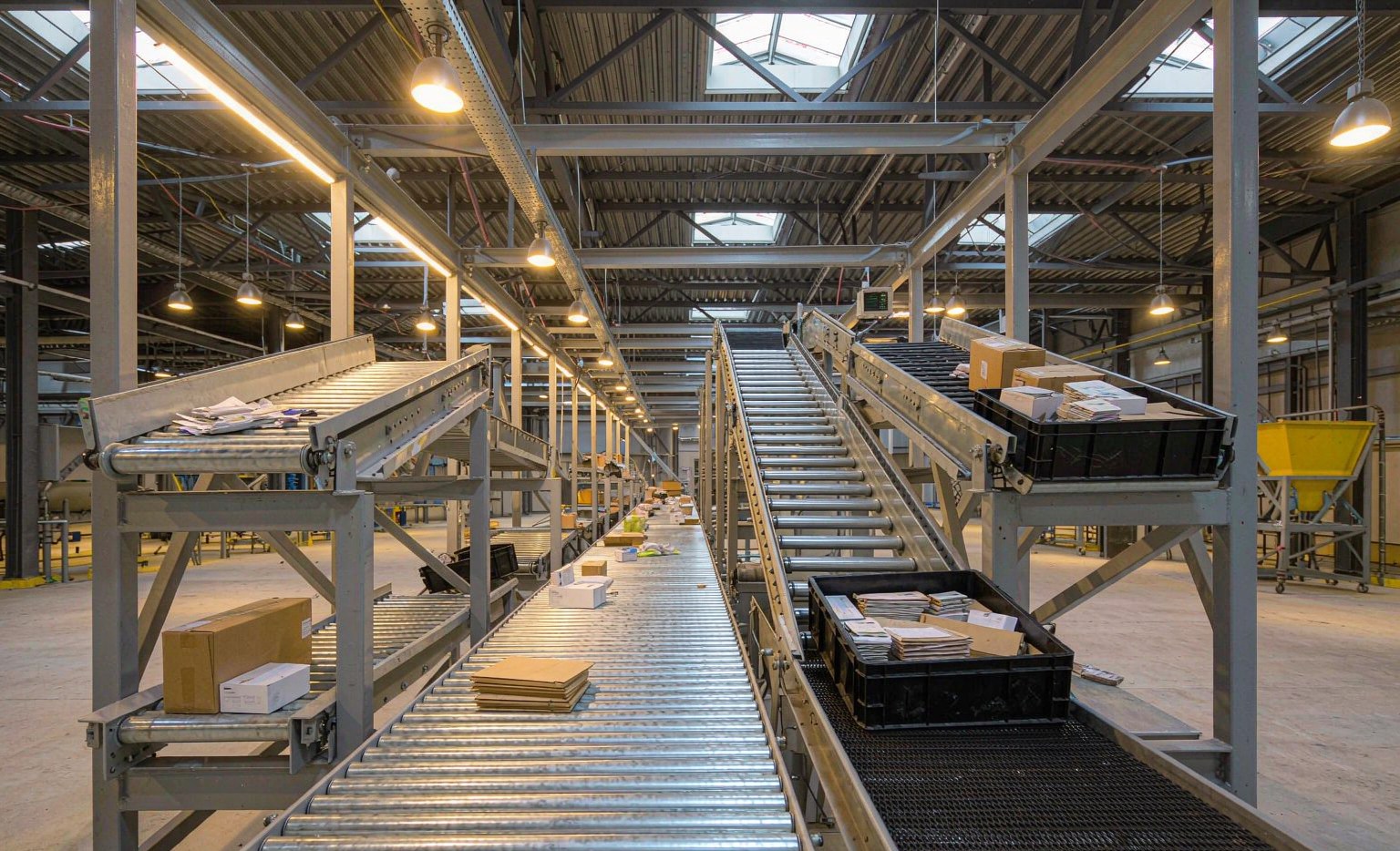
A cross-belt sorter carries each parcel on its own short powered belt mounted perpendicular to the direction of travel. When the carrier reaches the assigned chute, the belt activates and transfers the package off — sideways, under control, with low impact. Because items ride on their own carrier rather than sliding across a surface, cross-belt sorters handle fragile e-commerce parcels, polybags, and irregular shapes more gently than most alternatives. They also support over 100 sort destinations (Interroll notes cross-belt systems typically serve 100+ destinations), making them the default for large express, courier, and e-commerce hubs. Reported ranges run 15,000–27,000 units/hr, with large multi-carrier loops reaching above 30,000 units/hr at carrier speed.
Tilt-Tray Sorters: Flexible for Mixed Product
Tilt-tray sorters carry packages on individual trays that tip at the designated point to slide the item into a chute or bin. They handle a diverse range of shapes and sizes — including small items that might fall through gaps on other sorter types — and are common in postal and parcel operations where package variety is high. Tilt-tray is mechanically simpler than cross-belt and well proven, typically quoted from roughly 8,000 up to 40,000+ units/hr, with the 10,000–27,000 units/hr band most often cited for modern systems.
Sliding Shoe Sorters: Balanced Speed and Cost
Sliding shoe sorters use rows of flat shoes on a moving conveyor surface; when activated, the shoes slide diagonally to push the package off the main line. The divert motion is smooth and controlled. They balance speed with cost-effectiveness and work well for flat-bottom packages and poly-bagged items, though they handle irregularly shaped goods less reliably than loop sorters. Published figures sit around 3,000–5,000 units/hr, with specific families quoted up to 175–400 cartons/min — a strong fit for carton-to-shipping-lane sortation in a straight in-line flow with a moderate number of destinations.
Swivel-Wheel and Pop-Up Wheel Sorters: Compact Modular Diverts
Wheel-based diverters rise from beneath the conveyor to redirect items at an angle. They suit compact lines, merging, and moderate-volume sortation within existing routes, and they are cheap to add as building blocks rather than as a full system. Throughput is lower (about 2,000–6,000 units/hr), so they are best as secondary sortation or lane-change points. TrueLiSort offers both swivel-wheel sorters and pop-up wheel modules as part of a modular material-flow design.
Put Walls and Robotic Sortation
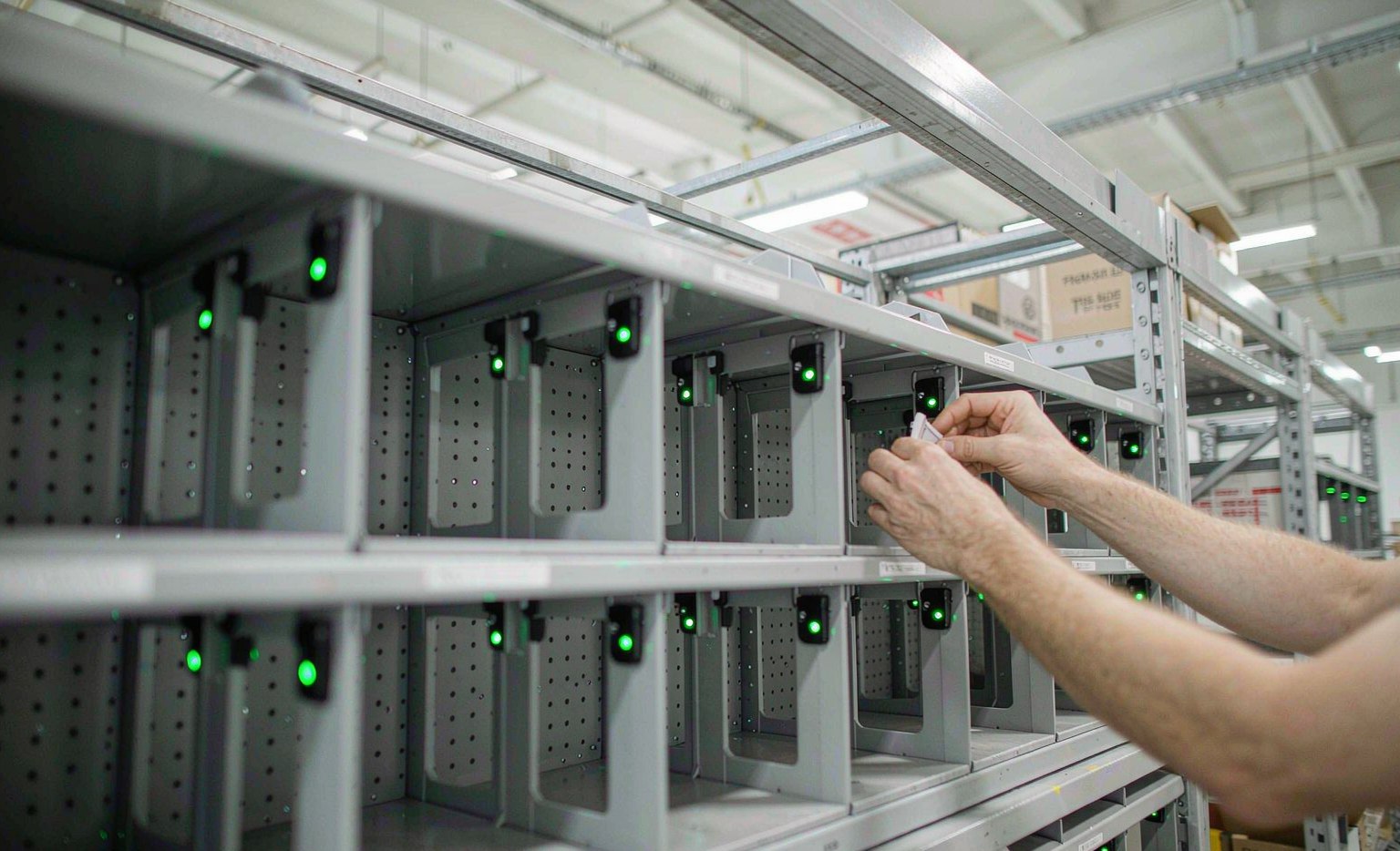
For order consolidation, batch picking, last-mile, and returns, put-wall / put-to-light stations let operators sort mixed, small, or non-conveyable goods into lanes by light. Throughput scales with operators rather than mechanics. Robotic and AMR sorters (30–60 parcels/min) trade peak speed for infrastructure-light flexibility and phased scaling, useful when volumes or layouts shift often.
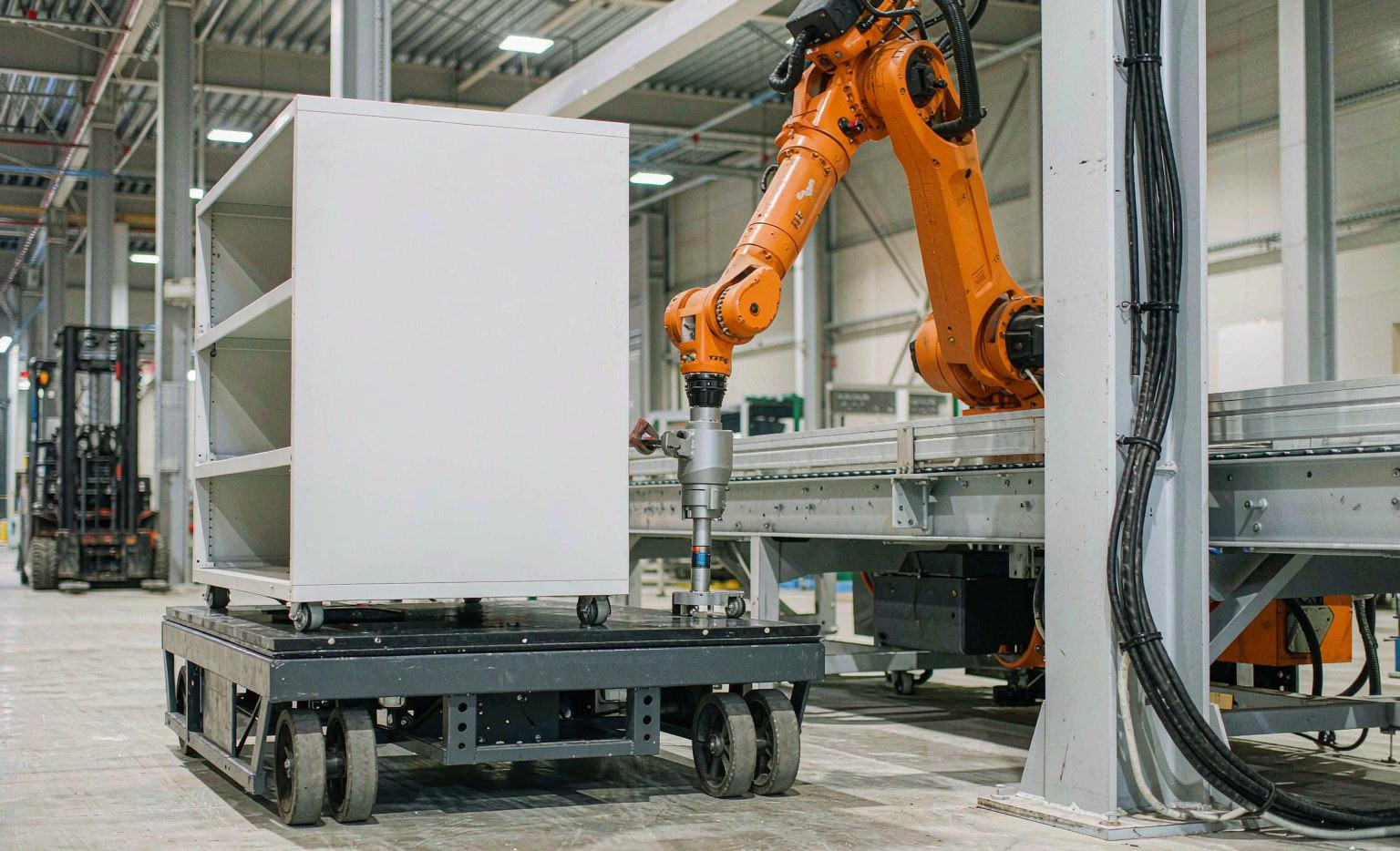
Throughput Is a System Number, Not a Sorter Number
The single most common mistake in sorter selection is quoting the sorter’s peak rate as the project’s rate. In practice the induction, gapping, and singulation section — not the sorter loop — is usually the bottleneck (SourceBySpec). A sorter can only divert items it receives correctly spaced and one at a time: singulation separates the bulk stream into a single file, gapping creates the controlled distance so each item lands on its own carrier, and induction meters items onto the loop in time with carrier position. If gapping is too tight, two items share a cell and mis-sort; if too loose, carriers run empty and rated throughput drops. Suppliers therefore often quote separate sorter and system rates.
Accuracy follows the same logic. Published sortation accuracy of 99.9% or higher (Locus) is protected by the barcode read rate at induction, not by the divert mechanism, which is deterministic. Poorly applied, damaged, or oriented-away labels create no-reads that route to a reject lane; a six-sided scan tunnel, vision OCR fallback, and disciplined label placement push first-pass read rates above 99%, which is what holds the system-level accuracy figure. On the safety side, North American installs follow ASME B20.1 and European installs follow EN 619 (under the Machinery Directive), both requiring guarded nip and shear points, lockout/tagout, accessible e-stops, and risk assessment per ISO 12100.
How to Choose: Match the Sorter to Your Operation
The right technology follows from six inputs, which mirror TrueLiSort’s published six selection criteria:
- Parcel profile & packaging mix — size/weight range, hardness, and surface reflectivity decide reliability. Mixed profiles need strong singulation and scanning.
- Throughput & peak capacity — define the real sustained rate plus the peak-day target; peak, not average, is usually the true constraint.
- Number of sort destinations — 100+ destinations drive loop sorters (cross-belt/tilt-tray); a few dozen favor shoe or wheel diverters.
- Footprint, building structure & existing conveyors — column spacing, ceiling height, floor load, and current routes often decide the project more than equipment preference.
- Software & data integration — the sorter depends on fed data; confirm WMS/WCS/ERP, scan, and DWS interfaces, ownership, and exception handling early.
- Expansion, maintenance & lifecycle cost — TCO includes engineering, install, training, spares, and upgrade path; an expandable system often costs less over ten years than a low-price fixed design.
Interroll’s decision framework adds a practical sequence: express throughput in parcels/hour (peak, not average), document parcel extremes, map facility constraints, count unique destinations, then evaluate total cost of ownership (Interroll).
Supplier Models and Who to Evaluate
You can buy from a pure equipment manufacturer, a systems integrator, or a manufacturer-integrator that does both. For express parcels, evaluate express parcel sorting solutions; for online retail, e-commerce fulfillment sorting; for contract logistics, 3PL operations; and for central warehouses, distribution-center automation. TrueLiSort’s full sorting solutions overview covers cross-belt, narrow-belt, swivel-wheel, pop-up wheel, put-wall, and parcel-singulator modules as building blocks.
Frequently Asked Questions
What throughput can a parcel sorting system handle?
High-speed loop sorters (cross-belt, tilt-tray) reach 15,000–27,000 units/hr, with large loops above 30,000. Sliding shoe runs ~3,000–5,000 units/hr, wheel diverters ~2,000–6,000, and robotic ~30–60 parcels/min. Real project rate is set by induction/gapping, not the sorter peak.
Which sorter is best for e-commerce mixed parcels?
Cross-belt, for gentle handling of fragile and irregular items plus 100+ destinations. TrueLiSort’s cross-belt sorter is built for exactly this profile.
What sortation accuracy should I expect?
99.9% or higher with good scanning; the limit is the barcode read rate at induction, not the divert mechanism. Push first-pass read rate above 99% with multi-sided scan and OCR fallback.
How many destinations can one sorter serve?
Loop sorters (cross-belt/tilt-tray) serve 100+ chutes; compact wheel or shoe diverters suit lower destination counts. Count outbound lanes, storage zones, exception areas, and returns stations.
What is a typical ROI timeline?
Enterprise payback is commonly cited at 12–24 months through 30–50% labor reduction, near-99.9% accuracy, and 40–60% throughput gains versus manual sorting.
Next Step
If you are scoping a parcel sortation project, start from your parcel profile, peak parcels/hour, and destination count, then shortlist sorter types against the table above. TrueLiSort designs cross-belt, narrow-belt, swivel-wheel, pop-up wheel, put-wall, and parcel-singulator modules as integrated systems — see the buying guide for the full selection checklist and a 10-step procurement plan.