
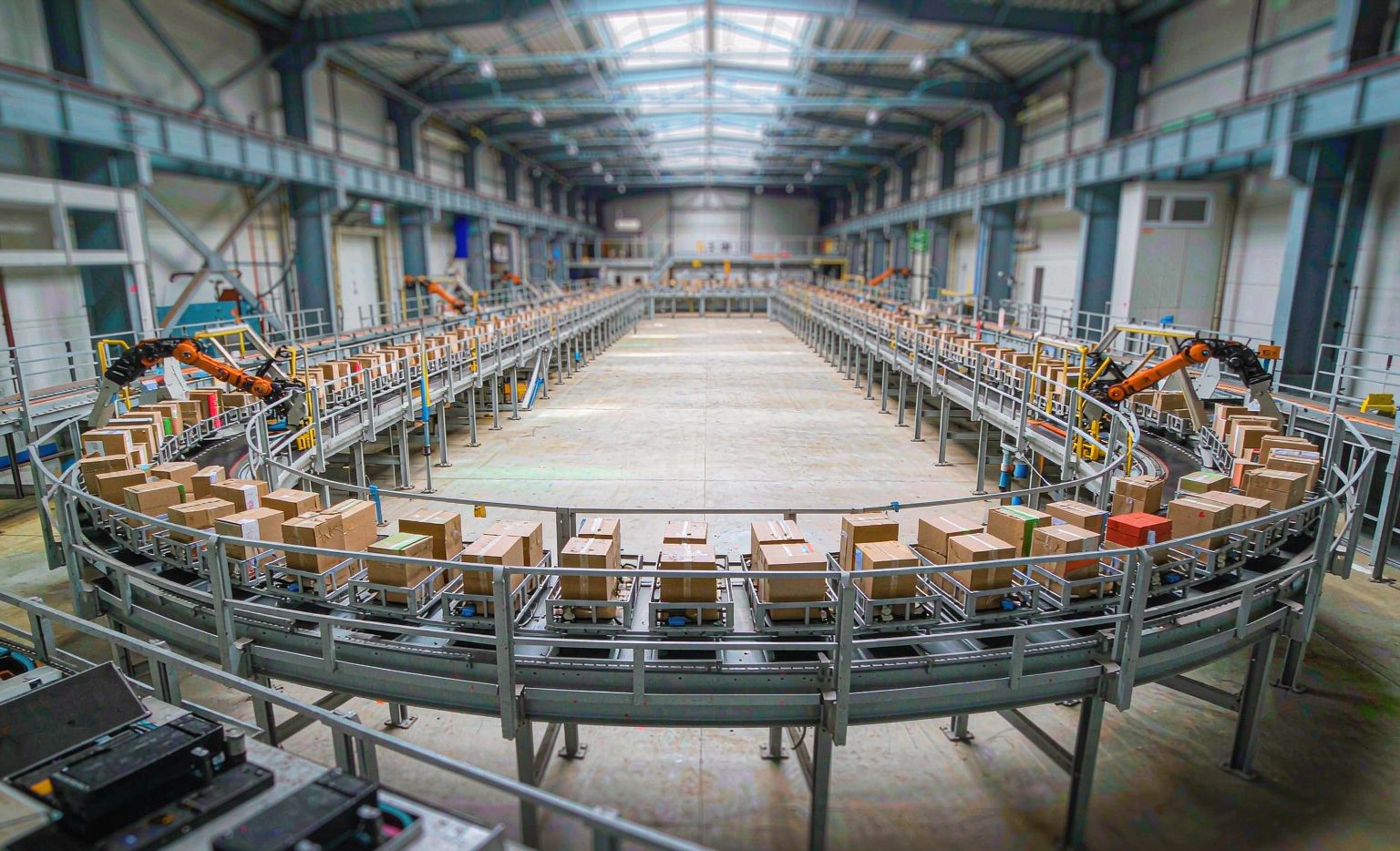
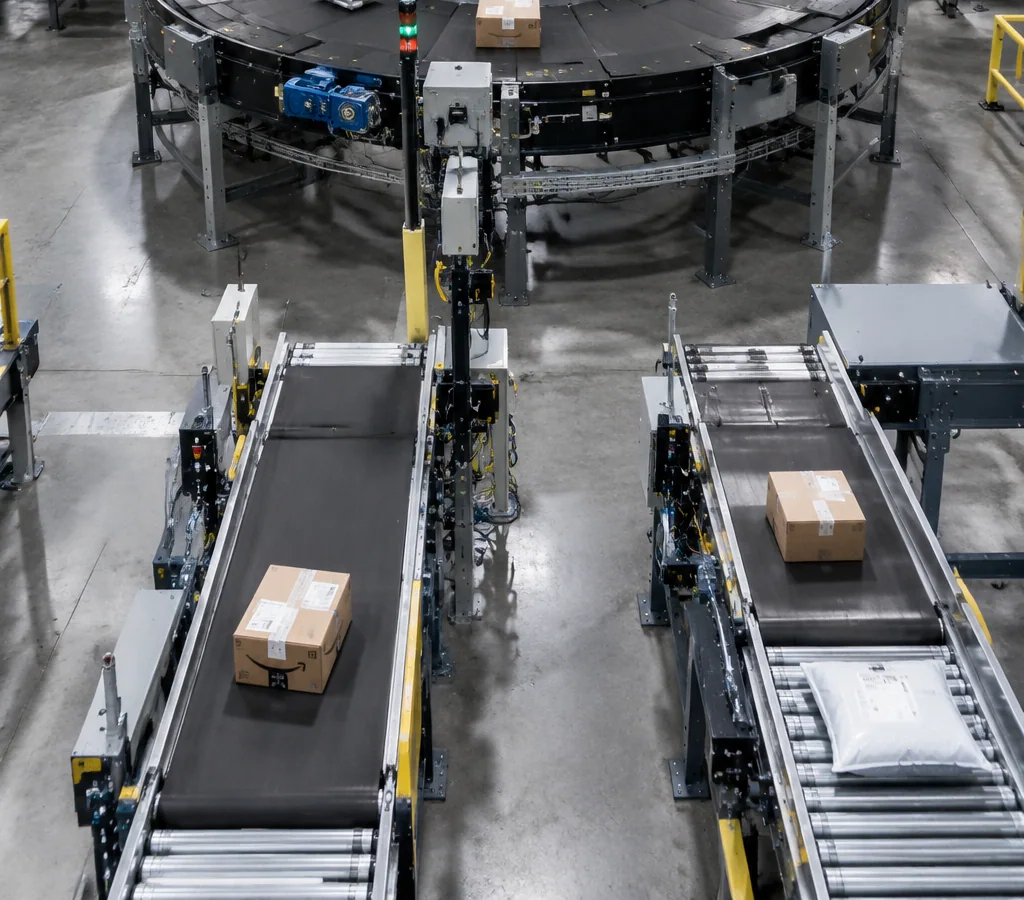
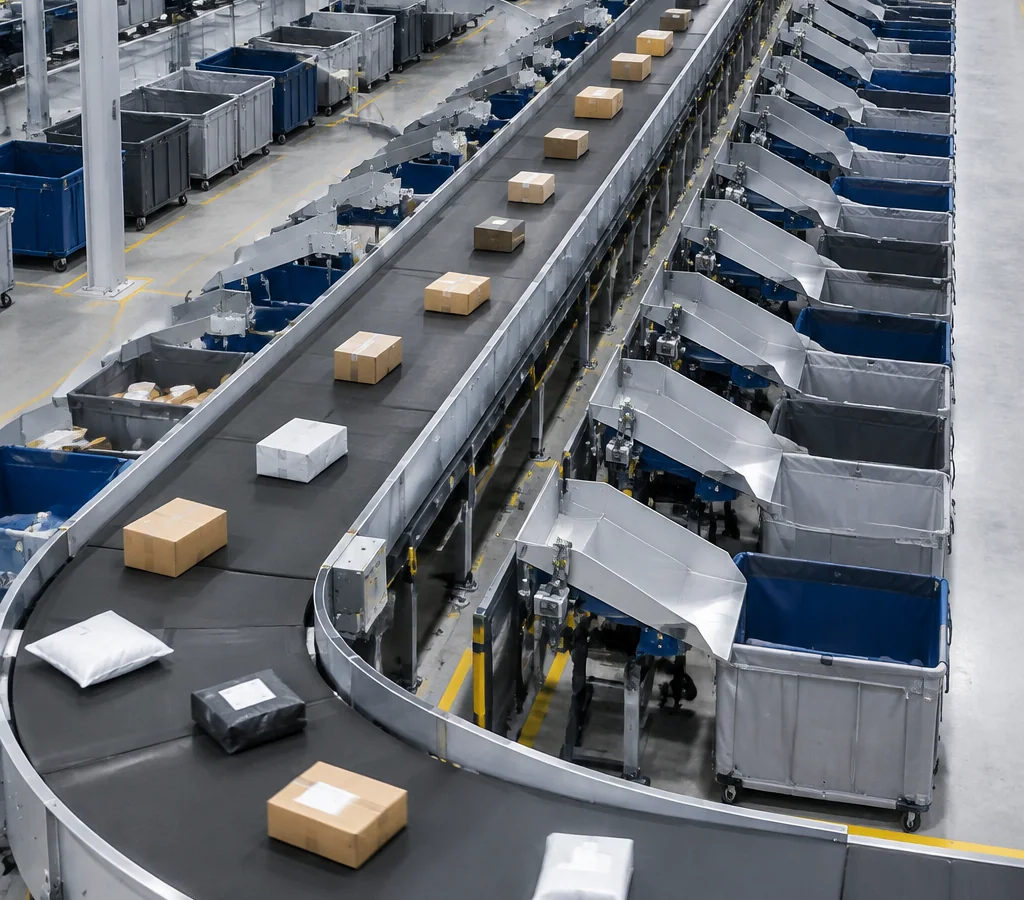
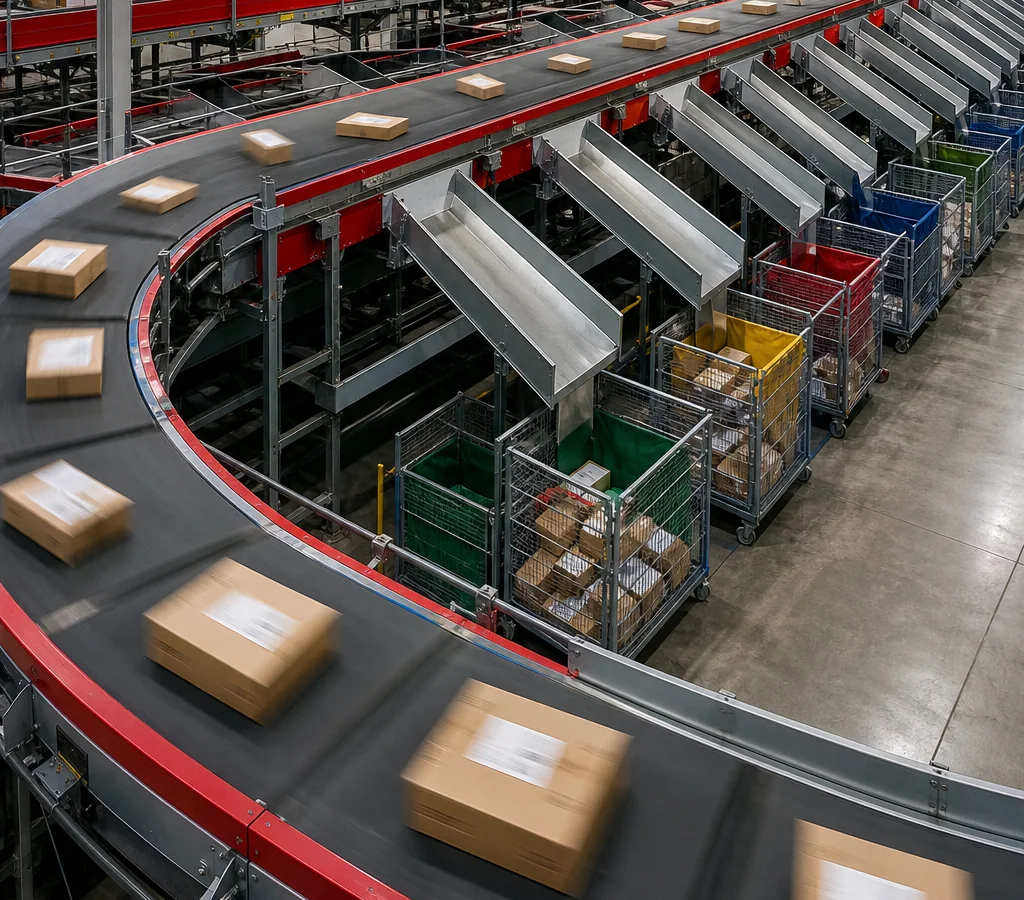
Parcel sortation is the machine that turns a pile of mixed incoming boxes into neat streams bound for the right truck. The technology chosen — cross-belt, shoe, tilt-tray, or a scanner-based diverter — sets the ceiling on speed and the floor on cost. This guide compares the main sorter types on the numbers that matter to a fulfillment or postal operation.
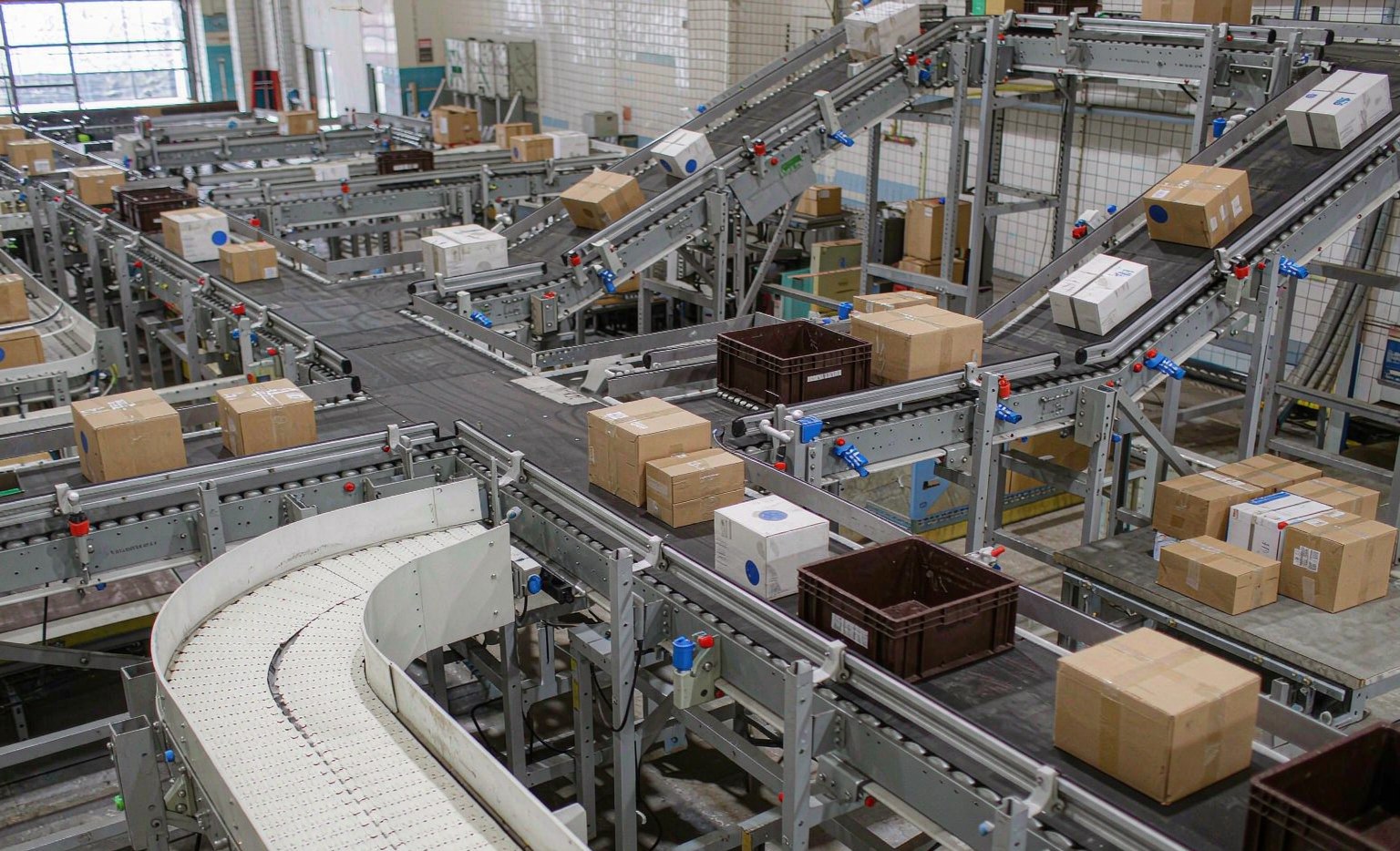
| Sorter | Typical throughput | Best for |
|---|---|---|
| Cross-belt | up to 30,000 / hr | High-speed, mixed sizes |
| Shoe / pusher | up to 12,000 / hr | Medium volume, robust |
| Tilt-tray | up to 15,000 / hr | Fragile, heavier parcels |
| Push-tray / diverter | up to 8,000 / hr | Lower cost, simple |
Throughput figures are typical nameplate rates; real output depends on induction rate and chute count, which are usually the binding constraint.
Cross-belt: the speed king
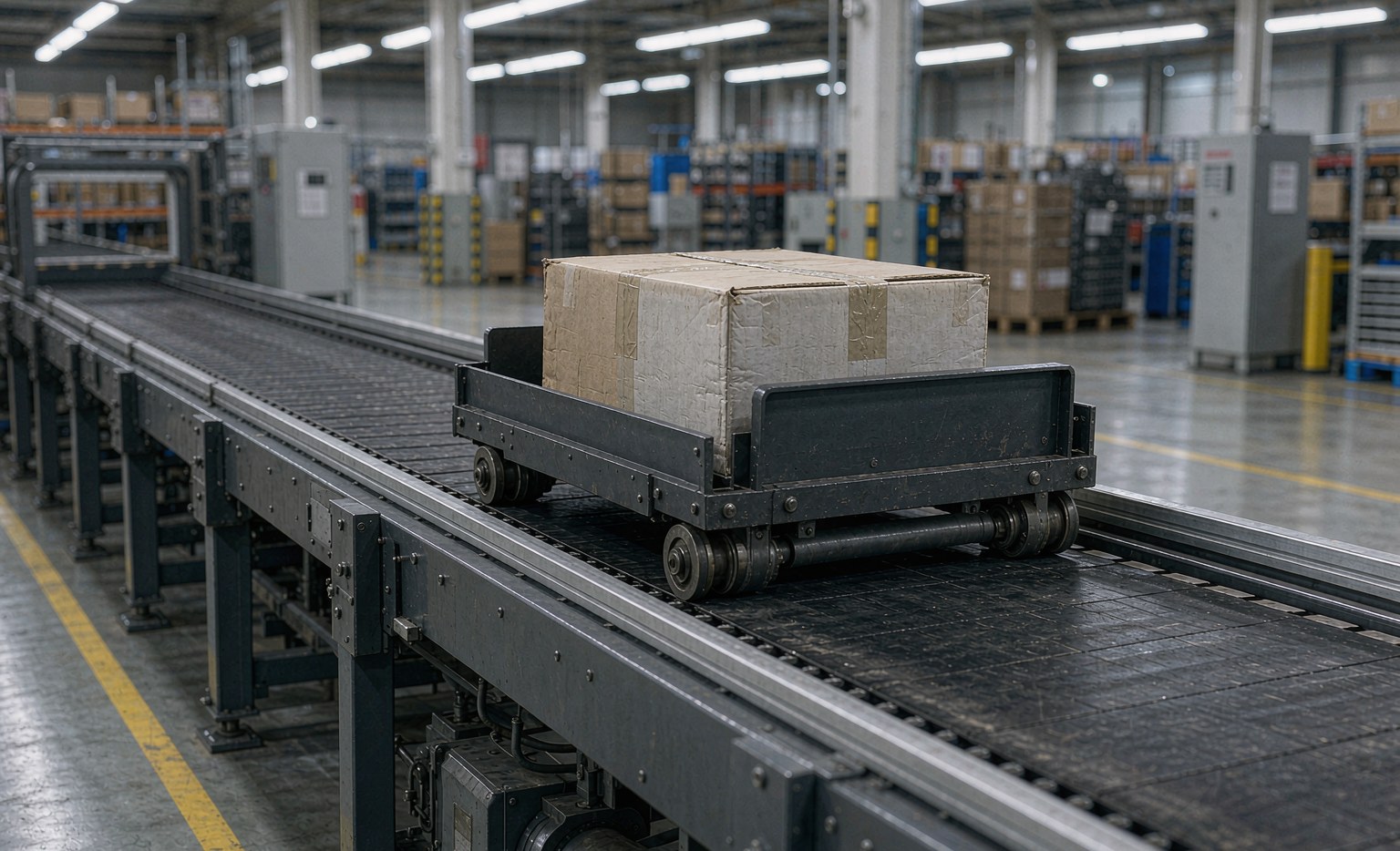
Each carrier has a small belt that accelerates the parcel off sideways at the right chute. Cross-belt sorters run fast (carrier speeds of 2–3 m/s) and handle a wide size range with low damage, which is why large hubs use them. The trade is cost and footprint — they are the premium option, justified by volume.
Shoe and tilt-tray: robust workhorses
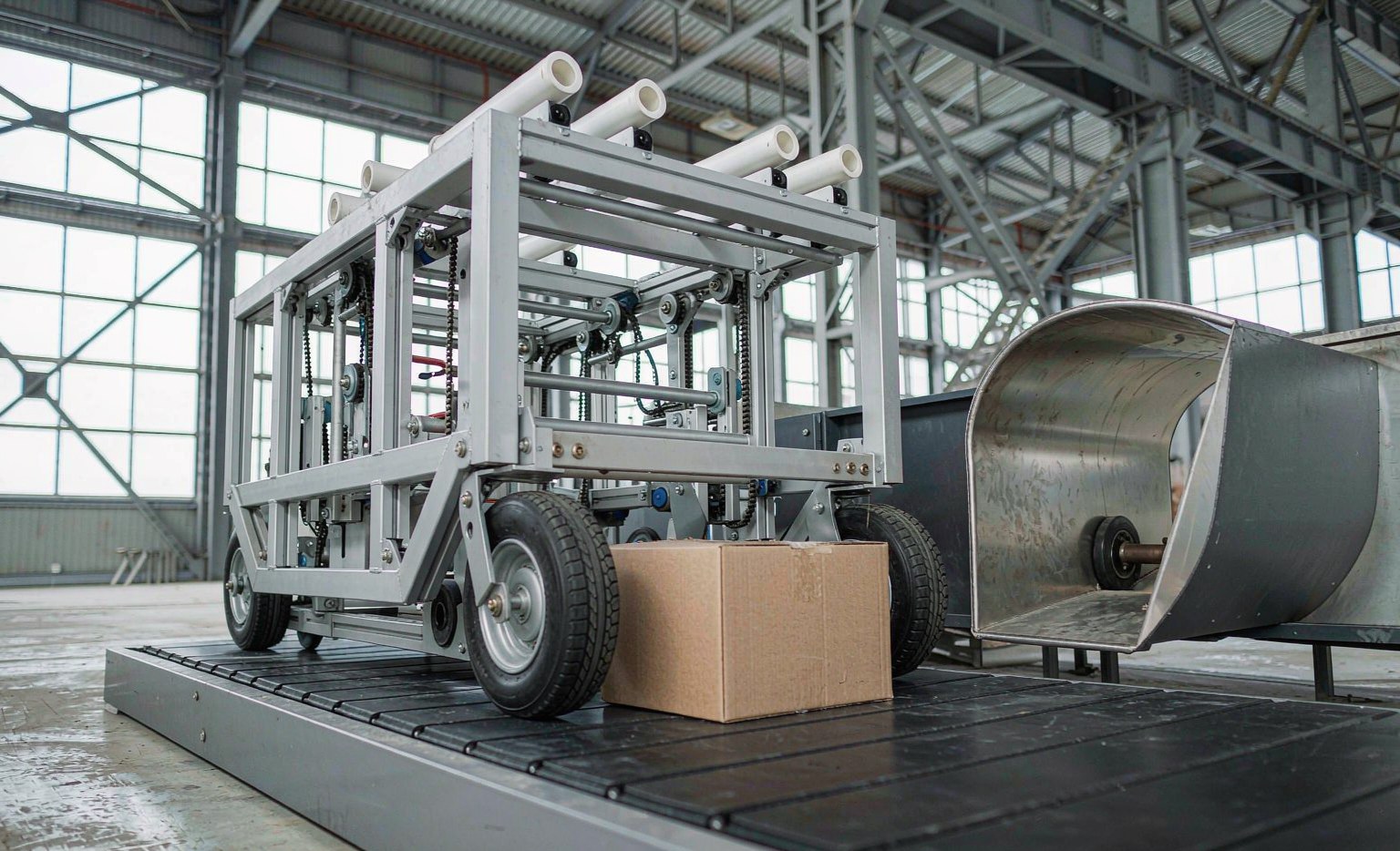
Shoe sorters use sliding shoes to push a parcel into a chute; tilt-tray units tip the tray. Both are gentler on fragile or heavier items than a hard push, and they are the default for mid-volume hubs and for parcels that should not be slammed. Tilt-tray in particular suits items a cross-belt would jostle.
How parcels get identified
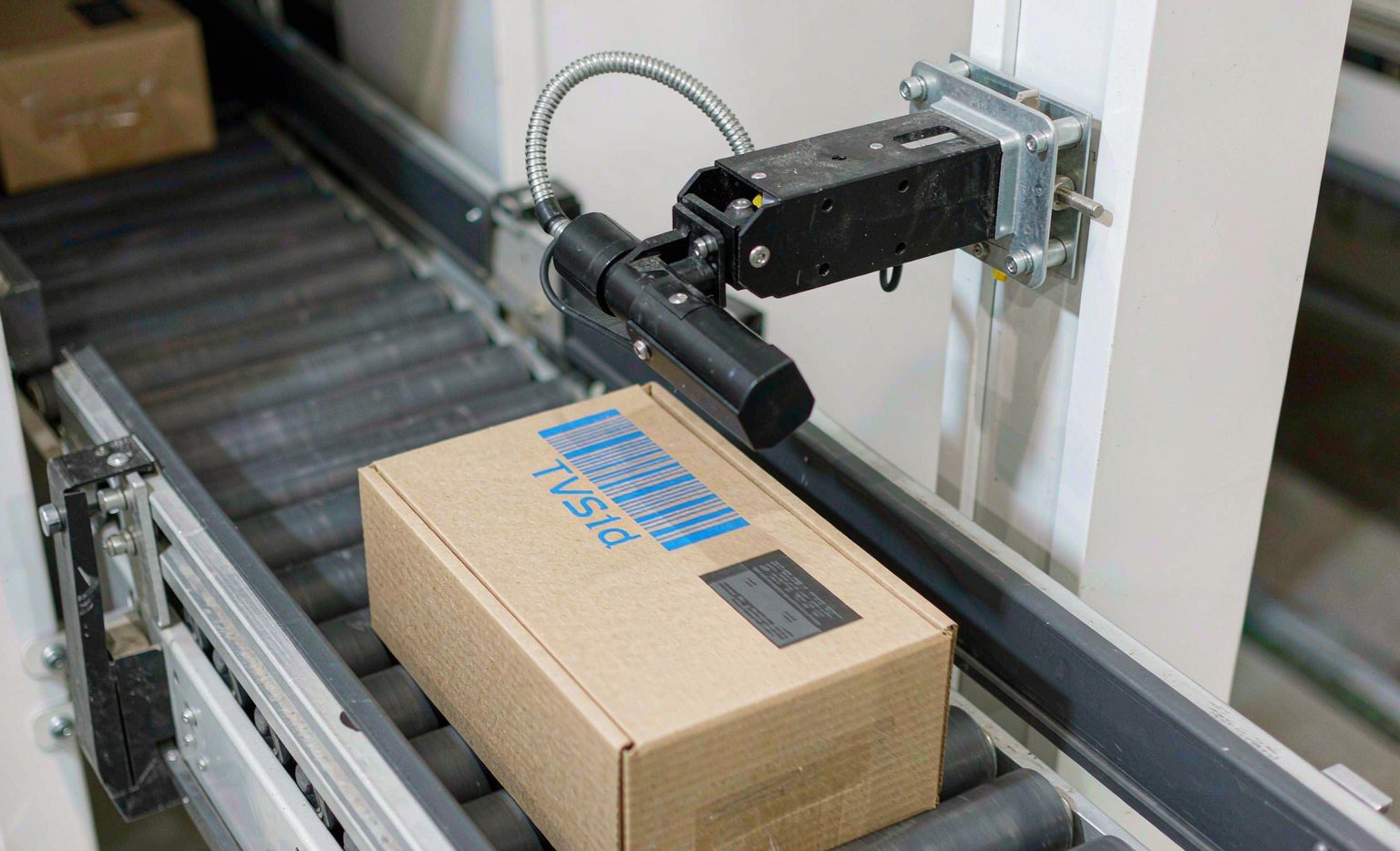
No sorter works without reading the parcel. Induction stations use 1D/2D barcode scanners and omni-directional (OMS) or OCR cameras to capture the destination from any face, often with multiple encoder reads (MEAS) to track position precisely. A sorter is only as good as its read rate; a 99.5 % scan rate at 20,000/hr still misses 100 parcels an hour that must be recirculated.
Accuracy and software
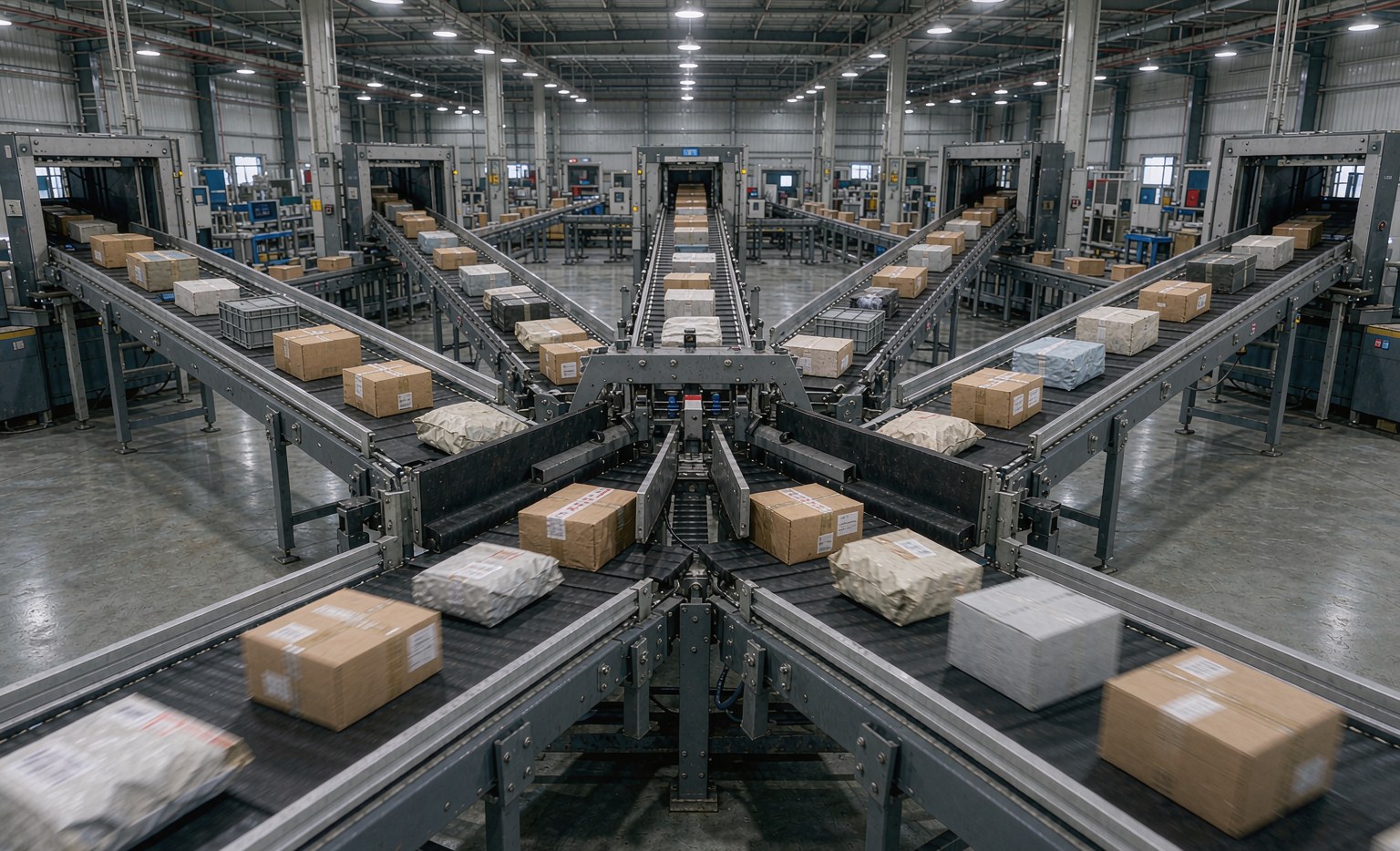
Modern systems target sort accuracy above 99.9 % via a WCS/WES layer that maps each read to a chute, reroutes misses, and balances chute fill so none overflows. The sorter is mechanical; the intelligence is software. Choosing a sorter is therefore also choosing the control system that drives it, and that decision outlasts the steel.
Chute and destination design
Sortation only delivers value if parcels arrive where operators can reach them. Chute angle, drop height and accumulation length decide whether parcels arrive intact and readable, and whether a bagger or cart can be loaded without stopping the line. Steep, short chutes raise throughput but increase damage; long, shallow chutes are gentler but need more floor space.
Destination design also covers how many chutes a route needs: too few and a route overflows during peaks, forcing recirculation and manual handling that erode the sorter’s rated rate.
Maintenance and spares
Sorters wear: belts, shoes, trays and carriers all have finite lives, and a single worn carrier can cause mis-sorts that look like software faults. A preventive schedule keyed to parcel count, plus an on-site stock of the highest-wear parts, keeps uptime high. Vendors that supply carriers and belts quickly are worth more than a marginally faster sorter.
Induction methods
How parcels are put onto the sorter — manual, semi-automatic or automated — often limits throughput more than the sorter itself. Manual induction caps at a few parcels per minute per operator; singulation and automated infeed raise that sharply but add cost and complexity. Right-sizing induction to the sorter’s rate is what turns a nameplate figure into real output.
Choosing a sorter vendor
Choose on total lifecycle cost, spare-part availability and control-software maturity, not just the speed on the brochure. Ask for reference sites in a similar parcel mix, the recommended spares kit, and how upgrades are handled. A sorter is a decade-long asset; the vendor relationship outlasts the steel.
Sorter selection matrix
Match the technology to volume, parcel fragility and budget:
| Priority | Best fit |
|---|---|
| Maximum throughput | Cross-belt |
| Fragile / heavy parcels | Tilt-tray |
| Robust mid-volume | Shoe sorter |
| Lowest capital | Push-tray / diverter |
| Tight footprint | Cross-belt with loop |